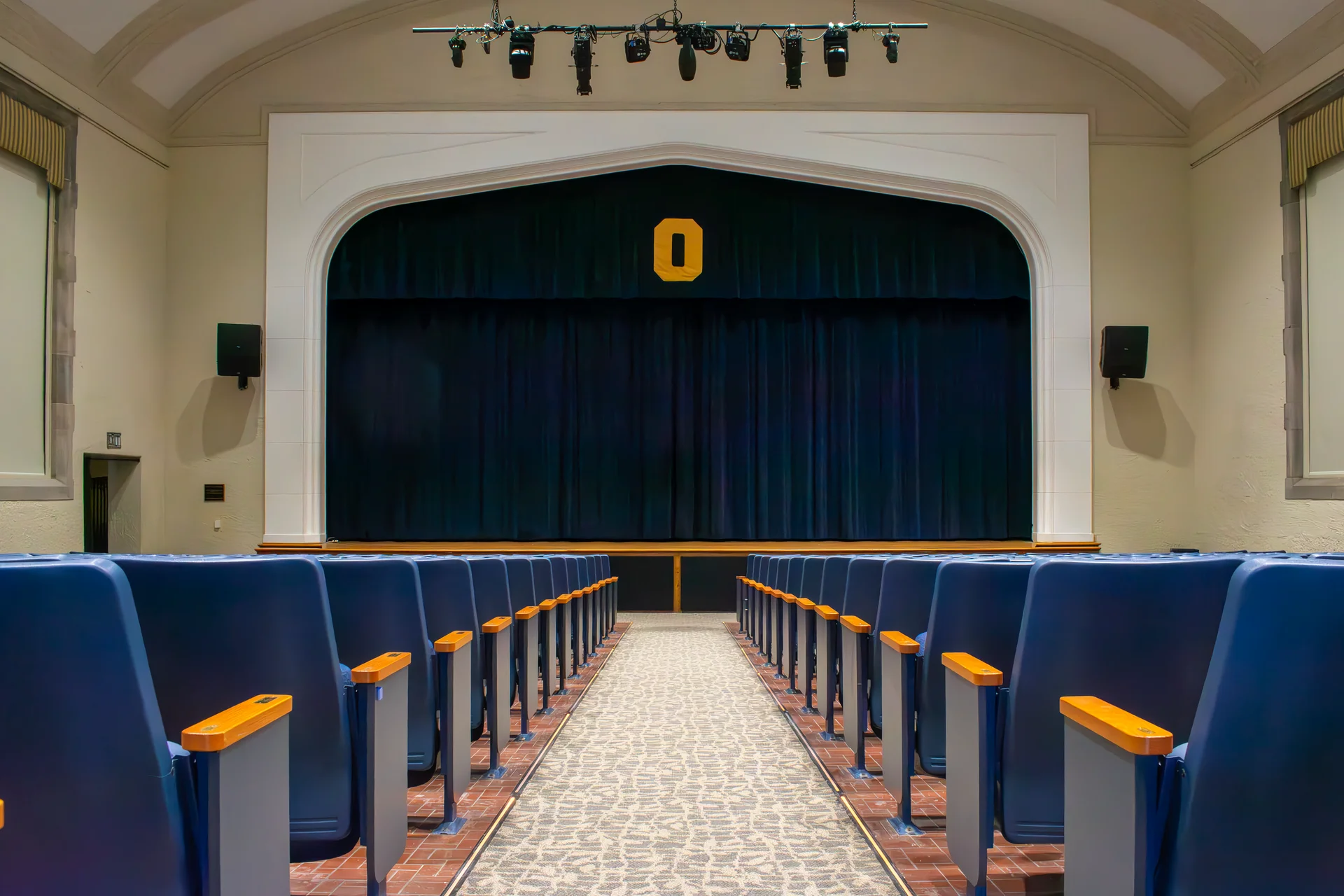

Oakwood Theater Renovation 2025
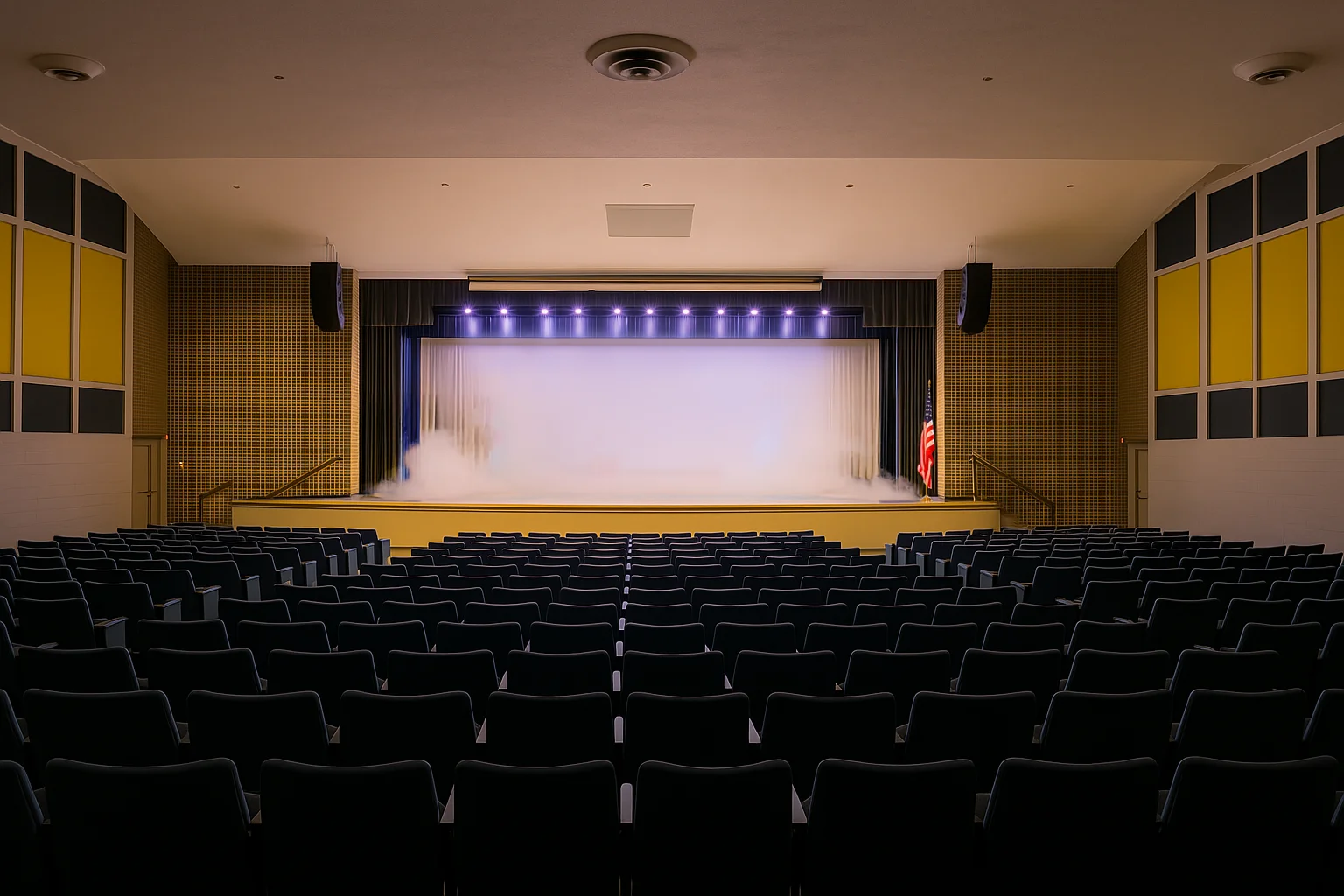
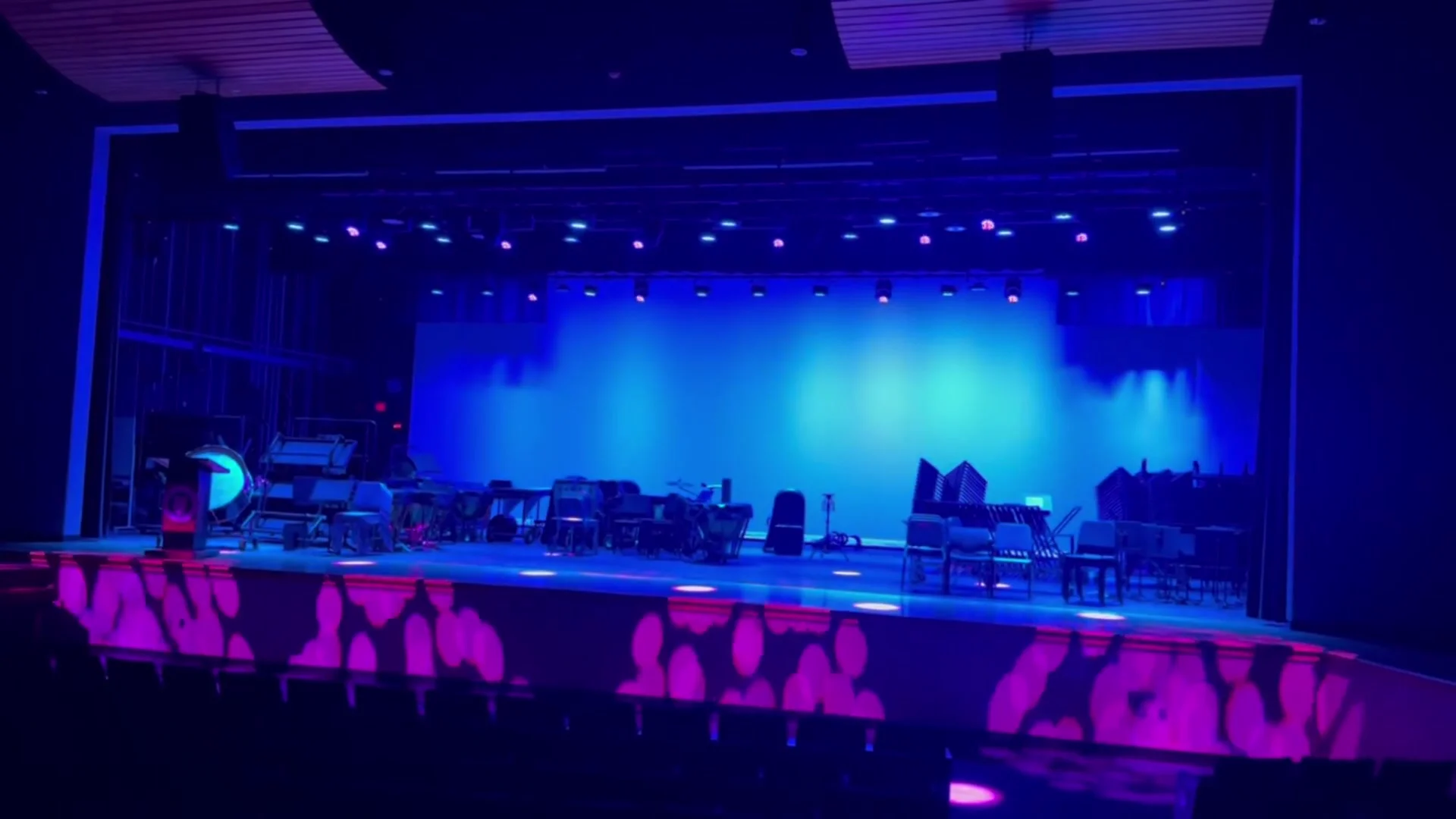
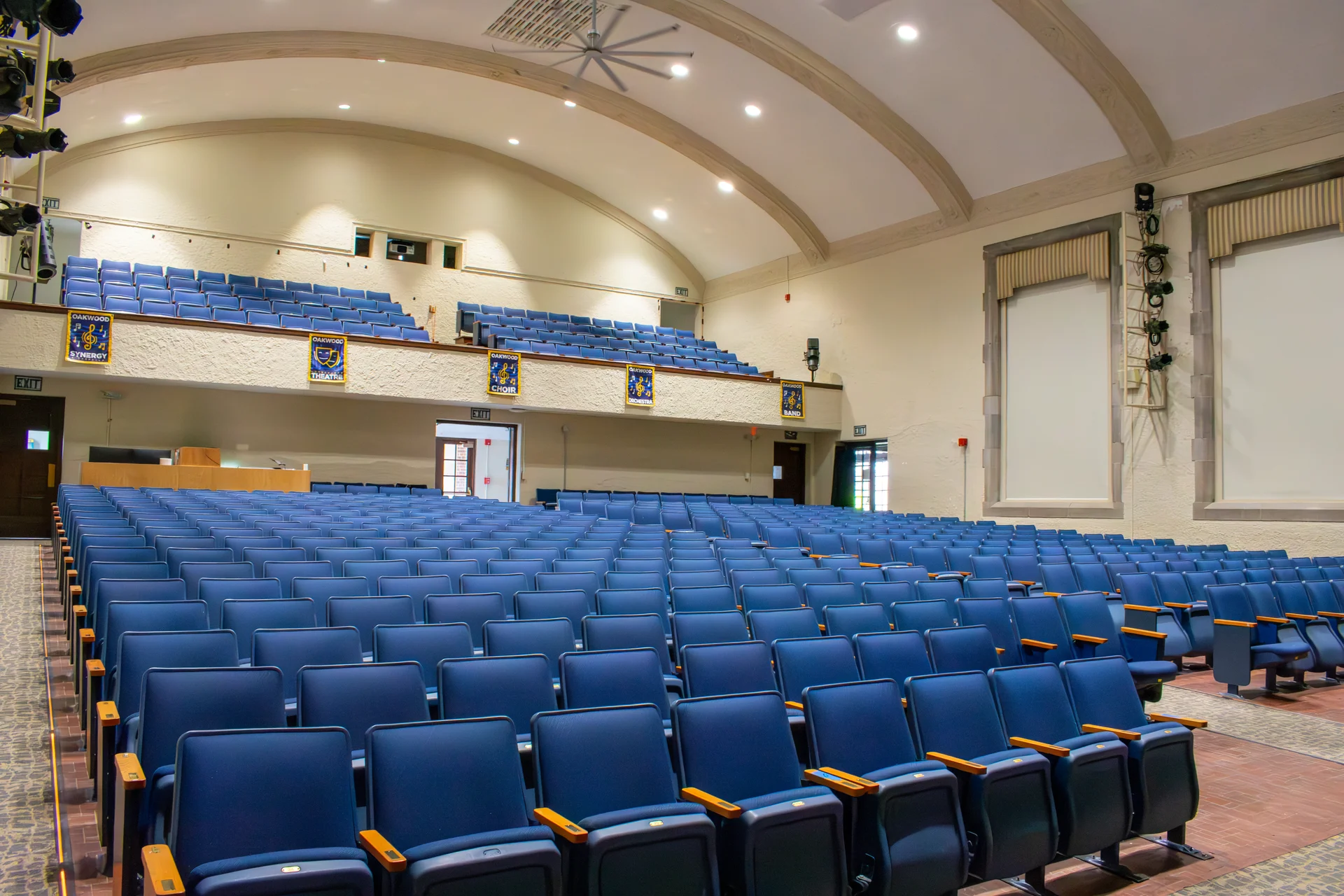
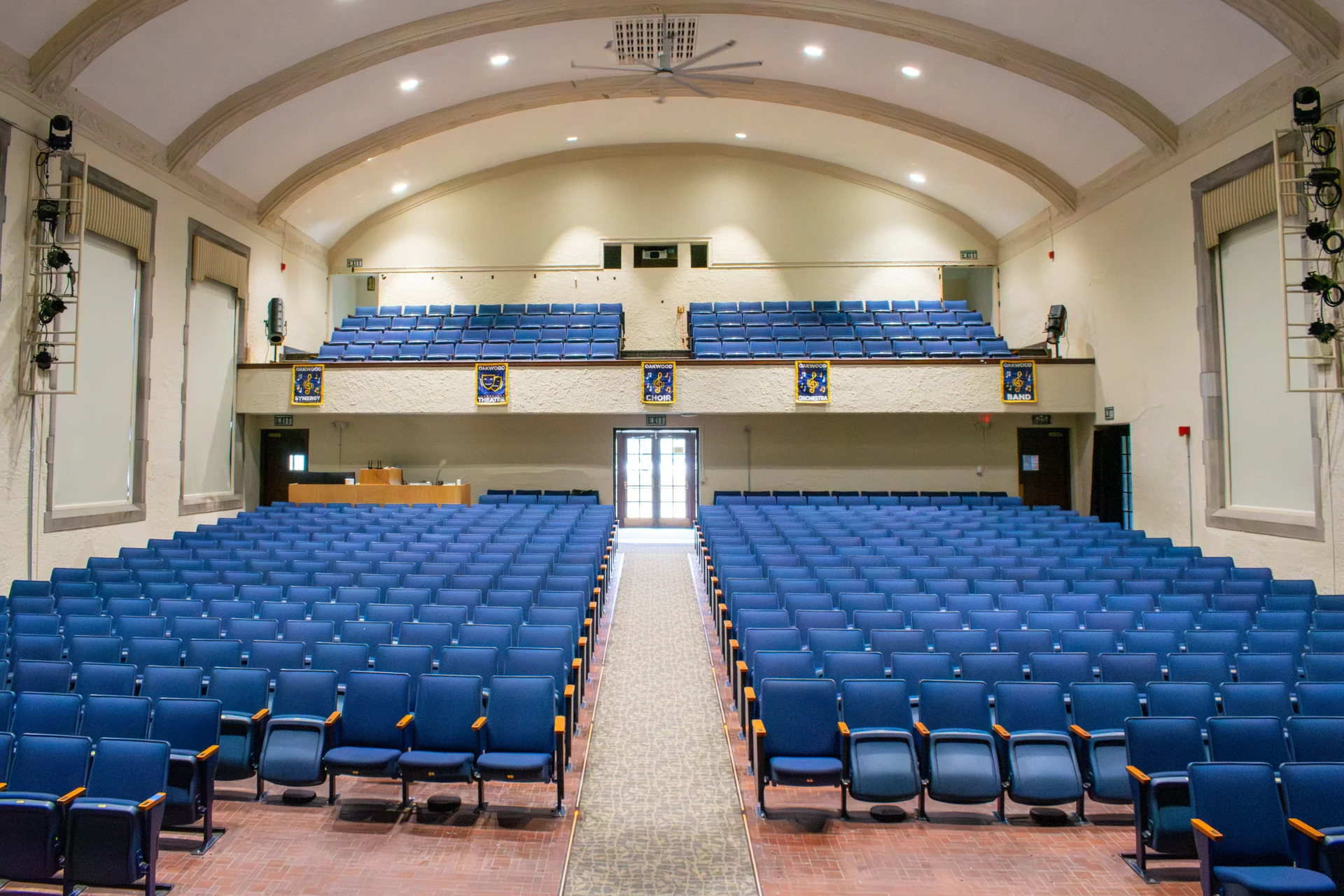
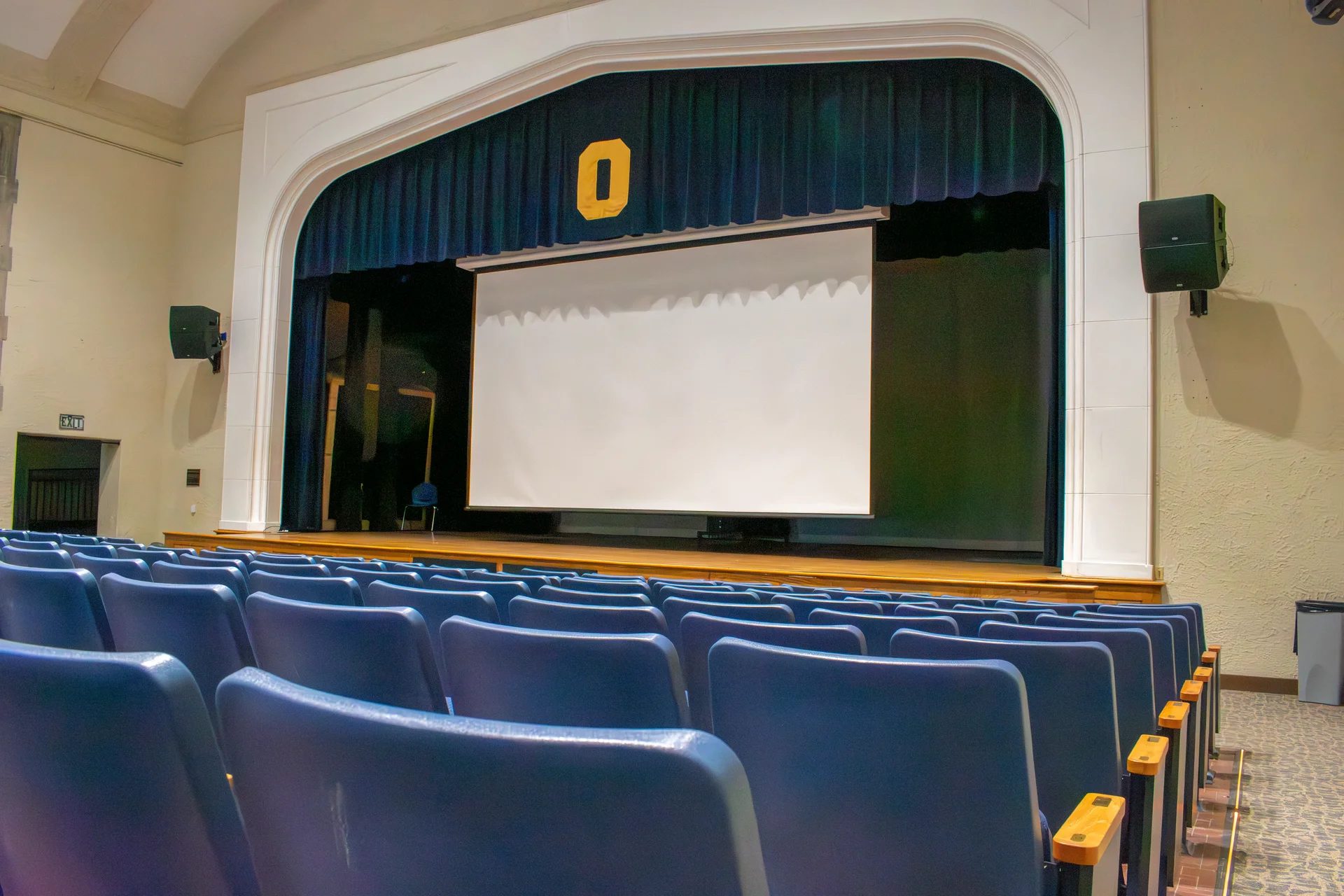
Oakwood Jr. and Sr. High School's auditorium has a new production system: a 40-channel digital sound desk with line-array speakers and subwoofers, LED theatrical lighting with moving heads and color-changing washes, house lights on dimmable presets, and a 293-inch screen with an 8,500-lumen projector. Prodigy installed it, repaired the existing curtains and rigging rather than replacing them, built a custom booth desk, and provided in-person training with two system designers. Oakwood City Schools bought it pre-bid through the TOP-C cooperative contract.
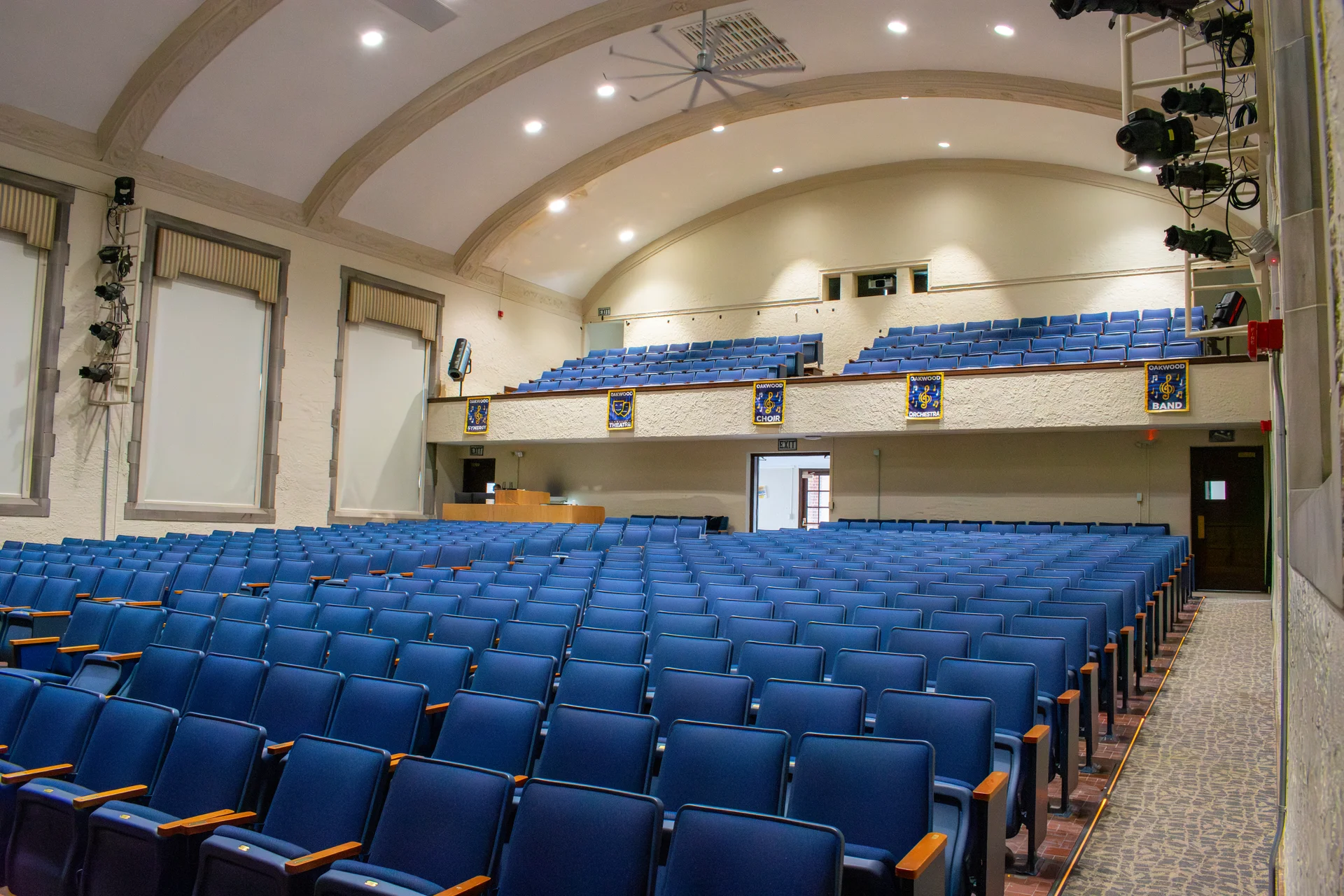
The auditorium at Oakwood Jr. and Sr. High School in Oakwood, Ohio had a familiar split. The iron above the stage was serviceable and repairable. The equipment that controls what happens under it was a generation behind what the school's productions and its daily assemblies were asking of it.
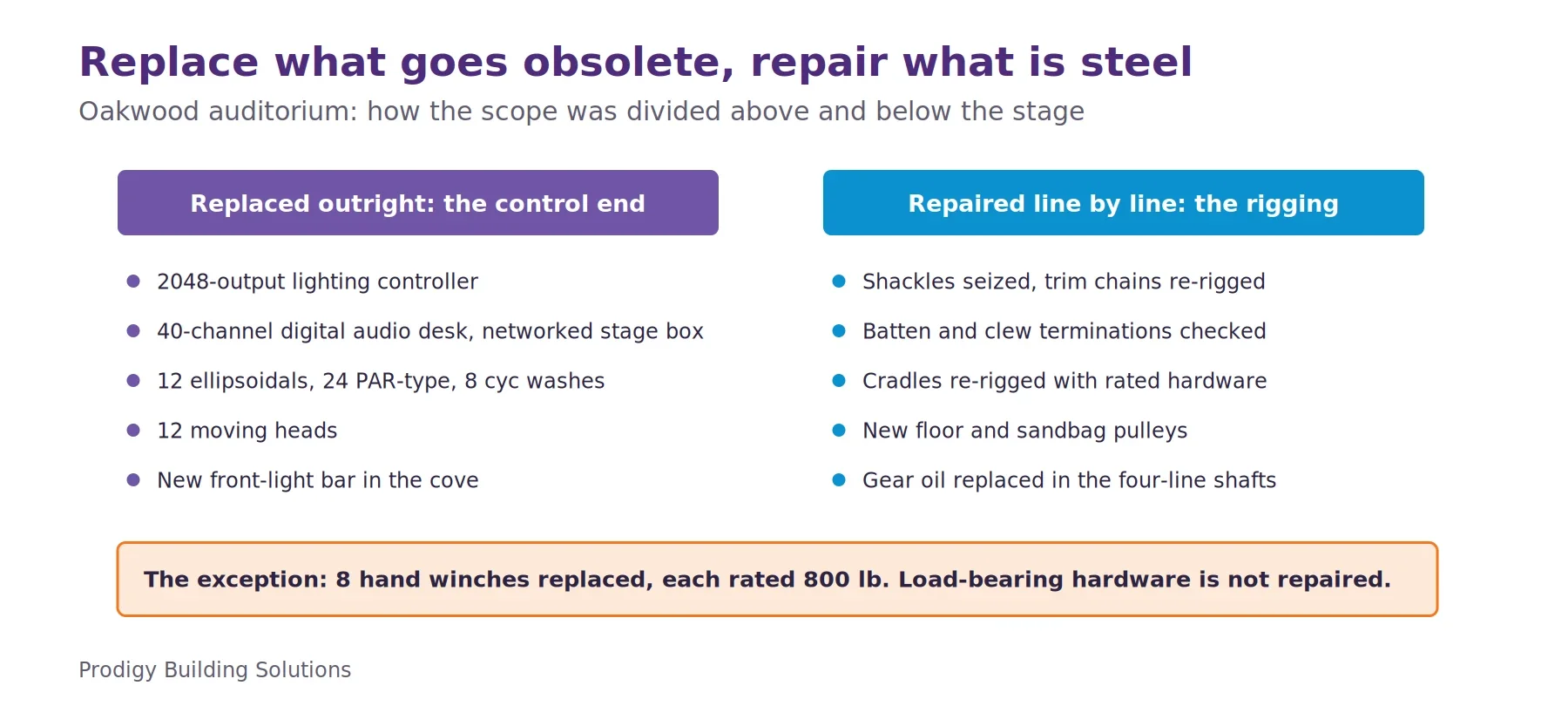
Oakwood City Schools joined the pre-bid TOP-C unit price contract and bought an upgrade aimed squarely at the control end. Audio is rebuilt around a 40-channel digital desk with a networked stage box and wireless control, six line-array mains on wall brackets and two matched subwoofers set behind acoustically transparent fabric under the stage, with a wireless intercom for productions and a custom-built booth desk sized to hold the new equipment and the retained gear together.
Lighting runs from a 2048-output controller, with LED ellipsoidals, color-changing PARs, cyclorama washes and moving heads, plus a new light bar in the cove at the zero electric position that gives the room a front angle it did not have before. The house lights are brought into theatrical control as a dimmable system with five control stations and presets for dramatic and non-dramatic use. Video is a dead-hung 293-inch screen and a matrixed 8,500-lumen large-venue projector mounted at the back wall.
Above the stage, the curtain and rigging are repaired rather than replaced. The district also gets wiring diagrams, startup manuals and in-person training with two system designers, which is the part that decides whether any of it is still being used properly in five years.
Technical Discussion
Our Work