
Hamilton CSD Water Heater Installation 2026
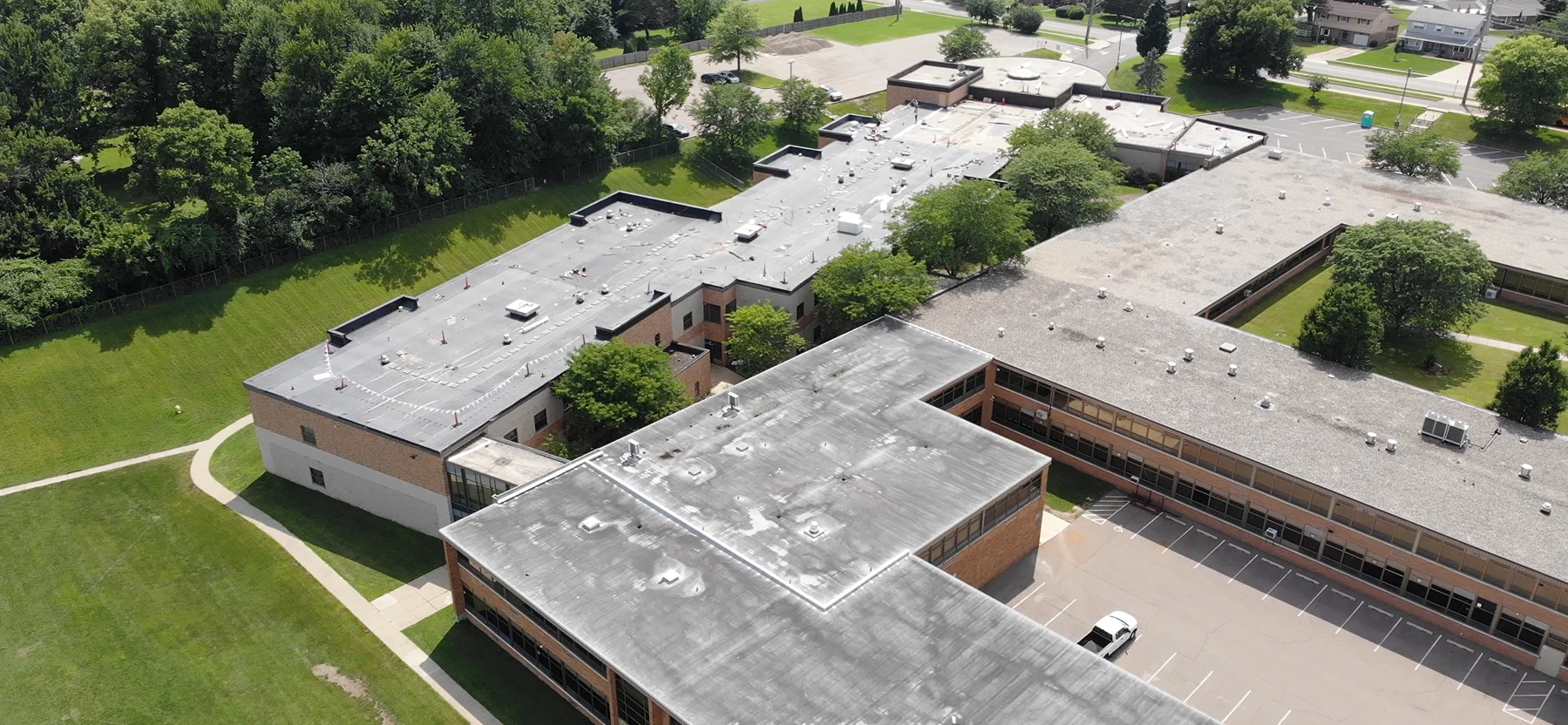
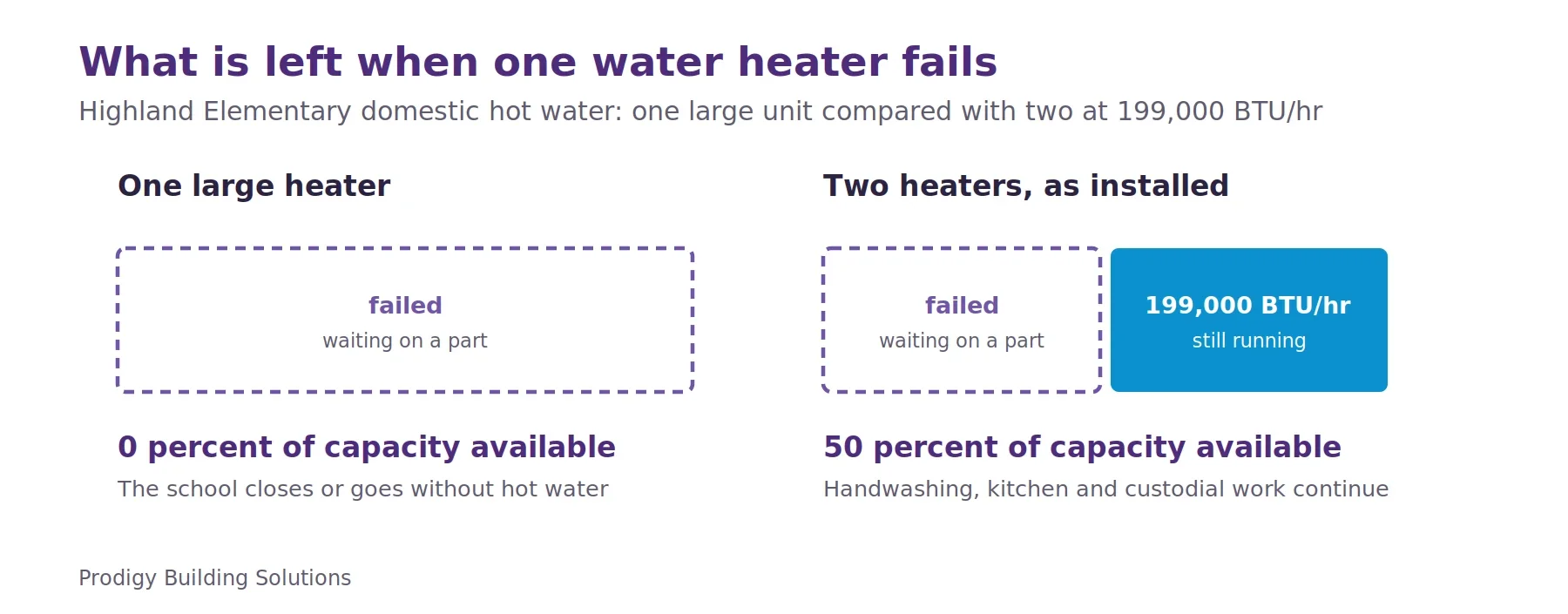
Highland Elementary School in Hamilton, Ohio runs on two domestic water heaters, and an elementary building cannot go a day without hot water — handwashing, the kitchen and custodial work all stop at once. Hamilton City School District asked for a plan to replace both units on its own schedule instead of waiting for the units to set one. What follows is that proposed scope; it describes work as proposed, not work performed.
The proposal replaces both heaters with two high-efficiency condensing natural gas units at 199,000 BTU/hr each, on 120 volt single phase power. Hot and cold water piping is modified and reconnected, all new and modified piping is insulated, and the flue and combustion air piping is reworked, because a condensing heater does not vent the way the unit it replaces did. Gas piping is modified and a gas regulator provided for each heater. The existing housekeeping pad is reused. Both units are filled and flushed, and the old heaters and the debris leave with the crew.
The electrical scope is deliberately small. The two existing 20-amp receptacles come out, conduit and conductors are modified to land on the new units, and the existing 120-volt 20-amp circuits and wall-mounted disconnects are reused. No controls work is required.
What the district would end up with is the same two-unit arrangement it has today, in condensing equipment carrying a three-year heat exchanger and tank warranty from the manufacturer, and a hot water plant where one unit out of service is a service call rather than a closed building. Pricing is against a pre-bid TOP-C unit price contract.
Technical Discussion
Our Work