
•••
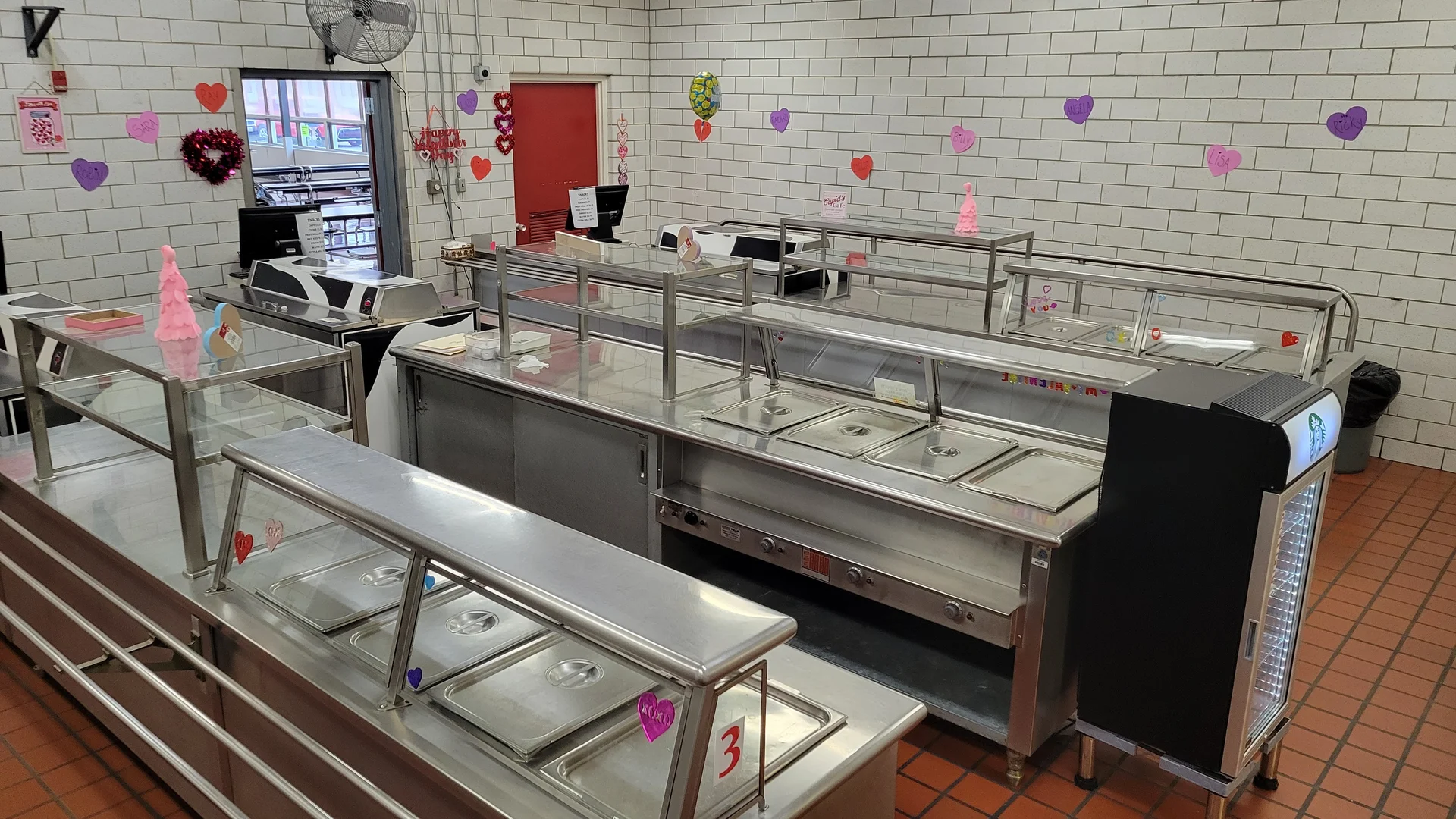
Decorated serving line in the Fairfield Creekside cafeteria
Building RenovationSouthwest OhioCincinnatiEqualis Gordian

Fairfield Creekside Kitchen and Line Renovation 2025

Creekside Middle School's kitchen and serving area were rebuilt together to clear the bottlenecks out of the lunch line: walls opened between kitchen, serving and cafeteria, pass-through heated and refrigerated cabinets, new hot and cold serving wells, a third checkout kiosk, a new dish room, new ceilings and lighting, and the electrical, gas, plumbing and grease interceptor to support it. Prodigy performed the design, obtained the permits and built it. Fairfield City Schools bought the project on a pre-bid Equalis cooperative contract.

Creekside Middle School feeds the whole building through one kitchen and one serving area, in a number of minutes that does not change. The room had accumulated obstacles: a storage room walling off part of the serving area, an abandoned cooler and freezer holding floor space in the kitchen, serving lines that put staff and students in each other's paths, and a single load-bearing wall between the two rooms with one door in it.

Fairfield City Schools rebuilt the kitchen and the serving area together on a pre-bid Equalis contract, with Prodigy performing the design services and obtaining the permits. The wall between the serving area and the old storage room came down. Three new openings were made in the load-bearing wall between kitchen and serving — one man door and two sized to hold new pass-through refrigerated and heated cabinets. New openings and doorways were cut from serving into the cafeteria, a third checkout kiosk was added, and the openings to dry food storage were infilled with the corridor door reworked for access. Ceilings and lighting were replaced across all three spaces.

In the kitchen, the abandoned cooler and freezer were removed and the floor inside their footprint taken to grade. A new dish machine, ware washing area, dishwasher hood, exhaust fan and booster heater went in; the existing cooking hood and its fire suppression system stayed. One oven was removed, another relocated with the tilt kettle and steamer, and a new oven and hot water dispenser added, alongside hot and cold serving wells, a frost top, sneeze guards, milk coolers and display cases. Two new panels went in over the existing ones, a grease interceptor was set, gas piping reworked, and the washer and dryer relocated with new power, water, waste and a dryer vent.
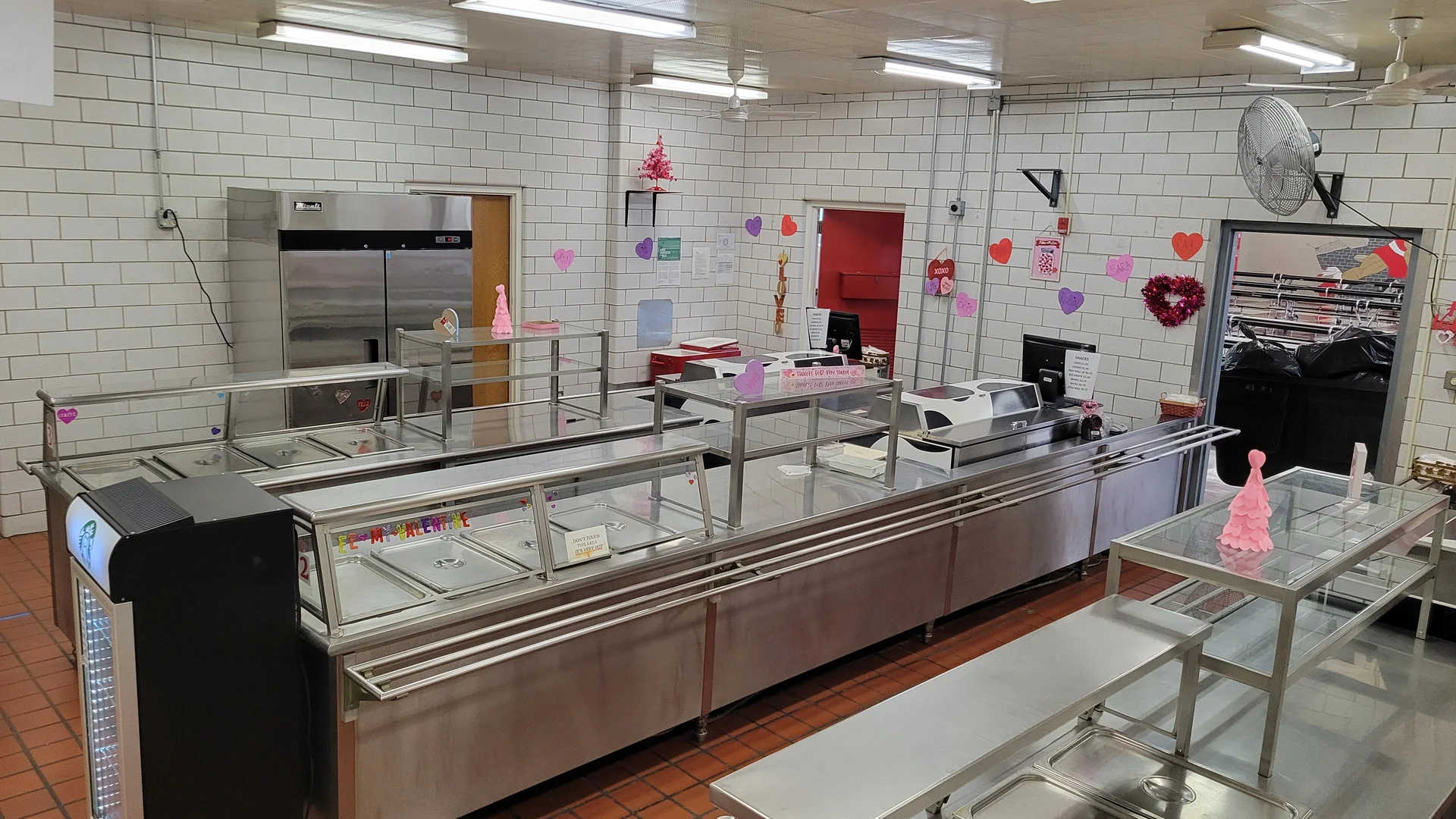
Serving line and point of sale in the renovated Fairfield Creekside kitchen
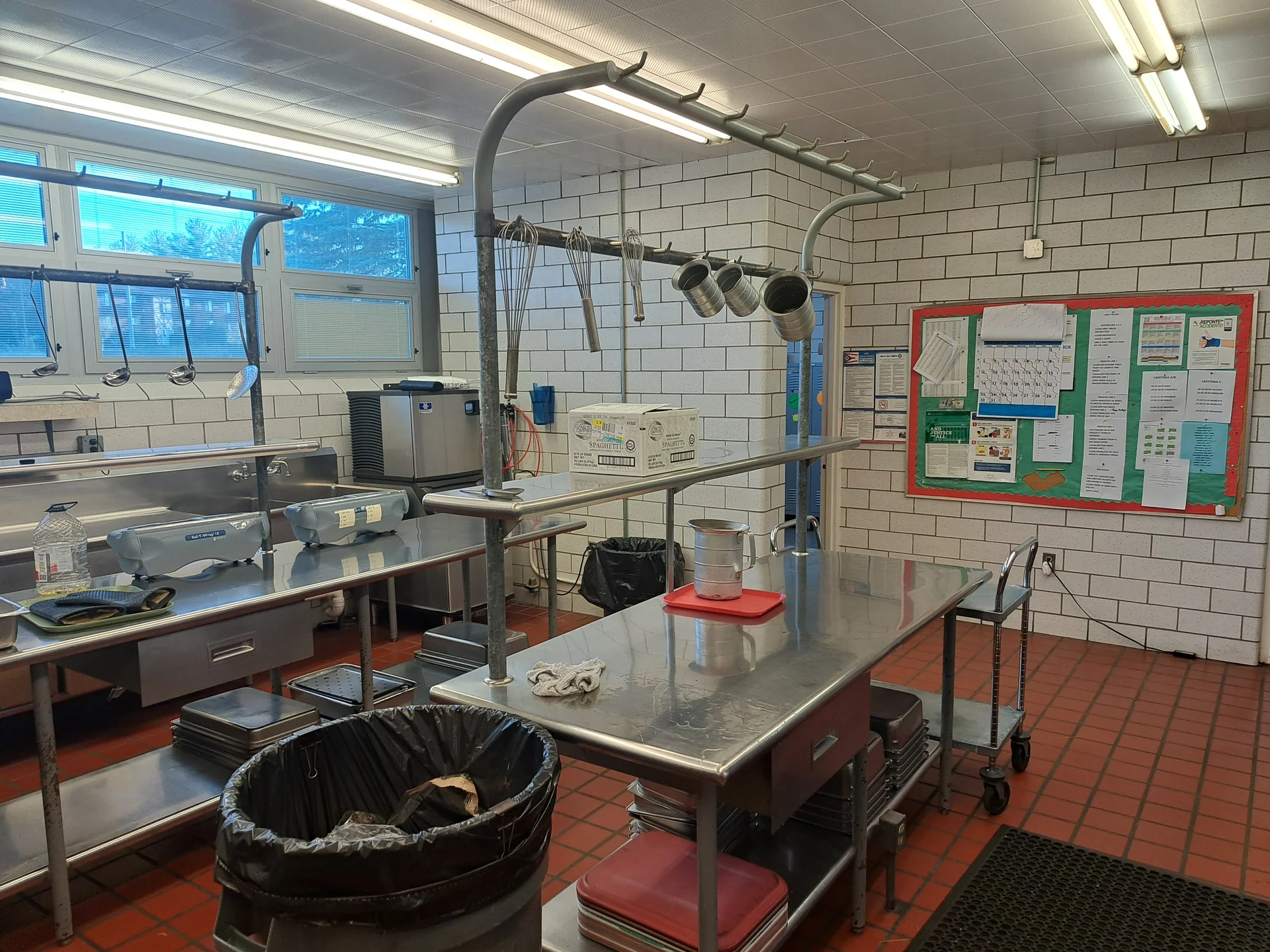
Stainless prep tables and pass-through shelving in the Creekside kitchen
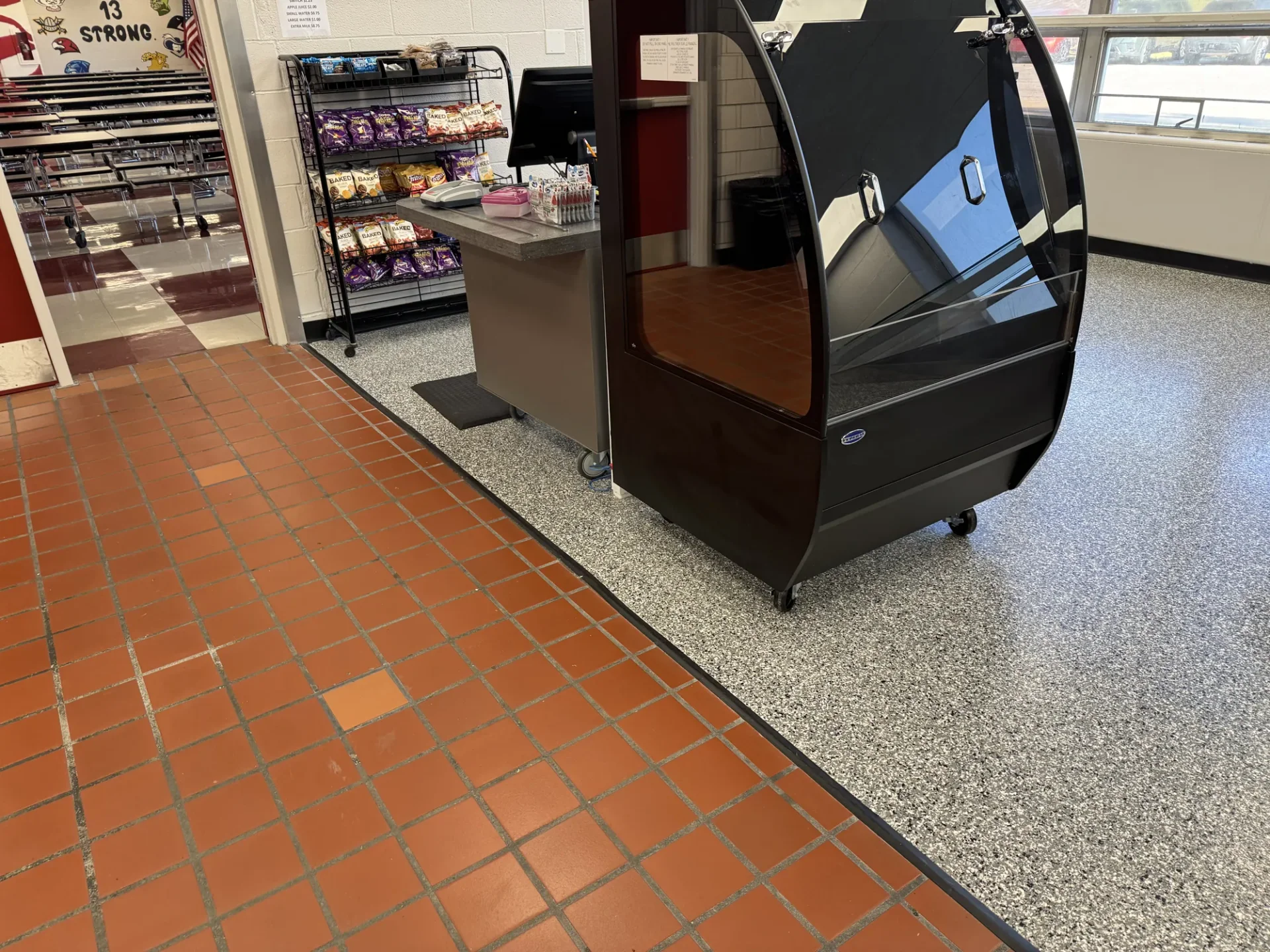
Serving line exit at Creekside Middle School where new speckled epoxy flooring meets quarry tile, beside a curved grab-and-go cooler

Technical Discussion

Two panels and a shunt trip: the electrical work behind a serving line

The visible change at Creekside is the flow: pass-through cabinets in the load-bearing wall, one-way movement through a widened serving area, a third checkout kiosk. The change a facilities director should read closely is on the electrical drawings, because a school kitchen is fed differently from every other room in the building.

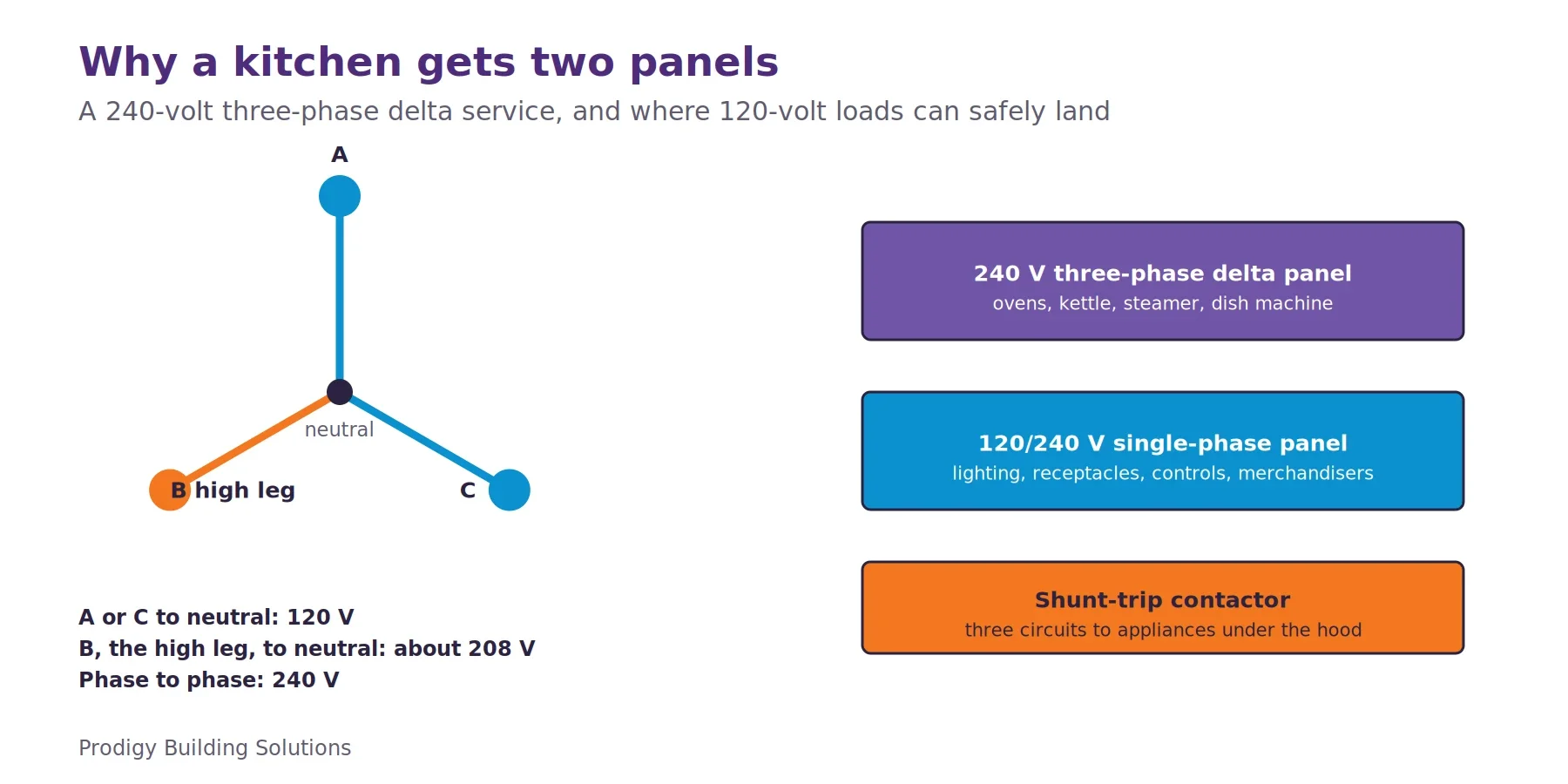
Diagram of a 240-volt three-phase delta service showing 120 volts from phases A and C to neutral and about 208 volts on the high leg B, beside the two new Creekside panels: a 240-volt three-phase delta panel for cooking equipment and a 120/240-volt single-phase panel for lighting, receptacles and controls, plus the shunt-trip contactor feeding the appliances under the hood.
Figure 1 — The high leg is why 120-volt loads get their own panel, and the shunt trip is why the oven is wired through the contactor.

Why the kitchen has a delta panel

The existing kitchen panel came out and two new panels went in over the old recessed cabinet, which stayed in the wall as a pull box. One is a 240-volt three-phase delta panel. The other is a 120/240-volt single-phase panel. A kitchen needs both because of what a delta service does: two of its three phases give 120 volts to neutral, but the third, the high leg, sits at about 208 volts to neutral. A 120-volt receptacle or control circuit landed on that leg is destroyed the first time it is switched on. Cooking equipment such as ovens, kettles and the dish machine takes the 240-volt three-phase panel. Lighting, receptacles, controls and the merchandisers take the single-phase panel, where every breaker position is safe for 120-volt loads.

The circuit through the shunt trip

Above the cooking line is a hood with a fire suppression system, and the fire code requires that when that system discharges, the fuel and power to every appliance under the hood shut off at the same moment. Electrically that is done with a shunt-trip contactor: the suppression system trips it, and every circuit routed through it goes dead. Two circuits already ran through Creekside's contactor. The new oven needed a third, and the contactor had one termination point left, so the new appliance was wired through it rather than around it. An appliance under a hood on an ordinary breaker keeps running through a fire.

The rest of the rough-in

Three new openings were cut in the load-bearing wall between the kitchen and the serving area, two of them holding pass-through refrigerated and heated cabinets loaded from the kitchen side. A new grease interceptor and the ware-washing plumbing went in with the dish machine, which got its own hood and roof exhaust fan, and the washer and dryer moved to a new location with power, water and a vent to the outdoors.

When a kitchen renovation is priced, the panel schedule and the shunt-trip wiring are the lines to ask about. They are invisible when the line opens and they are what the fire marshal checks.

Our Work

Similar Projects