
•••
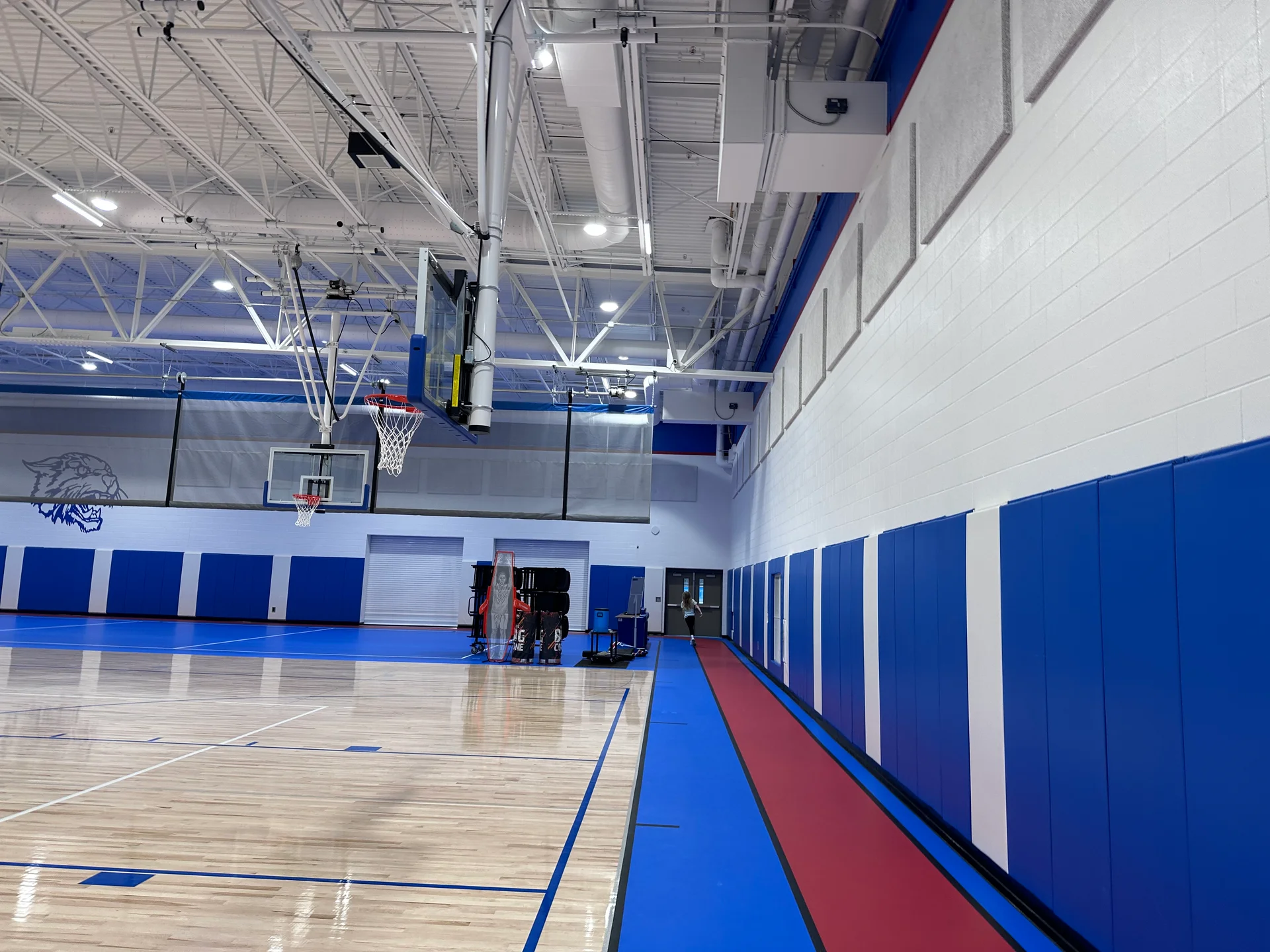
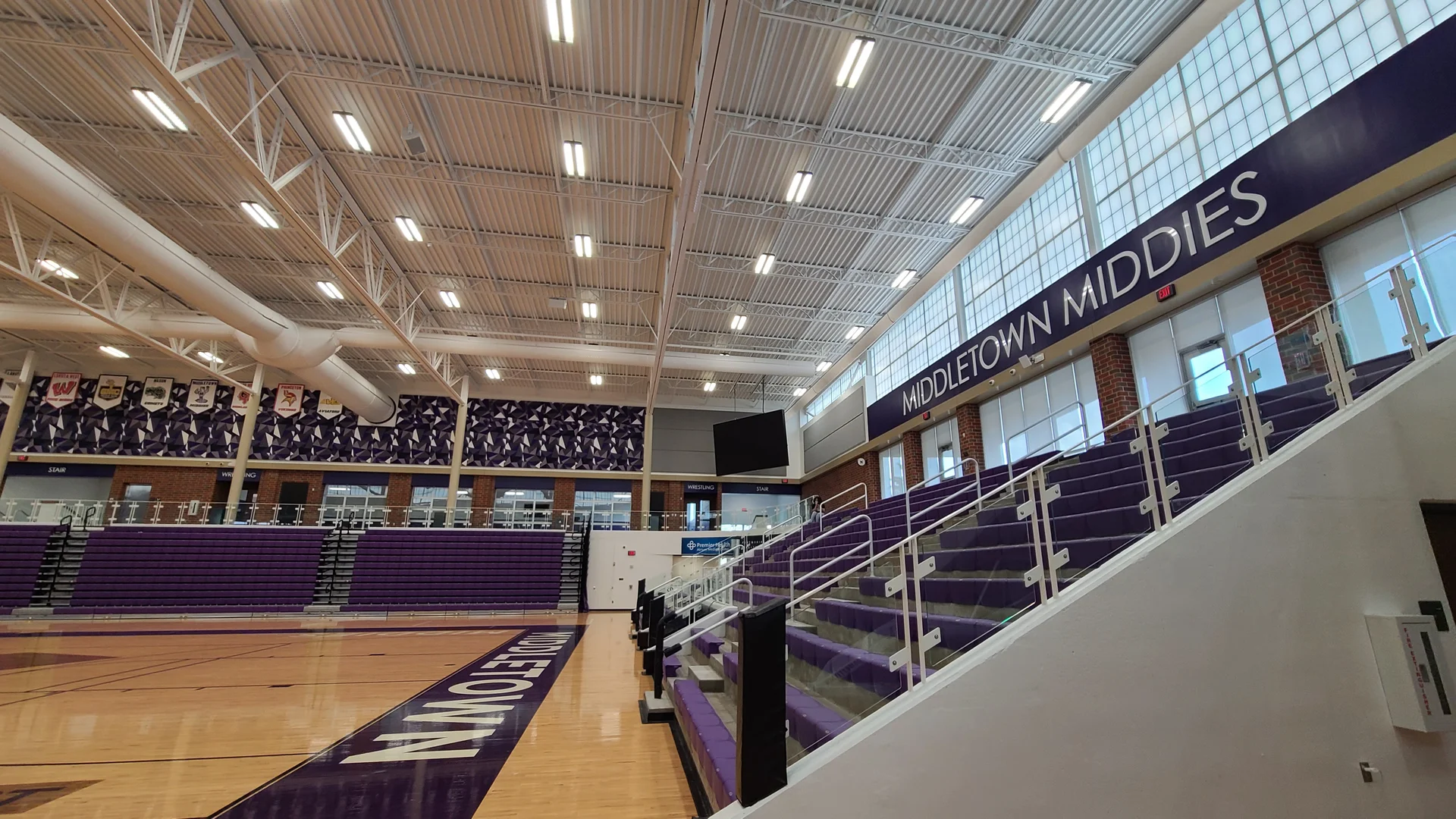
Middletown Middies gymnasium with purple bleachers and new high-bay lighting
LightingSouthwest OhioCincinnatiTIPS

Middletown District Wide Lighting Upgrade 2021

Middletown City School District converted nine buildings to LED in one project: roughly 7,100 flat panels, 2,200 LED tubes, 295 linear high bays, 385 direct/indirect fixtures at the middle and high schools, and more than 600 dimming systems. Prodigy removed and disposed of the old lighting and coordinated installation with district staff so students and staff were not disrupted. The district now has one lighting standard across nine buildings, bought through pre-bid TIPS cooperative contracts.

Middletown City School District bought its lighting the way districts rarely get to — all of it, at once. A single 2021 facility maintenance package covered ten buildings, and the lighting portion of it ran across nine: Amanda, Creekview, Mayfield, Miller Ridge and Wildwood elementaries, Central Academy, the Highview 6th Grade Center, the middle school and the high school.

The counts give the scale. Roughly 6,600 LED 2x4 backlit flat panels and about 500 2x2s, some 2,200 line-voltage T8 tubes, 295 linear high bay fixtures with lenses and wire guards, 385 direct/indirect linear fixtures at the two secondary buildings, and more than 600 0–10V dimming systems with the low-voltage wire to run them. Removal and disposal of the existing lighting equipment is part of the scope, so nothing was left for district staff to deal with afterward.

The agreement is deliberately not a construction contract and says so: it provides materials, installation services and supplies for maintenance across the grounds of the buildings, and states that it does not meet the requirements for construction management under ORC 153.502 or for a construction project under ORC 123.281(B). It was bought through pre-bid TIPS cooperative contracts, and the schedule was written to be coordinated with district staff so installation did not disrupt students and staff.

What the district ends up with is one lighting standard across nine buildings, dimming systems throughout, and a maintenance stock list that fits on a page.
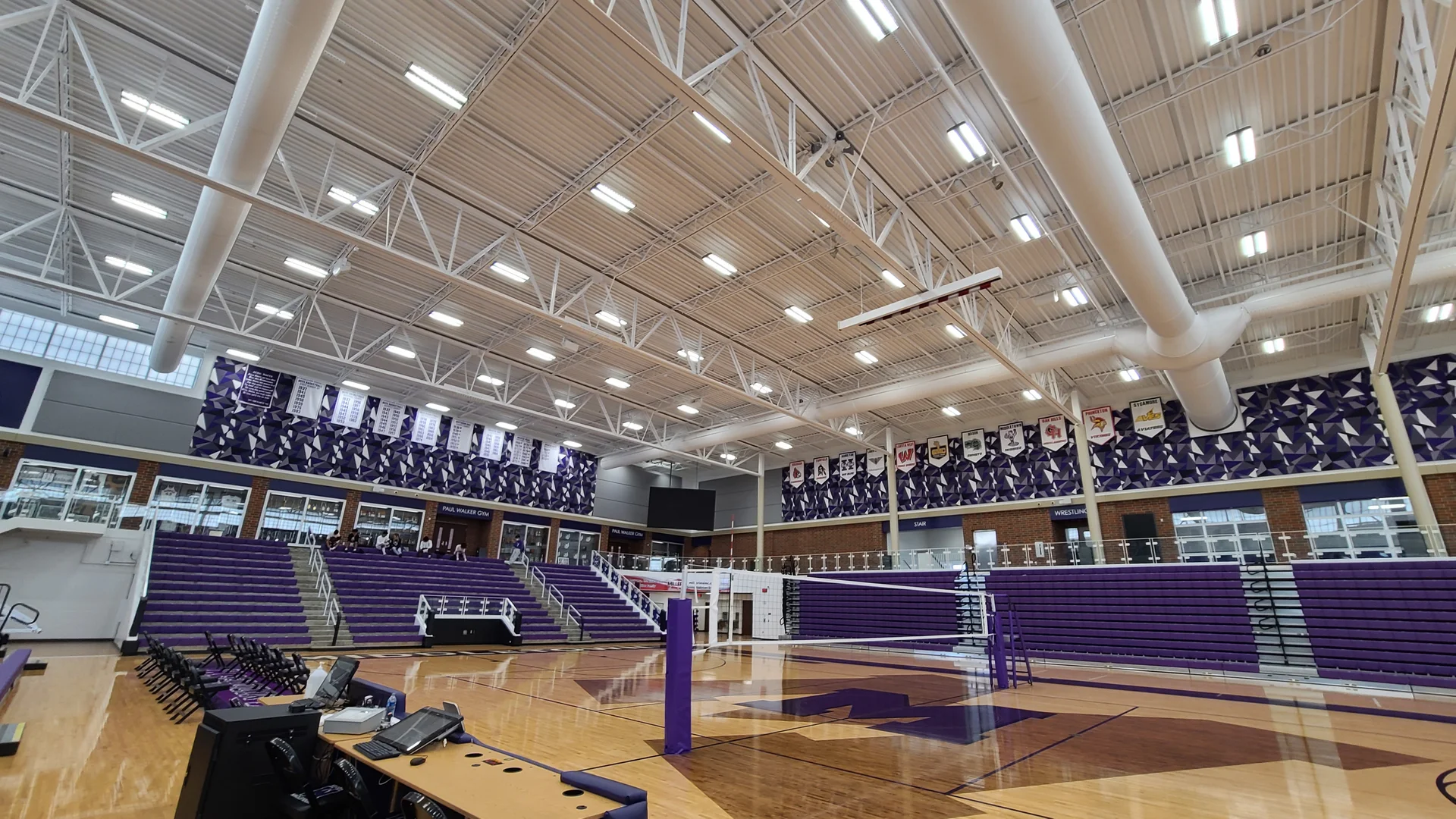
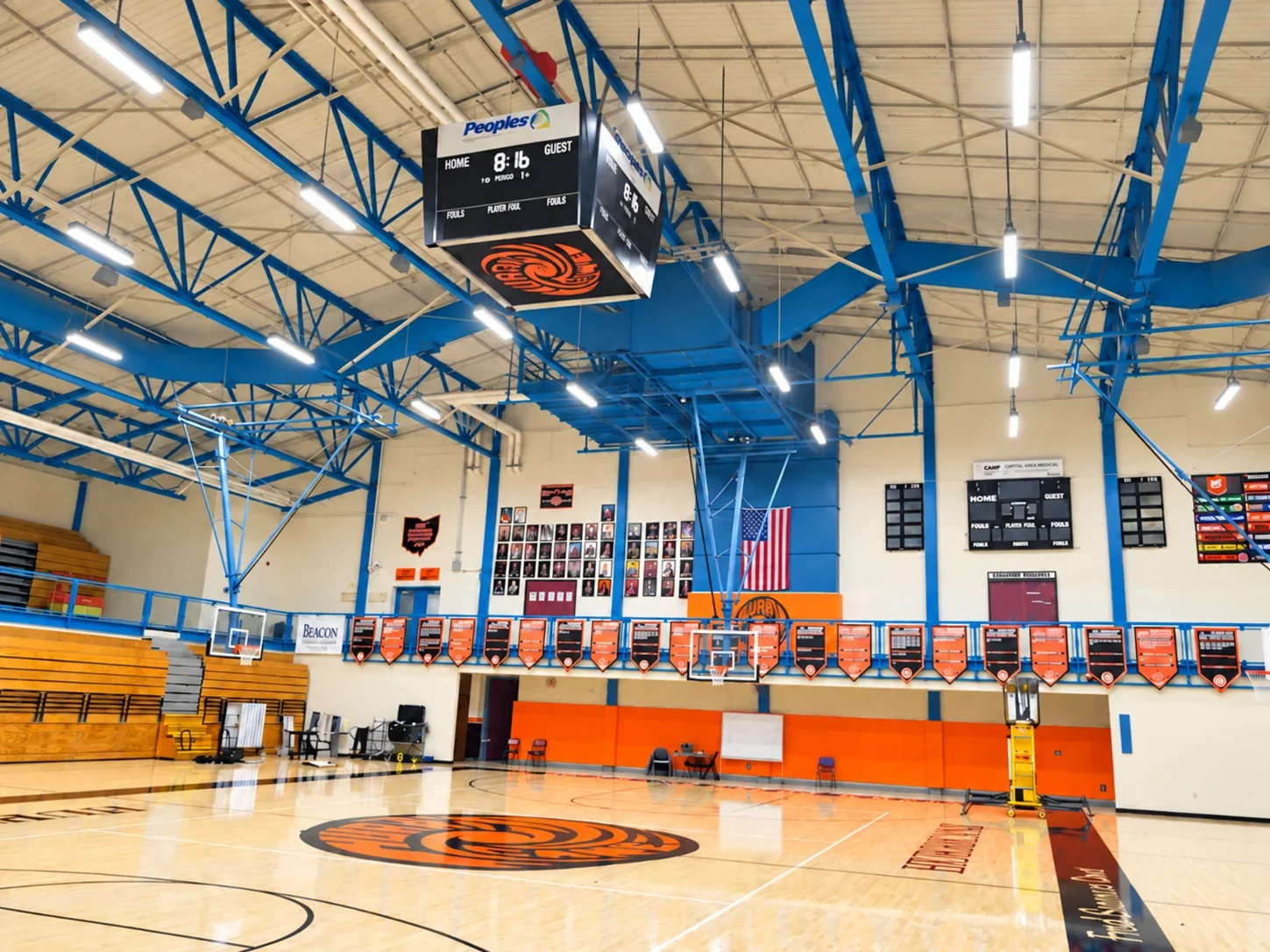
Middletown gymnasium and purple bleachers under the new high-bay lighting
Middletown gymnasium with purple wall padding under new lighting
New linear lighting in a Middletown bus garage bay

Technical Discussion

Backlit panels and 0-10 volt dimming

Nine Middletown buildings took about 6,600 LED flat panels in the 2-by-4 size alone, and more than 600 dimming systems. At that quantity two specification lines decide what the district owns for the next fifteen years: how the panel makes its light, and whether a teacher can turn it down.

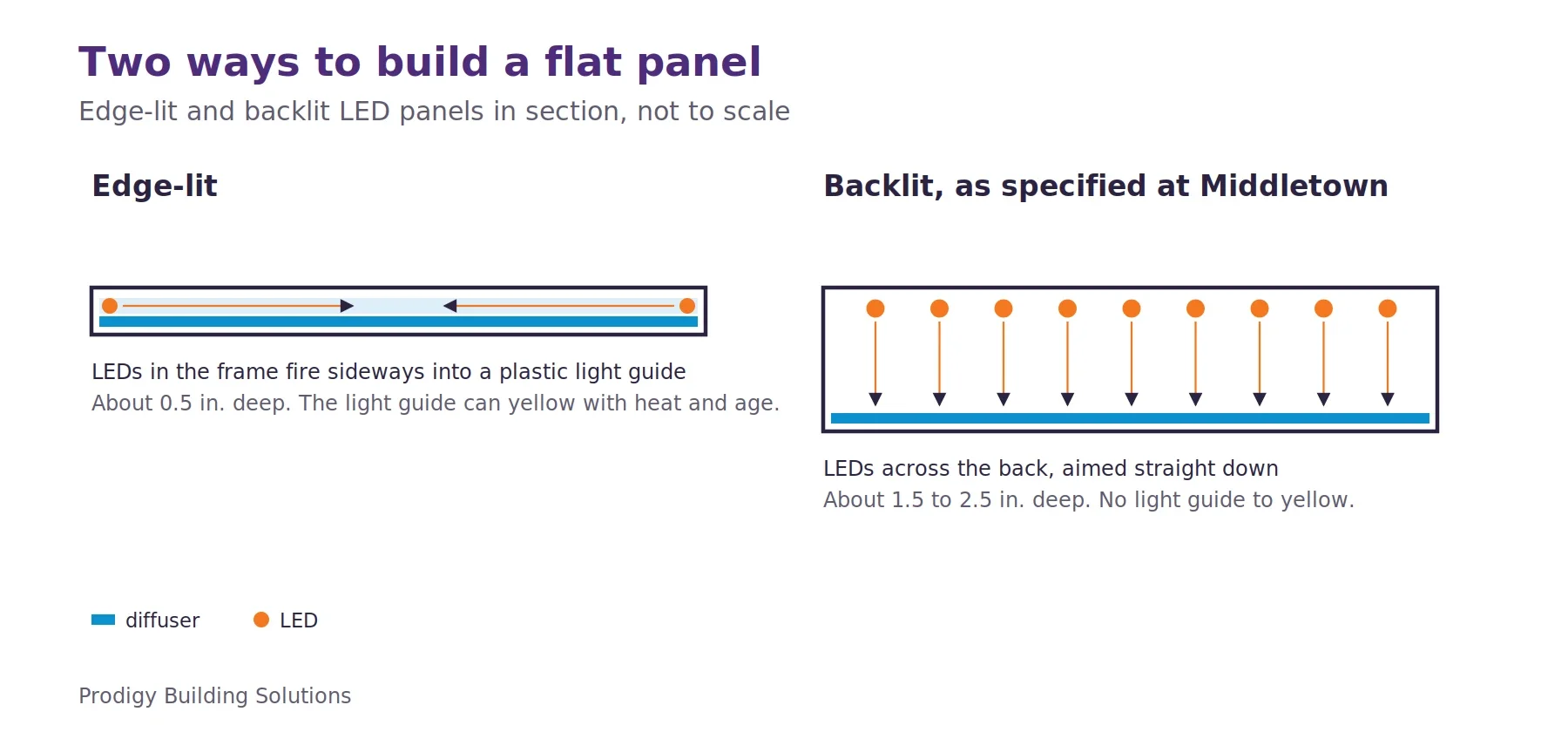
Section diagrams of two LED flat panel types. An edge-lit panel about half an inch deep has LEDs in the frame firing sideways into a plastic light guide. A backlit panel about 1.5 to 2.5 inches deep, the type specified at Middletown, has LEDs spread across the back aimed straight down through the diffuser.
Figure 1 — The two panels look alike from below and age differently.

Edge-lit and backlit are different products

An edge-lit panel is about half an inch thick. Its LEDs sit in the frame and fire sideways into a clear plastic light guide, which bends the light down through a diffuser. It is thin enough to surface-mount, and it depends entirely on that plastic sheet. Lower-cost light guides are polystyrene, and polystyrene yellows with heat and age, so the panel drifts warm and dim from the edges in. A backlit panel is a shallow box, typically 1.5 to 2.5 inches deep, with the LEDs spread across the back and aimed straight down through the diffuser. There is no light guide to discolor, the light takes a shorter path so more of it leaves the fixture per watt, and the heat is spread across the whole back of the fixture instead of being concentrated in the frame. In a lay-in ceiling the extra depth costs nothing. The contract specifies backlit panels in both sizes.

What 0-10 volt dimming adds

A 0-10 volt system adds one pair of low-voltage wires between a wall control and the driver in each fixture. Ten volts is full output, and the light falls as the voltage falls, down to about 10 percent on a standard driver. Input power falls nearly in step, so a room run at 60 percent draws roughly 60 percent. The larger gain is in the room. A classroom with a projector or an interactive display needs the front of the room darker than the desks, and a switch can only offer on or off. The elementary buildings took about 62 dimming systems each.

Why the same fixture everywhere

Seven buildings received the same 16 linear high bays with lenses and wire guards, and the panel is the same panel at Amanda, at Creekview and at the high school. When a driver fails in year eight, the replacement is already on the district's shelf and the person installing it has done it before.

If a lighting proposal says only LED flat panel, ask which kind. The two look the same on the day they are installed and they age differently.

Our Work

Similar Projects