
Certificates of Participation (COPs) and Lease-Purchase Financing for Ohio School Construction Projects
An Alternative Funding Method for Capital Improvements
Many Ohio school districts face significant facility needs while balancing taxpayer considerations, capital budgets, and project timelines. One financing option available under Ohio law is a lease-purchase financing structure commonly referred to as a Certificate of Participation (COP) program.
COP financing has been used by Ohio school districts to fund a variety of capital projects, including building additions, renovations, athletic facilities, parking lots, safety improvements, and other permanent improvements. Ohio law specifically authorizes school districts to enter into lease-purchase agreements for the construction, enlargement, improvement, furnishing, and equipping of school facilities.
How Does COP Financing Work?
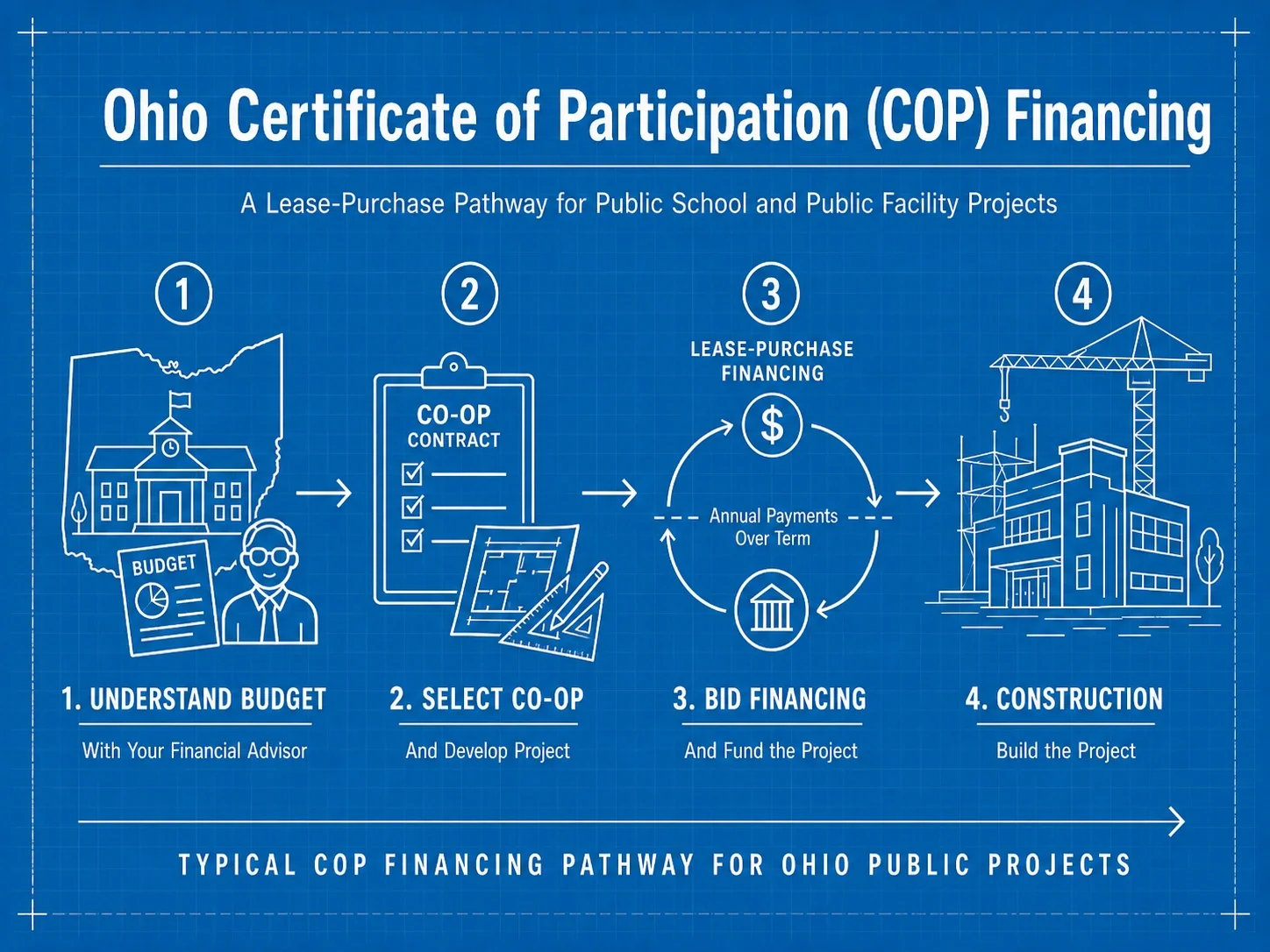
While each financing program is structured by the district's legal and financial advisors, a typical COP financing arrangement generally follows these steps:
A lease-purchase structure is established by the school district and its financing team.
Investors purchase Certificates of Participation, which provide funding for the project.
Construction proceeds similarly to other capital projects.
The school district makes lease payments over the agreed financing term.
At the conclusion of the lease-purchase agreement, ownership of the facility or improvement transfers to the district.
In practical terms, COP financing allows a district to spread the cost of a capital project over time rather than funding the entire project from existing cash reserves.
What Types of Projects Can Be Financed?
Ohio Revised Code §3313.375 permits lease-purchase financing for a broad range of school facility improvements, including:
Building additions
Classroom expansions
Renovations and modernization projects
Athletic facilities
Parking lots
Safety and security enhancements
Site improvements
Furnishing and equipping facilities
The specific eligibility of a project should always be reviewed by the district's legal counsel and financial advisor.
Why Do Some Districts Consider COP Financing?
Every district's financial situation is different, but COP financing may be considered when a district:
Has an identified facility need that cannot wait several years for cash accumulation.
Wants to preserve capital reserves for future needs.
Seeks flexibility in structuring project funding.
Is evaluating alternatives to traditional bond financing.
Has dedicated capital revenue sources available to support long-term payments.
Districts commonly work with bond counsel, financial advisors, underwriters, trustees, auditors, and other professionals to determine whether a lease-purchase structure is appropriate for their circumstances.
Funding Sources
Depending on the district's financial plan and applicable legal requirements, lease-purchase payments may be supported by various capital funding sources. Ohio law recognizes Certificates of Participation issued as part of lease-purchase agreements as a funding mechanism for permanent improvement projects.
The availability and use of any funding source should always be evaluated by the district's treasurer, financial advisor, and legal counsel.
How We Help
Our role is not to provide financial, legal, or investment advice. Instead, we work collaboratively with school districts and their professional advisors to help align facility planning, project scope, construction budgets, and project delivery with the district's selected funding strategy.
When a district is considering a lease-purchase or COP financing structure, we can assist by:
Developing conceptual budgets and project scopes.
Providing preliminary cost estimates.
Evaluating phased construction options.
Assisting with long-term capital planning discussions.
Coordinating project schedules to align with financing timelines.
Delivering projects through cooperative purchasing, design-build, construction management, or other approved procurement methods.
Our team regularly works with school districts, financial advisors, bond counsel, and other stakeholders to help move projects from concept to completion while maintaining transparency and budget accountability.
Important Notice
Financing decisions should always be made in consultation with the district's treasurer, financial advisor, bond counsel, legal counsel, and other qualified professionals. This information is provided for general educational purposes only and should not be construed as financial, legal, tax, or investment advice.
PACE Financing for Public Sector Energy and Facility Improvement Projects
Funding Energy Improvements Without Large Upfront Capital Expenditures
Many public entities are seeking ways to improve aging facilities, reduce utility costs, enhance occupant comfort, and modernize infrastructure without requiring substantial upfront capital investments.
One financing option that may be available for qualifying projects is Property Assessed Clean Energy (PACE) financing. In Ohio, PACE financing is administered through Energy Special Improvement Districts (ESIDs) and can be used to fund eligible energy-related improvements on commercial, nonprofit, institutional, and governmental properties.
PACE financing is commonly used for projects involving:
HVAC system replacements
Building automation systems
LED lighting upgrades
Solar energy systems
Geothermal systems
Building envelope improvements
Insulation and window upgrades
Energy efficiency and sustainability improvements
Certain resiliency and water conservation measures
How PACE Financing Works
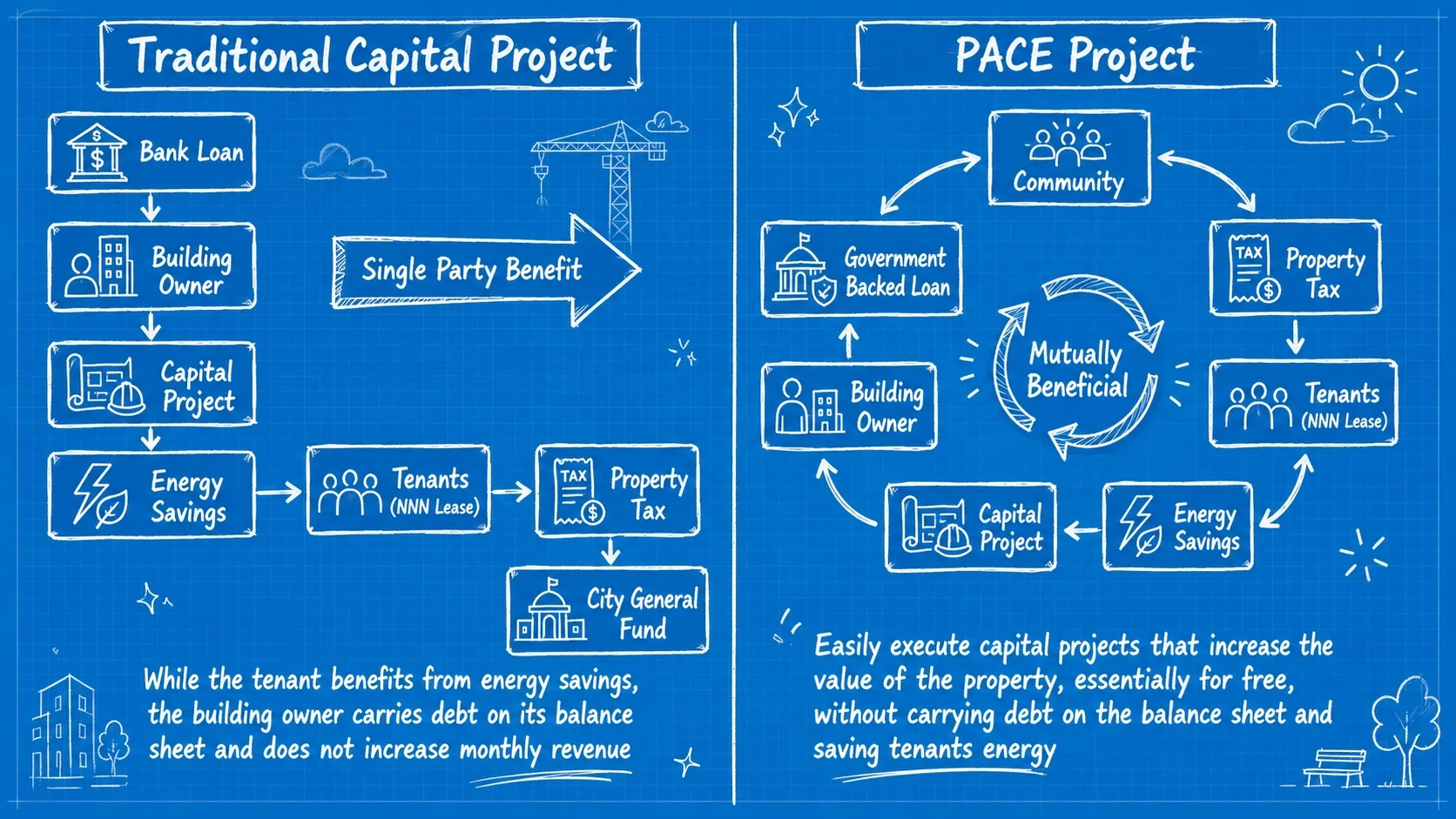
PACE financing is designed to help property owners fund qualified energy improvements using long-term private capital.
A typical project generally follows these steps:
Eligible energy-saving improvements are identified.
The property is enrolled in an Energy Special Improvement District (ESID), if necessary.
A private capital provider funds the qualified improvements.
The financing is repaid through a voluntary special assessment associated with the property.
Repayment occurs over an extended term, often aligned with the useful life of the improvements.
The objective is often to spread project costs over time while allowing the facility to benefit from reduced energy consumption, improved comfort, and modernized building systems.
Benefits Public Entities May Consider
Depending on the specific project and financing structure, PACE financing may offer several potential advantages:
Reduced upfront capital requirements
Long-term financing options
Funding for comprehensive energy improvement projects
Ability to bundle multiple facility upgrades into a single project
Improved building performance and energy efficiency
Potential utility cost savings
Support for sustainability and energy reduction goals
Because eligibility requirements vary by jurisdiction and project type, each opportunity should be evaluated individually by qualified advisors.
Common Public Sector Applications
Public entities frequently evaluate PACE financing for projects such as:
School HVAC modernization programs
Municipal facility energy upgrades
Government office building renovations
Community center improvements
Renewable energy installations
Campus-wide energy conservation initiatives
PACE financing is often considered when a facility requires significant energy-related improvements and the owner wishes to preserve available capital for other priorities.
How We Help
Our role is not to provide financial, legal, tax, or investment advice. Instead, we work alongside our clients and their professional advisors to evaluate project feasibility and develop construction solutions that align with available funding strategies.
For projects where PACE financing may be appropriate, we can assist with:
Facility assessments and capital planning
Energy efficiency project identification
Budget development and cost estimating
Life-cycle cost analysis
Project phasing strategies
Design-build delivery
Coordination with energy consultants, ESIDs, capital providers, and other project stakeholders
Our team works collaboratively with owners, financial advisors, legal counsel, ESID representatives, and financing partners to help move qualified projects from concept to completion.
Important Notice
PACE financing availability, eligibility requirements, project qualification standards, and financing structures vary by jurisdiction and project type. All financing decisions should be made in consultation with qualified legal counsel, financial advisors, ESID representatives, and other appropriate professionals. This information is provided for general educational purposes only and should not be construed as financial, legal, tax, or investment advice.
LATEST POSTS
From Our Resource Center

Milford EVSD Pavement & Parking Lot Renovation 2026
Two elementary schools and the district's Transportation Office in Milford came back from summer break with smooth, freshly striped asphalt and water that now goes where it should. For the Milford Exempted Village School District, Prodigy Building Solutions planned and delivered one paving and drainage package across three sites: Mulberry Elementary, McCormick Elementary and the Transportation Office. The work covered asphalt milling and resurfacing, full-depth base repairs, new trench drains with outlet piping, a perforated underdrain, rebuilt concrete catch basin collars, hot-applied crack s…
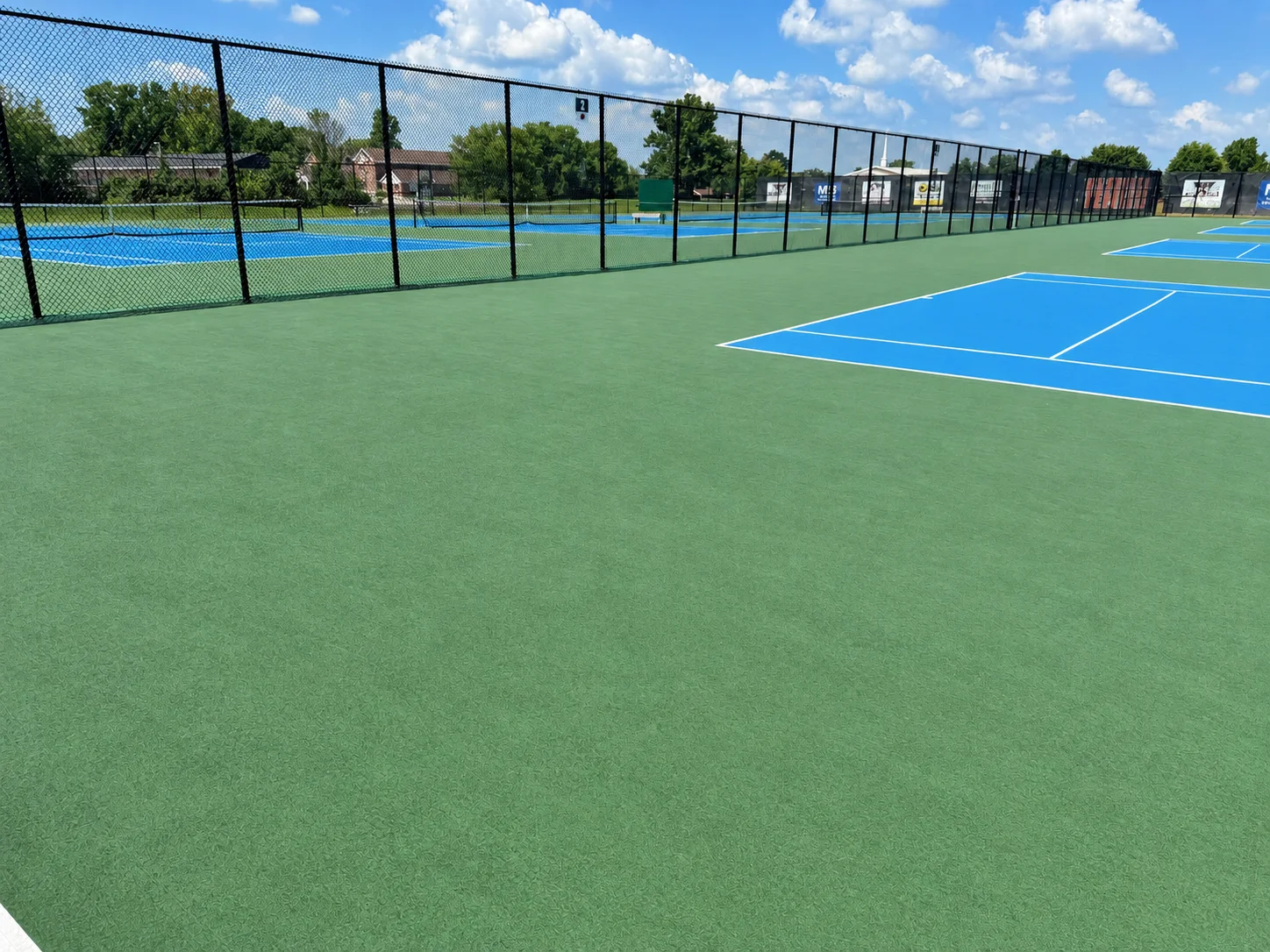
Wilmington Tennis Court Cleaning and Crack Repair 2026
The ten tennis courts at Wilmington High School went into the 2026–2027 school year clean and sealed. For Wilmington City Schools, Prodigy Building Solutions delivered a two-part maintenance package for the whole tennis complex: every court was scraped and pressure-washed to strip away the mold, mildew and ground-in dirt that had dulled the color coat and made the surface slick, and the cracks across the courts were filled with acrylic crack filler to keep water out of the pavement below. Courts that sit in the shade of trees and fences, or that stay damp after rain, grow a film of mold and al…
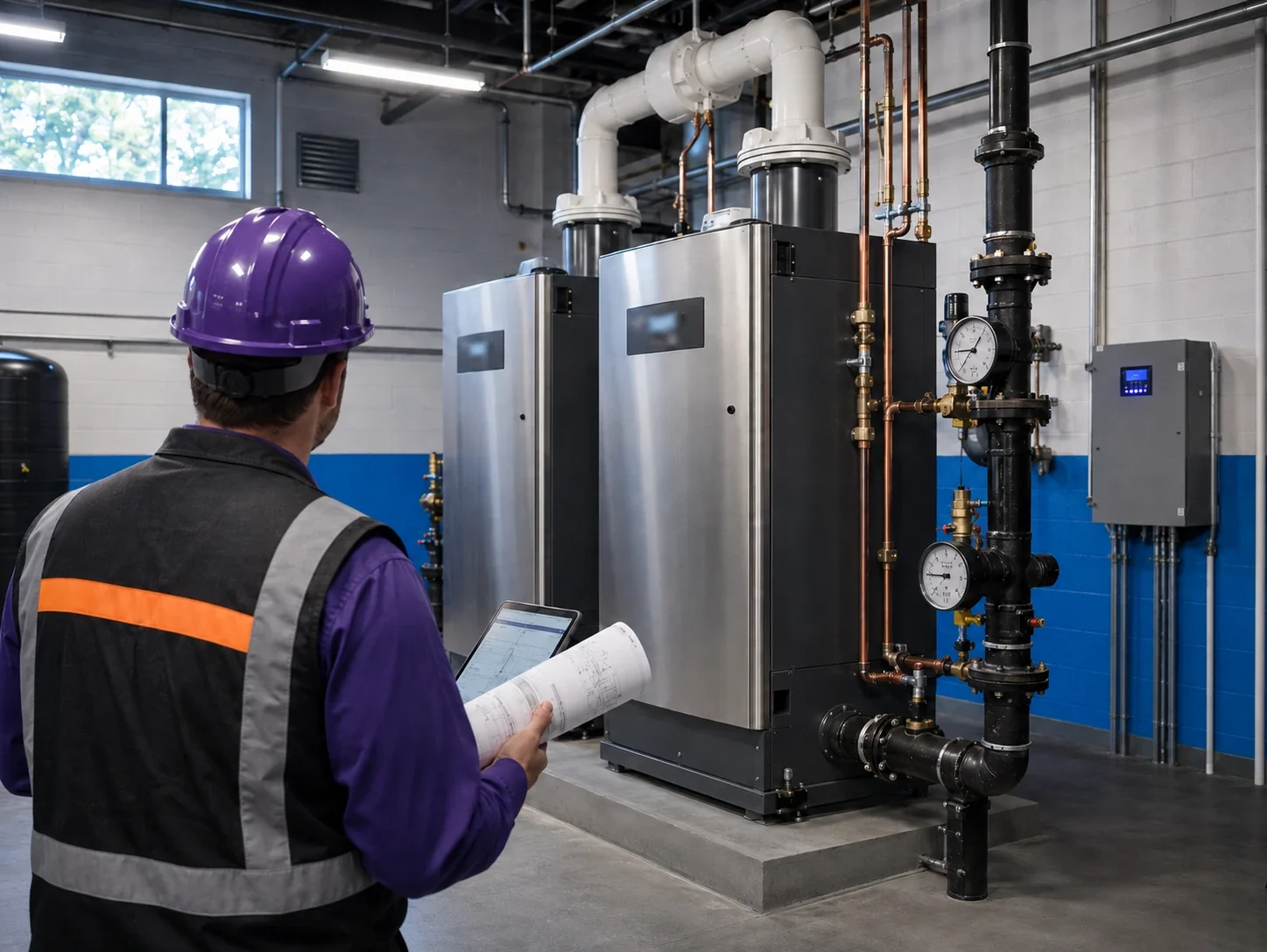
Three Bids, One Price: How the “Basis of Design” Quietly Narrows Competition on School HVAC Projects
Public owners see three sealed bids and reasonably assume the market has spoken. But on most plan-and-spec projects, the single largest line, the specified equipment, was decided before pricing ever existed, and it rides through all three bids untouched. Prodigy's in-house engineers put the application out to competing manufacturers, buy the equipment directly, and bid the labor on its own, so every dollar in the budget number is actually competed.
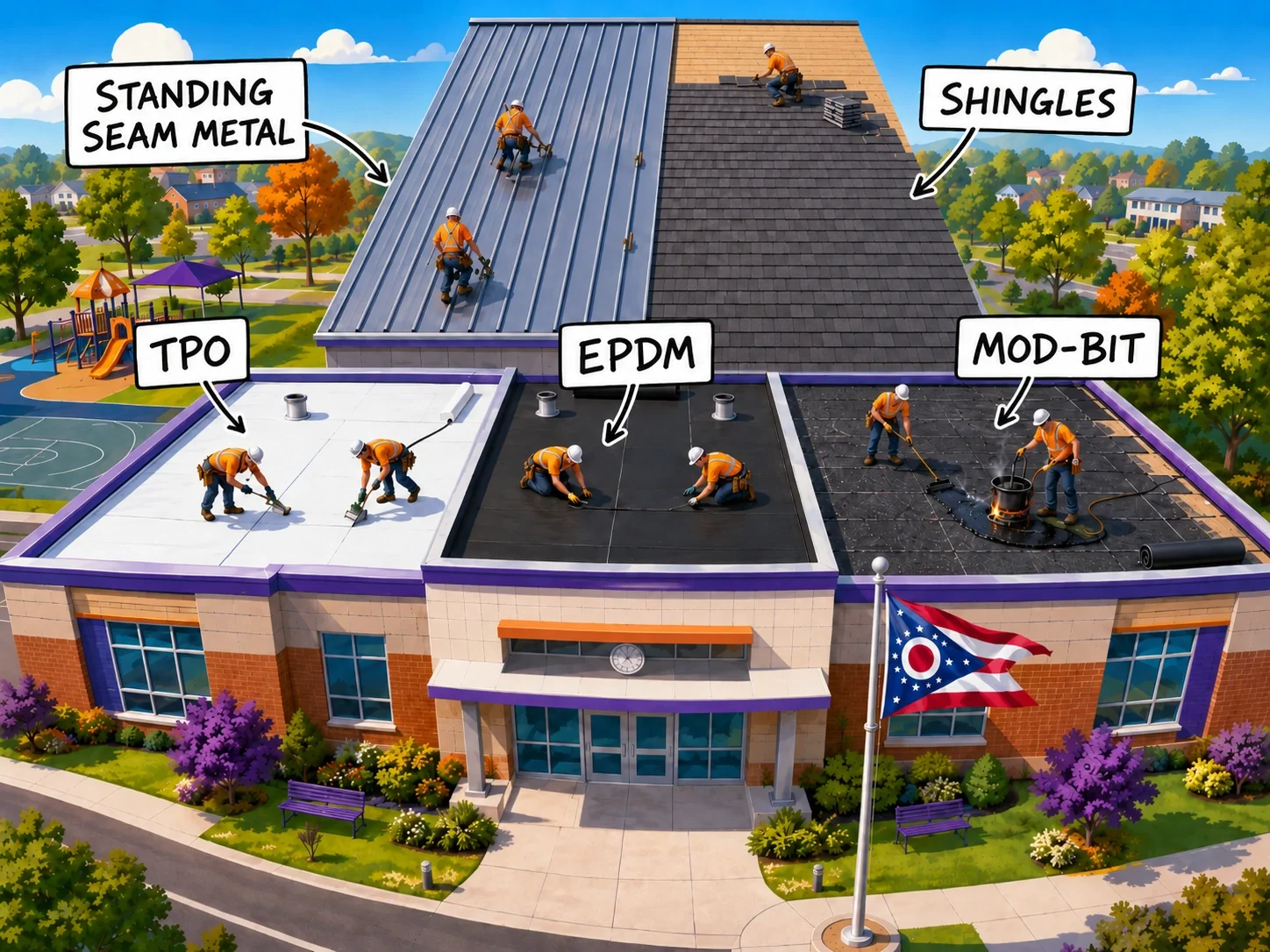
How Ohio Schools Choose the Right Commercial Roofing System
EPDM, TPO, PVC, metal, and mod-bit — matched to Ohio's climate, school budgets, and the maintenance crew's Tuesday afternoons.Most roofing specs are written by engineers who don't work in schools — which is how districts end up paying premiums for systems whose hidden maintenance costs surface years later. This guide walks through how Ohio's extreme freeze-thaw cycling should drive system selection, why two "30-year warranties" can differ by six figures in upkeep, and how EPDM, TPO, PVC, standing seam metal, and modified bitumen each earn their place — section by section, not one-size-fits-all…