•••
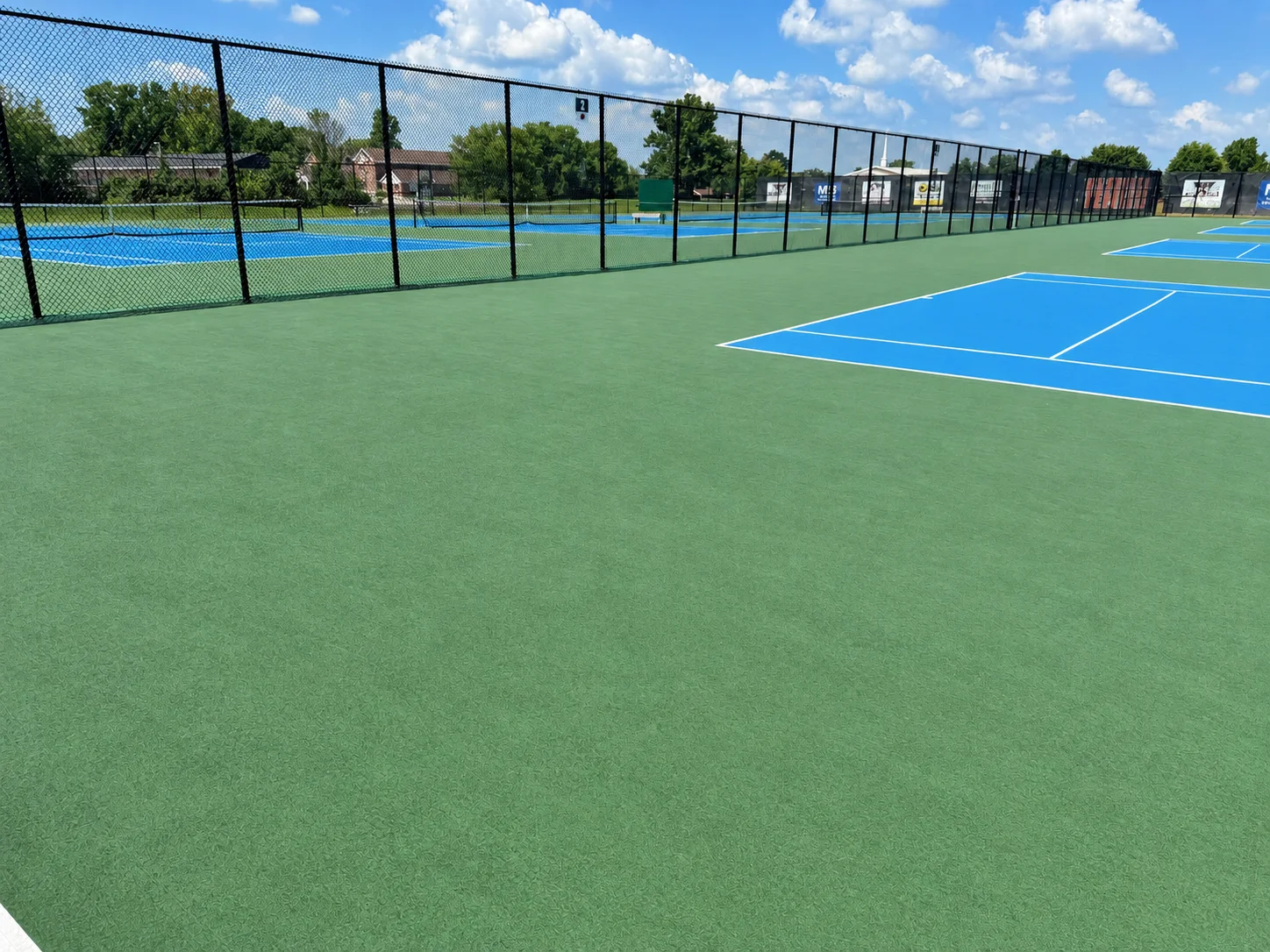
Cleaned green tennis court in the foreground with a blue court beyond and the black chain-link fence along the complex
Athletic FacilitiesSouthwest OhioCincinnati

Wilmington Tennis Court Cleaning and Crack Repair 2026

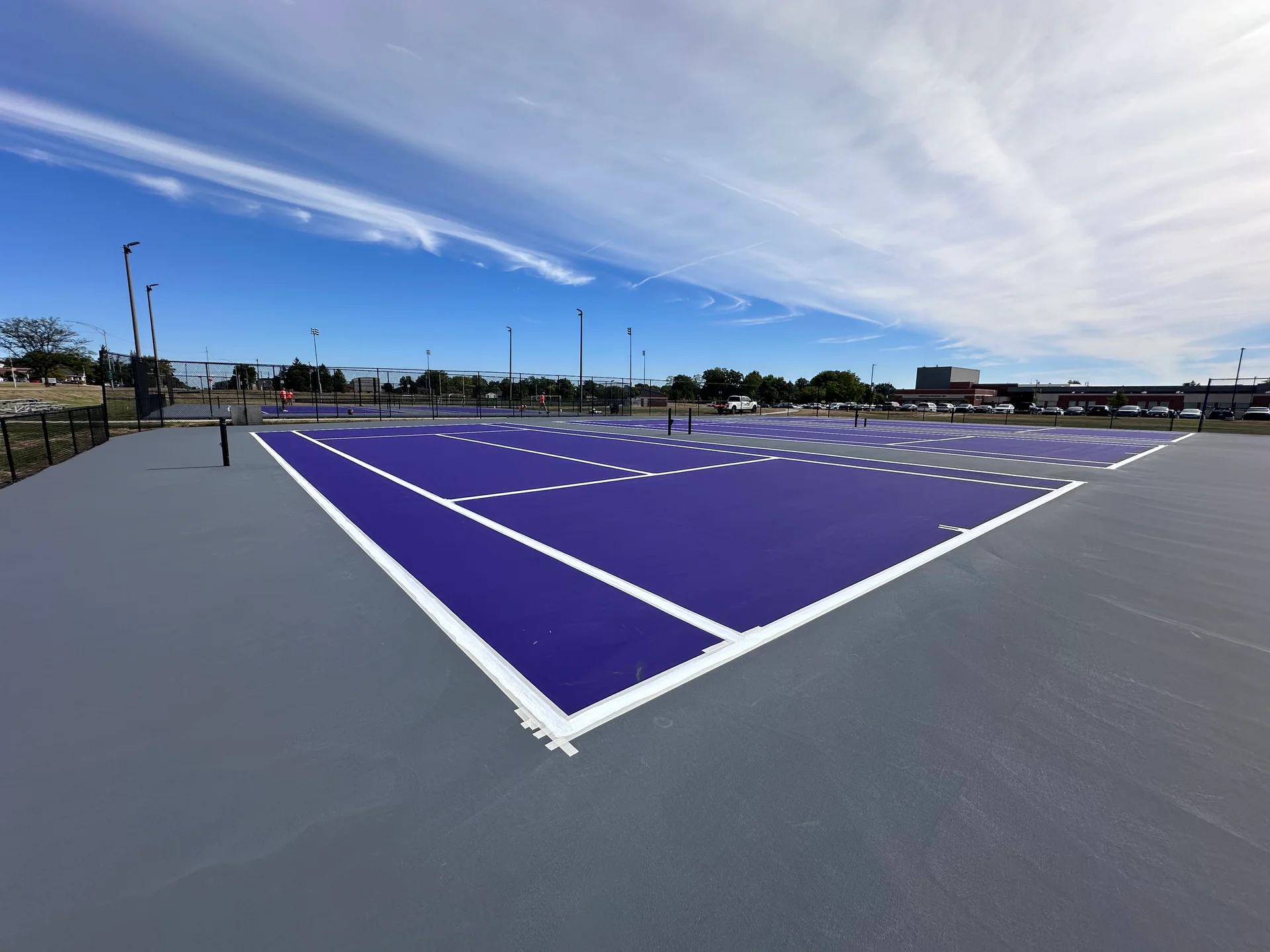
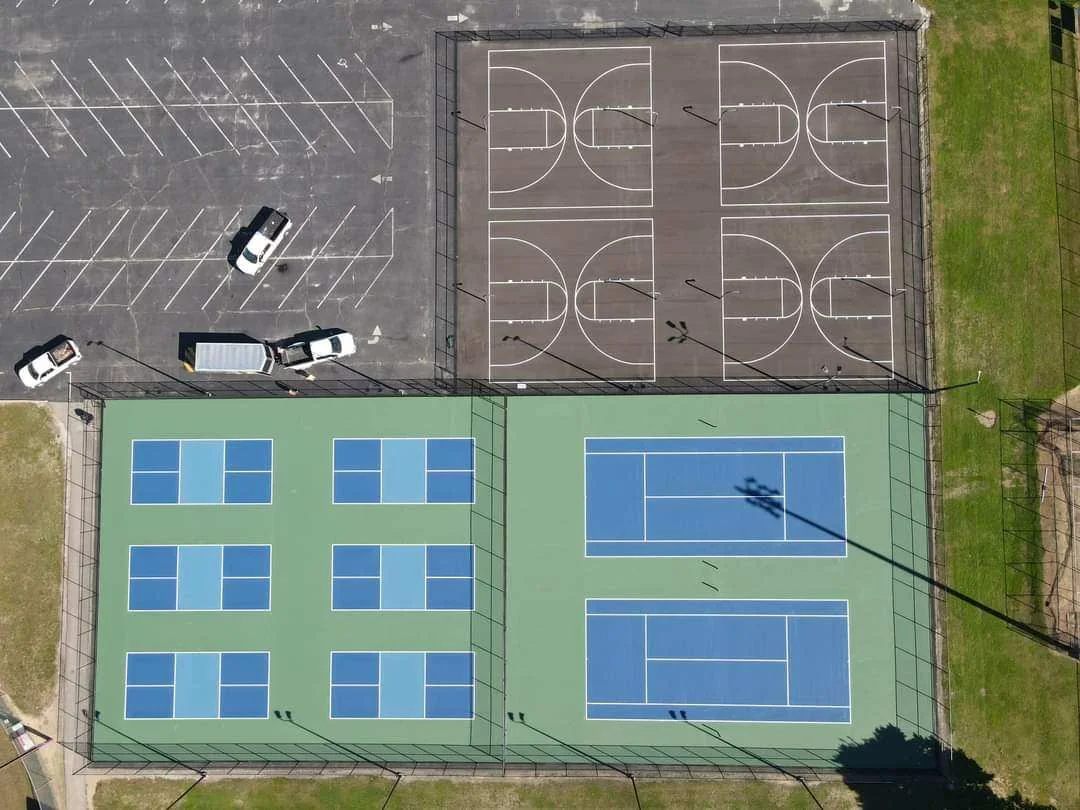
The ten tennis courts at Wilmington High School went into the 2026–2027 school year clean and sealed. For Wilmington City Schools, Prodigy Building Solutions delivered a two-part maintenance package for the whole tennis complex: every court was scraped and pressure-washed to strip away the mold, mildew and ground-in dirt that had dulled the color coat and made the surface slick, and the cracks across the courts were filled with acrylic crack filler to keep water out of the pavement below.

Courts that sit in the shade of trees and fences, or that stay damp after rain, grow a film of mold and algae on the acrylic surface. Besides looking neglected, that film makes the court slippery and holds moisture against the coating, which shortens its life. Cleaning the courts restored the green and blue color coats to something close to their original appearance and gave players dependable footing again.

Filling the cracks is the other half of protecting the investment. An open crack lets water into the stone base under the court, where it softens the base and, through freeze-thaw cycles, widens the crack every winter. Filling cracks while they are still narrow slows that process and keeps the playing surface smooth for the season.

The work was scheduled around the school calendar and was finished at the end of June 2026.

Wilmington now has a ten-court complex that looks cared for and plays safely, with a maintenance step done at the right time to stretch the life of the existing surface before the next resurfacing.
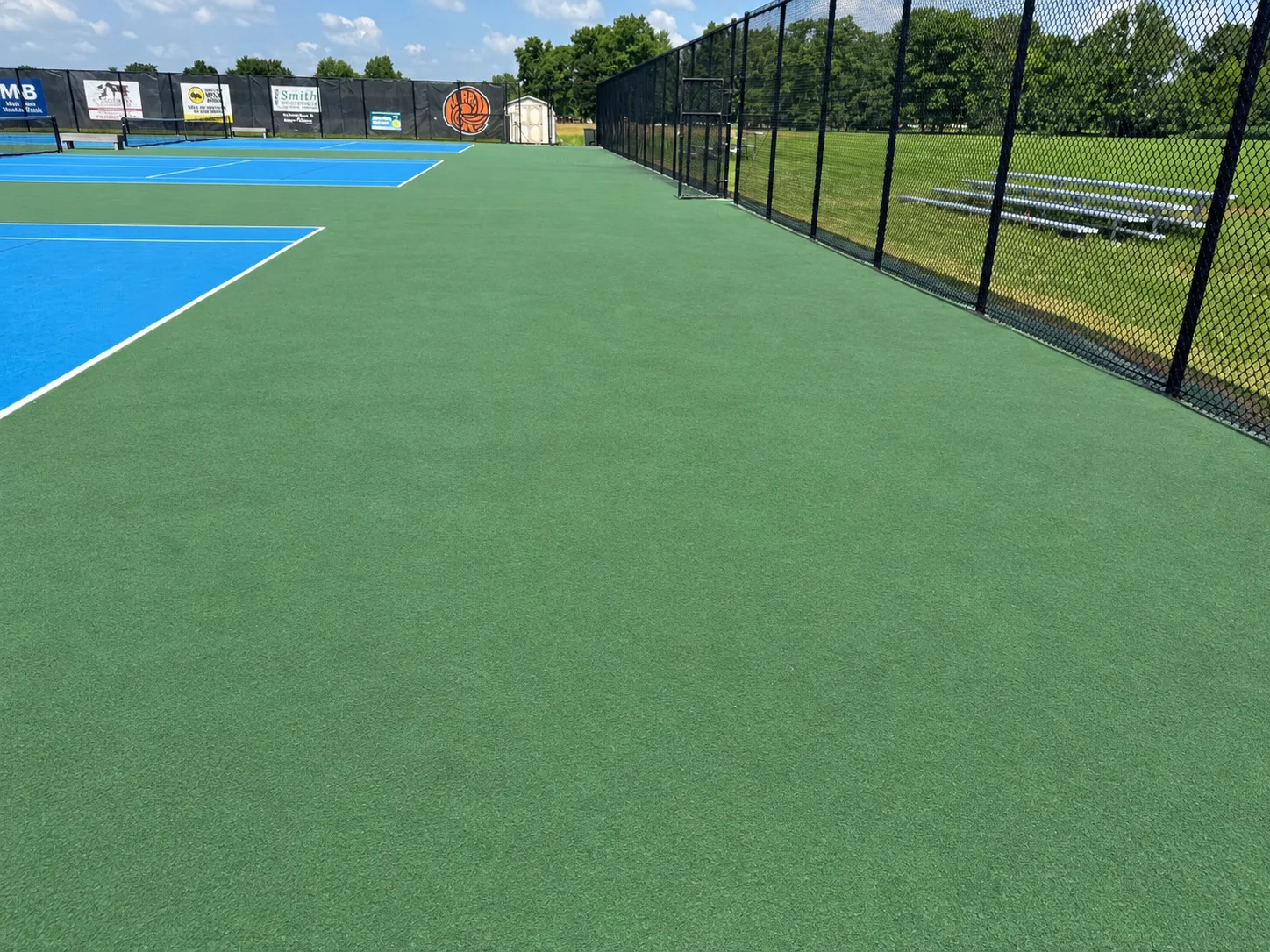
Long view down the cleaned tennis complex between the fence and the courts, with bleachers on the grass outside
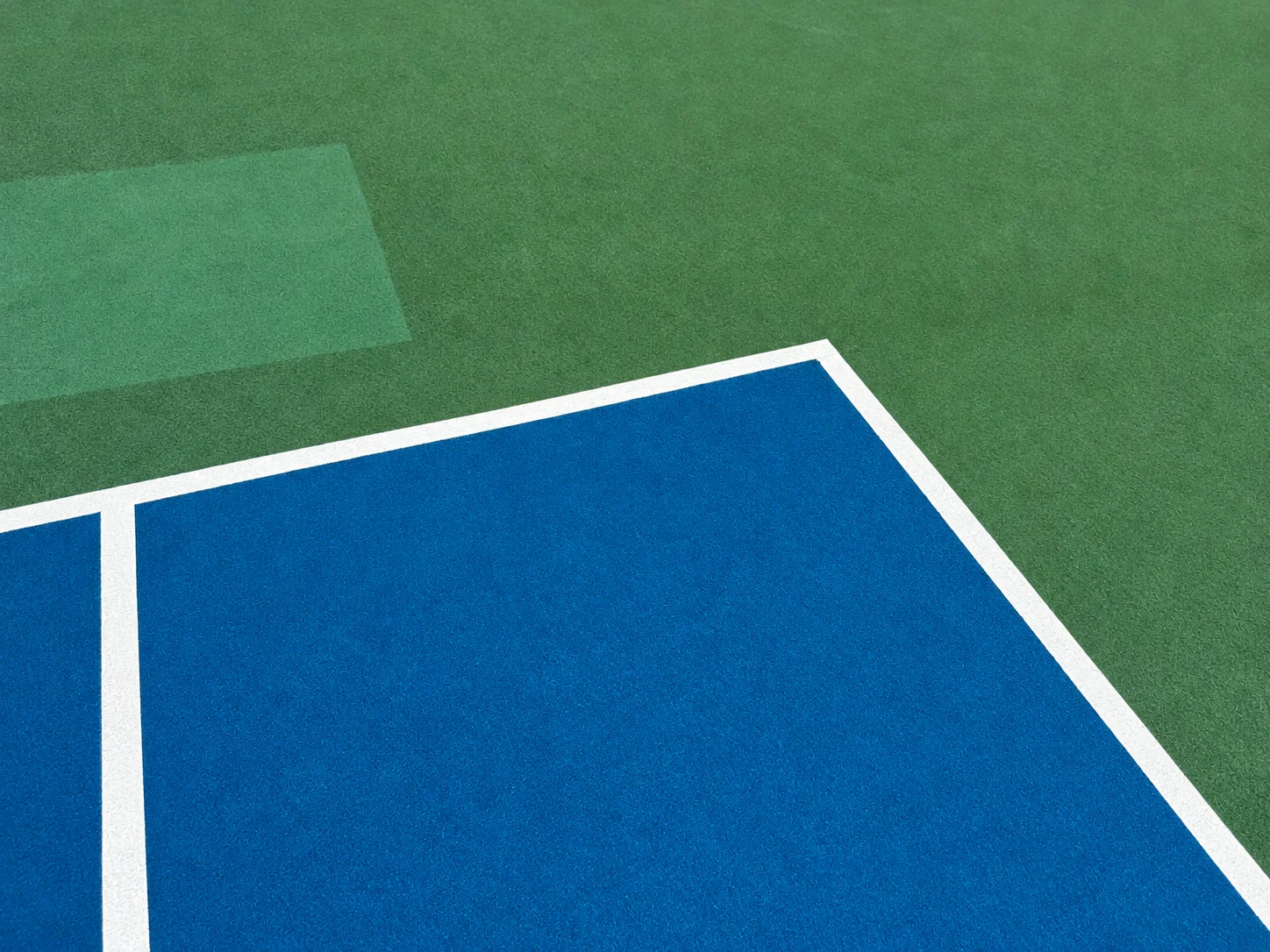
Close view of a cleaned blue court and white boundary lines against the green surround
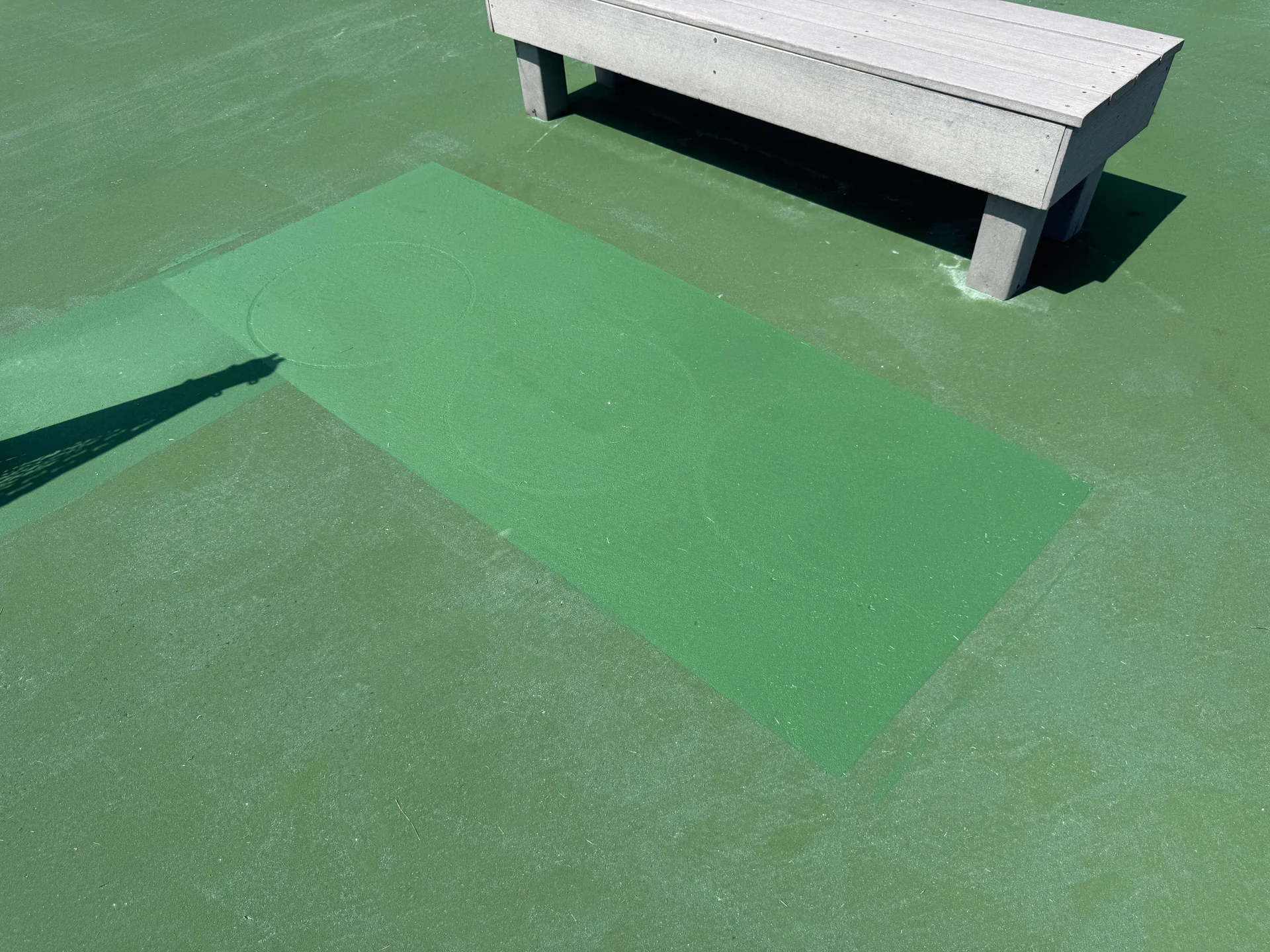
Bright rectangle of cleaned green court surface beside a bench, with faint circular marks from the rotary washer

News

Why Crack Filler Is Maintenance, Not a Cure

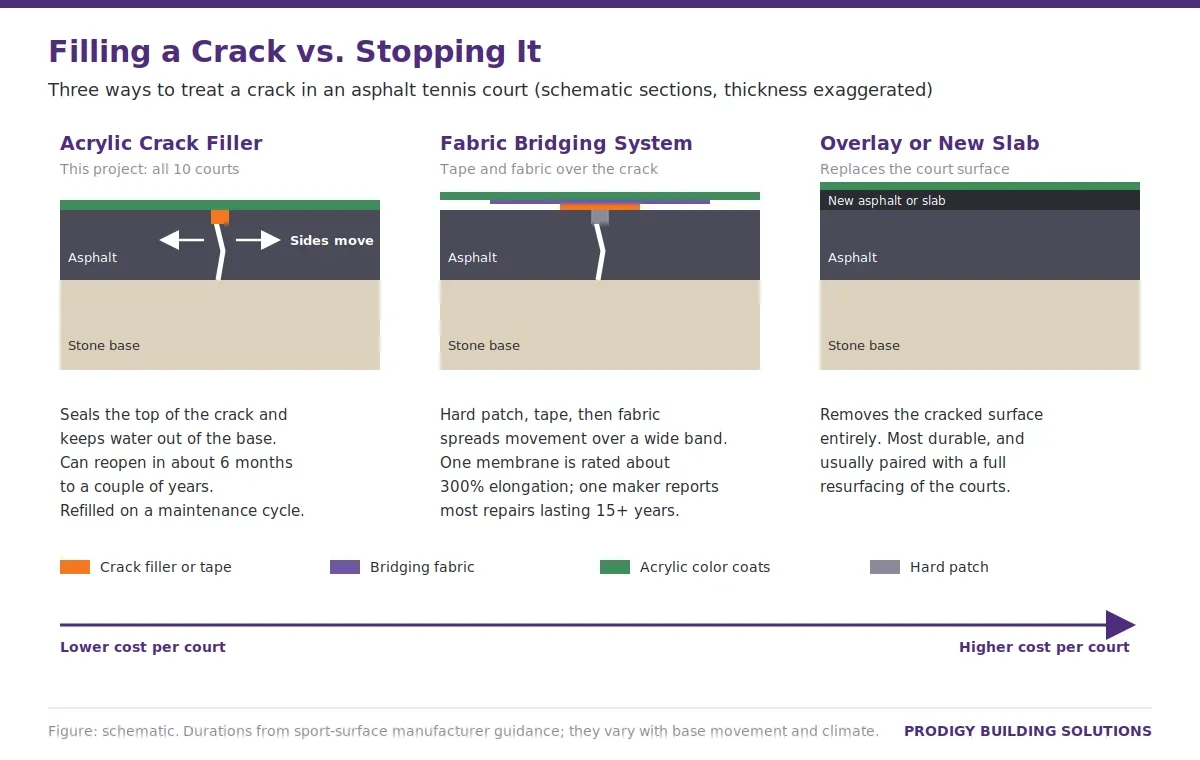
Most cracks in an asphalt tennis court are not just in the paint. They run down through the asphalt and into the stone base, and the two sides of the crack move independently every day as the pavement warms, cools, wets and dries. That movement is the reason a filled crack can open again. Sport-surface manufacturers say so plainly: depending on how much the base moves and on the climate, a filled crack can reappear in days, weeks, months or years, and one estimates the typical result at about six months to a couple of years.

What the Filler Does

Acrylic crack filler is a thick, sand-filled acrylic that is troweled into the crack and leveled with the surface, so it can be color-coated to match the court. Its job is to seal the top of the crack and keep water out of the base, which slows further deterioration. Manufacturers recommend checking courts in spring and early fall and filling cracks whenever they are seen open, in weather that stays above about 50 degrees Fahrenheit so the acrylic cures properly. That makes it a maintenance item, done on a cycle, rather than a one-time repair.

Three cross-sections of an asphalt tennis court, each showing a crack running down through the asphalt into the stone base. Left, acrylic crack filler: the top of the crack is filled and color-coated, which keeps water out of the base, but the two sides still move and the crack can reopen in about six months to a couple of years. Middle, a fabric bridging system: tape and fabric spread the movement over a wider band under the color coats. Right, an asphalt overlay or new slab that replaces the surface. A scale from lowest to highest cost per court runs beneath them.
Figure 1 — Filling a crack seals it; bridging or replacing the surface is what stops it from coming back.

The Alternatives, and When They Make Sense

There are more permanent ways to deal with a cracked court. Bridging systems fill the crack with a harder patch, cover it with a self-adhesive tape and a knitted or woven fabric, and coat over the top. The fabric spreads the movement over a wider band so it does not reflect through the surface; one widely used system rates its membrane at about 300 percent elongation, and another manufacturer reports most of its repairs lasting more than 15 years. Cushioned mat systems float over the entire court, and an asphalt overlay or a new post-tensioned concrete slab replaces the surface outright. Each of these costs far more per court than filling cracks, and each is usually paired with a full resurfacing.

For a ten-court complex whose surface still has life left, the right move was to clean the courts, fill the cracks and keep the base dry, then plan the bigger investment for the year the color coats are due. Cleaning matters to that plan too: manufacturers of acrylic surfaces recommend a rotary-head washer kept under about 1,500 psi, because a narrow, high-pressure stream can etch the coating it is meant to clean.

Our Work

Similar Projects