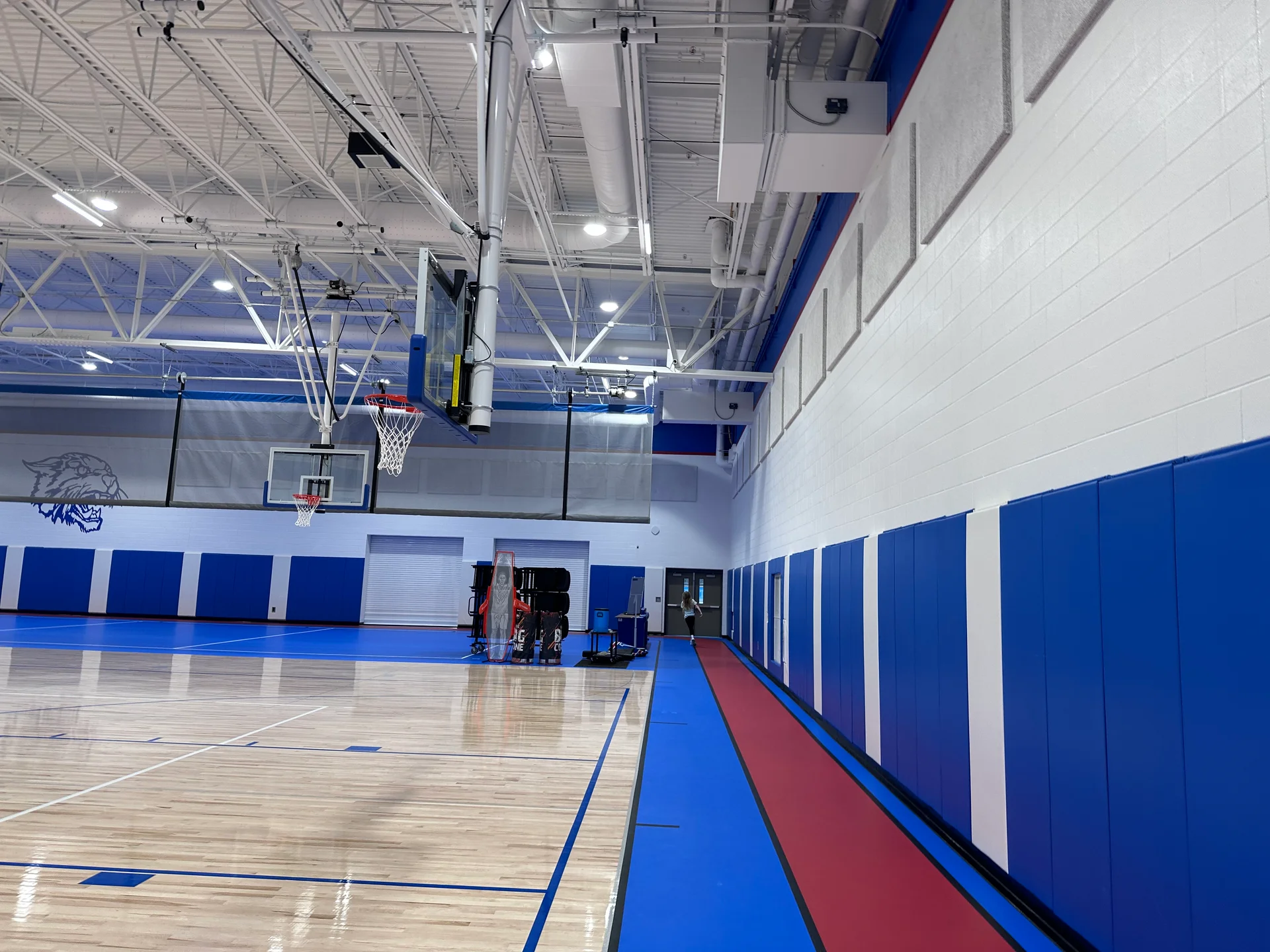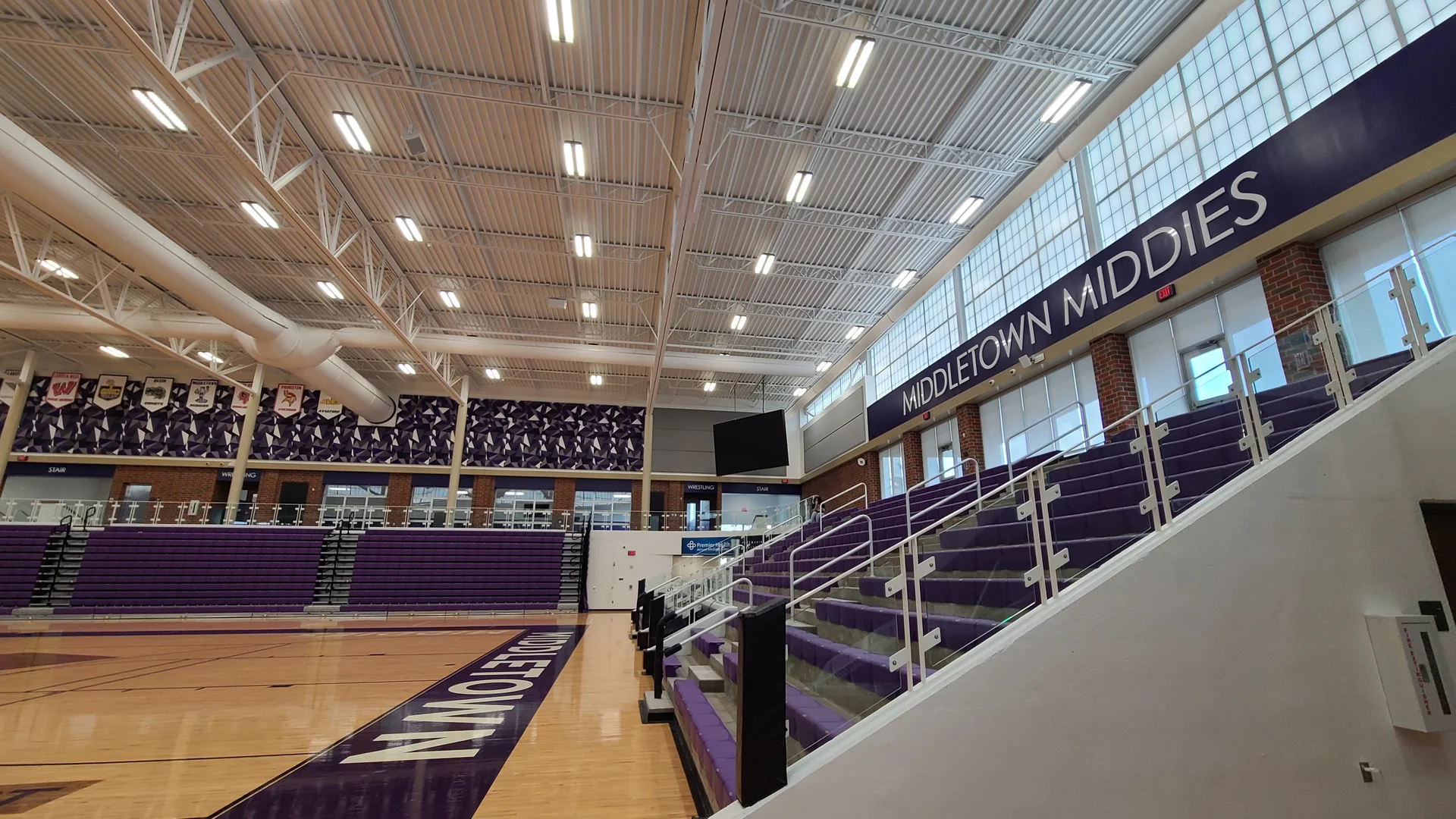
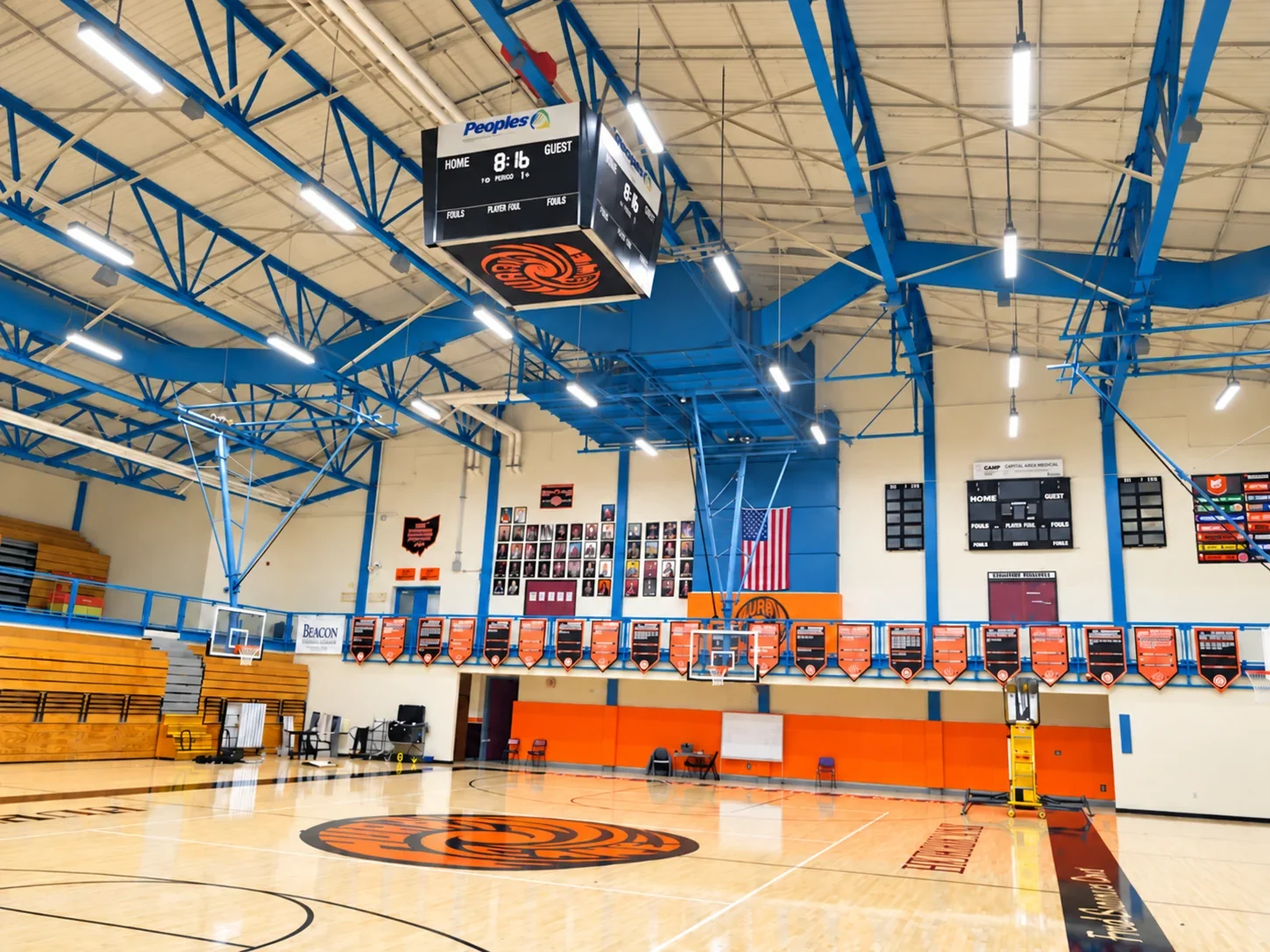

Wilmington High School main gym under new LED high bay lighting, blue roof trusses and the Hurricane logo at center court
LightingSouthwest OhioCincinnatiTIPS

Wilmington High School and Middle School LED Lighting Upgrade 2019

Wilmington High School and Wilmington Middle School, which share a campus in Wilmington, Ohio, were converted to LED inside and out in one project: 981 LED flat panels in classrooms and corridors, more than 1,300 fixtures retrofitted with direct-wire LED tubes, 133 new LED high bays with wire guards in the gyms, new LED stairwell fixtures, and new LED parking lot, canopy, wall and sign lighting across the grounds. Prodigy counted and classified all 2,751 fixtures, built a 3-D model of the facility to set the light levels, installed the work around the school day, handled lamp disposal and assisted with the DP&L utility rebate filing. Wilmington City Schools bought it pre-bid through a TIPS cooperative contract.

The district's brief had two halves that usually pull against each other. The buildings needed more light: classroom levels were short of the Ohio Facilities Construction Commission minimums, emergency ballasts had become a recurring problem, and staff had raised safety concerns about how dark the middle school parking lot was. And the project had to pay for itself out of energy and maintenance savings.

Prodigy's engineers started with a lighting study in May 2018 that recorded every fixture by type, wattage and hours of use, then modeled the whole facility in 3-D to see what each change would do to the light on the desk, the gym floor and the pavement. That is what let the design spend money where it bought the most. Two-lamp troffers became LED flat panels, which raise the light level and give an older ceiling a current look. Strip, wrap and four-lamp fixtures kept their housings and were rewired for direct-wire LED tubes. The six- and eight-lamp fluorescent fixtures in the gyms came down and LED high bays with wire guards went up in their place. Outside, the high pressure sodium and metal halide heads on the poles, canopies and walls were replaced with LED area lights, canopy lights, floods and wall packs, the building sign lights were retrofitted, and the WILMINGTON HIGH SCHOOL letters on the building were repainted as part of the job. When the district asked partway through to include the compact fluorescent fixtures in the stairwells, they were added by amendment and replaced with LED as well.

What the district has now is one lamp technology across two buildings and their grounds, brighter classrooms, gyms and parking lots, no fluorescent lamps or ballasts left to stock, and a utility rebate filed with help from the people who knew exactly what was installed. For a district that needs more light and has to justify the project on payback, Wilmington shows the two goals can be engineered together when the design starts from a full count rather than a catalog.
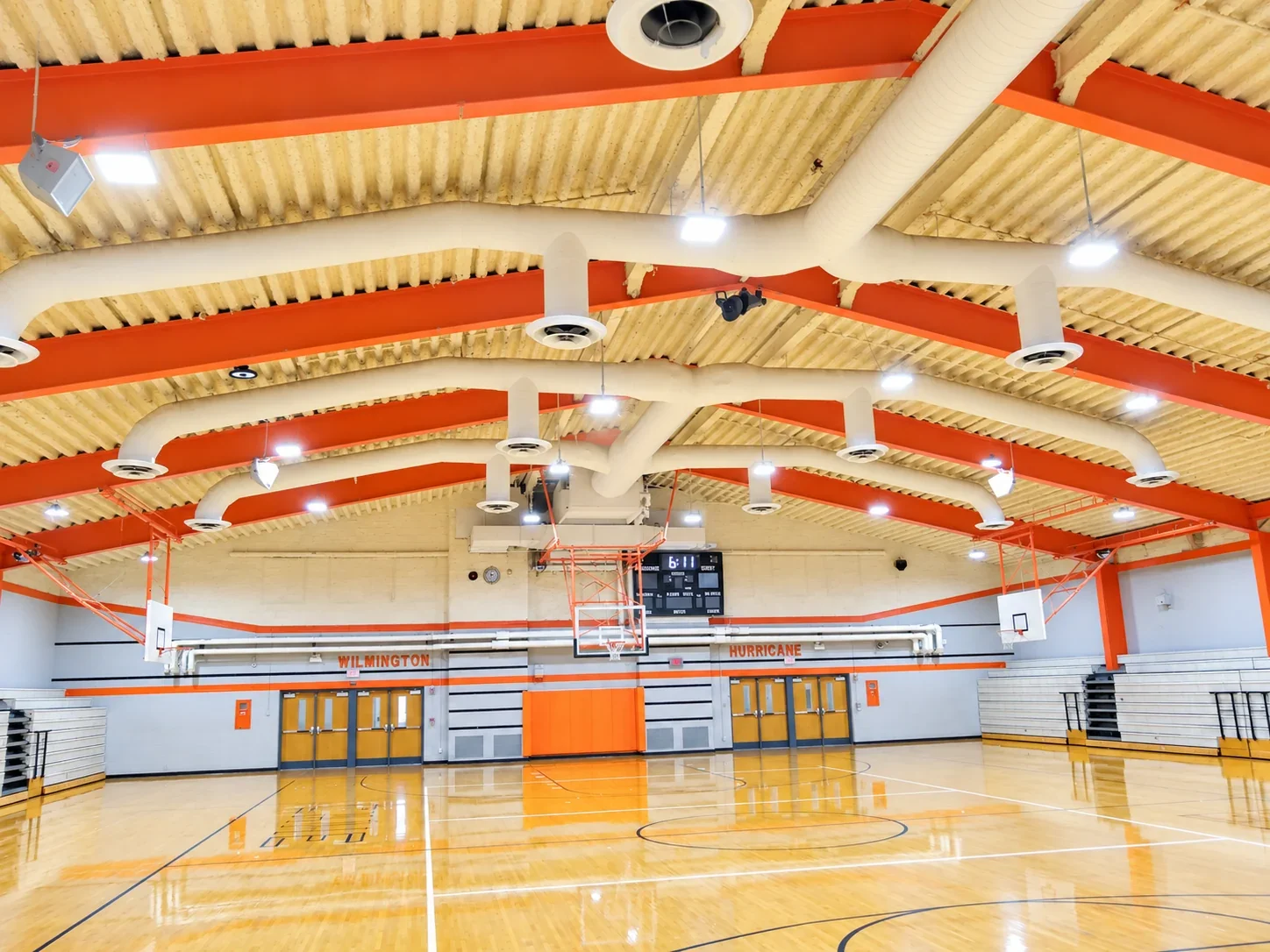
Auxiliary gym on the Wilmington high school and middle school campus lit by new LED high bays between orange roof beams, with Wilmington Hurricane lettering on the far wall
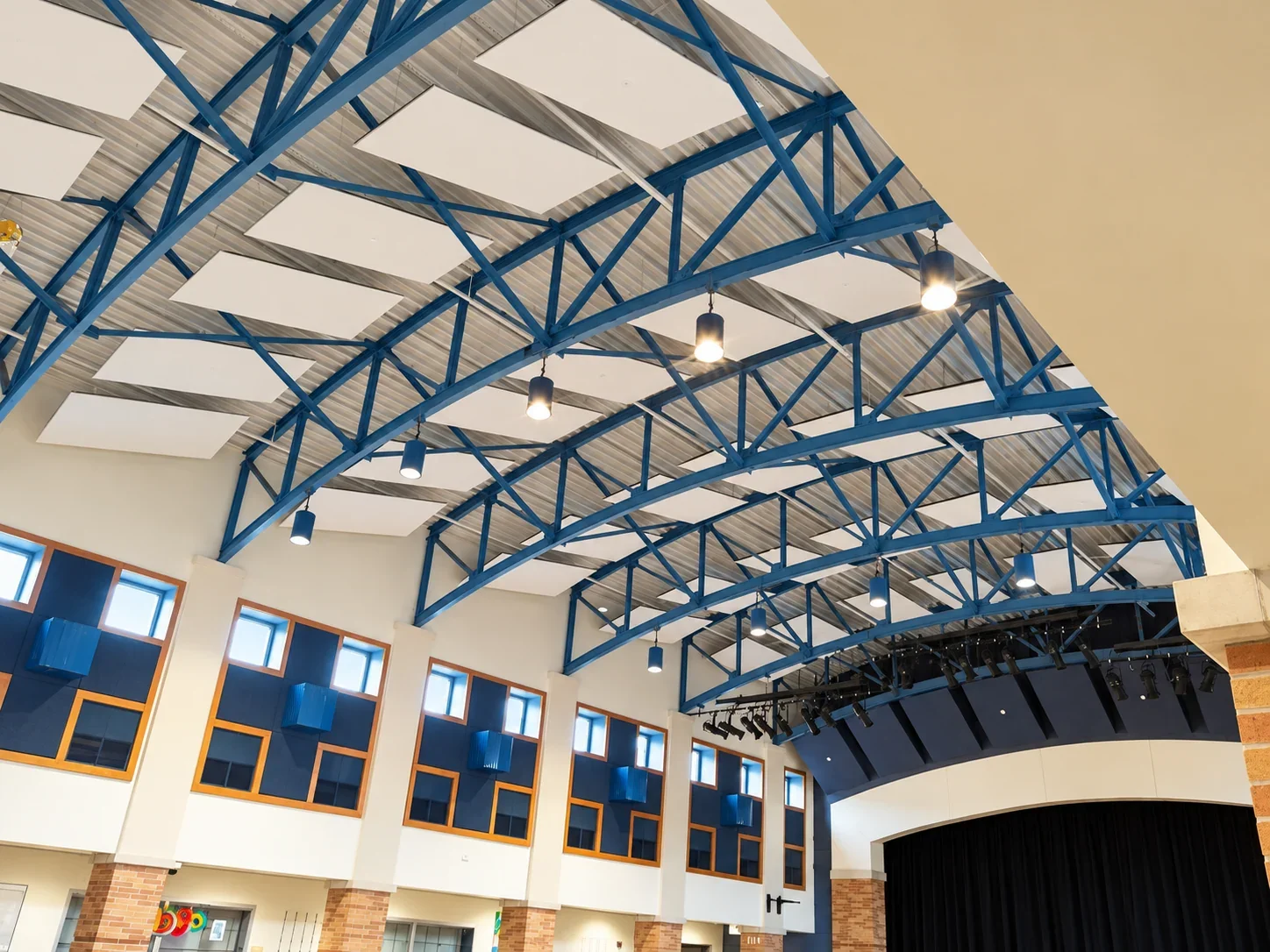
LED pendant lights hanging from curved blue trusses above the stage opening in a Wilmington City Schools cafetorium
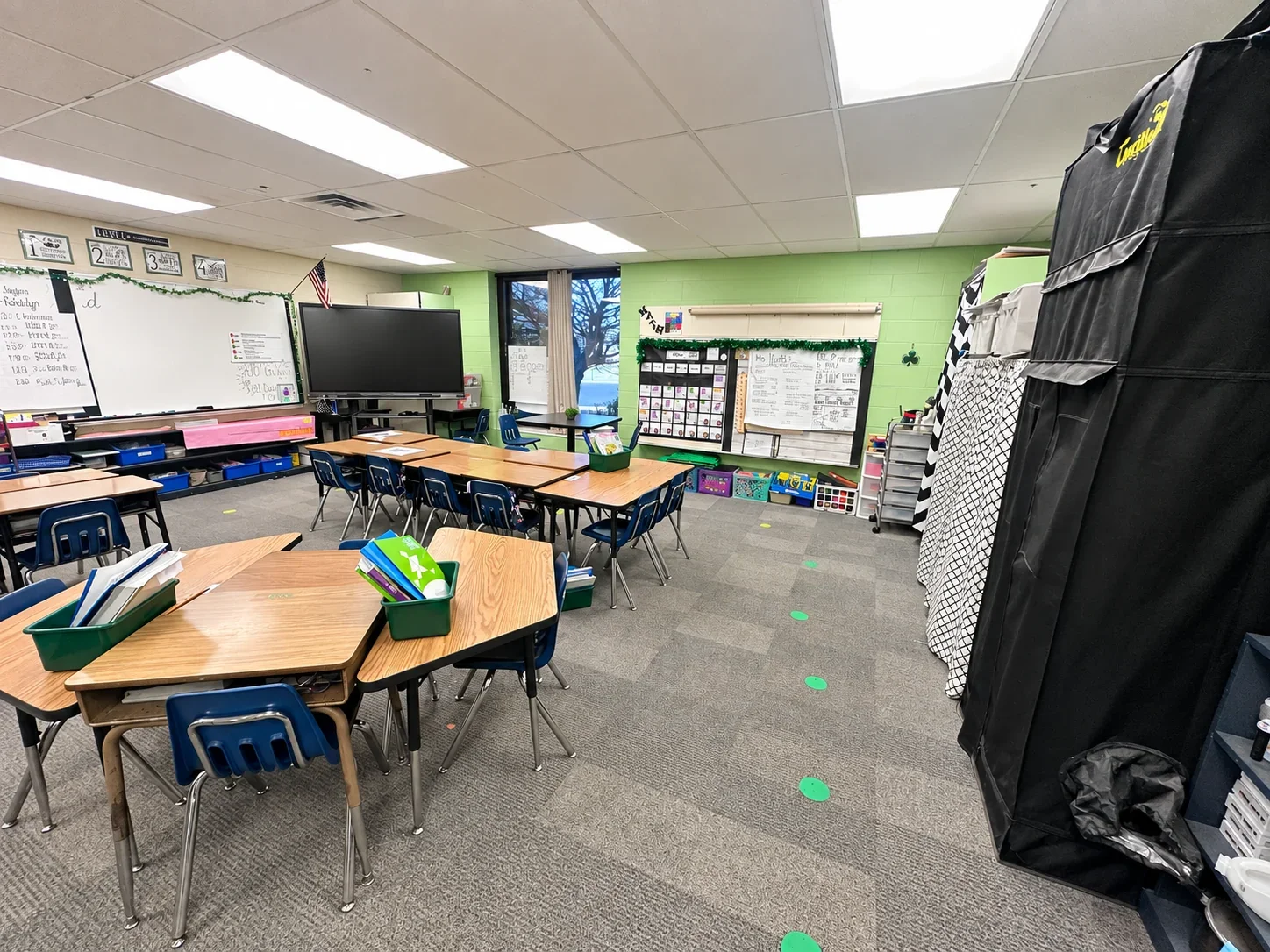
Wilmington City Schools classroom evenly lit by LED flat panels in the acoustic tile ceiling
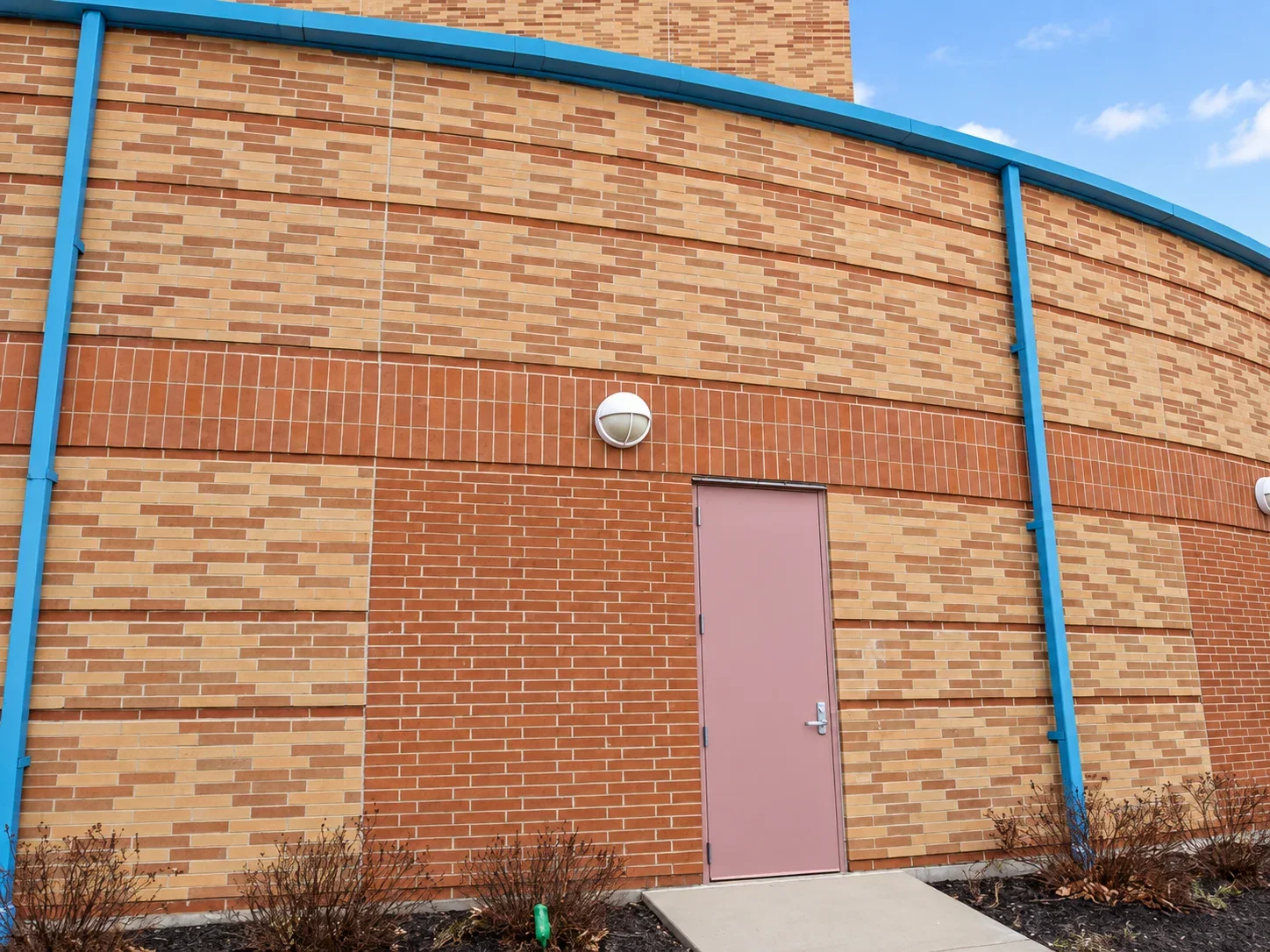
LED wall light above a side door on the curved brick exterior of a Wilmington City Schools building

Technical Discussion

Four percent of the fixtures, a fifth of the energy

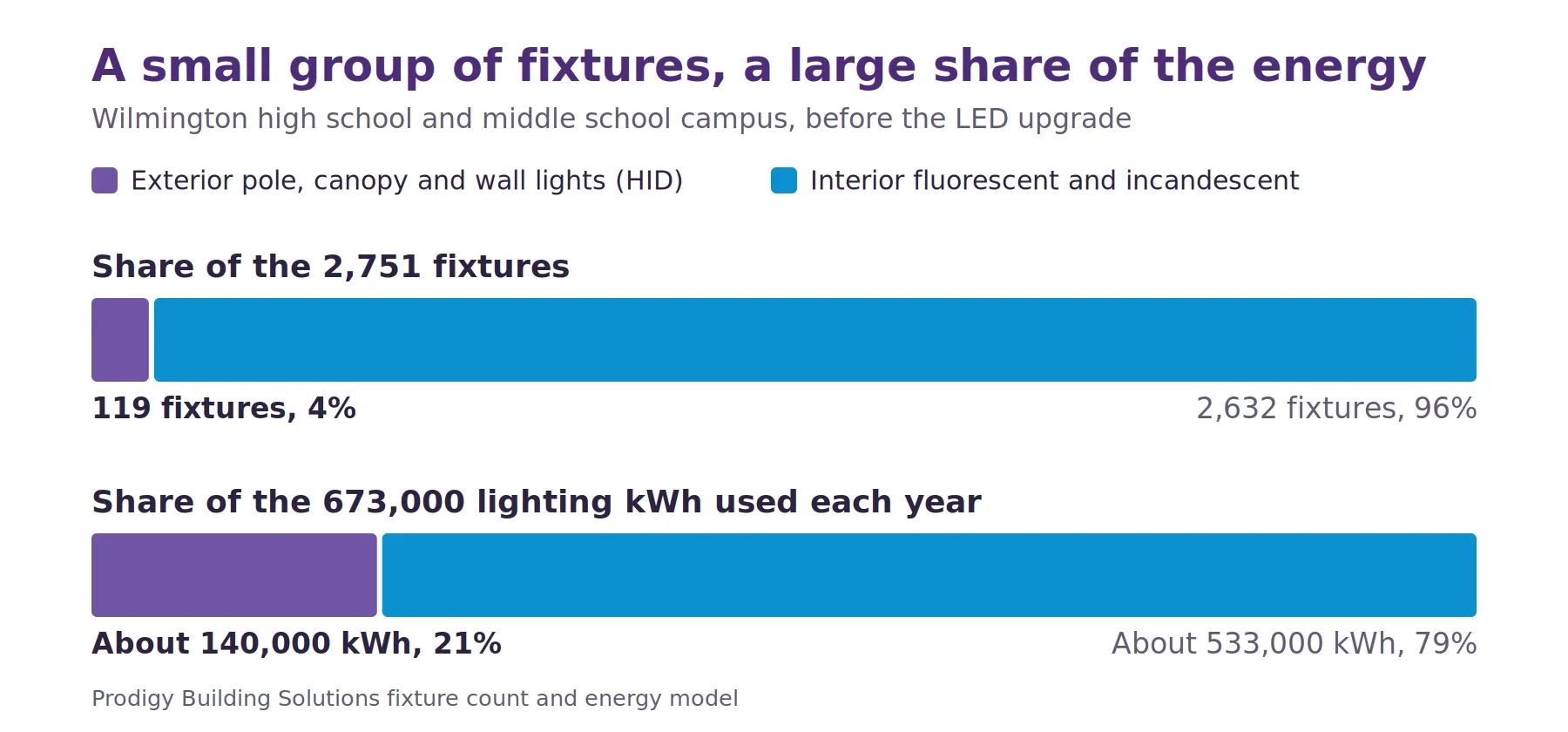
The count is what set the priorities. Of the 2,751 fixtures on the Wilmington campus, 2,610 were T8 fluorescent, 22 were incandescent and 119 were high intensity discharge: the high pressure sodium and metal halide heads on the poles, canopies and walls. Those 119 were about 4 percent of the fixtures and used roughly 140,000 of the campus's 673,000 lighting kilowatt-hours a year, 21 percent of the total.

Two stacked bars for the Wilmington high school and middle school campus before the LED upgrade. Exterior pole, canopy and wall lights were 119 of 2,751 fixtures, 4 percent, but used about 140,000 of 673,000 lighting kilowatt-hours a year, 21 percent.
Figure 1 — The exterior lights were 4 percent of the fixture count and 21 percent of the lighting energy, which is why they were addressed first.

Two numbers explain it. A 400-watt high pressure sodium head draws about 465 watts once the ballast is included, and an exterior light burns dusk to dawn, about 4,380 hours a year. A two-lamp classroom troffer draws 44 to 49 watts and runs about 3,036 hours. One pole light was using as much energy as about fourteen classroom fixtures, so the exterior carried a share of the savings far out of proportion to its fixture count, and it was also where staff had asked for more light. LED area lights at 75, 150 and 300 watts were matched to each pole position in the model rather than swapped one for one.

Indoors the decision was made fixture type by fixture type, and the choice was always among three things. A direct-wire LED tube reuses the housing and takes the ballast, the part that fails, out of the circuit; it is the right answer where the light level is already adequate and the fixture is sound. An LED flat panel replaces the troffer's lens and lamps with an evenly lit surface; it costs more and earns it where the room needs more light, which is why the two-lamp troffers got panels. Full replacement is for fixtures that are wrong for the space. The gyms' six-lamp and eight-lamp fluorescent high bays drew about 222 and 290 watts each; they were replaced with 105-watt and 165-watt LED high bays, and the foot-candle levels on the gym floors were modeled before the fixtures were ordered.

The lesson for another district is to count by type and by hours before looking at product. A campus-wide average hides the small group of fixtures doing most of the spending, and a single retrofit method applied everywhere either overspends on rooms that were fine or leaves dark rooms dark.