
•••
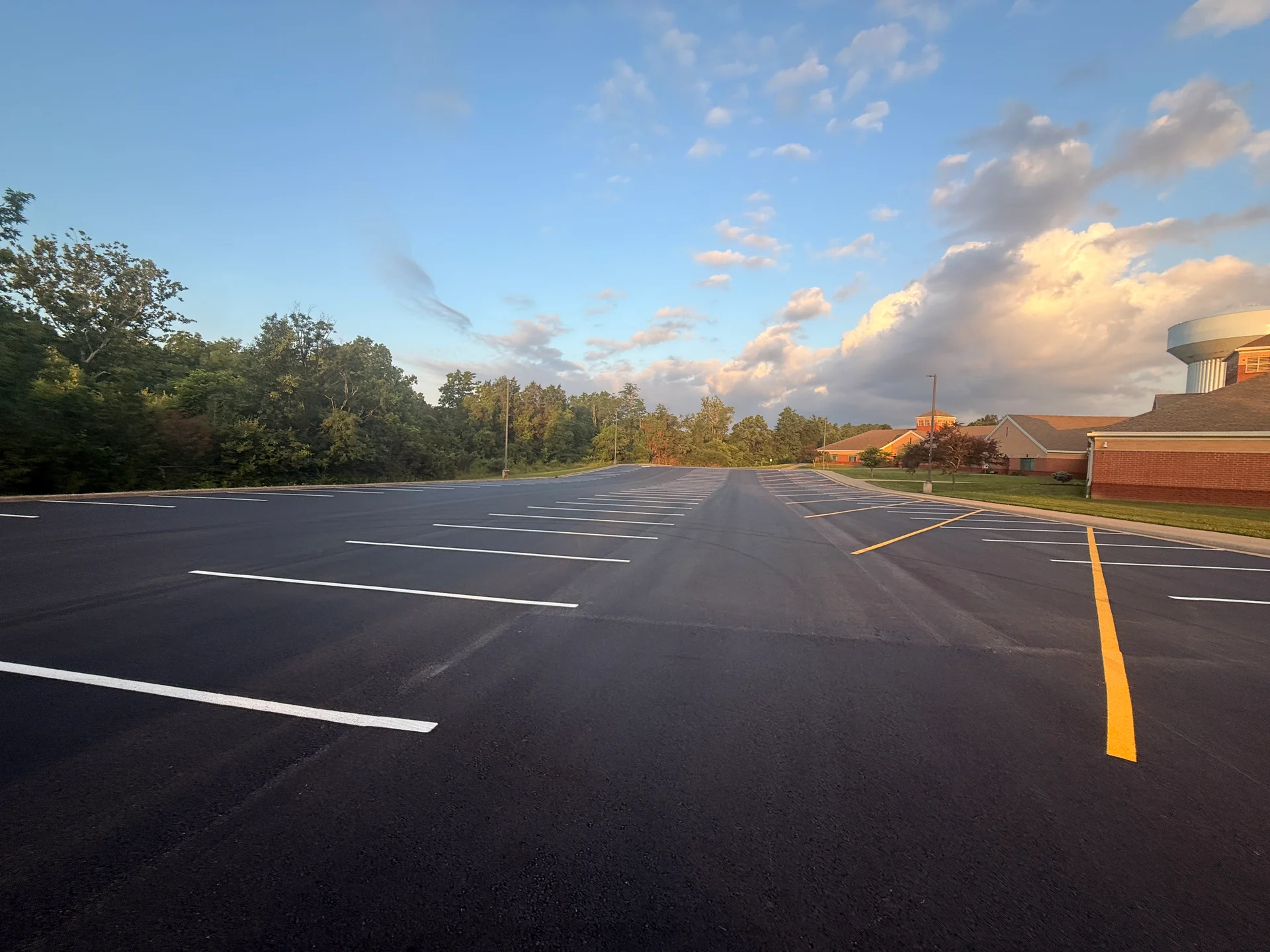
Freshly paved and striped school parking lot with yellow lane markings, a school building and water tower in the distance
PavingSouthwest OhioCincinnatiTOP-C purple wordmark logo for The Ohio Purchasing Council cooperative purchasing program

Milford EVSD Pavement & Parking Lot Renovation 2026

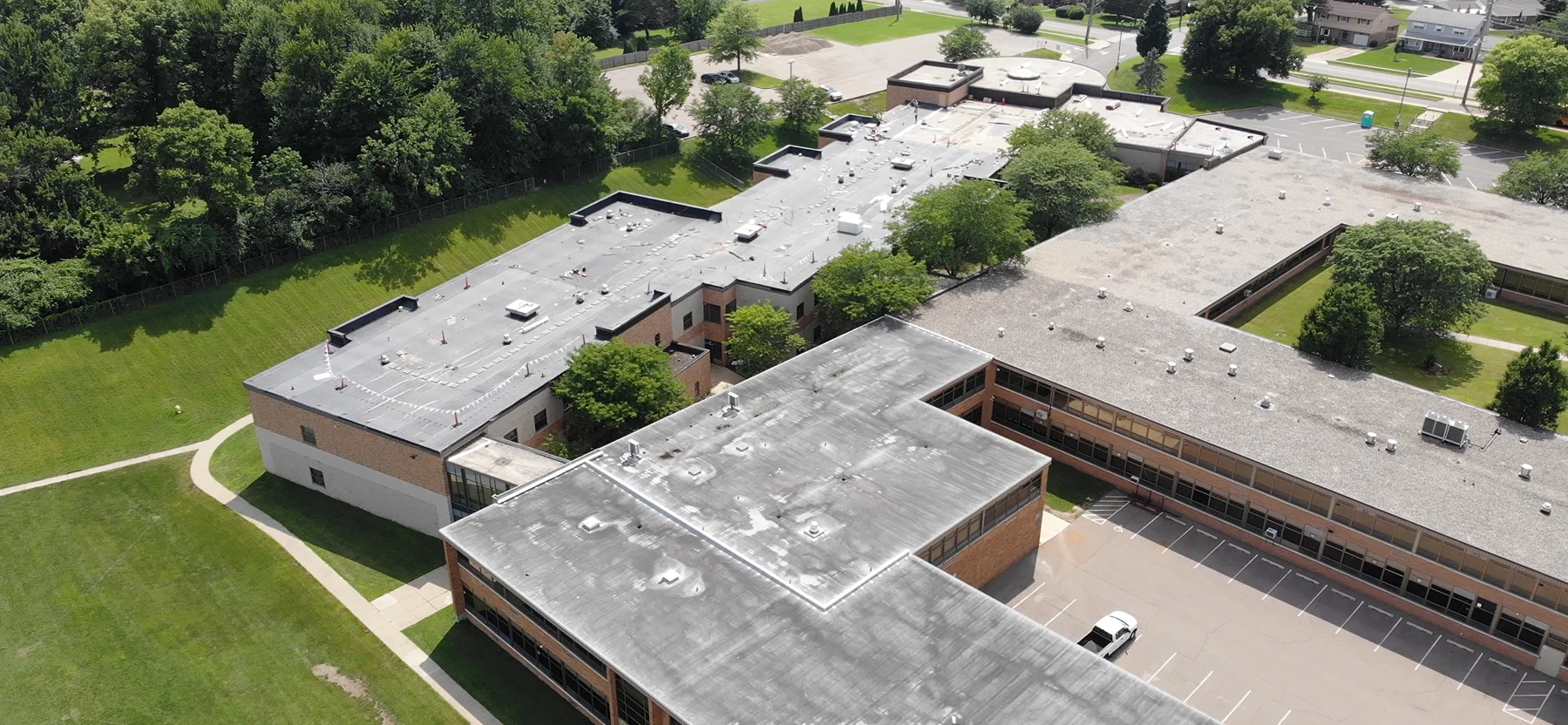
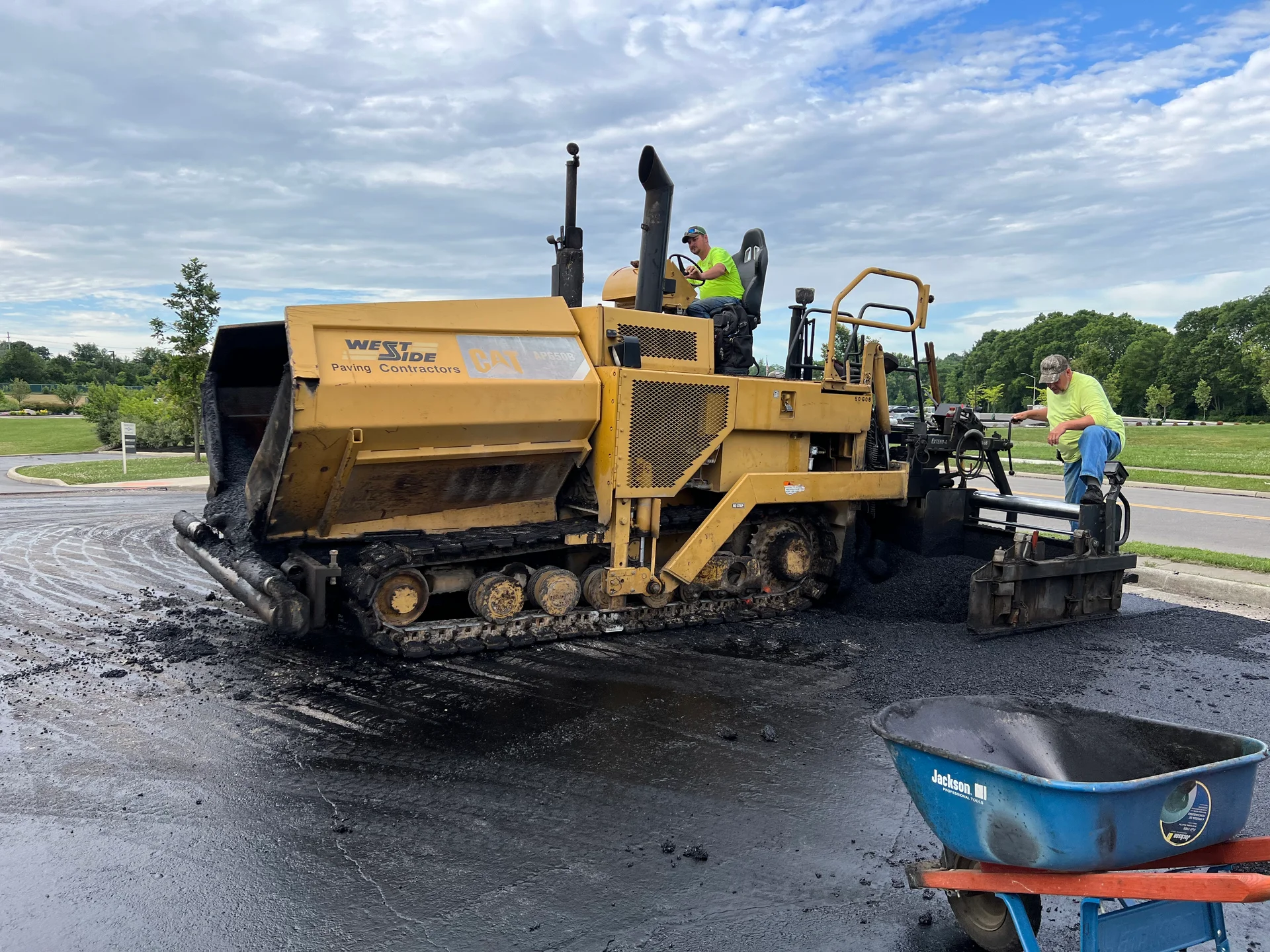
Two elementary schools and the district's Transportation Office in Milford came back from summer break with smooth, freshly striped asphalt and water that now goes where it should. For the Milford Exempted Village School District, Prodigy Building Solutions planned and delivered one paving and drainage package across three sites: Mulberry Elementary, McCormick Elementary and the Transportation Office. The work covered asphalt milling and resurfacing, full-depth base repairs, new trench drains with outlet piping, a perforated underdrain, rebuilt concrete catch basin collars, hot-applied crack sealing, and new striping, crosswalks and car stops. It was procured through the district's TOP-C cooperative contract.

Each lot got the treatment its pavement called for rather than one blanket overlay. Where the asphalt base was still sound, the worn top was milled off and replaced with a new surface course. Where the base had failed, crews cut deeper and rebuilt it before paving. Where the pavement was still in good shape, the cracks were cleaned and sealed to keep water out and buy years before the next resurfacing. That approach puts the district's money into the areas that needed it most.

Drainage was part of the plan from the start. At Mulberry, a road-grade trench drain set in fiber-reinforced concrete now catches water across the pavement and carries it to daylight. At McCormick, a second trench drain ties into an existing catch basin, and a perforated underdrain bedded in washed stone pulls groundwater out from under a section of pavement before it can soften the base. Catch basin collars at both schools were cut out and rebuilt in fiber-reinforced concrete, which gives the asphalt around each basin a solid edge to meet.

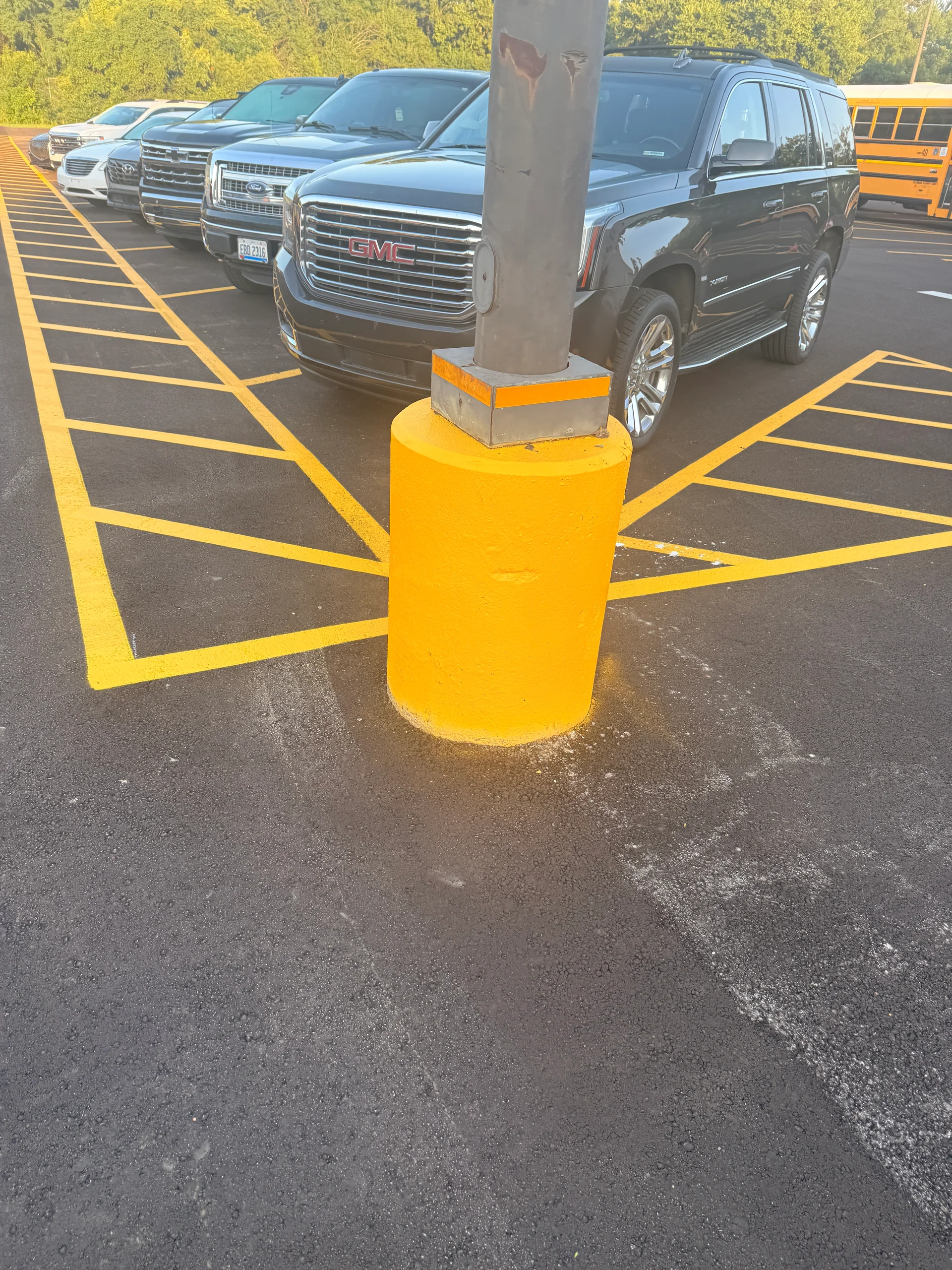
The stripes were laid back out to match each lot's existing traffic pattern, with crosswalks, accessible spaces and the hatched islands around light poles repainted, and the car stops at the Transportation Office were pulled, stockpiled and reset on the new surface.

The schedule was set by the school calendar. The paving and drainage work was finished in the summer break so buses, parents and staff returned to finished lots.

Milford now has three sites with new pavement where it was needed, drainage that carries water away from it, and sealed cracks protecting the pavement that still had years left.
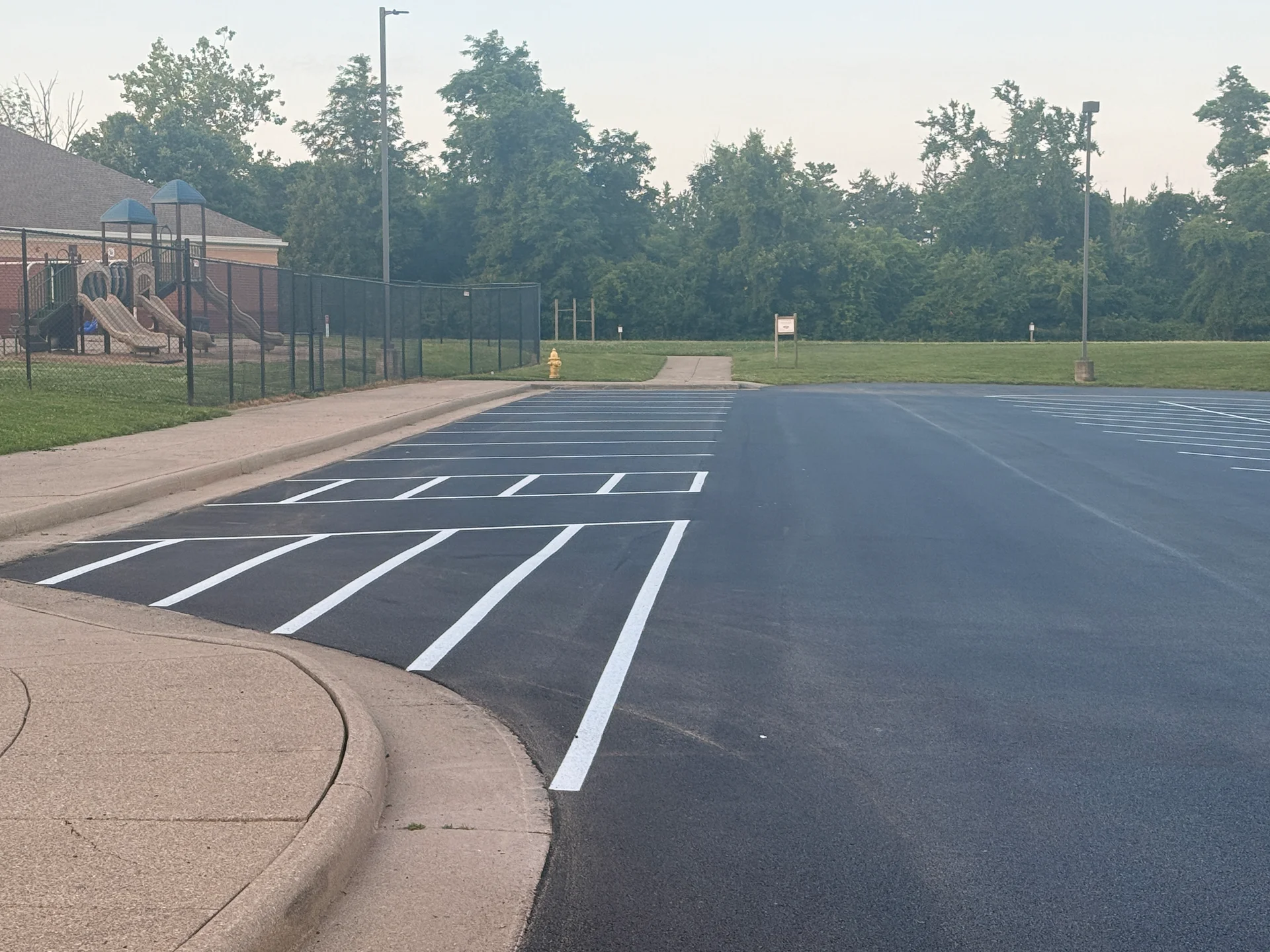
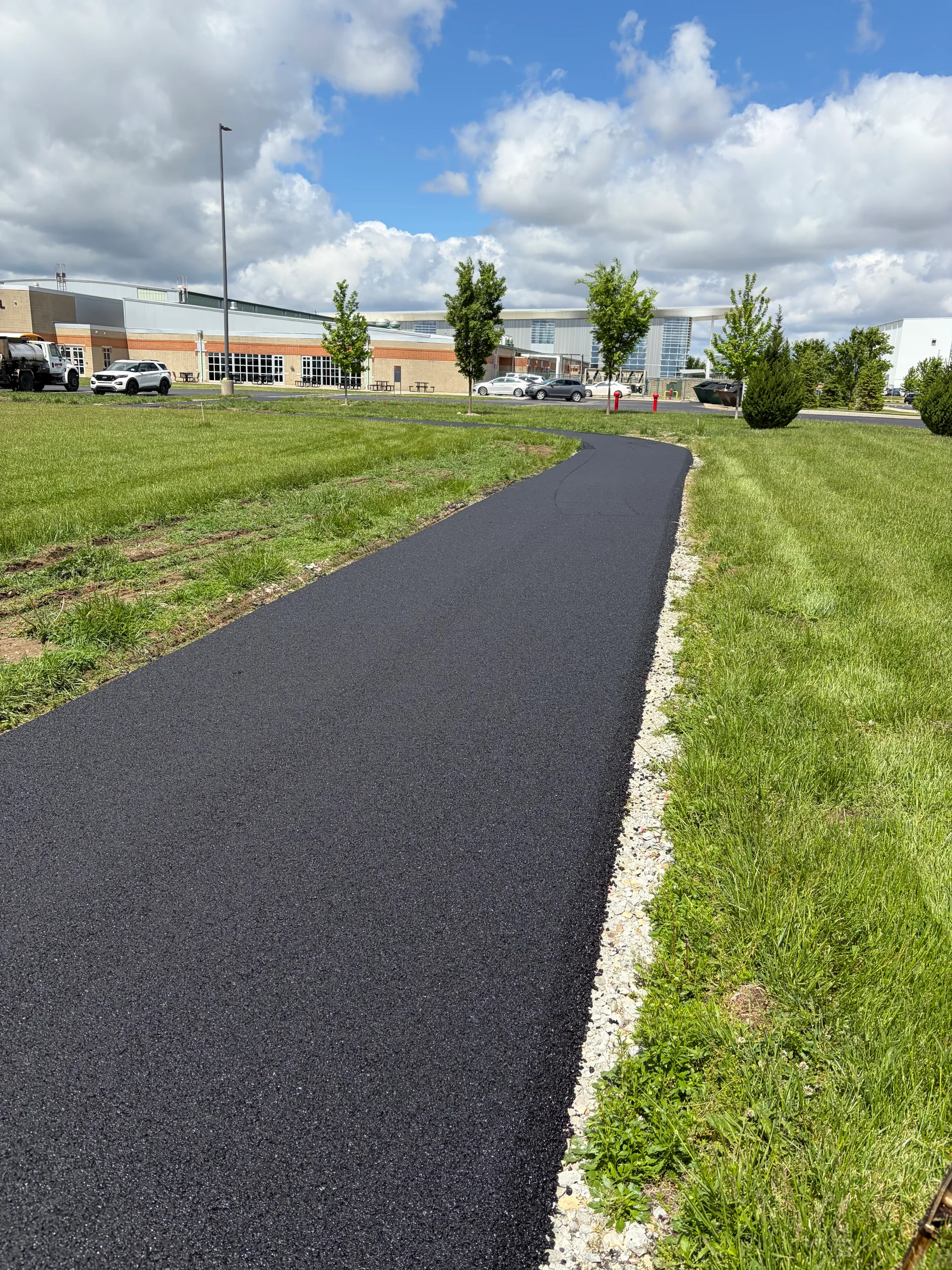
New asphalt and white stall lines beside a curved concrete walk, with the school playground behind the fence
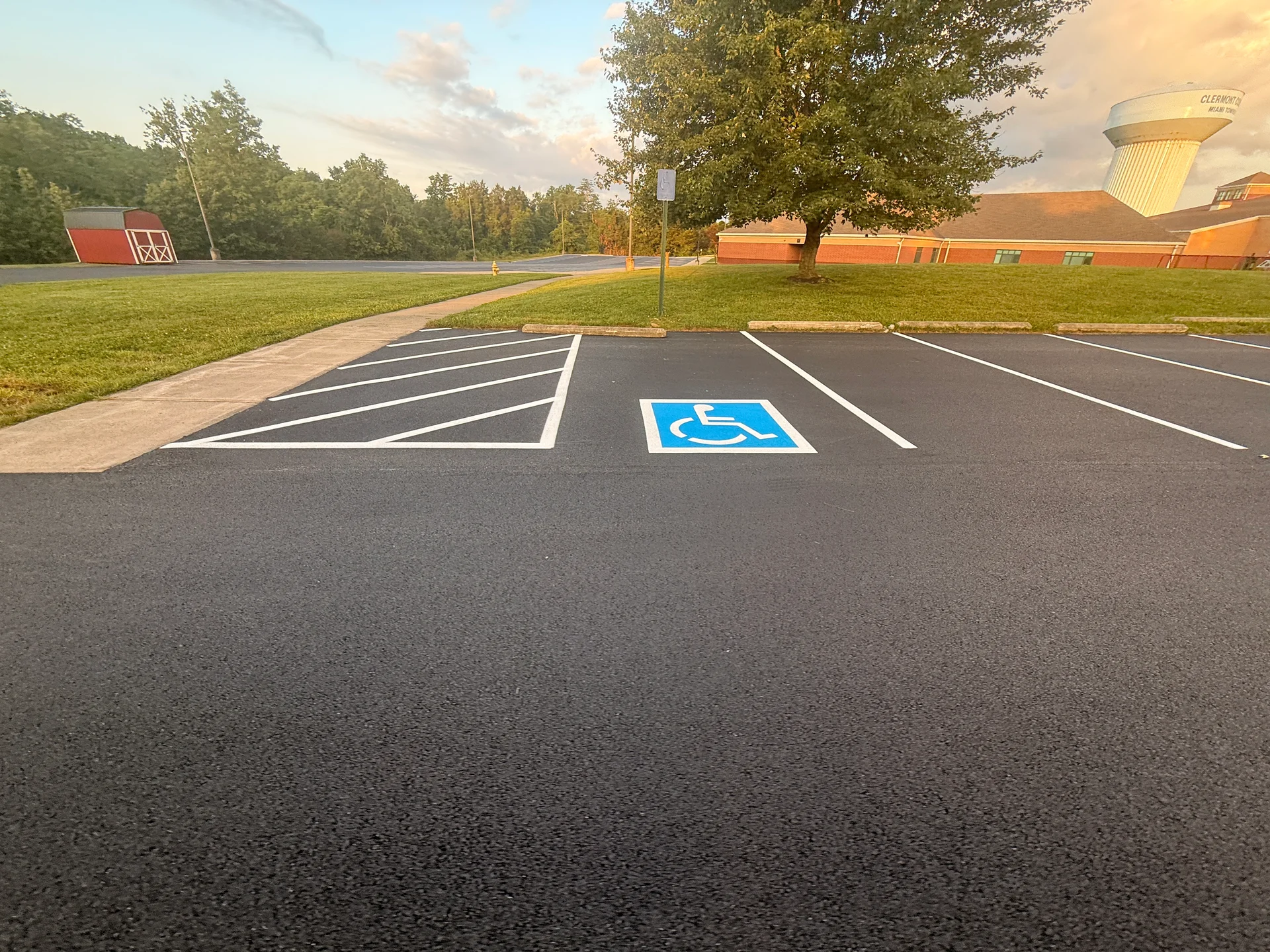
Newly paved parking row with an accessible space marked in blue and white beside the school lawn
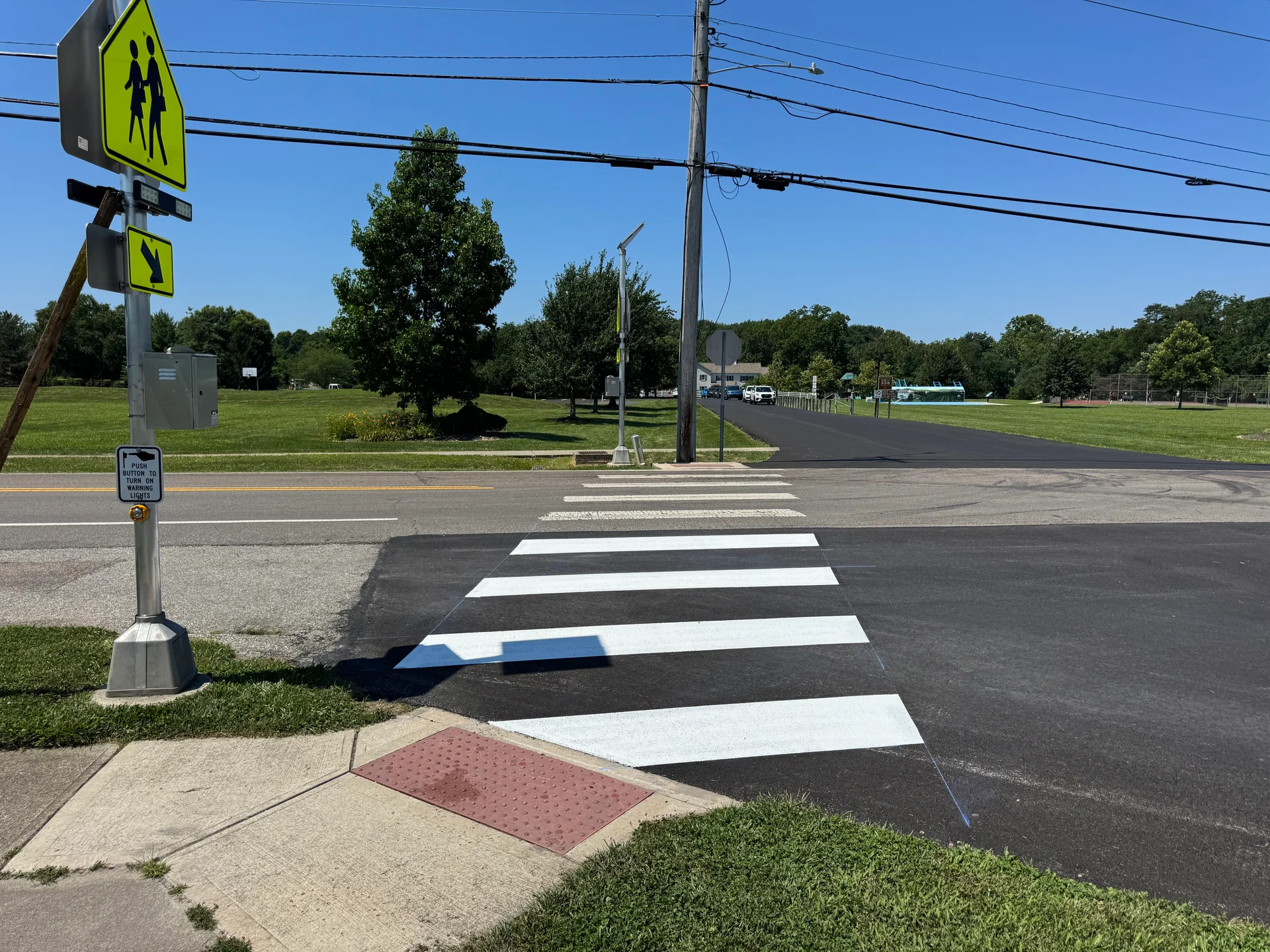
New white crosswalk across a freshly paved school driveway, with a school crossing sign and a tactile warning pad at the curb
Yellow guard around a light pole in a newly painted yellow hatched island, with vehicles and a school bus parked behind

News

Matching the Mill Depth to What Failed

Asphalt pavement is built in layers. The top inch and a half or so is the surface course, a fine mix such as ODOT Item 448 that is made to resist wear and shed water. Below it sits the base course, a coarser, stronger mix such as ODOT Item 301, and below that the aggregate base and the soil. How deep a repair has to go depends on which of those layers has given out, and a single lot can have all three conditions at once.

Reading the Cracks

Isolated linear cracks in otherwise firm pavement are mostly a surface and age problem. The layers below are still carrying the load, so the job is to keep water from getting down to them. At Mulberry, cracks wider than about three-eighths of an inch were cleaned out and filled with hot-applied rubberized sealant, which stays flexible as the pavement moves with temperature.

A worn, raveled or oxidized surface over a sound base calls for a mill and fill. The top inch and a half is ground off and replaced with new surface course, bonded to the old pavement with a tack coat. The new layer is the same thickness as the one removed, so curbs, drains and doorways stay at their existing heights.

Alligator cracking, a pattern of small interconnected blocks, is different. It is the classic sign of fatigue in the layers under the surface: the base has been flexing under traffic until it cracked through. Sealing those cracks or paving an inch and a half over them only hides the failure, and the pattern returns through the new surface. Those areas need the failed material cut out and a new base built in its place.

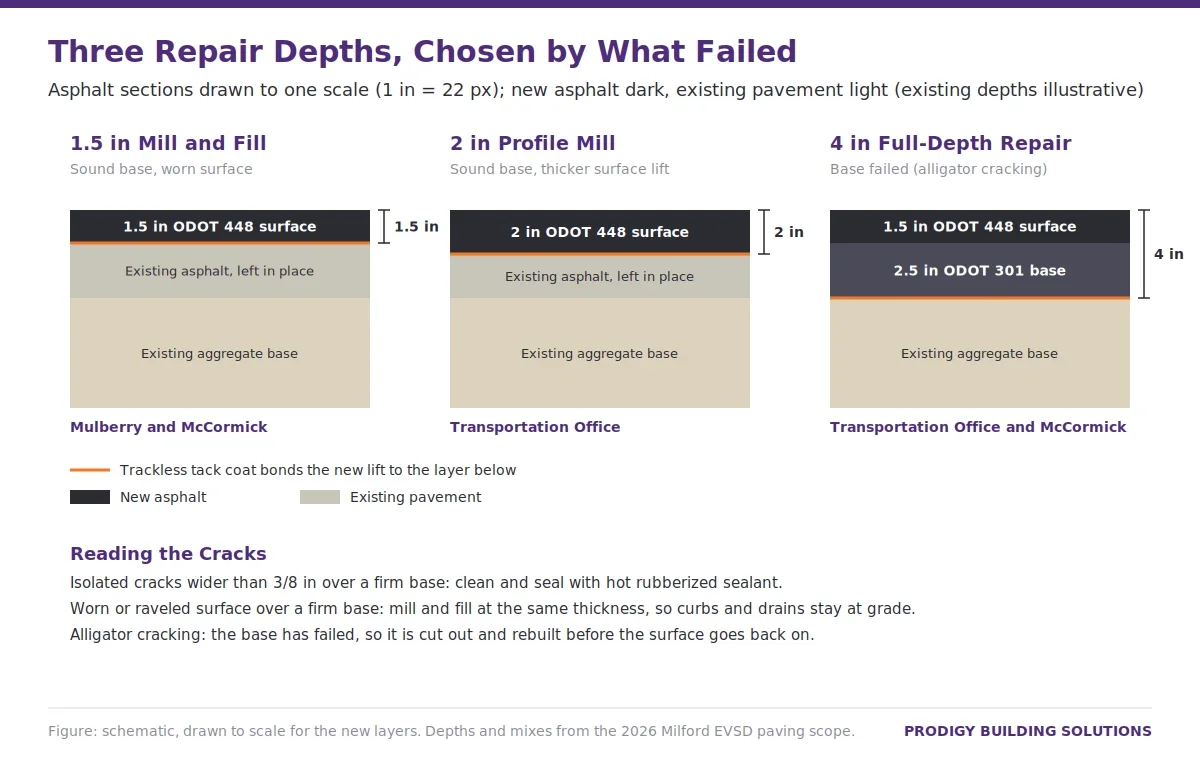
Three asphalt pavement sections drawn to one scale. Left, a one-and-a-half-inch mill and fill: the worn surface is replaced with 1.5 inches of ODOT 448 surface course over the existing sound base. Middle, a two-inch profile mill replaced with 2 inches of 448. Right, a four-inch full-depth repair where the base had failed: 2.5 inches of ODOT 301 base course under 1.5 inches of 448 surface. A note shows cracks wider than 3/8 inch sealed with hot rubberized sealant where the pavement is still sound, and alligator cracking as the sign that the base has failed.
Figure 1 — Three repair depths, chosen by which layer of the pavement had failed.

Three Depths in One Contract

At Milford the contract was written area by area. The lighter-wear areas at Mulberry and McCormick were milled up to an inch and a half and repaved with the same thickness of 448 surface course. Part of the Transportation Office lot was profile-milled up to two inches and replaced with two inches of 448. The failed areas at the Transportation Office and at McCormick were milled four inches deep and rebuilt with two and a half inches of 301 base course under an inch and a half of 448 surface. Every new lift was tacked to the layer below it, and every joint where new asphalt met old was sealed with hot rubberized sealant so water cannot work into the seam.

Choosing the depth this way spends the deeper, more expensive repair only where the pavement structure had actually failed, and it gives each of those areas a base that can carry buses and delivery trucks again instead of a thin skin over a problem that would have cracked back through.