
•••
RoofingWestern OhioDaytonTOP-C purple wordmark logo for The Ohio Purchasing Council cooperative purchasing program

Centerville Primary Village North Roof Replacement 2026

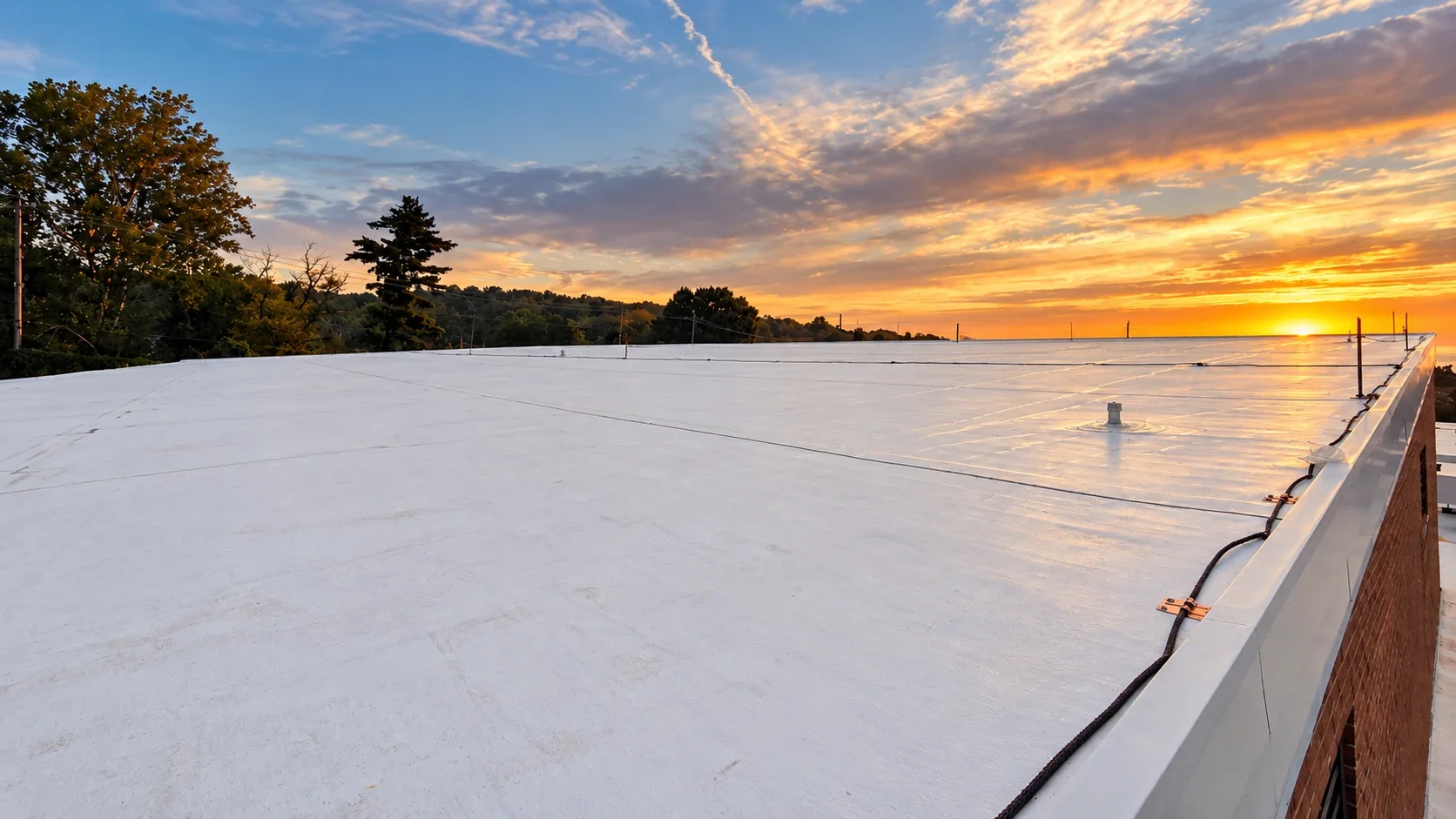
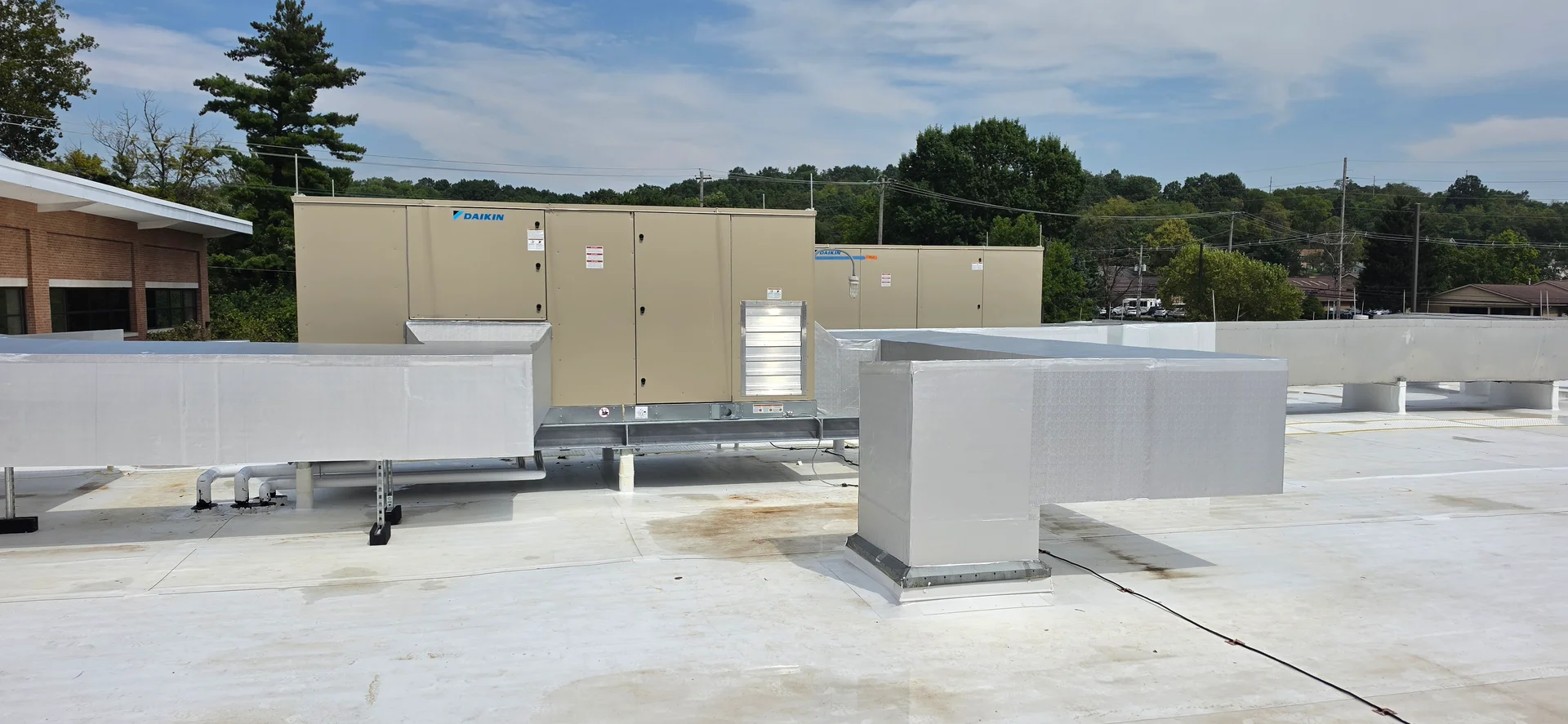
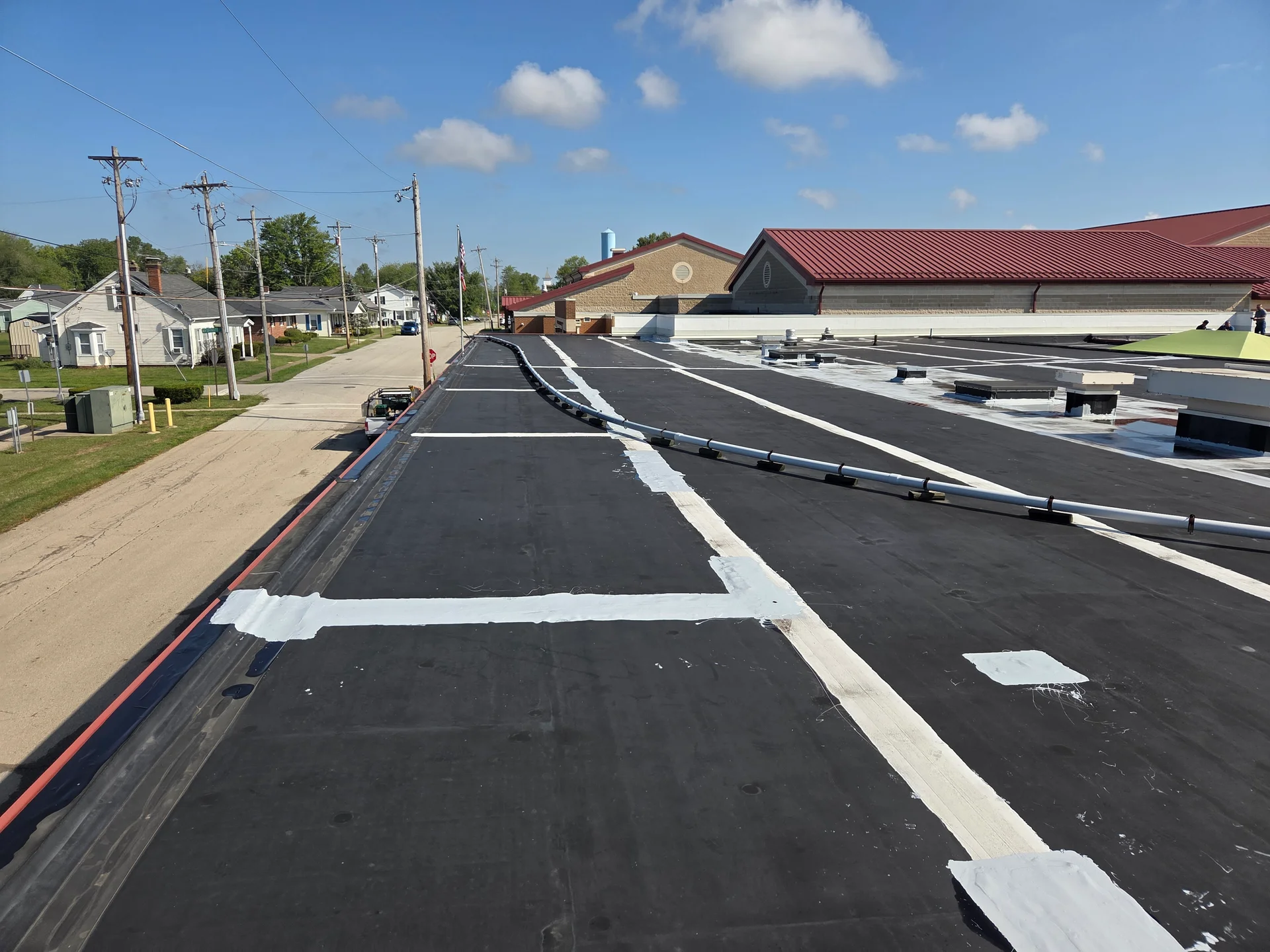
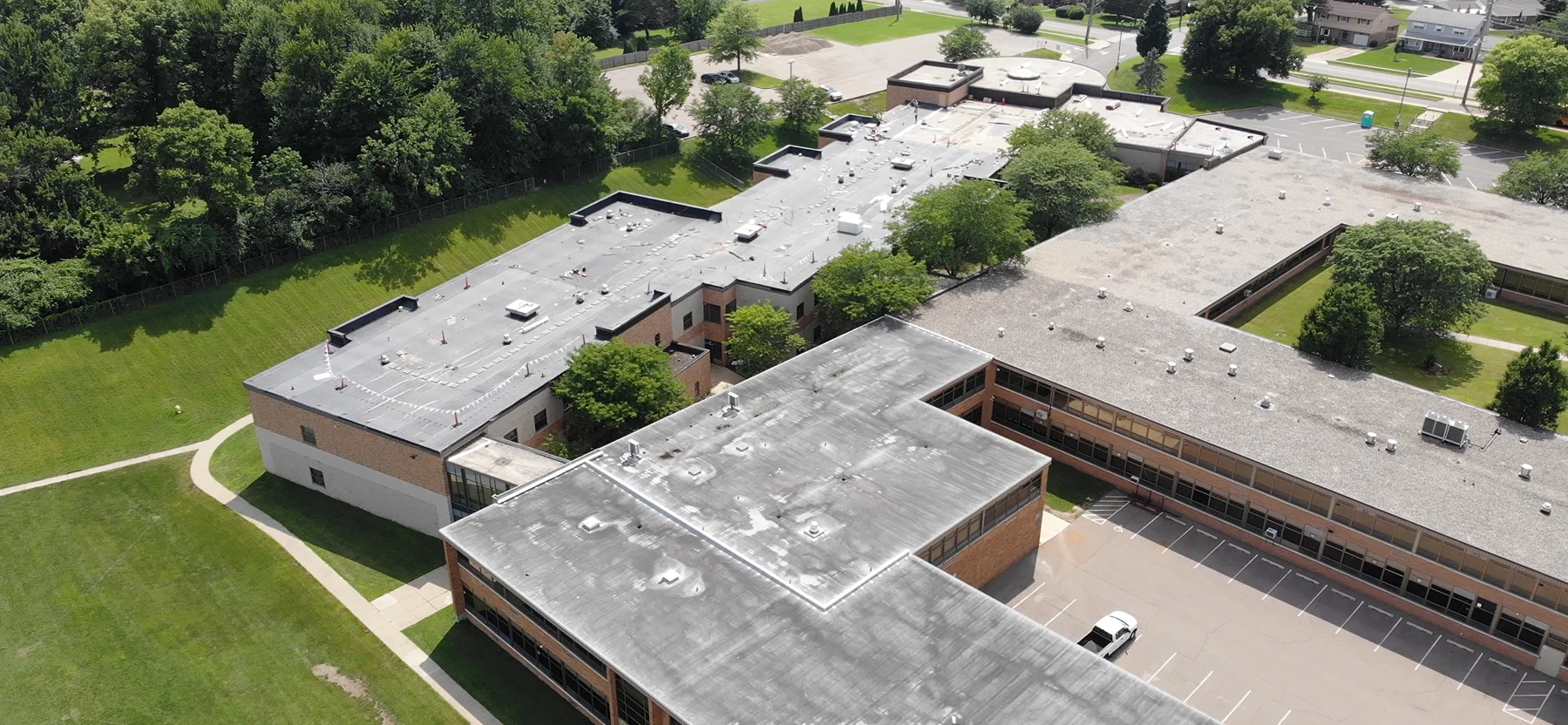
Primary Village North in Centerville has a new roof over two of its roof sections: Carlisle 90-mil EPDM fully adhered to a new half-inch high-density coverboard, new retrofit drains, membrane carried up and over the parapet walls, new cleated Kynar-finished edge metal, reinforced securement at every wall and angle change, a safety rail at the roof hatch, and a 30-year Carlisle Total System warranty backed by a 40-year warranty on the membrane itself. Prodigy engineered the roof, bought the materials direct from Carlisle and built it in the spring of 2026 for Centerville City Schools through the TOP-C cooperative contract, which is pre-bid, and Carlisle's warranty team inspected the finished roof before it was signed off.

The old roof was a built-up asphalt system over lightweight concrete and Tectum deck, and it had started to blister. Blisters are pockets of air and moisture trapped between the layers; they grow every summer and eventually split. The roof was also carrying abandoned light fixtures and old lightning protection hardware, each one a hole through the membrane that served no purpose anymore.

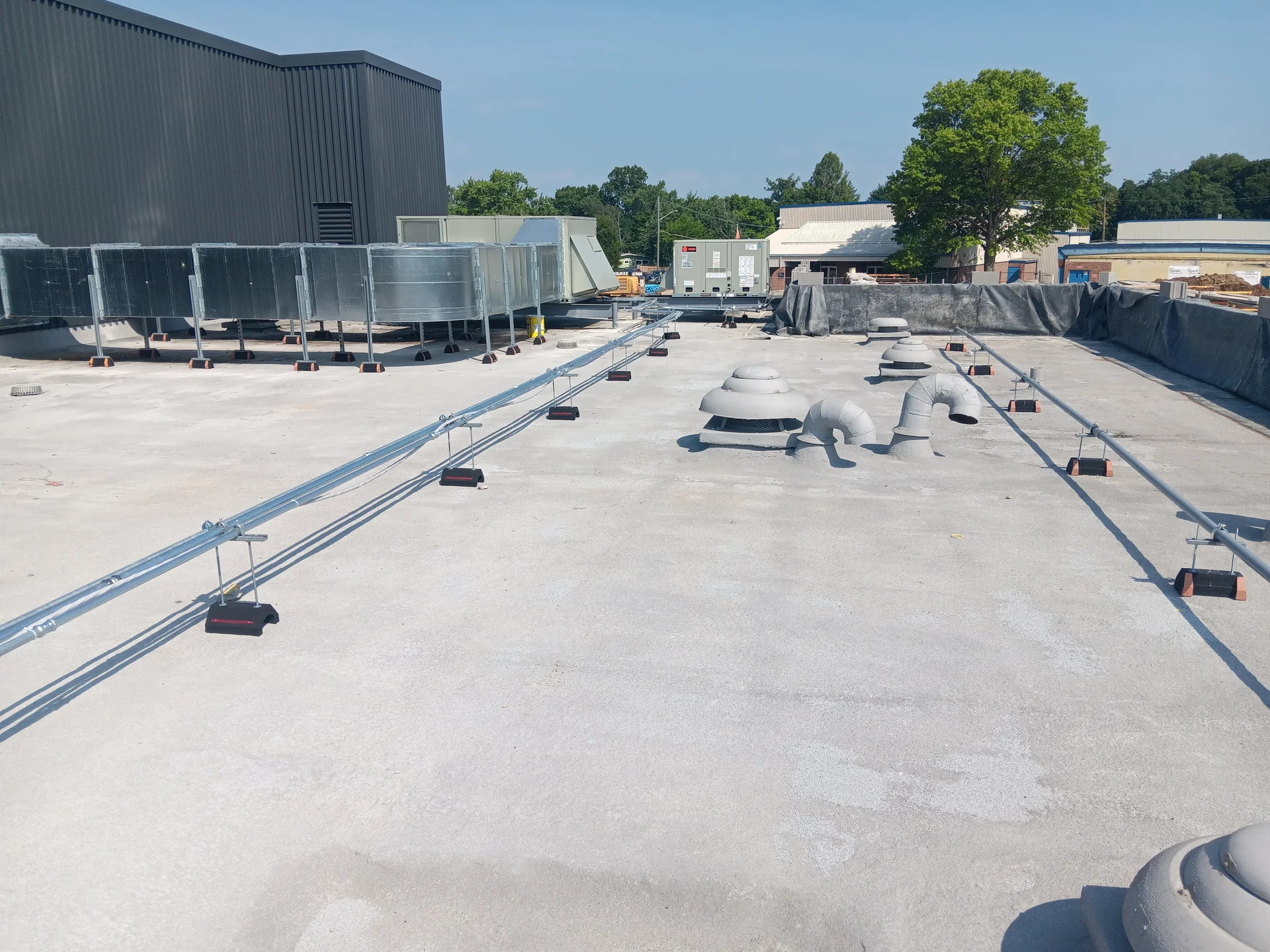
Rather than strip the building to the deck, Prodigy kept the existing roof as the base. The blistered areas were cut out and removed, the old edge metal came off, and a half-inch high-density coverboard was adhered over the whole surface with low-rise foam adhesive. That board gives the new membrane a flat, firm surface and keeps it from telegraphing the old roof's texture. The abandoned fixtures and lightning components were removed, and the conduit that stays on the roof now rests on rubber supports instead of wood blocking that rots.

The new membrane is 90-mil EPDM, half again thicker than the common 60-mil sheet, with seams made using six-inch factory-applied tape. It is fully adhered with Cav-Grip III, wrapped continuously over the parapets, and locked down at the perimeter with new 24-gauge cleats and edge metal. New retrofit drains were set into the existing drain lines so water leaves the roof through new, sealed drain bodies.

Centerville now has a roof over a primary school with fewer penetrations than it started with, drains that seal to the new membrane, and a manufacturer's warranty that runs to 2056. For a district looking at a blistered built-up roof of its own, it shows that a full tear-off is not the only way to a long warranty.

Centerville Primary Village North Roof Replacement 2026 — photo 1
Centerville Primary Village North Roof Replacement 2026 — photo 2
Centerville Primary Village North Roof Replacement 2026 — photo 3
Centerville Primary Village North Roof Replacement 2026 — photo 4

Technical Discussion

Seaming EPDM with tape instead of glue

A rubber roof is only as watertight as its seams. EPDM is a cured rubber, so unlike TPO or PVC it cannot be melted and welded; every seam is a bonded joint between two sheets. How that bond gets made is a real choice, and on Primary Village North the choice was a membrane that arrives from Carlisle with six-inch seam tape already laminated to its edge.

How seams used to be made

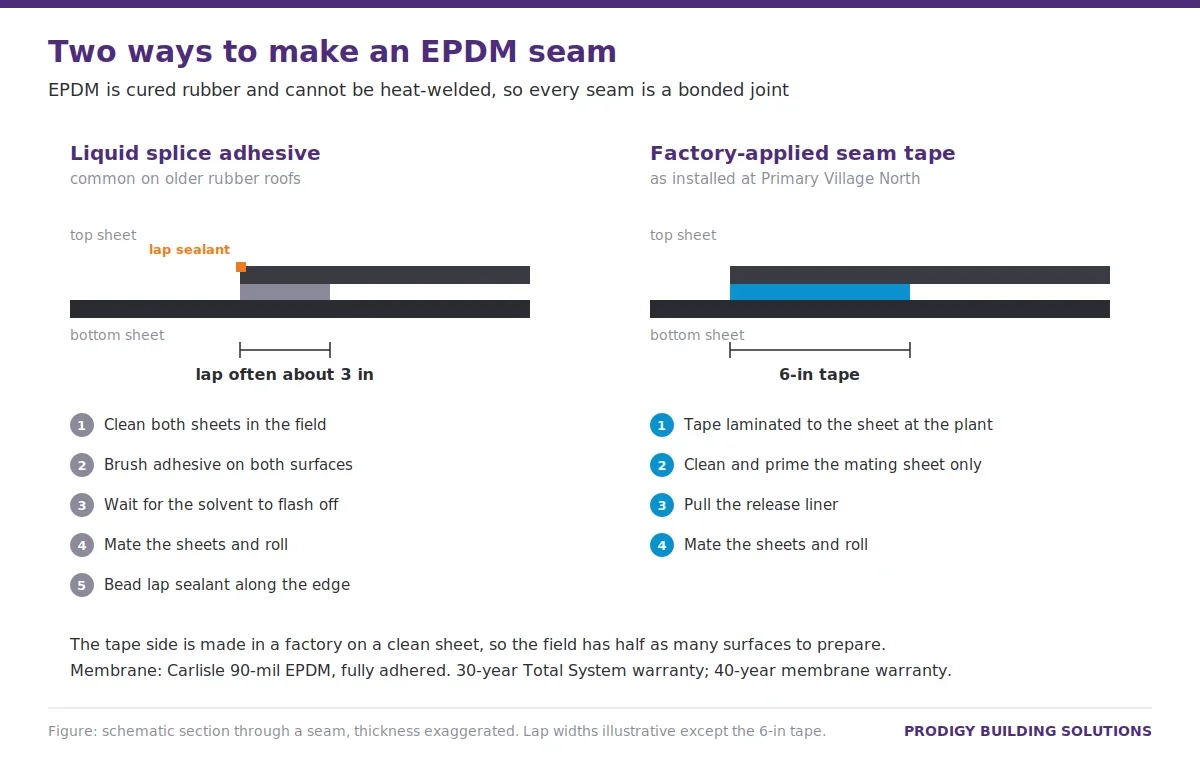
Older EPDM roofs were spliced with liquid adhesive. The crew cleaned both sheets, brushed adhesive onto both surfaces, waited for the solvent to flash off, pressed the sheets together, rolled them, and finally ran a bead of lap sealant along the edge. Each of those steps depends on the weather and the person doing it: too much adhesive or too little, a sheet mated before the solvent was ready, dust or dew on the surface. The laps were narrow, often about three inches, and on rubber roofs that failed early, the splice is often where it began.

Side-by-side seam sections: on the left a liquid-adhesive splice with a lap of about 3 inches, a lap sealant bead and five field steps; on the right a 6-inch factory-applied seam tape between two EPDM sheets with four field steps
Figure 1 — A liquid-adhesive splice and a factory-taped seam, and the field steps each one needs.

What factory tape changes

With factory-applied tape, half of the joint is made in a plant: the seam tape is laminated to a clean sheet edge under controlled conditions and covered with a release liner. In the field the crew cleans and primes only the mating sheet, pulls the liner, lays the sheets together and rolls the seam. Five field steps become four, two field-prepared surfaces become one, and the bond is six inches wide instead of a narrow lap. There is no solvent flash-off to time and no bead of sealant whose job is to cover for the seam.

Why it mattered on this roof

The membrane here is 90-mil EPDM carrying a 40-year material warranty under a 30-year Carlisle Total System warranty. A thick, long-lived sheet is only worth its thickness if the seams last as long as the rubber between them. Specifying the taped membrane on the material order put the most variable part of a rubber roof under factory control, and Carlisle's warranty inspection at the end of the job looked at those seams before the warranty was issued.

On an EPDM roof, the sheet is rarely what fails. Choosing how the seams are made is choosing how long the roof lasts.

Our Work
Similar Projects