
Coldwater HVAC Upgrade 2026
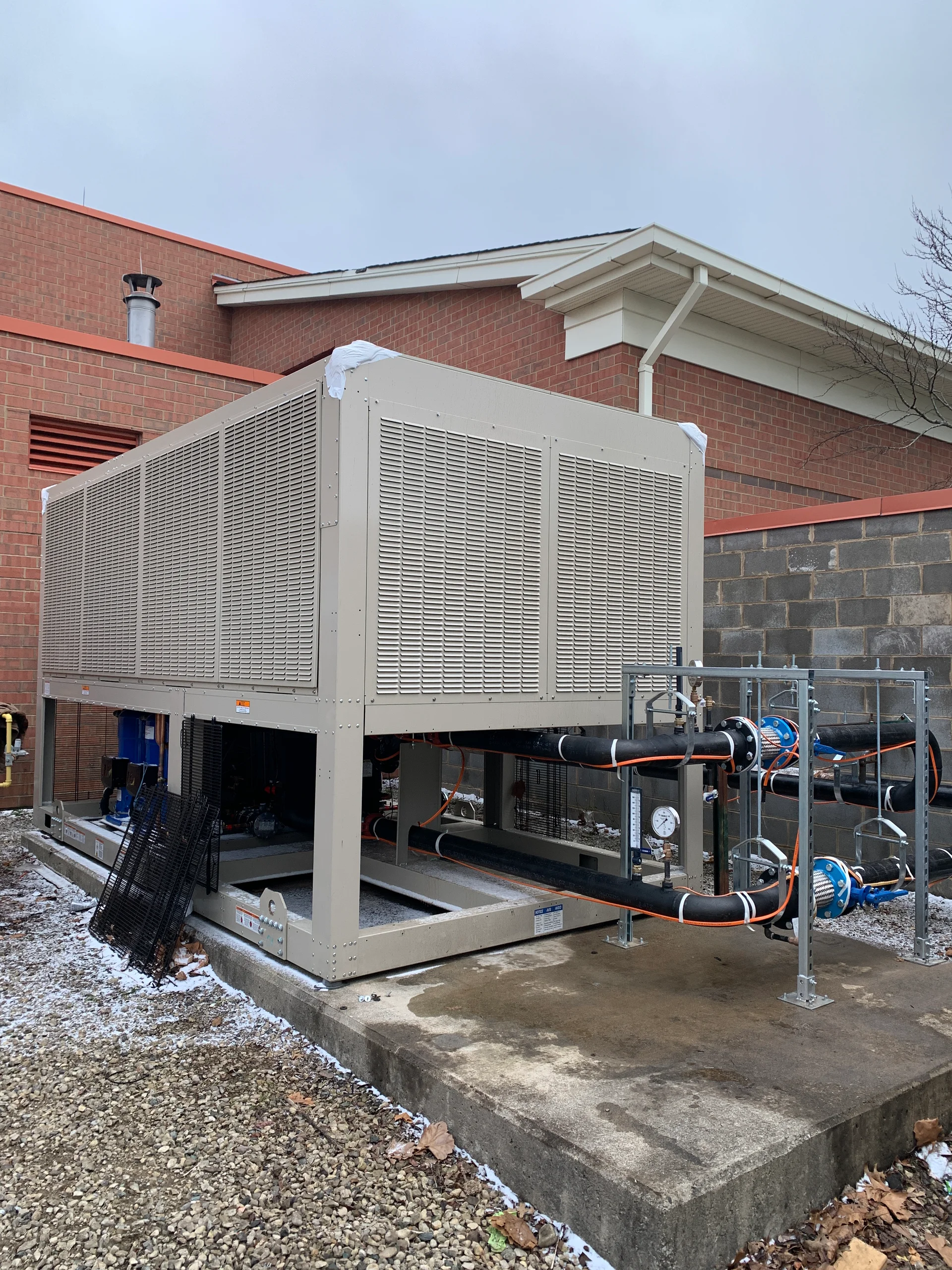
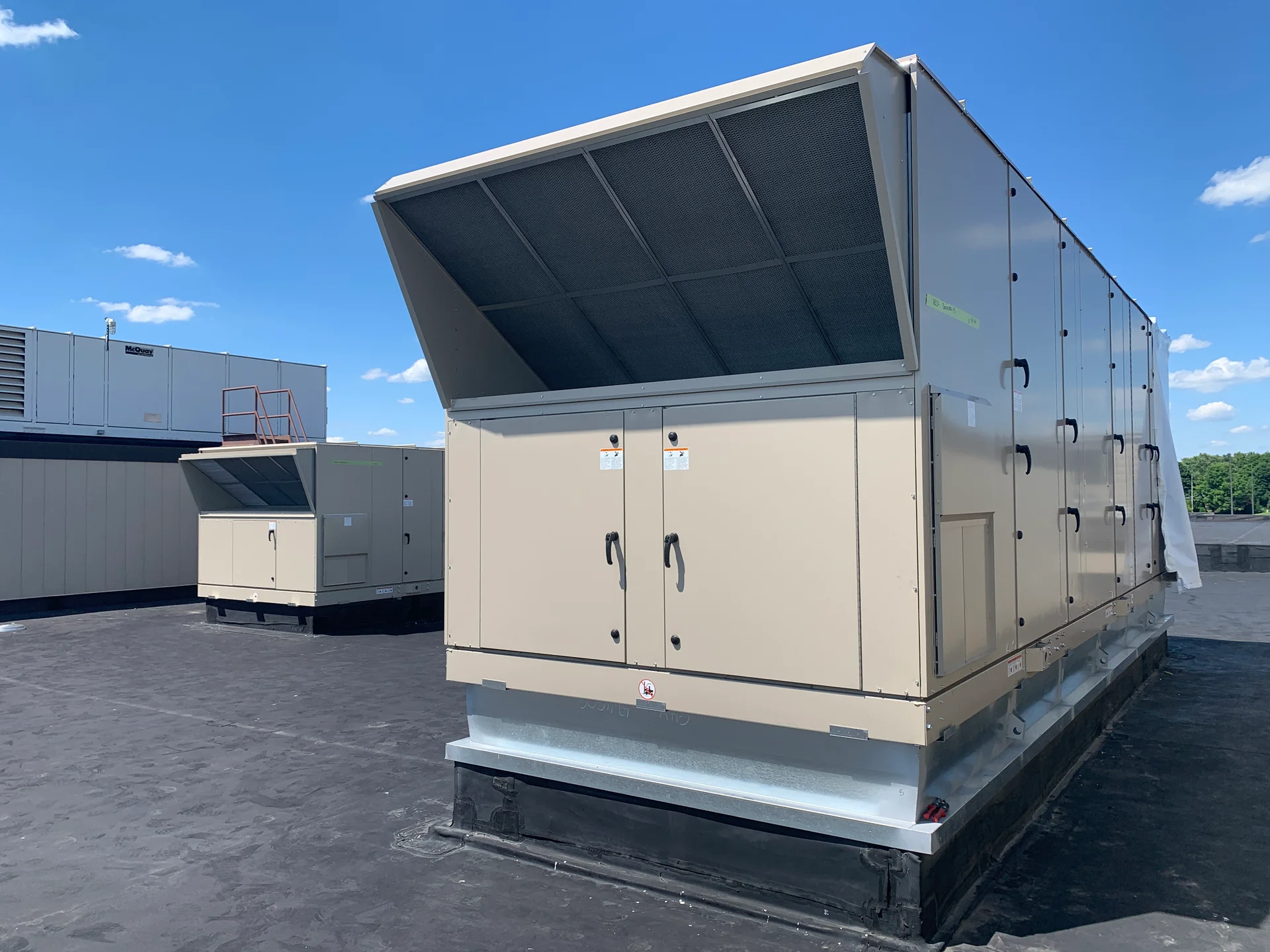
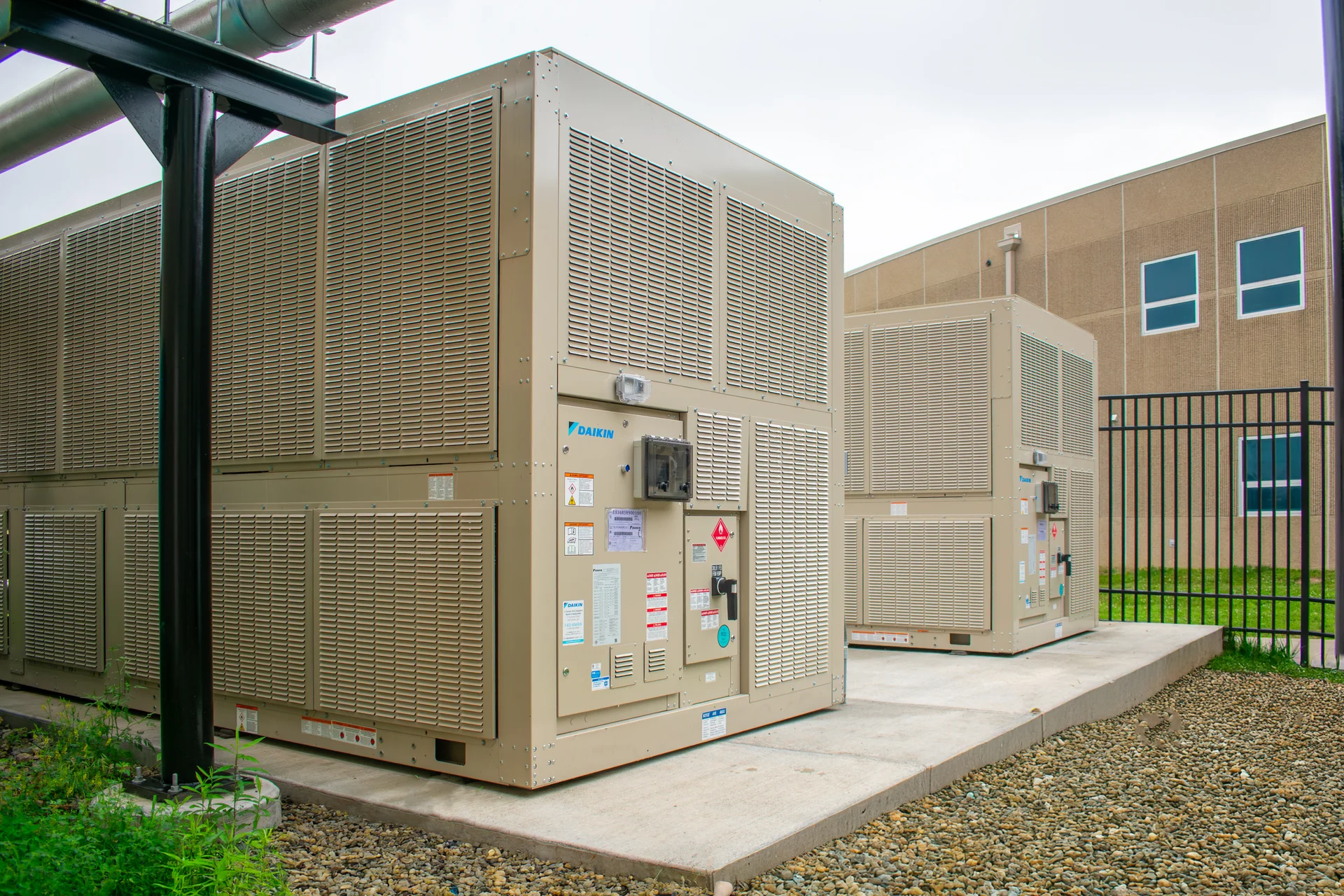
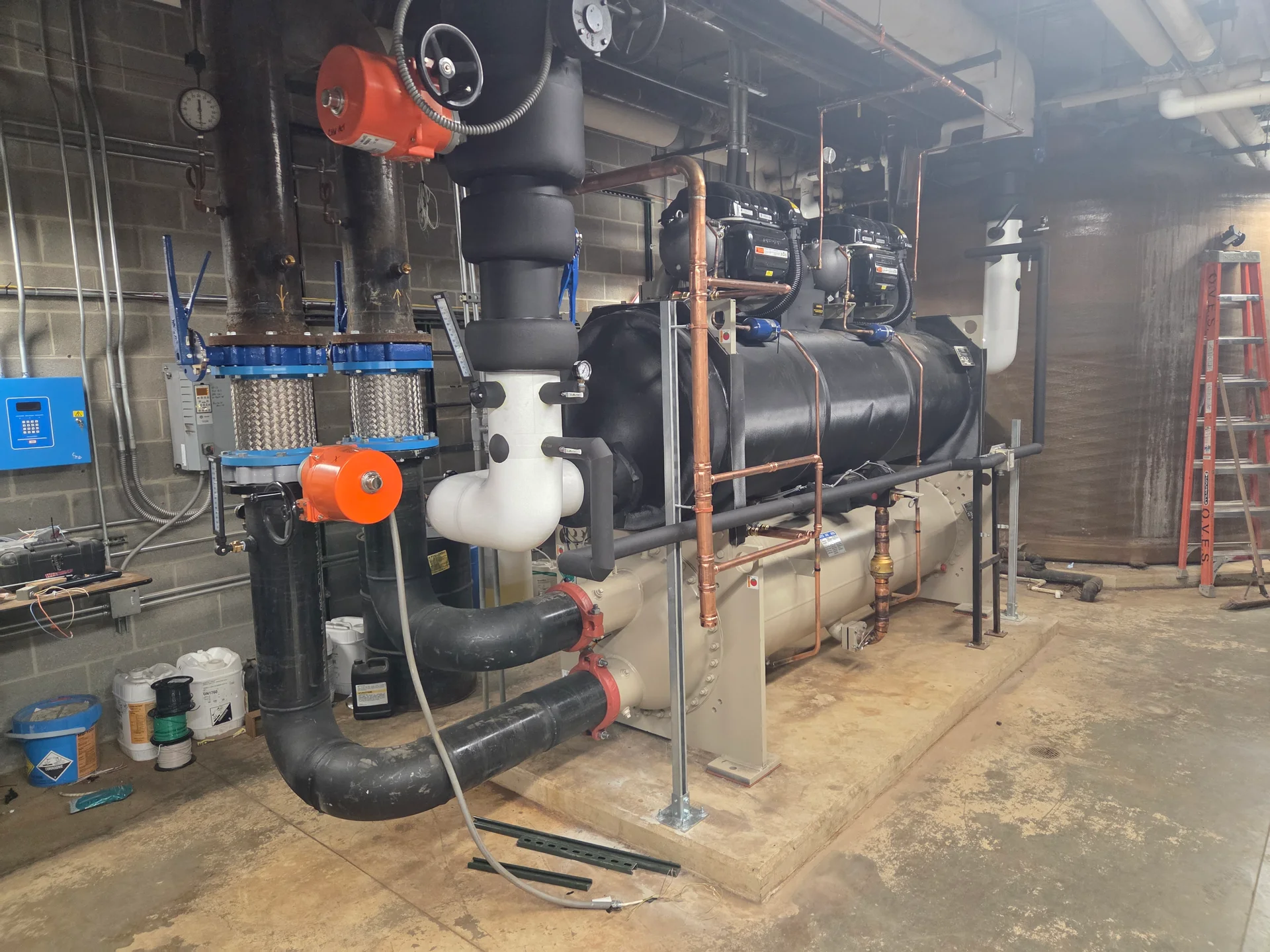
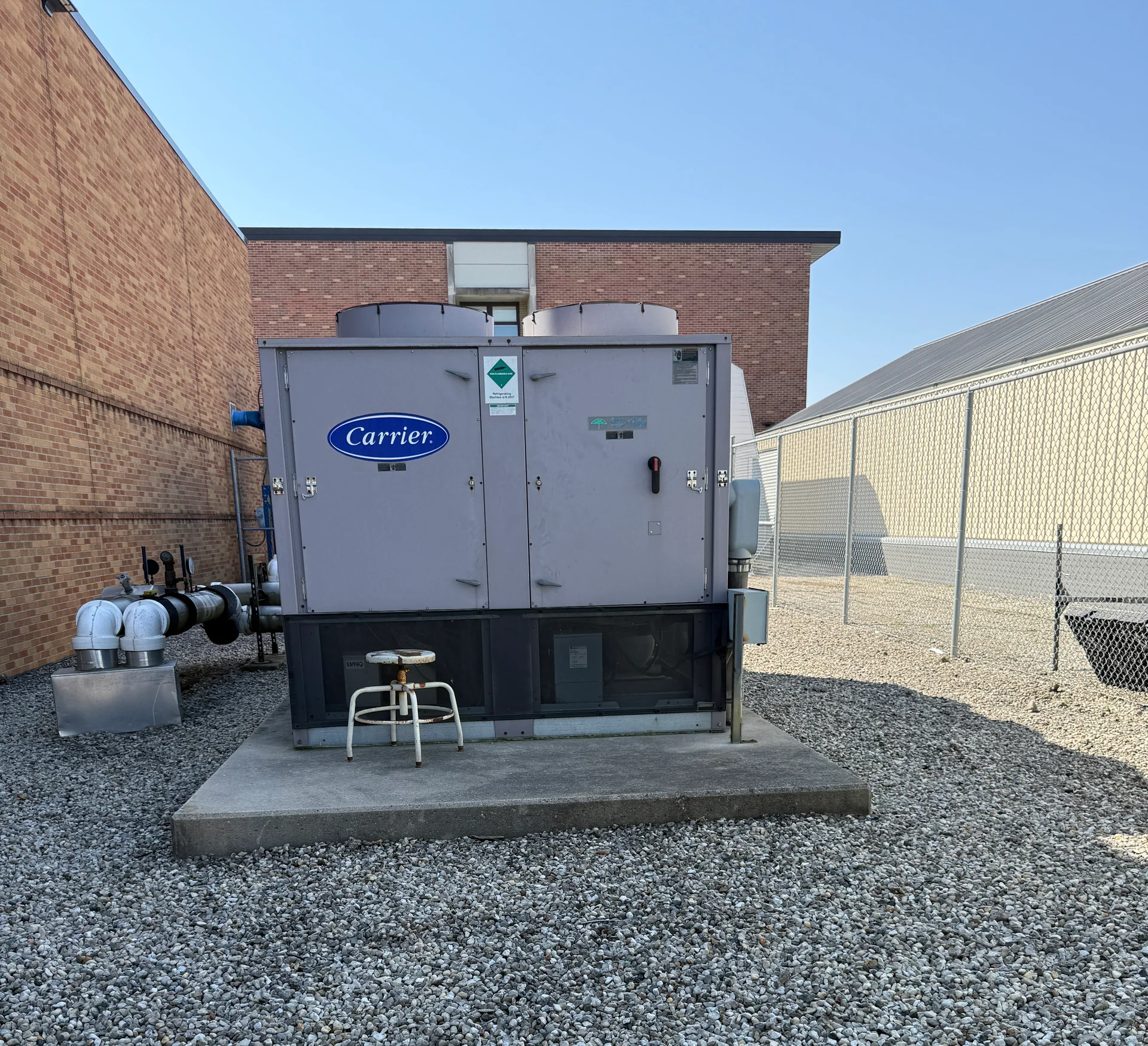
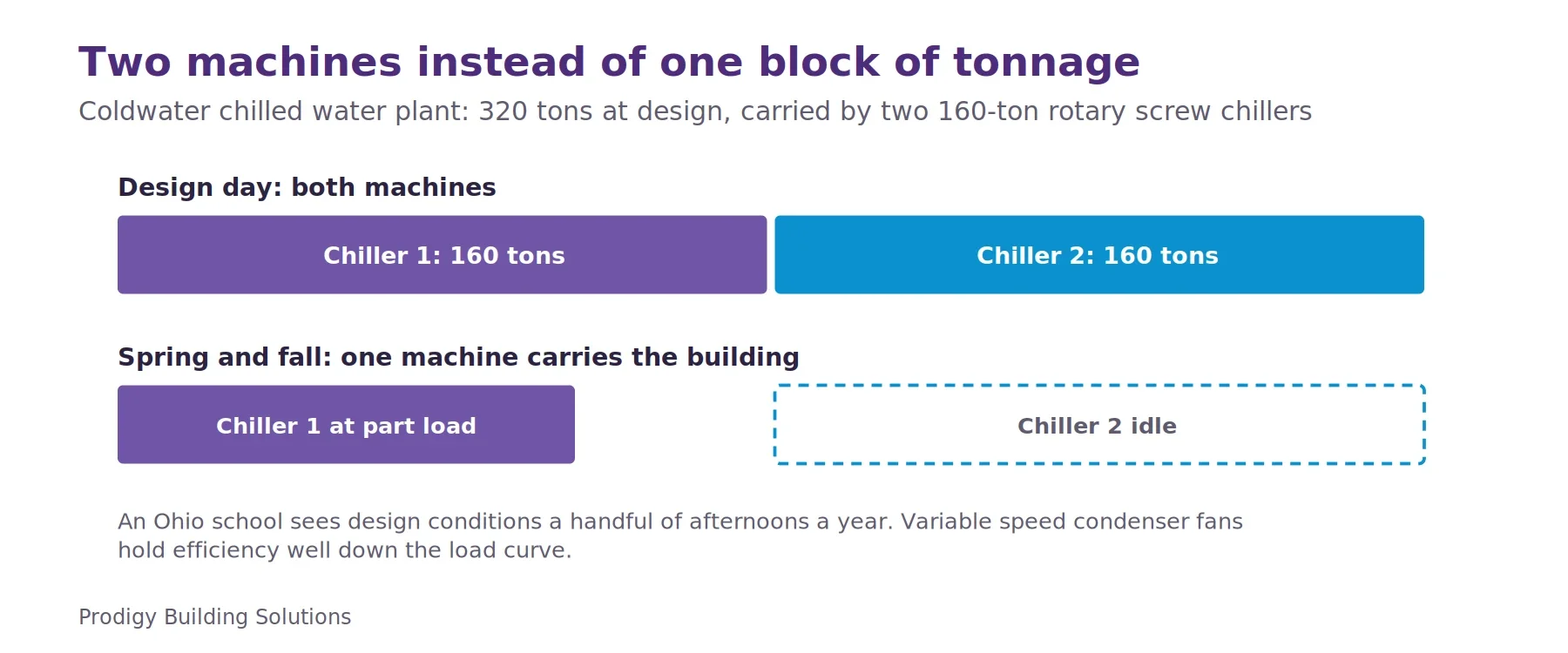
Coldwater High School's central chilled water plant has been rebuilt in place: two new 160-ton air-cooled chillers and four new pumps on variable frequency drives, set in the same locations and tied into the building's existing controls and graphics. Prodigy handled the chillers, pumps, piping, new electrical disconnects, controls integration and water balancing, so Coldwater Exempted Village Schools kept a plant its own staff already know how to run and gained machines at the start of their service life. It was bought pre-bid through the TOP-C cooperative contract.
Coldwater Exempted Village Schools cools its high school from a central chilled water plant, and the two machines in that plant had reached the end of their run on R-134a. Rather than walk away from the plant, the district rebuilt it: two new air-cooled chillers in the same locations, four new pumps on the same housekeeping pads, and a loop the district's own staff already know how to operate.
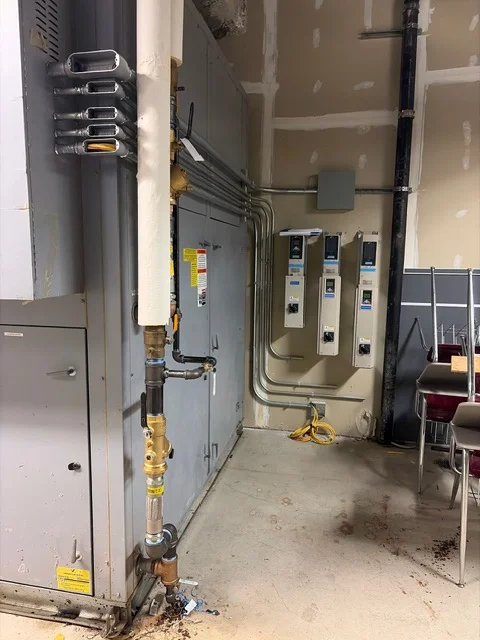
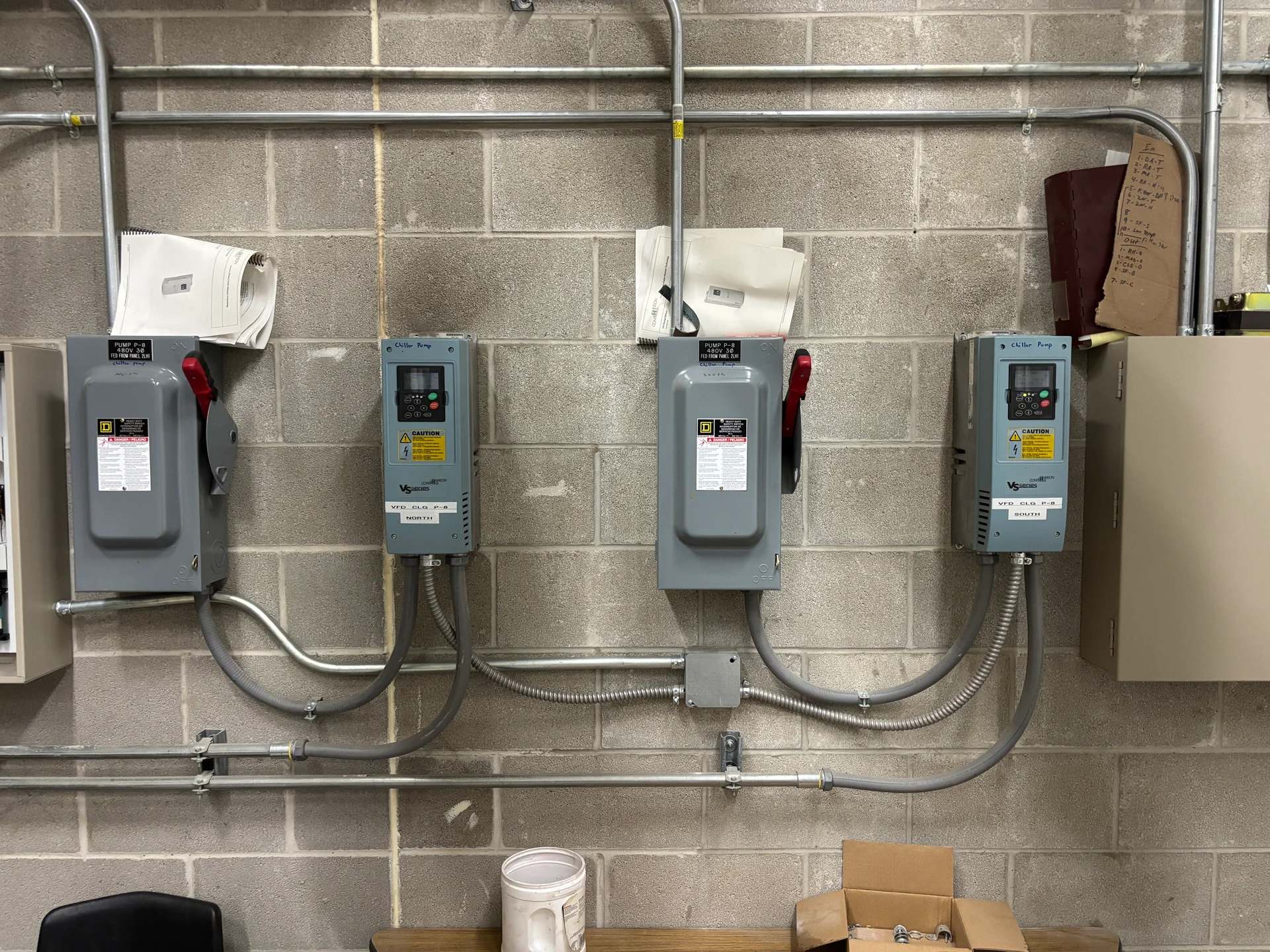
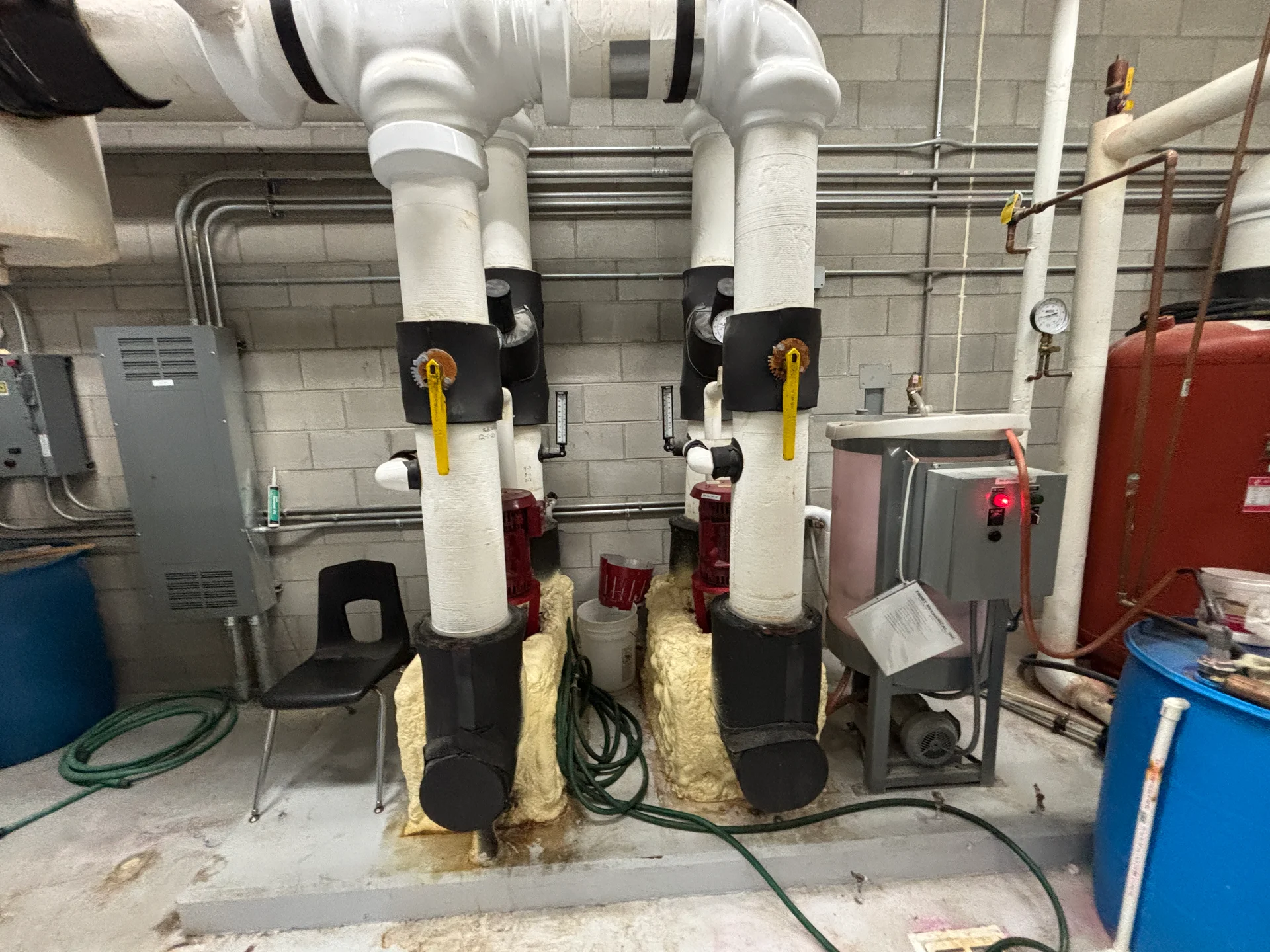
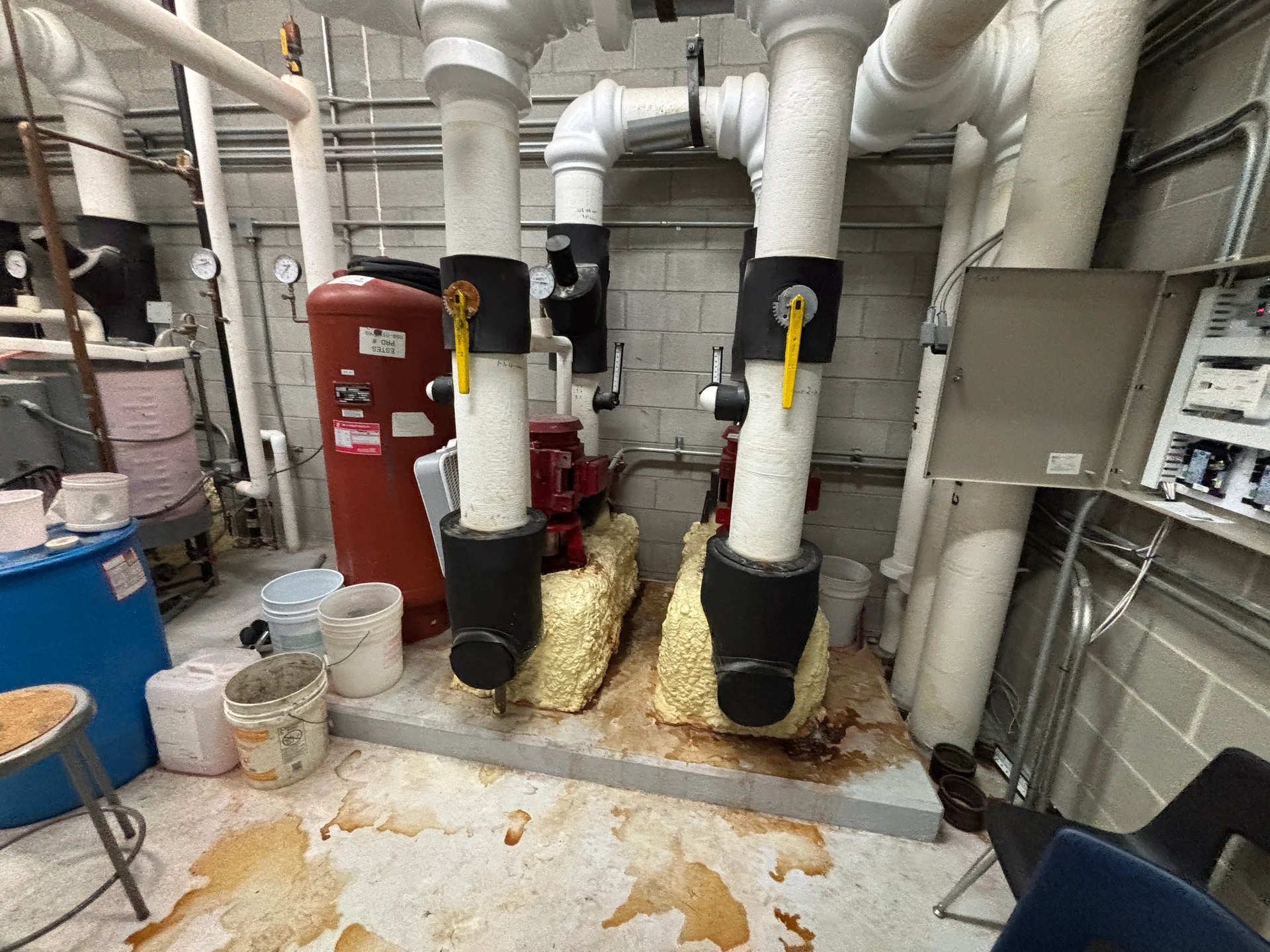
The new machines are 160 tons each, moving 343 GPM at 42-degree supply and 54-degree return water on a 25 percent ethylene glycol solution, using R-513A refrigerant, rotary screw compressors, variable speed condenser fans and BACnet communication cards. Two inline primary and two inline secondary pumps replace the four that came out, each on a variable frequency drive, with suction diffusers, triple duty valves and a cartridge filter across one of the pump sets. Each chiller gets a new 400-amp exterior-rated disconnect fed from the existing underground service, and every new component is integrated into the building's existing temperature control system and front-end graphics.
The work was bought pre-bid off a TOP-C unit price contract, and the chiller sizing was directed by the district. The old refrigerant was recovered and turned over to the owner, the glycol was drained into drums and put back into the system rather than replaced, and the chilled water system was balanced so both machines carry an even share of the flow. What the district ends up with is the same plant footprint, the same maintenance routine, and machines at the start of their service life rather than the end of it.
Technical Discussion
Our Work