•••
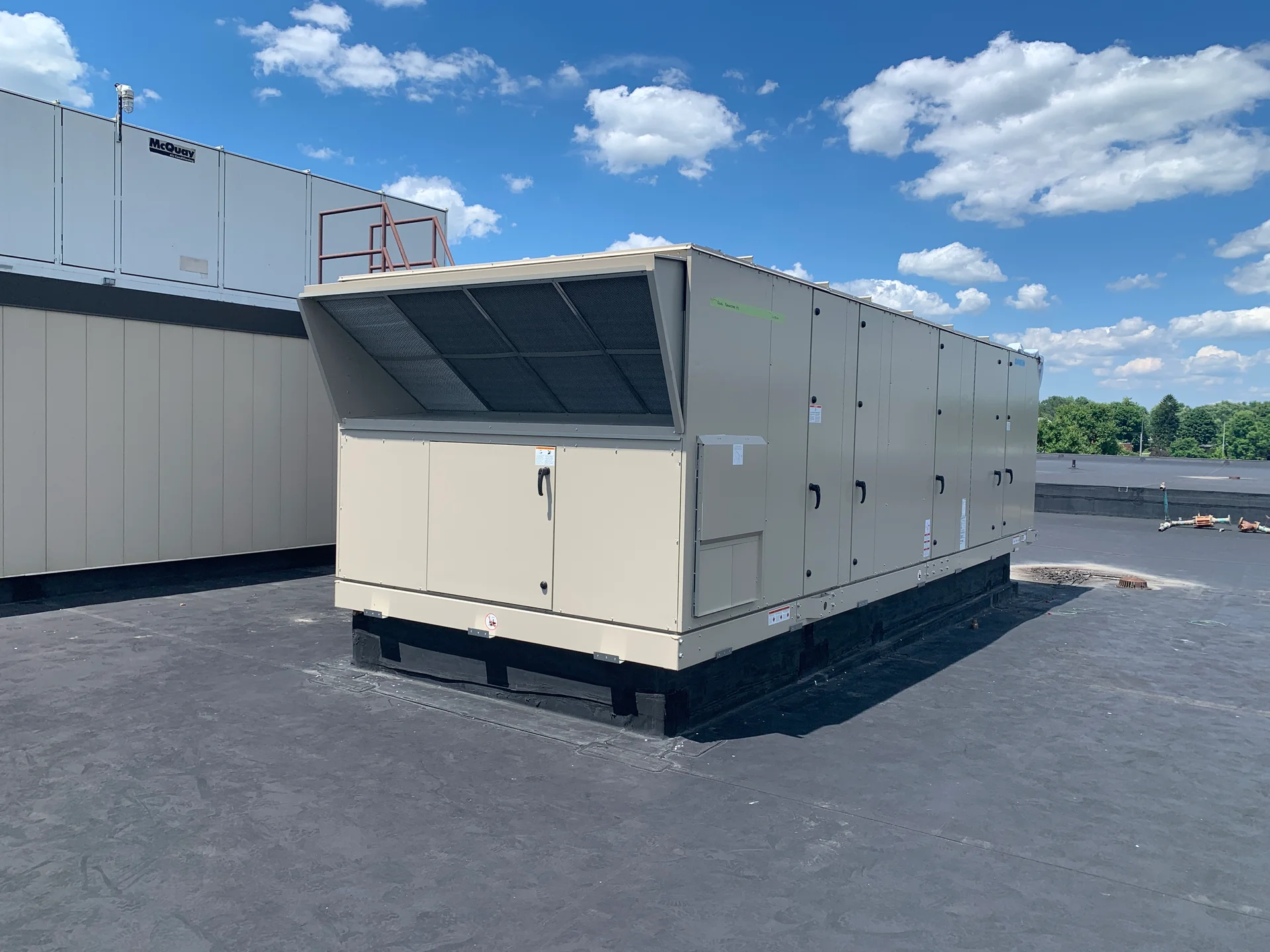
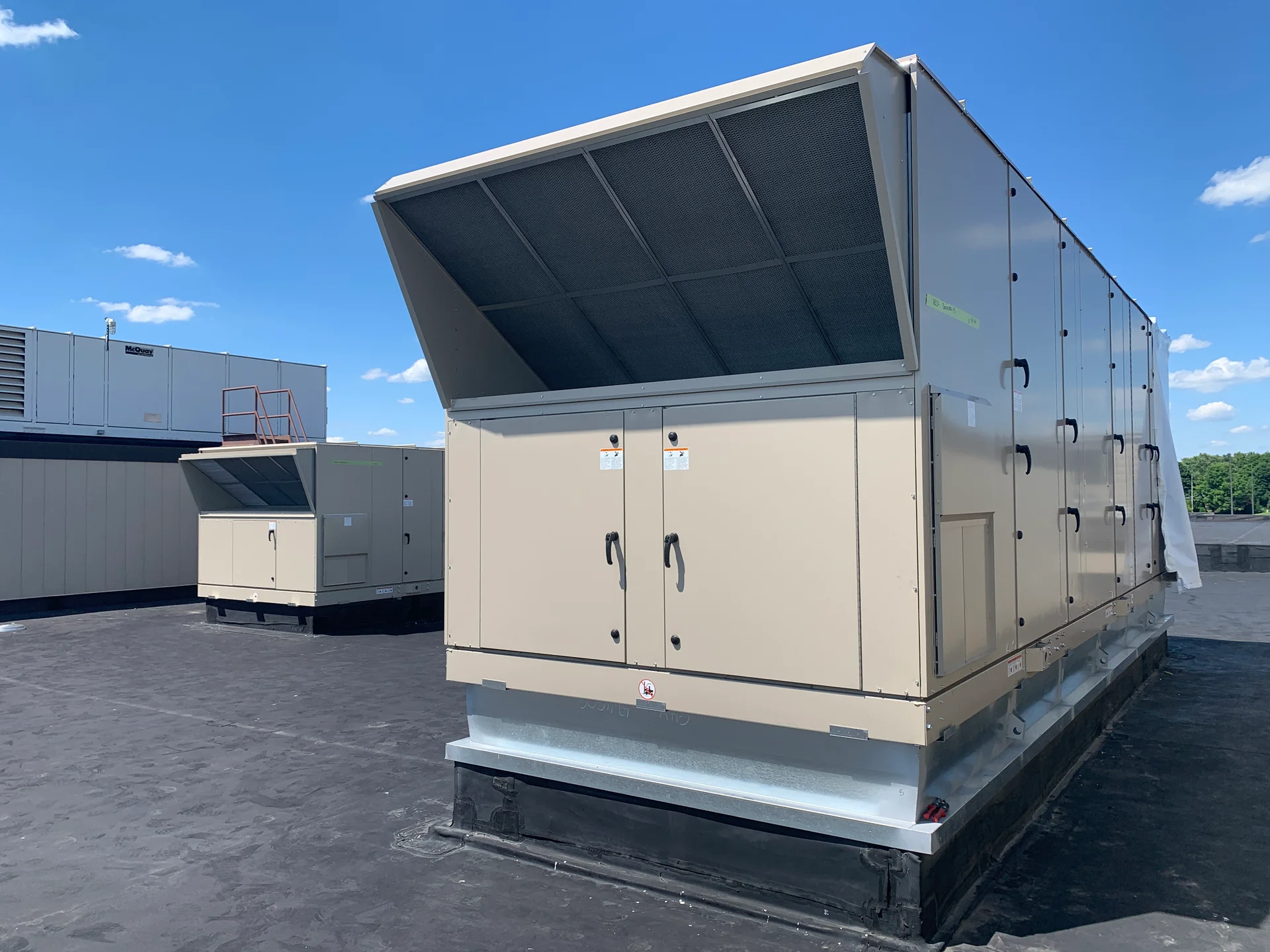
Rooftop units with outdoor air hoods installed at Beavercreek City Schools
HVACWestern OhioDayton

Beavercreek City Schools HVAC Installation 2026

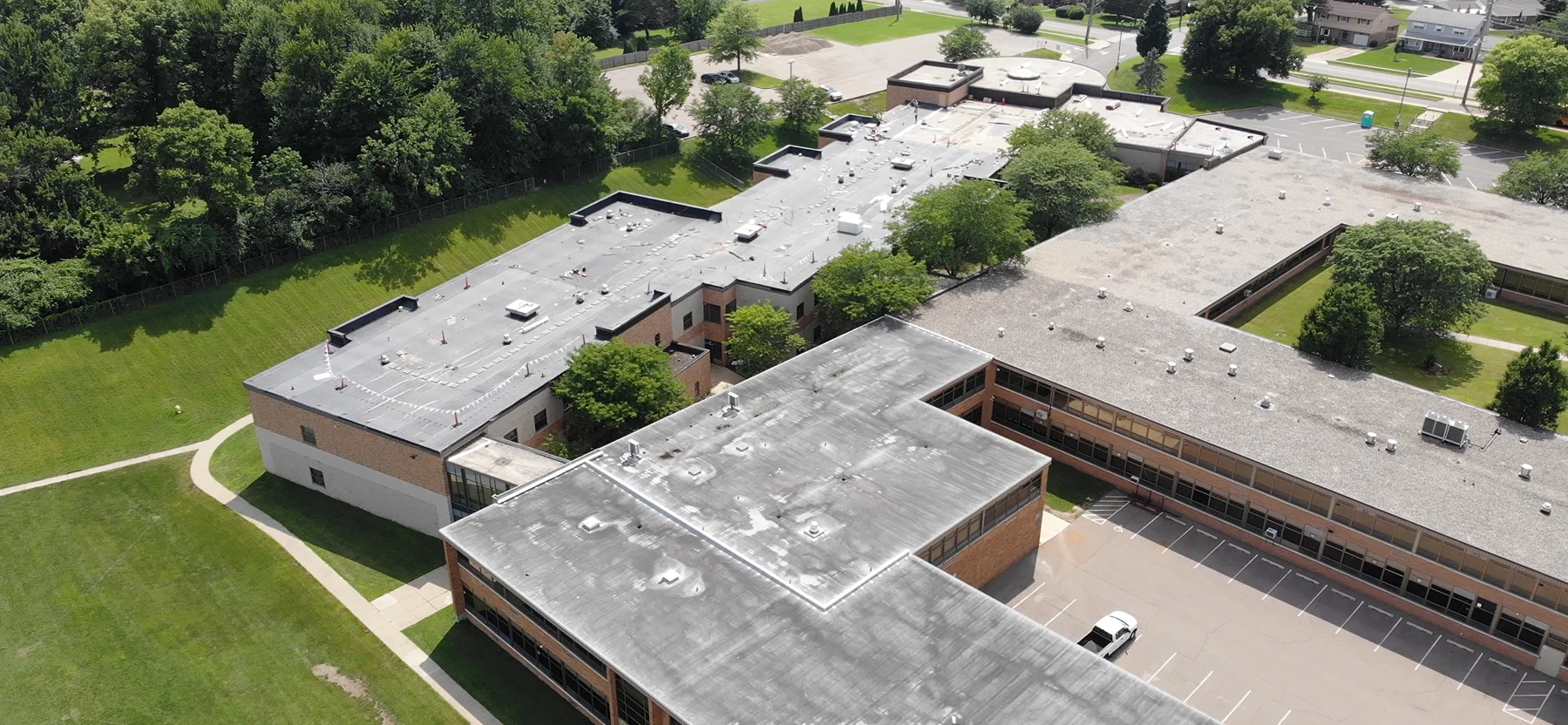
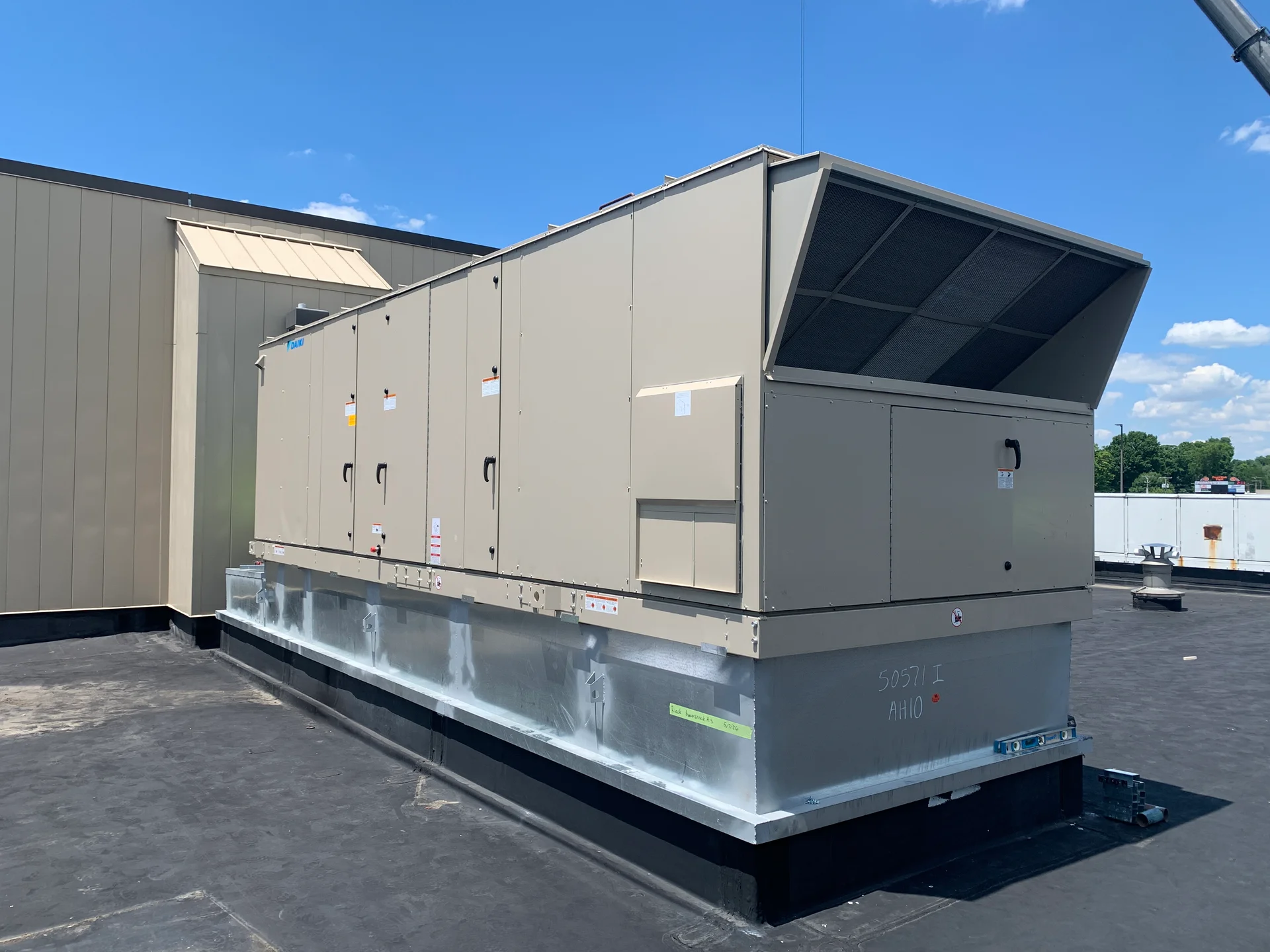
Six new Daikin rooftop air handlers now serve Beavercreek High School, installed in a single summer as Phase 1 of a phased replacement while the rest of the building's units stayed in service. Prodigy set the units, four of them on new curb adapters over the existing roof openings, and completed the ductwork transitions, hot and chilled water piping, electrical and temperature controls for each. Every unit matches the capacity of the one it replaced and comes with an enthalpy economizer and two-stage MERV 8 and MERV 14 filtration. The district purchased the work directly, with bonds and permits included.

Beavercreek City Schools is replacing the rooftop air-handling units at Beavercreek High School in phases rather than shutting the whole system down in one summer. Phase 1 covers six of them — AH-1, AH-2, AH-3, AH-5, AH-6 and AH-10 — together with the transition ductwork, hot and chilled water piping, electrical service and temperature controls that go with each one. The units not in this phase stay in service and wait their turn.

The district wrote the sizing into its own bid documents. Every new unit was matched to the heating, cooling and airflow capacity of the one it replaces, and no load or ventilation calculations were part of the work. The six Daikin units are double-wall, foam-injected cabinets with ECM fan arrays, mixing boxes, enthalpy economizers, hot water and chilled water coils, and two stages of filtration — 2-inch MERV 8 ahead of 4-inch MERV 14. Four of the six set on new curb adapters over the existing roof openings; AH-10 also picks up a duct-mounted hot water reheat coil sized for a 20-degree air temperature rise.

The district bought the work direct, on an equipment and services purchase agreement with its Board of Education, with scope and materials drawn from bid documents the district had already issued. Payment and performance bonds and permits are carried in the agreement, which sets substantial completion on or before August 1, 2026 — one summer, six units, a building that opens on time either way. What the district gets out of Phase 1 is equipment it can still service and a control system that finally reports what the equipment is doing.
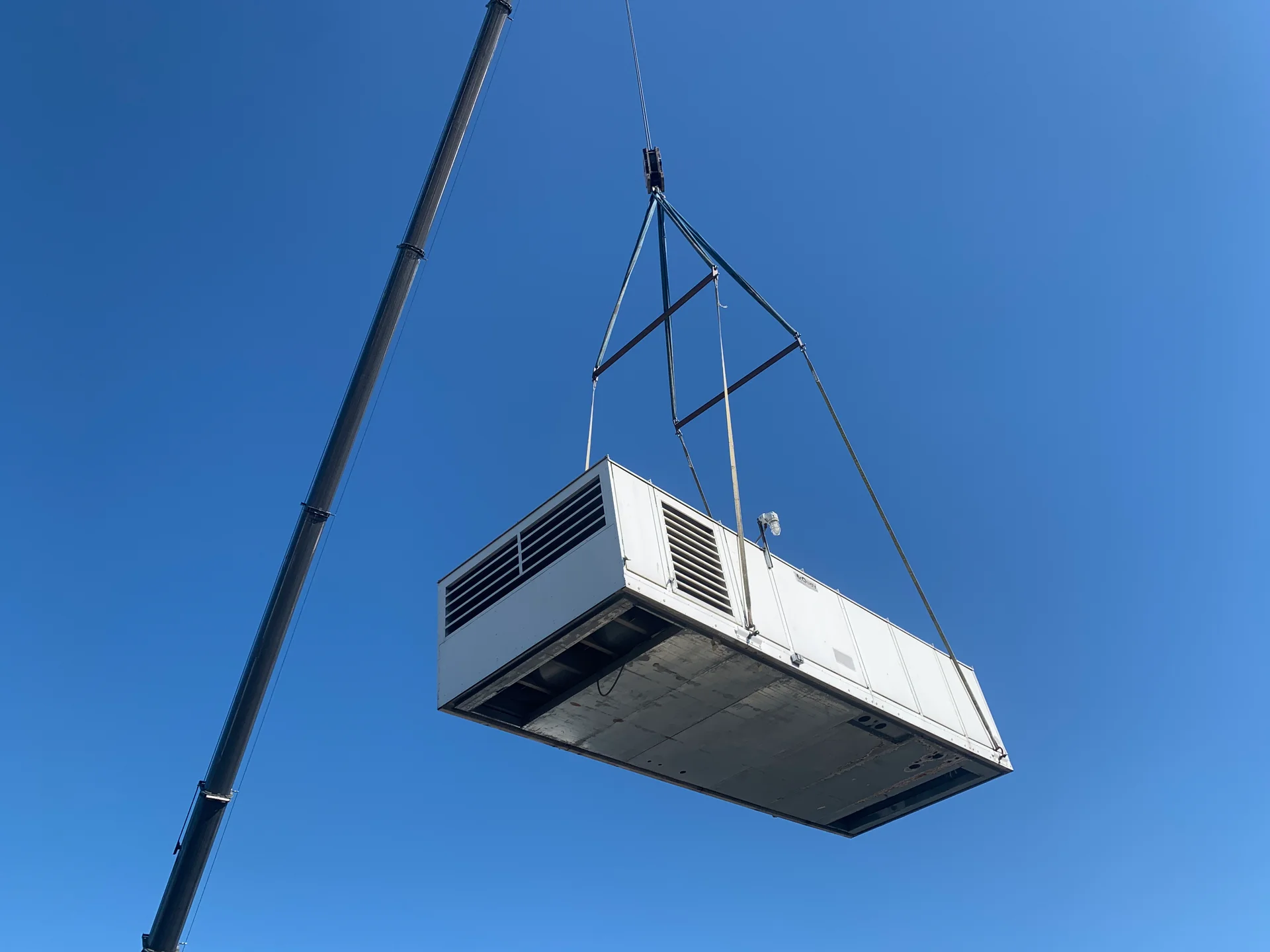
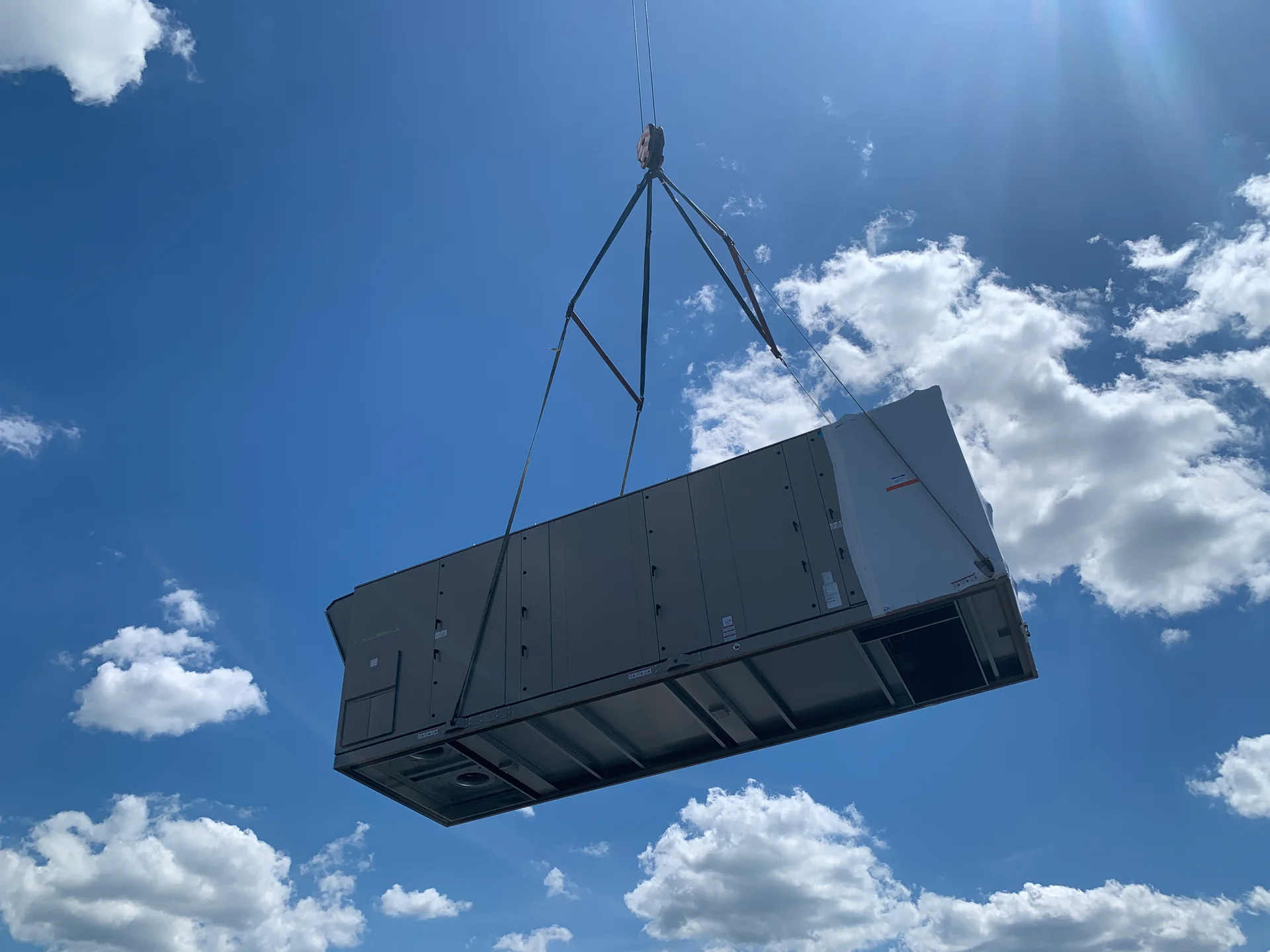
Rooftop air handling unit suspended from the crane during the Beavercreek HVAC installation
Outdoor air hood and access panels along a Beavercreek rooftop unit
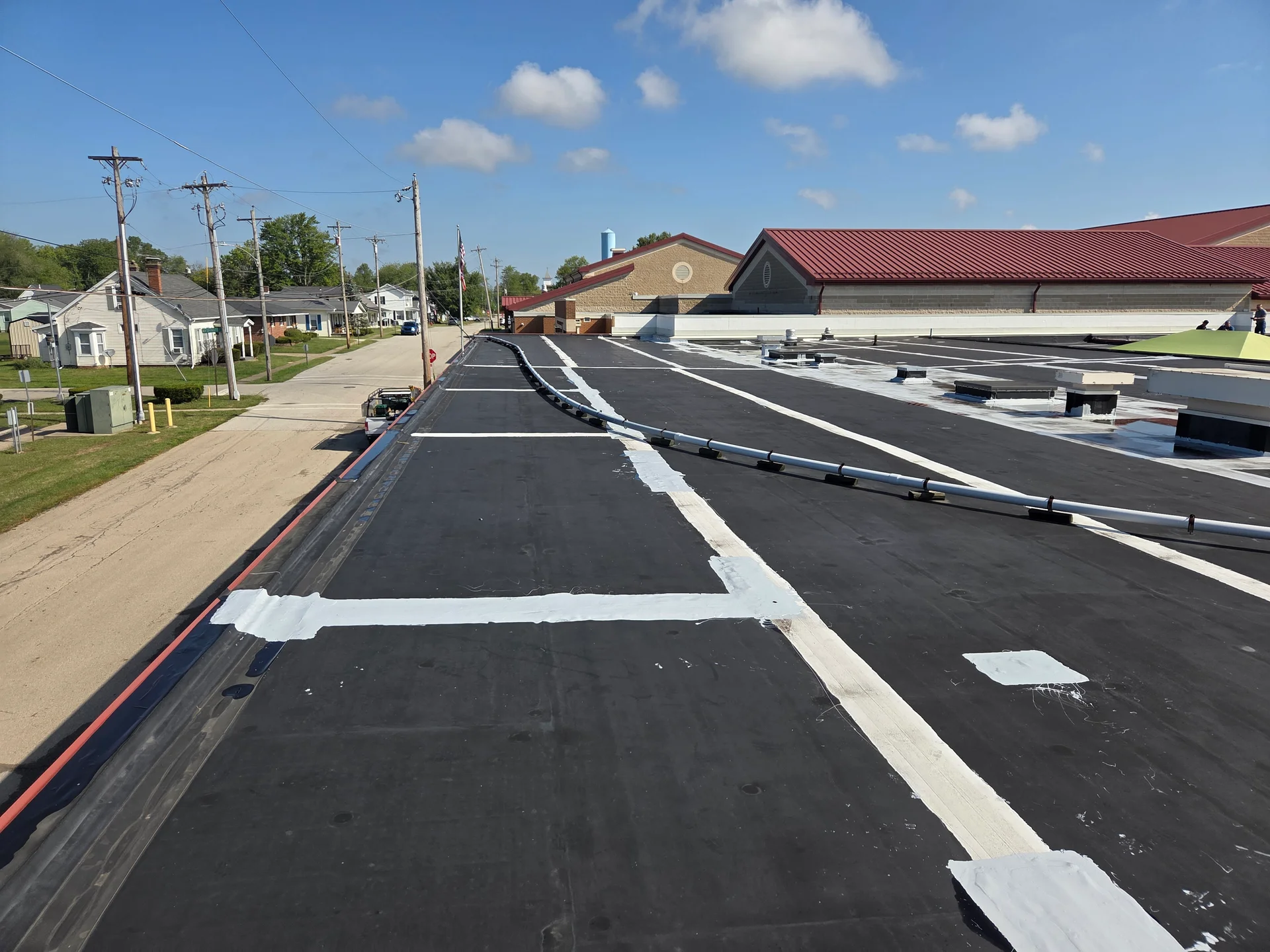
Beavercreek rooftop unit in place between the roof parapets
Crane rigging carrying a rooftop unit over the Beavercreek school
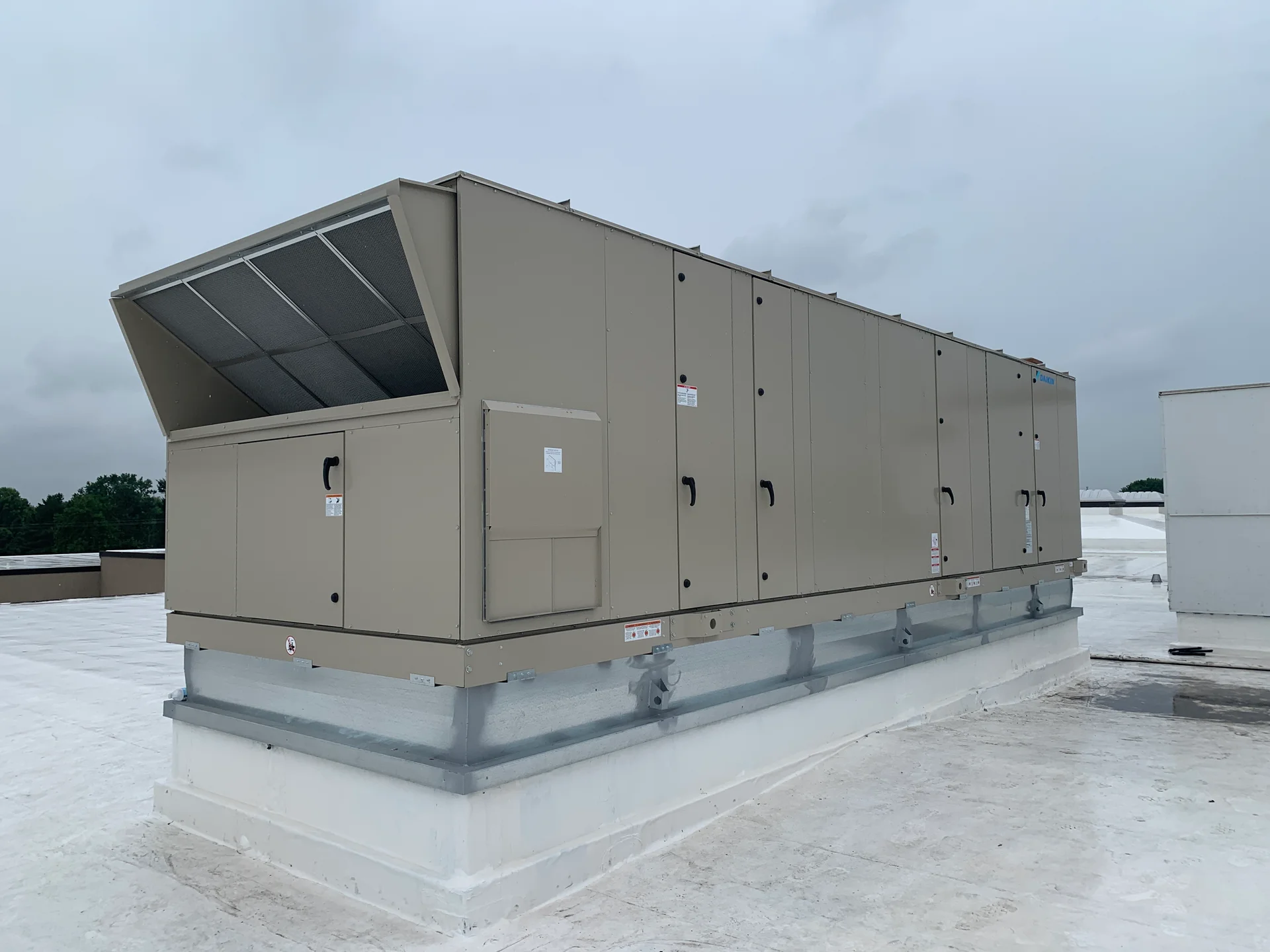
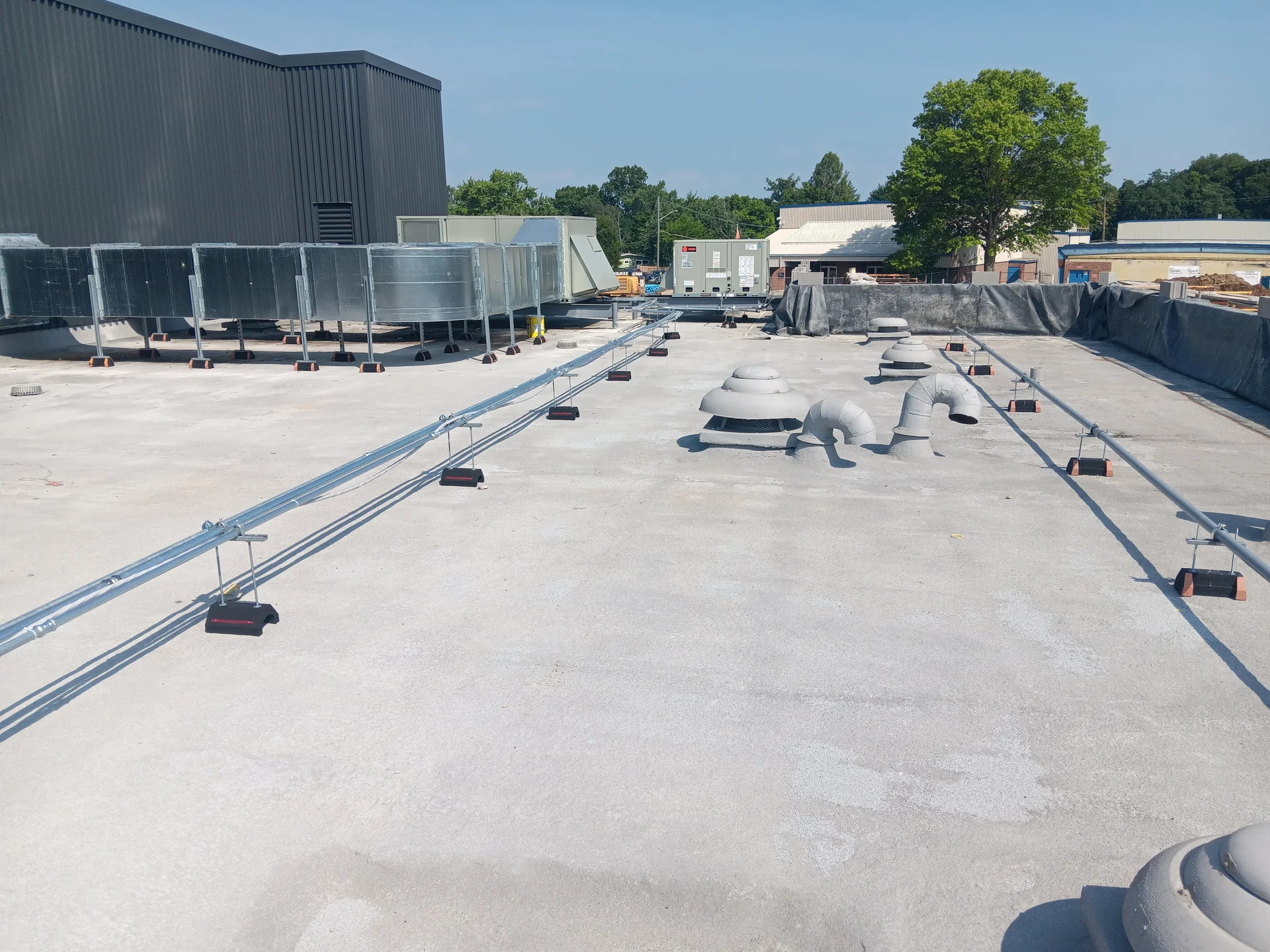
New rooftop unit set on its curb on the Beavercreek school roof

Technical Discussion

Replacing six rooftop units in kind, and what still changed

The sizing on this project came from the district's bid documents: six new air handlers matched to the heating, cooling and airflow capacity of the units they replaced. Replace-in-kind is the fast, predictable way to renew a school's rooftop equipment. The ductwork below does not change, four of the six units set on curb adapters over openings that were already cut, and the outage fits in one summer. The interesting part is how much changed inside a unit that was nominally the same size.

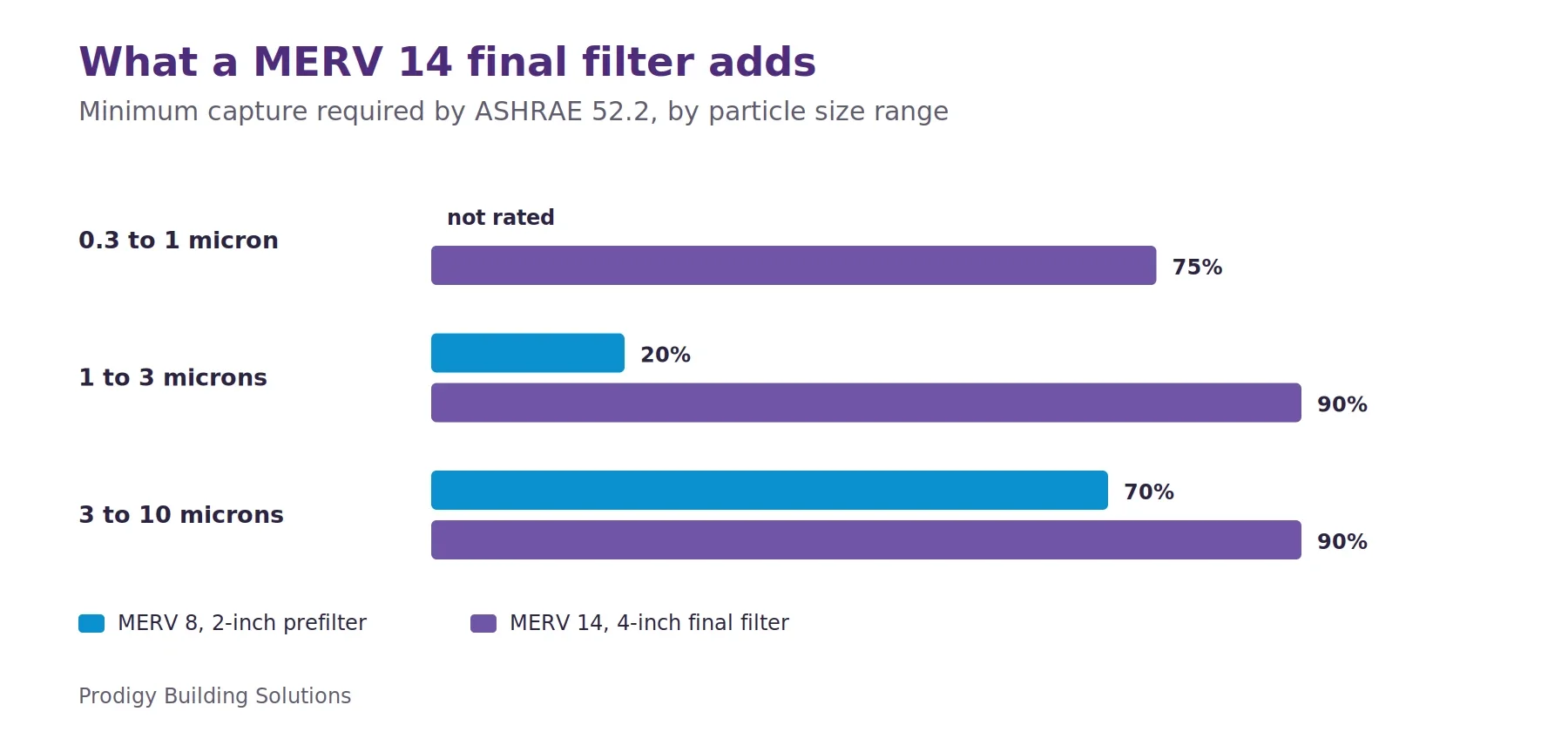
Grouped bar chart of minimum filter capture under ASHRAE 52.2. MERV 8 is not rated for 0.3 to 1 micron particles, captures 20 percent of 1 to 3 micron particles and 70 percent of 3 to 10 micron particles. MERV 14 captures 75, 90 and 90 percent.
Figure 1 — The new units filter the sub-micron range the old filters were never rated for.

The filters

The old units carried ordinary 2-inch filters. The new ones carry a 2-inch MERV 8 prefilter followed by a 4-inch MERV 14 final filter. Under the ASHRAE 52.2 rating, a MERV 8 filter is only required to capture 70 percent of particles in the 3 to 10 micron range and is not rated at all below 1 micron. A MERV 14 filter must capture at least 75 percent of particles from 0.3 to 1 micron and 90 percent of everything larger. Smoke, exhaust and the fine dust that stays airborne in a classroom live in that sub-micron band. The prefilter's job is to take the coarse load so the expensive final filter lasts a full season.

The fans

Each unit moves its air with a fan array, several small direct-drive fans on electronically commutated motors in place of one belt-driven blower. The array turns down smoothly with load, there is no belt to slip or replace, and if one fan fails the others speed up and the classroom never notices. An enthalpy economizer decides when outdoor air is cheaper to cool than return air, using humidity as well as temperature.

The coils and valves

Hot water and chilled water coils were repiped with new two-way modulating control valves and isolation valves. A modulating valve lets a coil hold a setpoint at part load instead of swinging past it the way a two-position valve does. AH-10 also received a duct-mounted hot water reheat coil sized for a 20-degree air temperature rise, so the zones downstream can warm the supply air rather than taking whatever the unit sends. Water-side and air-side balancing was included, and the district's existing ALC controllers were reinstalled in the new units' enclosures with new temperature, humidity and CO2 sensors.

A like-for-like replacement is a good time to ask what a new unit does better at the same size. Filtration and fan control are where the answer usually is.

Our Work
Similar Projects