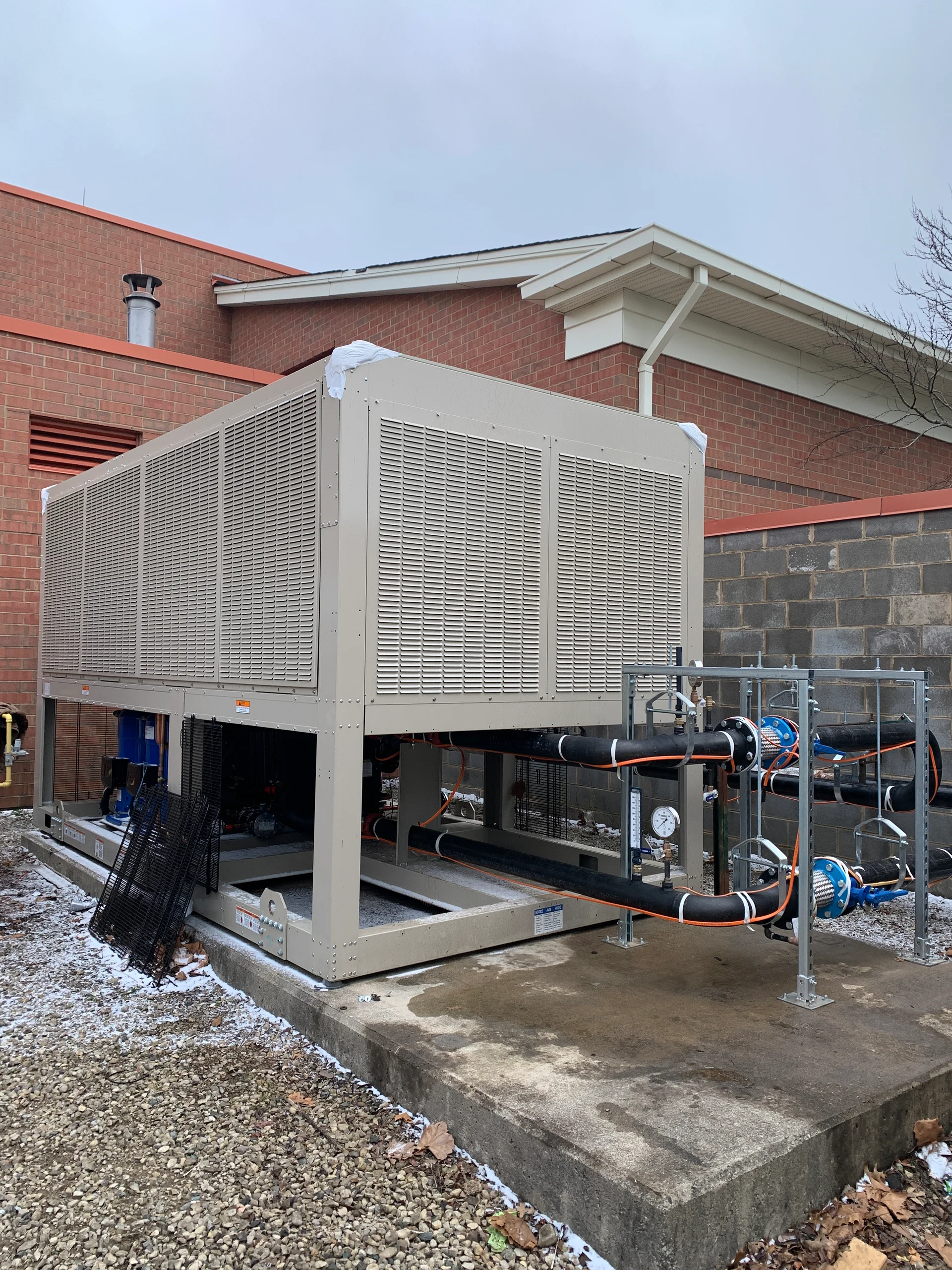
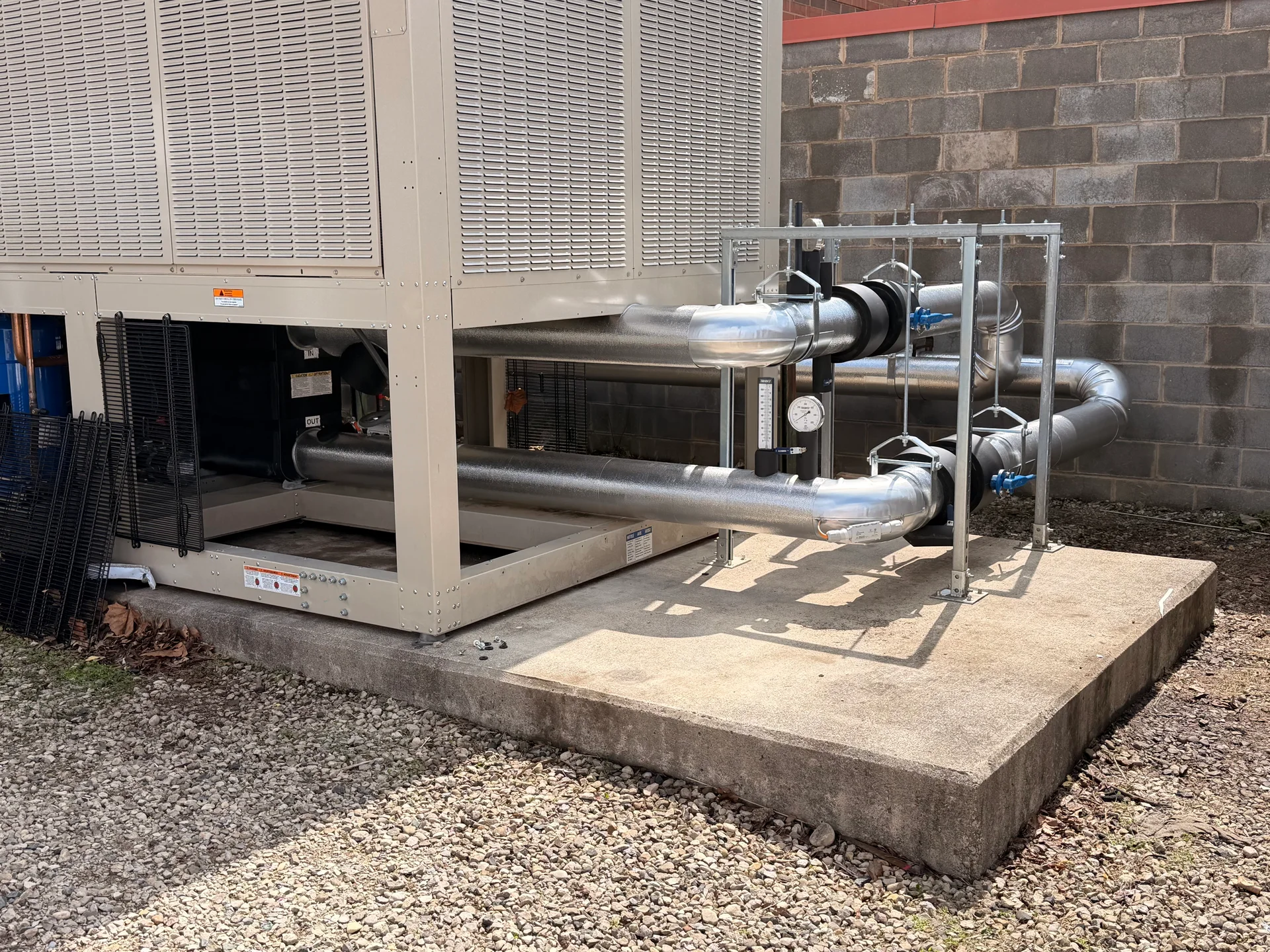
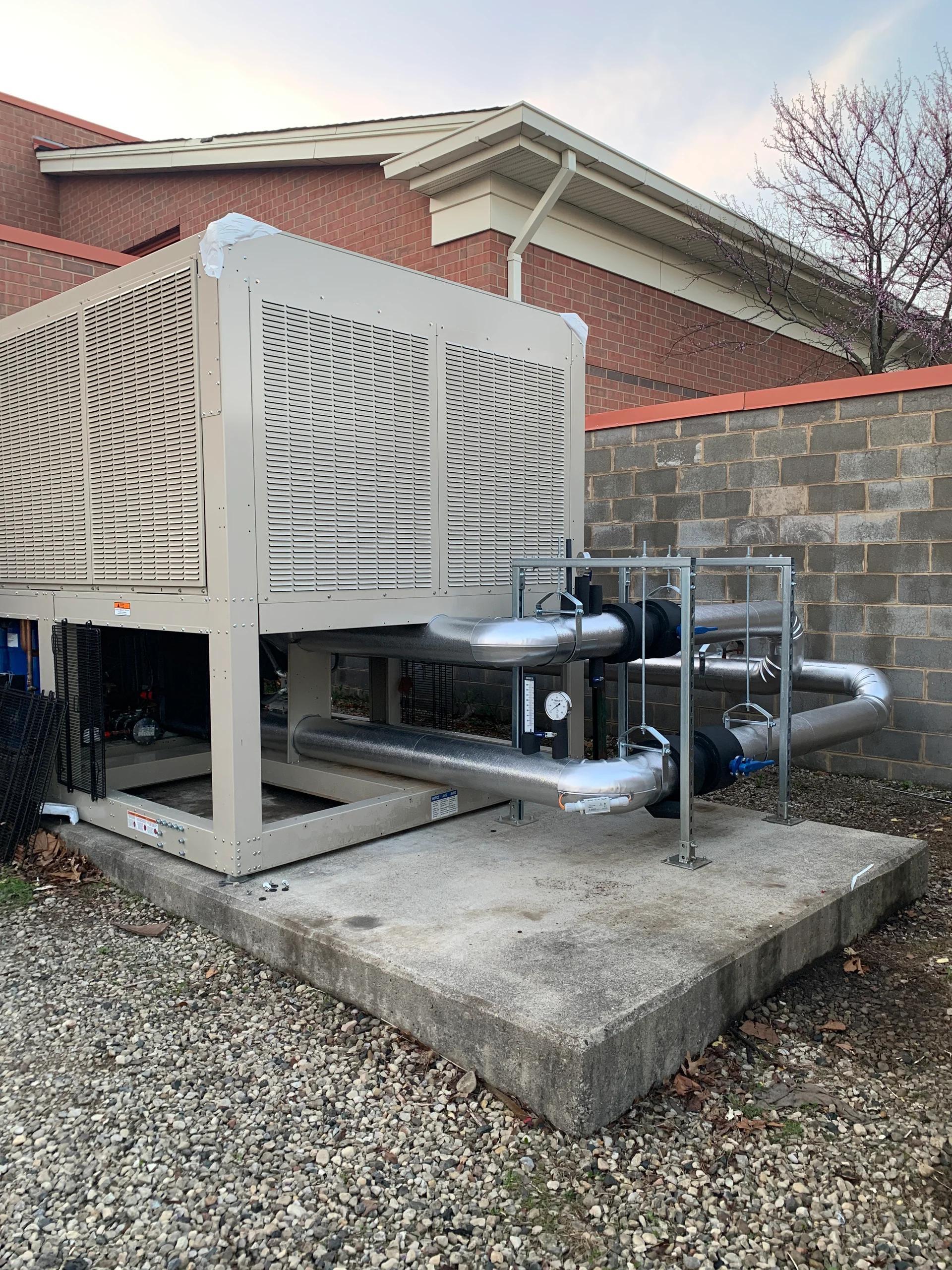
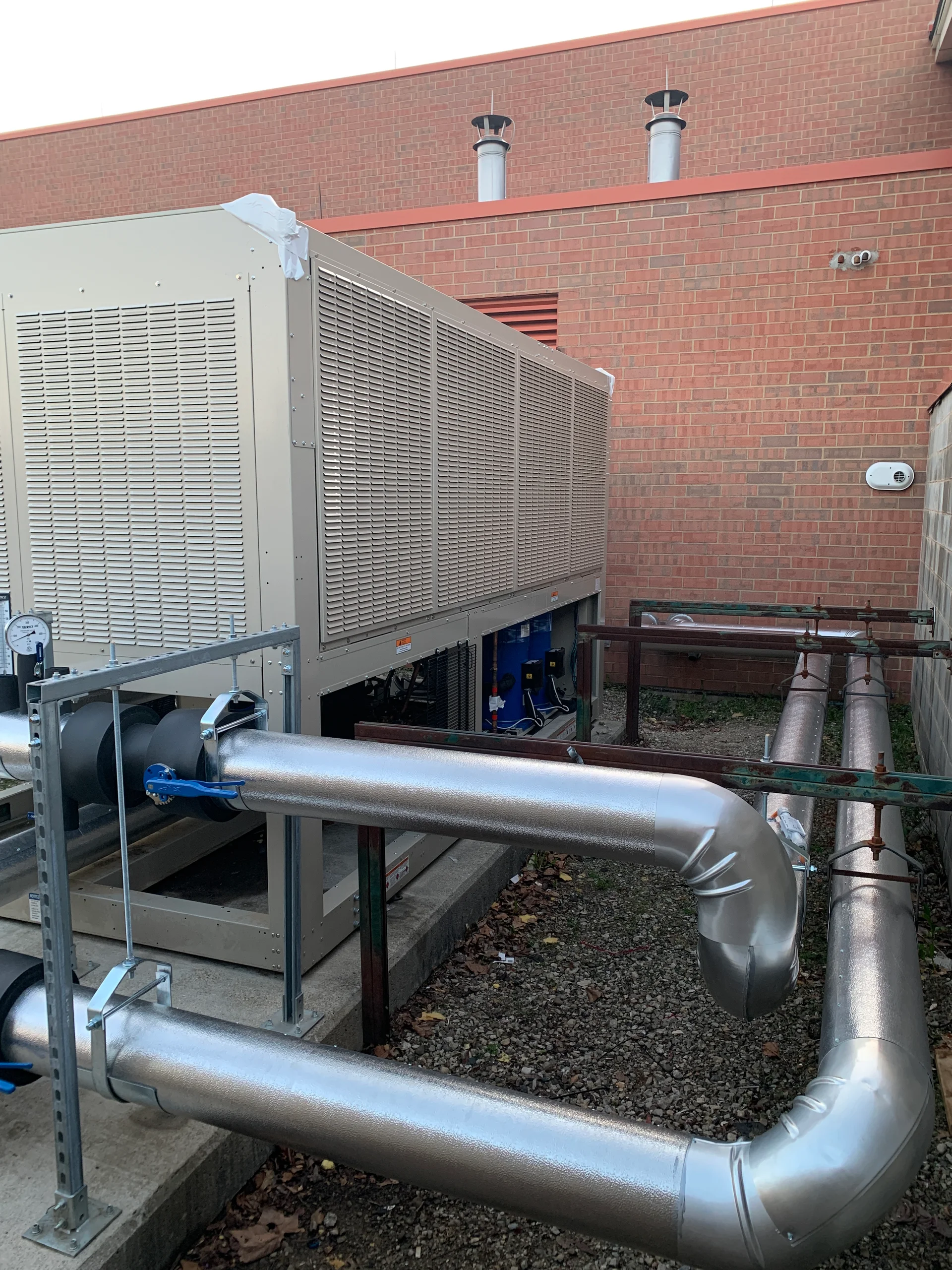
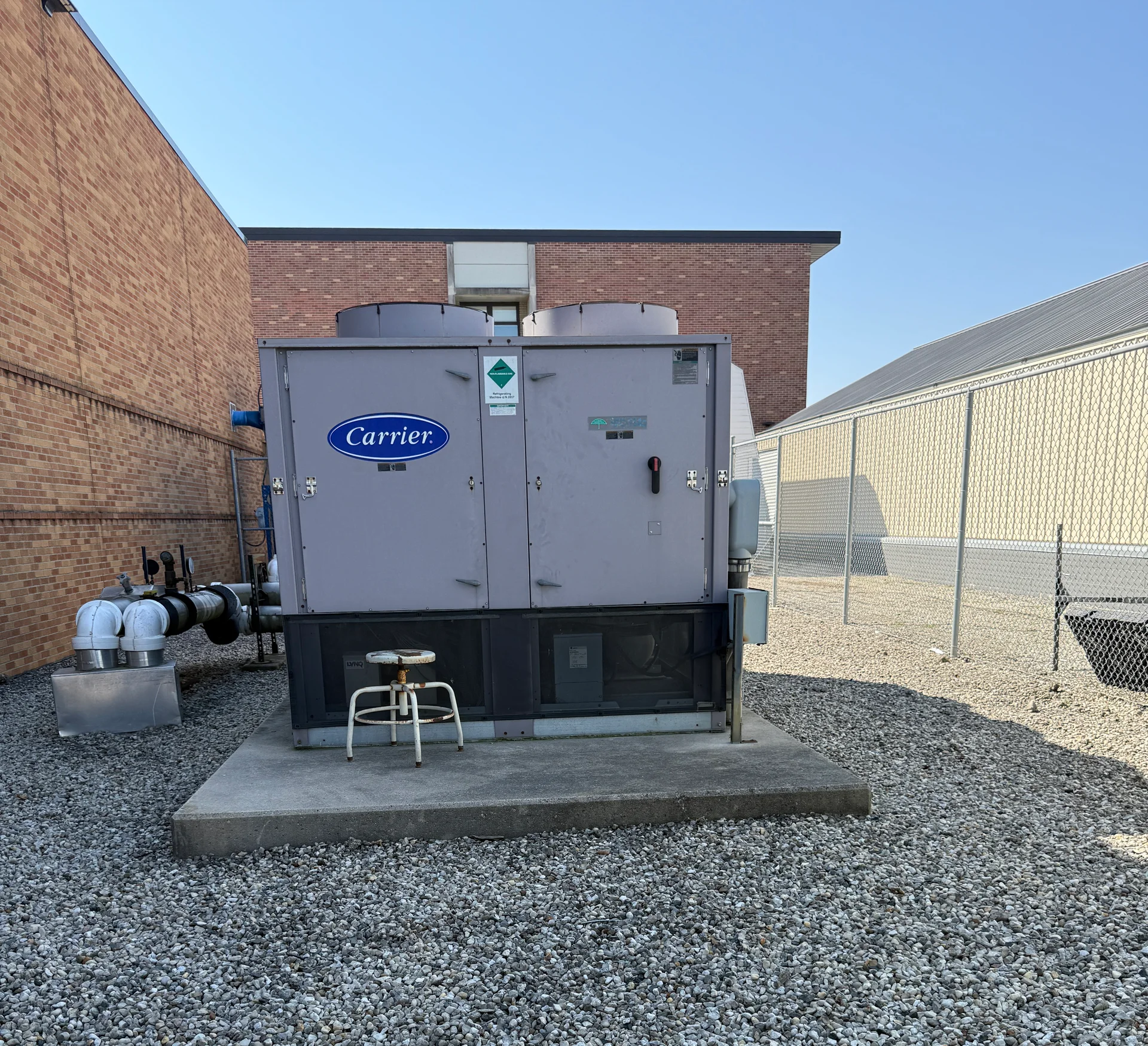
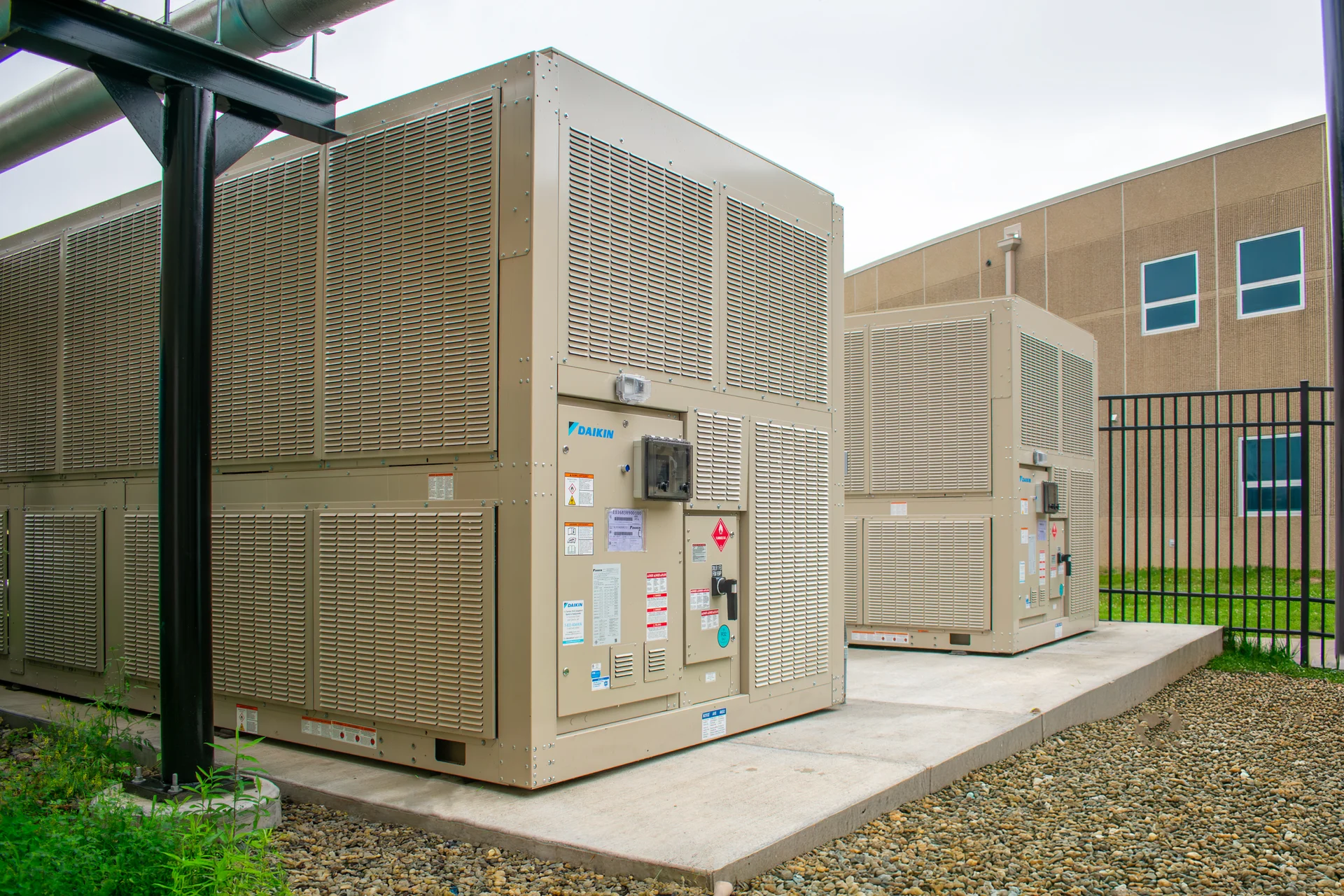
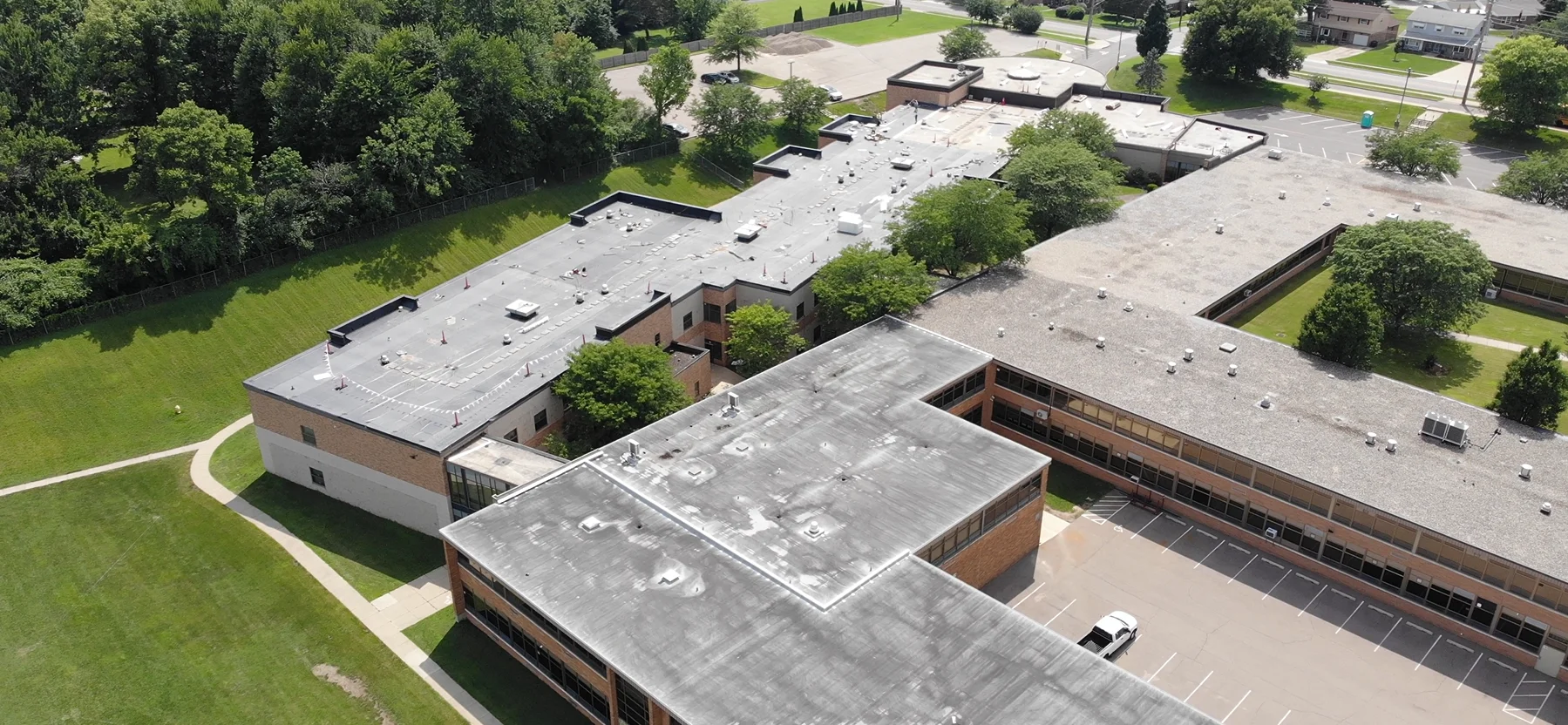
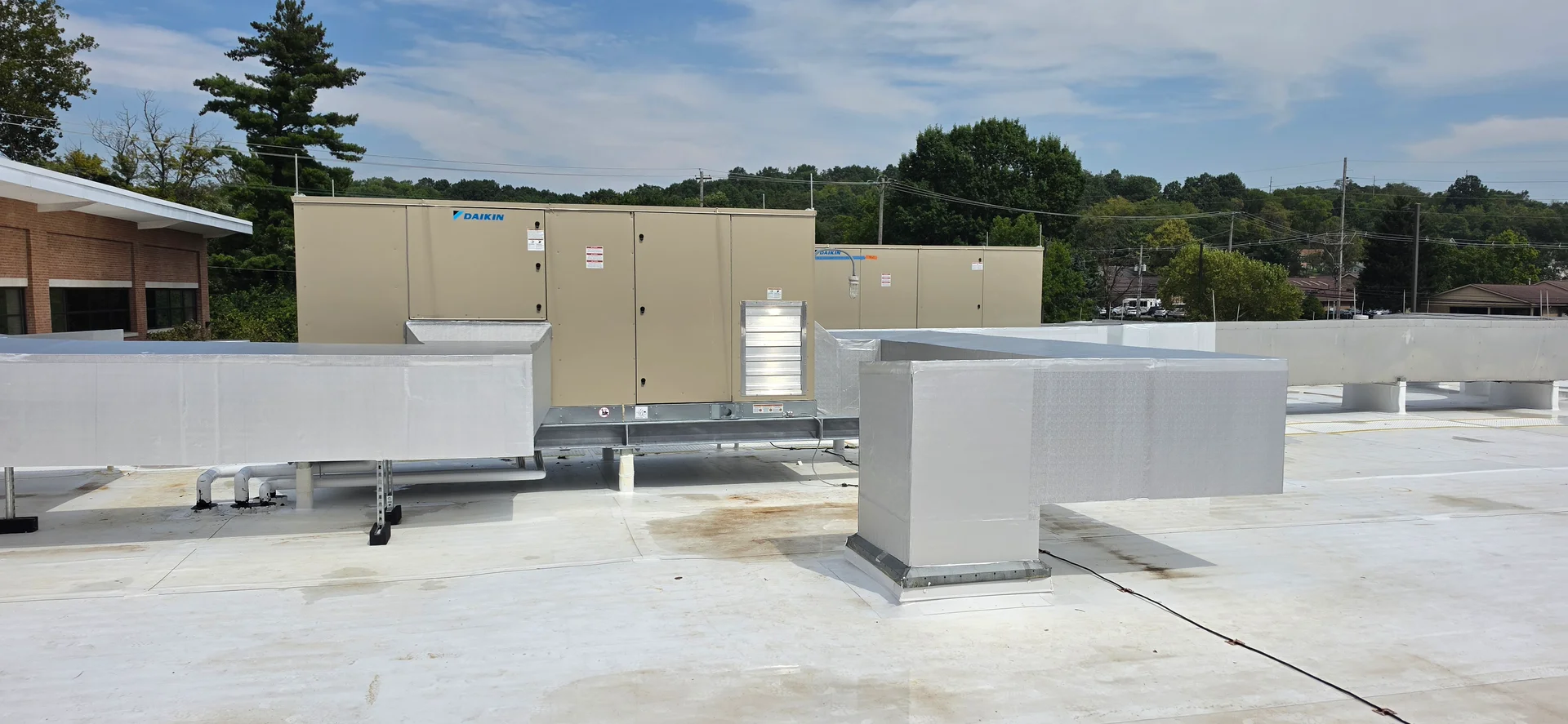
Beverly Gardens Elementary in Dayton starts every cooling season on a new 150-ton Daikin air-cooled chiller, with chilled-water piping built to ride out Ohio winters. Prodigy planned the replacement around what Mad River Local Schools already owned, the same concrete pad, electrical service and building controls, so the district's money went into the new machine and the piping that protects it instead of rebuilding the plant. One Prodigy team carried it from design through crane day and startup, purchased through the TOP-C cooperative contract, with a five-year Daikin parts-and-labor warranty behind the equipment.
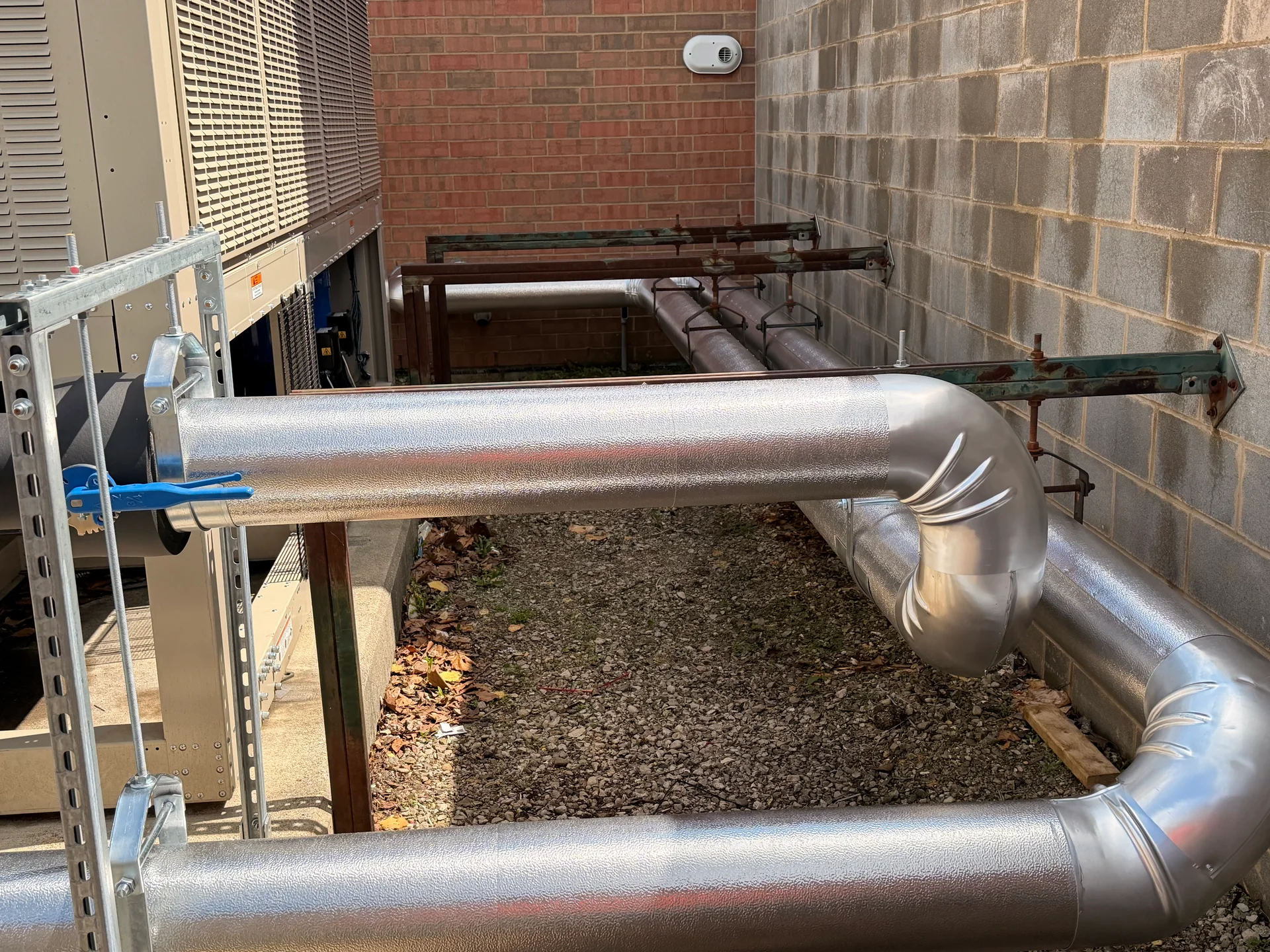
When the district asked to insulate the older outdoor piping as well, it went in as a simple change order with no added time, so every exposed run back to the wall now has the same protection. For a district with other buildings on outdoor chillers, Beverly Gardens shows how much of an existing system can stay when the replacement is engineered to fit it.
Technical Discussion
Keeping an outdoor chilled-water line from freezing
An air-cooled chiller lives outside, and so does some of the water it cools. On a January night in Dayton, with the chiller off, the evaporator and the pipes between the machine and the wall are sitting full of water. There are two conventional ways to keep that water from freezing, and they are not interchangeable.
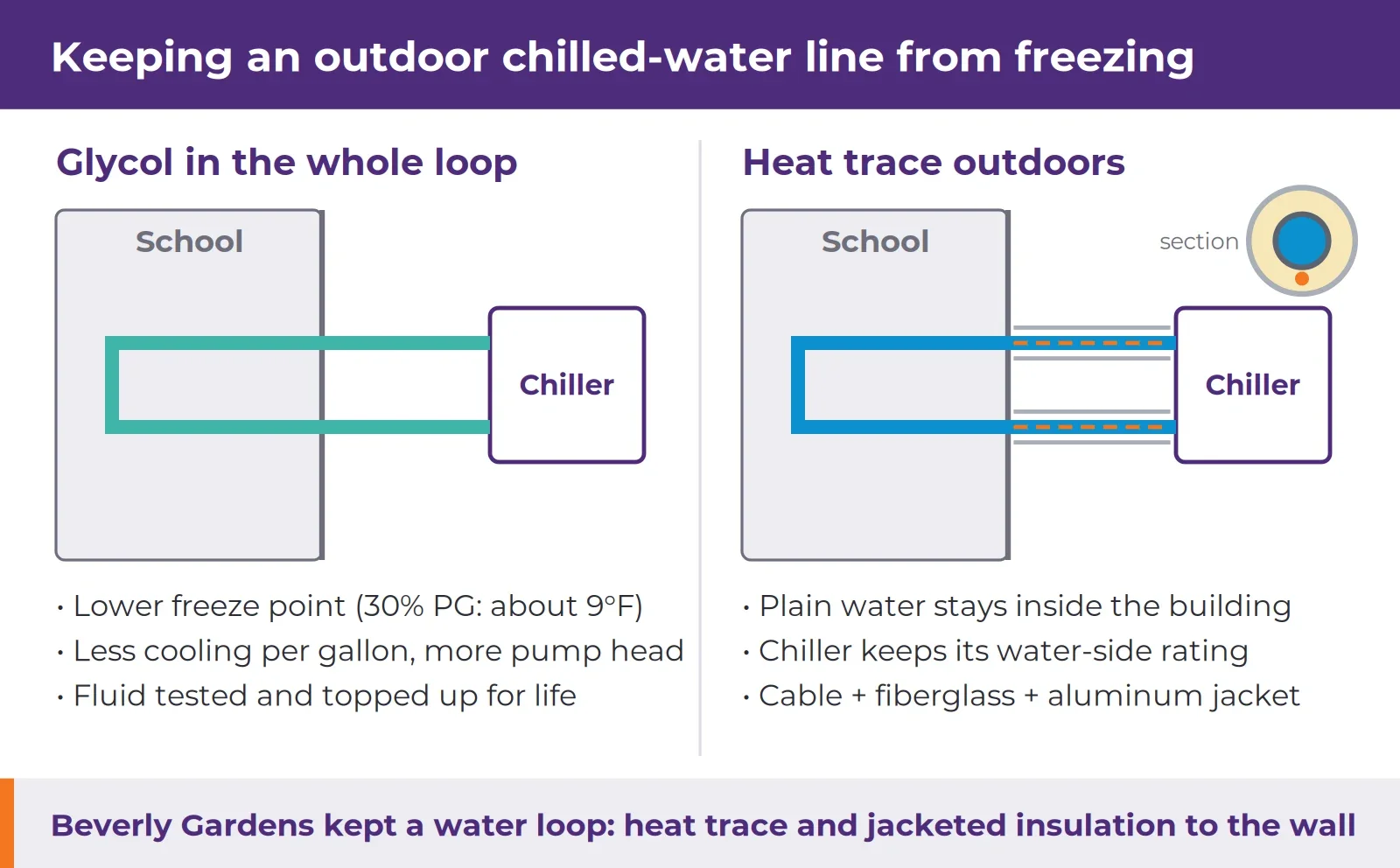
Figure 1: Glycol treats the whole loop; heat trace protects only the exposed run, which is how Beverly Gardens is built.
Change the fluid
A propylene glycol mix lowers the freezing point of the whole loop: roughly 18°F at 20 percent and roughly 9°F at 30 percent, with burst protection lower still. The price is paid every cooling day. Glycol carries less heat than water and is thicker when it is cold, so the same chiller delivers less cooling, flow has to rise to make up for it, and the pumps work against more pressure drop. Manufacturers publish correction factors for exactly this. The mix also has to be tested and its inhibitors maintained for the life of the system, and it has to go into every gallon of the loop, including the long runs that never leave the building.
Keep the water warm where it is exposed
Electric heat-trace cable along the outdoor piping, under insulation and a metal jacket, treats only the part of the system that is at risk. The loop stays plain water, the chiller runs at its water-side rating, and the pumps see the pressure drop they were selected for. What heat trace asks for is power, a working controller, and insulation that stays dry. A heat-trace circuit under wet or torn insulation is fighting the weather with nothing between them.
What Beverly Gardens chose
The school's loop was already plain water with heat trace on the exterior piping, so the engineering question was not which method is better in general, but whether the existing approach was being carried all the way to the wall. Converting a working water loop to glycol would have meant draining, flushing, re-rating the new chiller and re-checking the pumps for a problem that was confined to a few dozen feet of pipe outside. Instead, the heat trace was modified and reinstalled on the rebuilt lines, the new piping got fiberglass insulation with an aluminum jacket, and when the older exterior piping was exposed during the work, the district extended the same jacket over it by change order.
If your outdoor chilled-water piping relies on heat trace, the jacket is the part to walk every fall. A dented section or an open seam lets water into the insulation, and wet insulation is how a traced pipe still freezes.