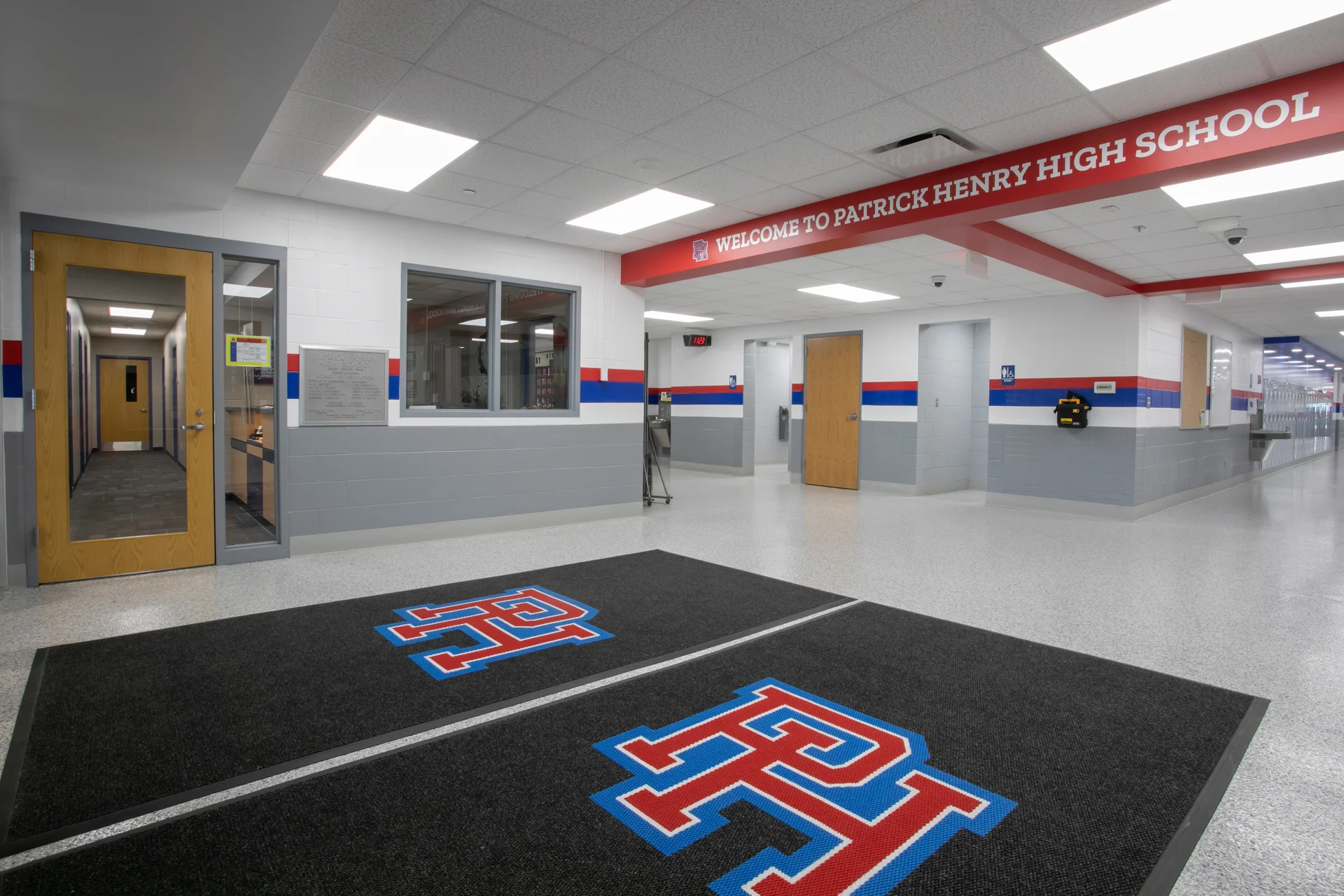

Patrick Henry High School entrance lobby with the school logo inlaid in the mat
Building RenovationNorthwest OhioDaytonTIPS

Patrick Henry Building Renovation

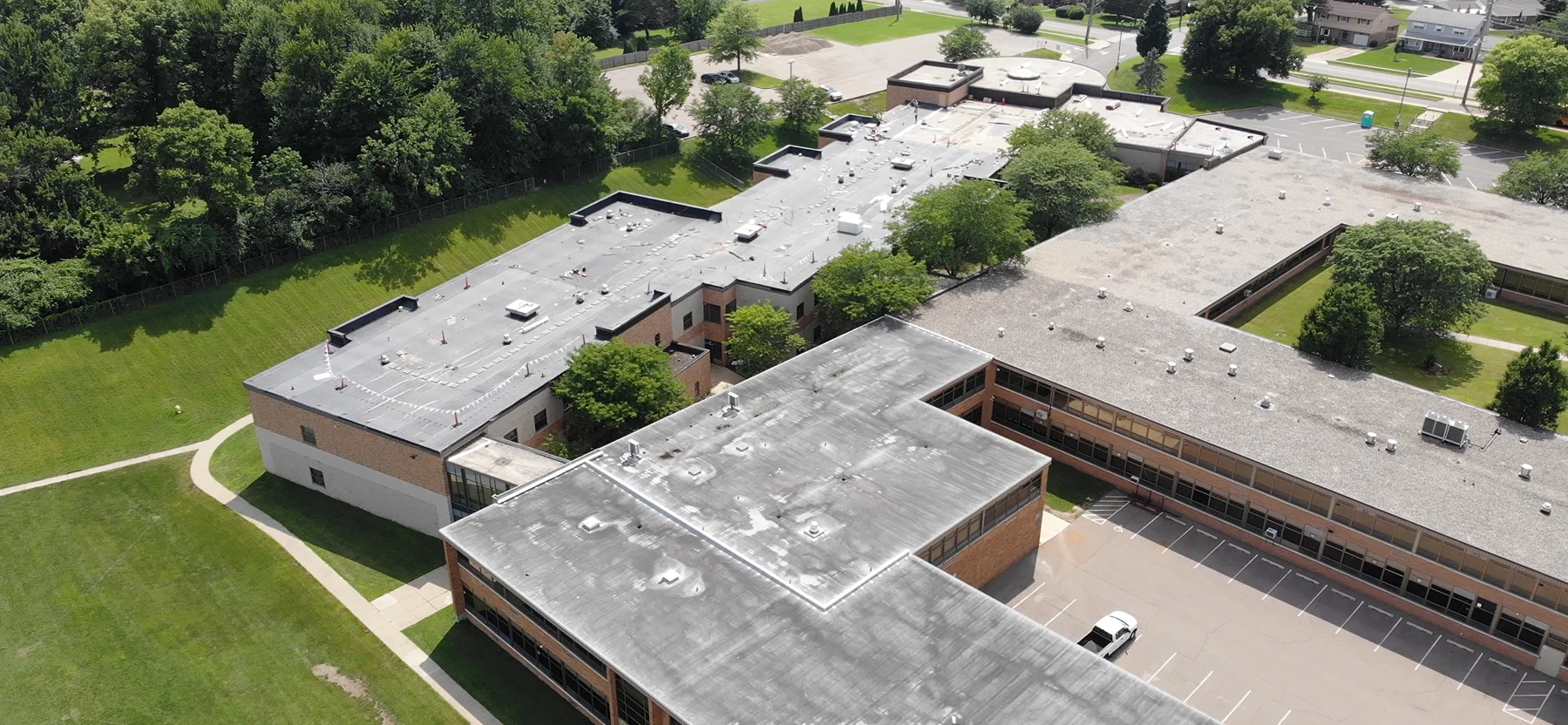
Patrick Henry Schools had a high school where the systems had aged into one another. The underground storm and sanitary piping was judged too fragile to patch and had to come out from under the slab. The building was not air conditioned, there was no fire sprinkler system, and the return air path ran through louvers in the classroom doors to the corridor and up to the units — a route that no longer met code. Five of the eight roof sections were coming off, one of them a ballasted membrane dating to 1981. Fixing any one of those meant opening the floor, the ceiling or the roof that the others also needed opened, so the district bought them together, as a single design-build agreement pre-bid through TIPS contract 181101.

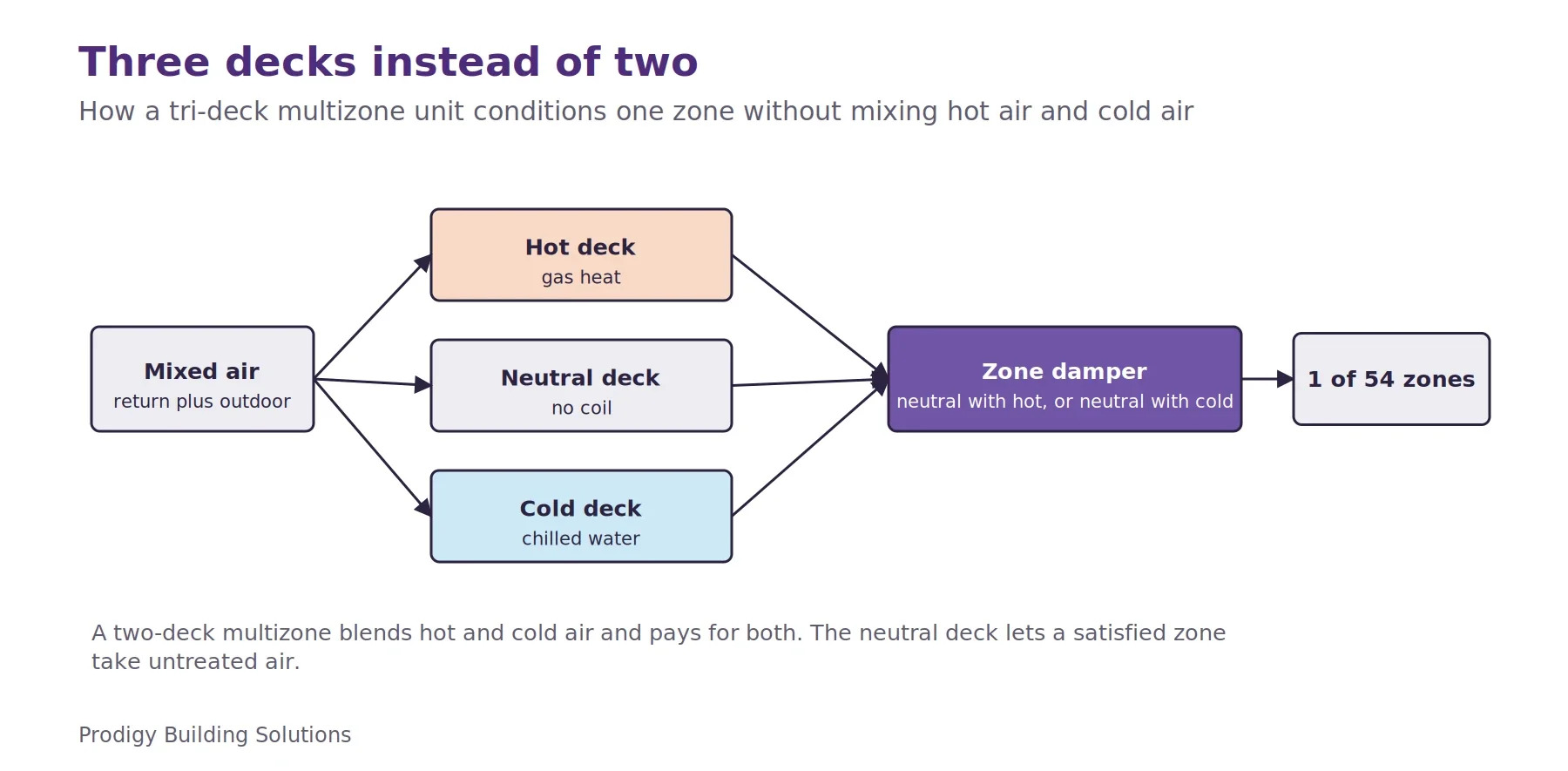
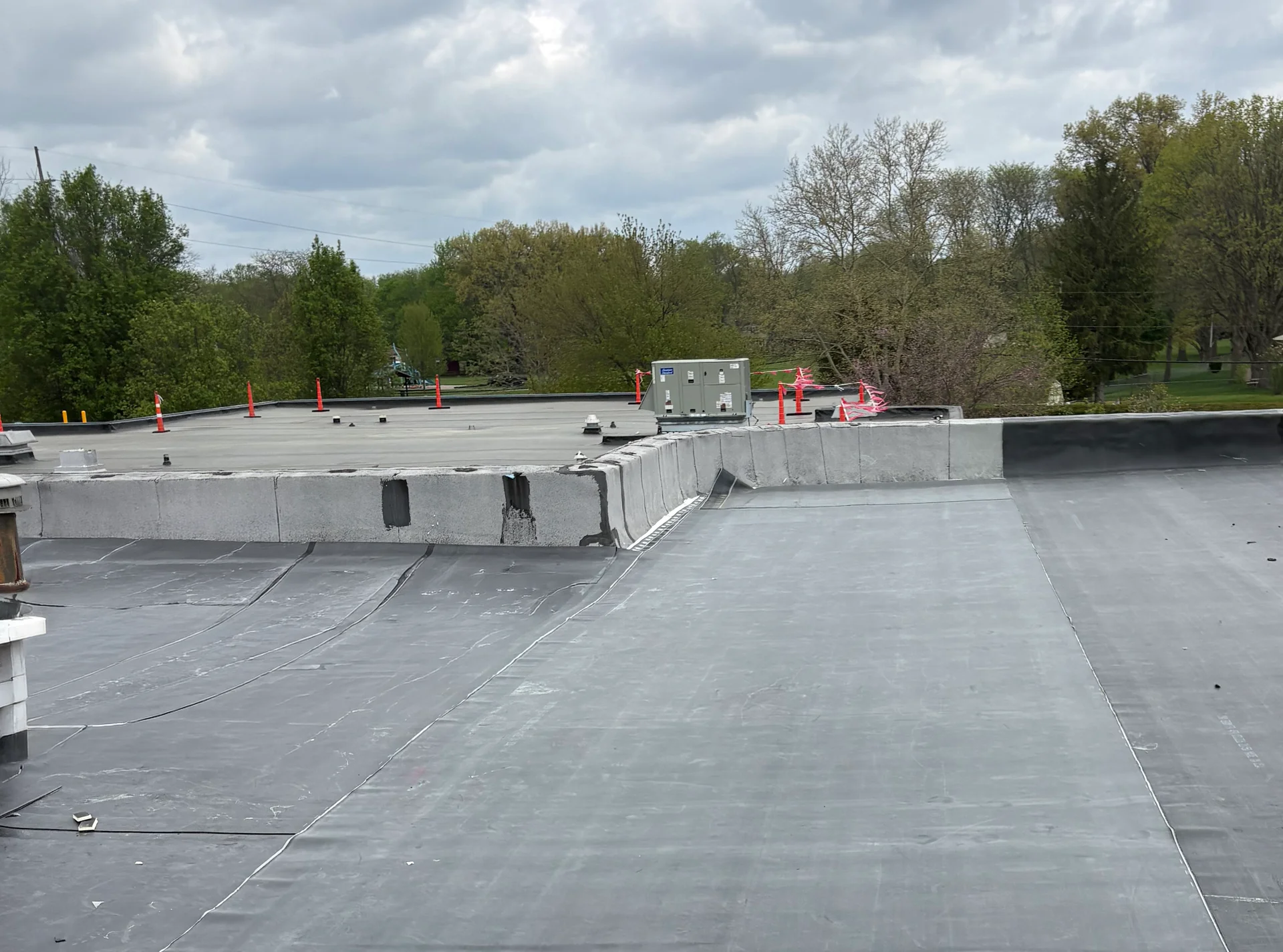
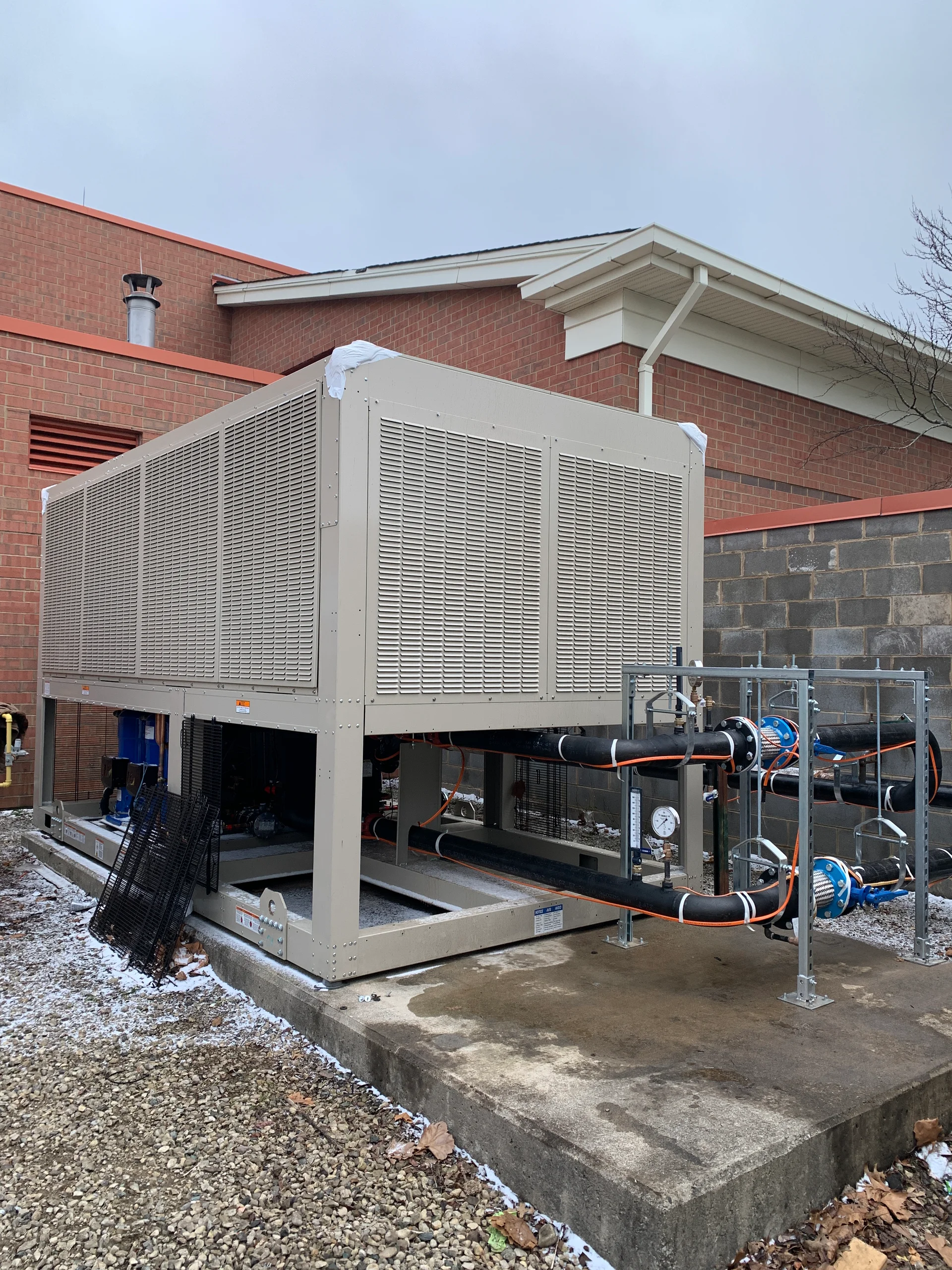
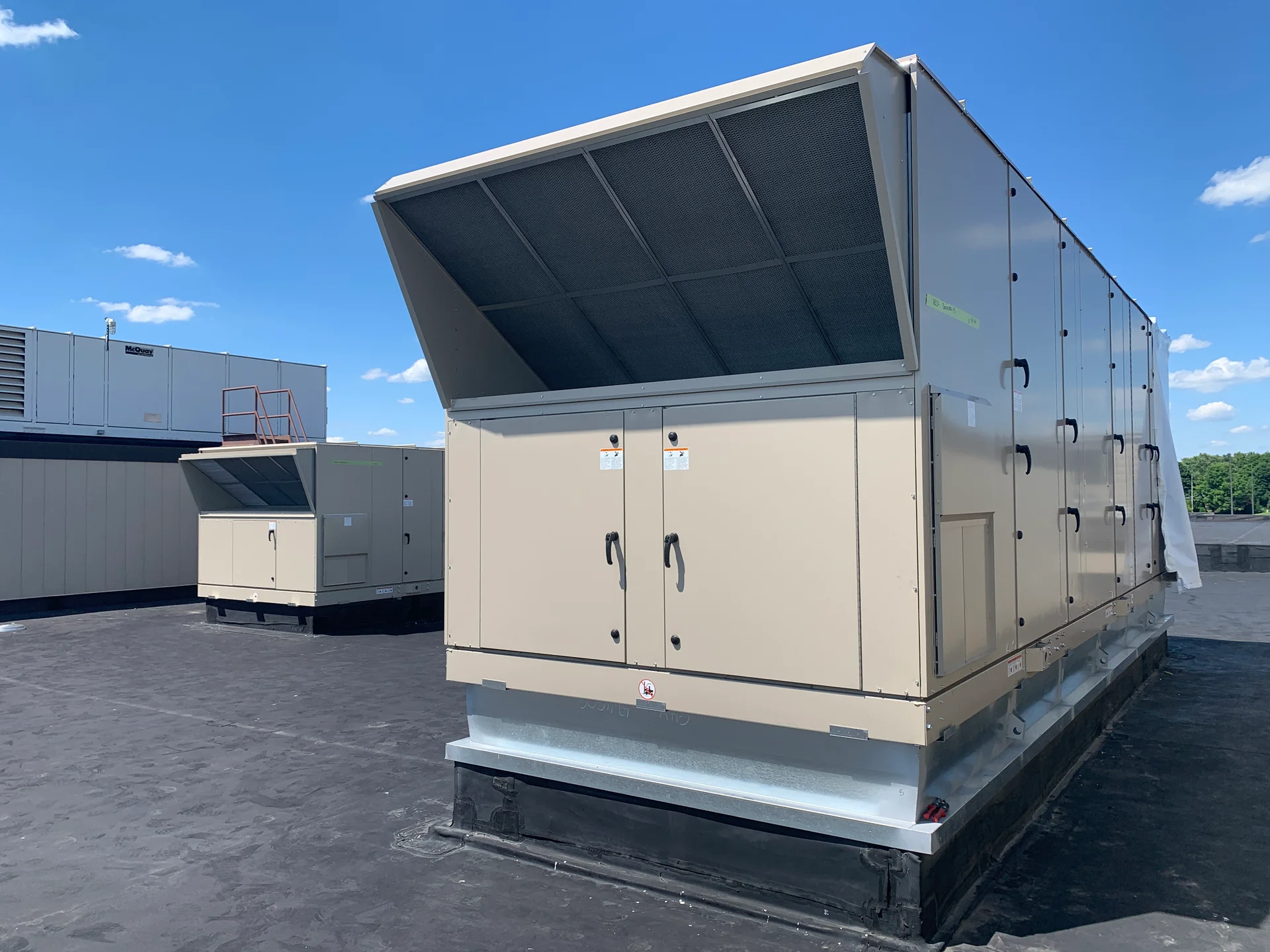
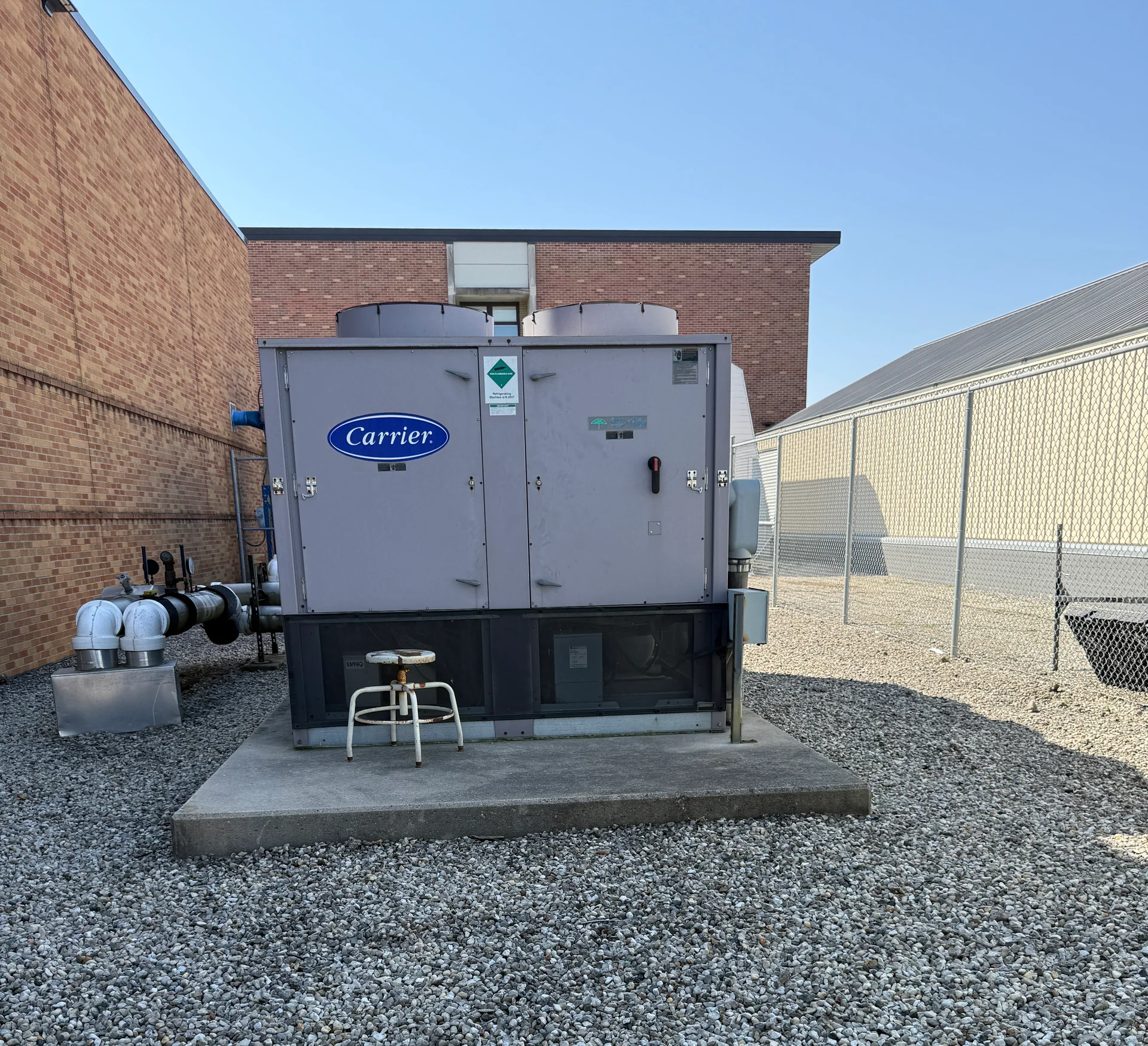
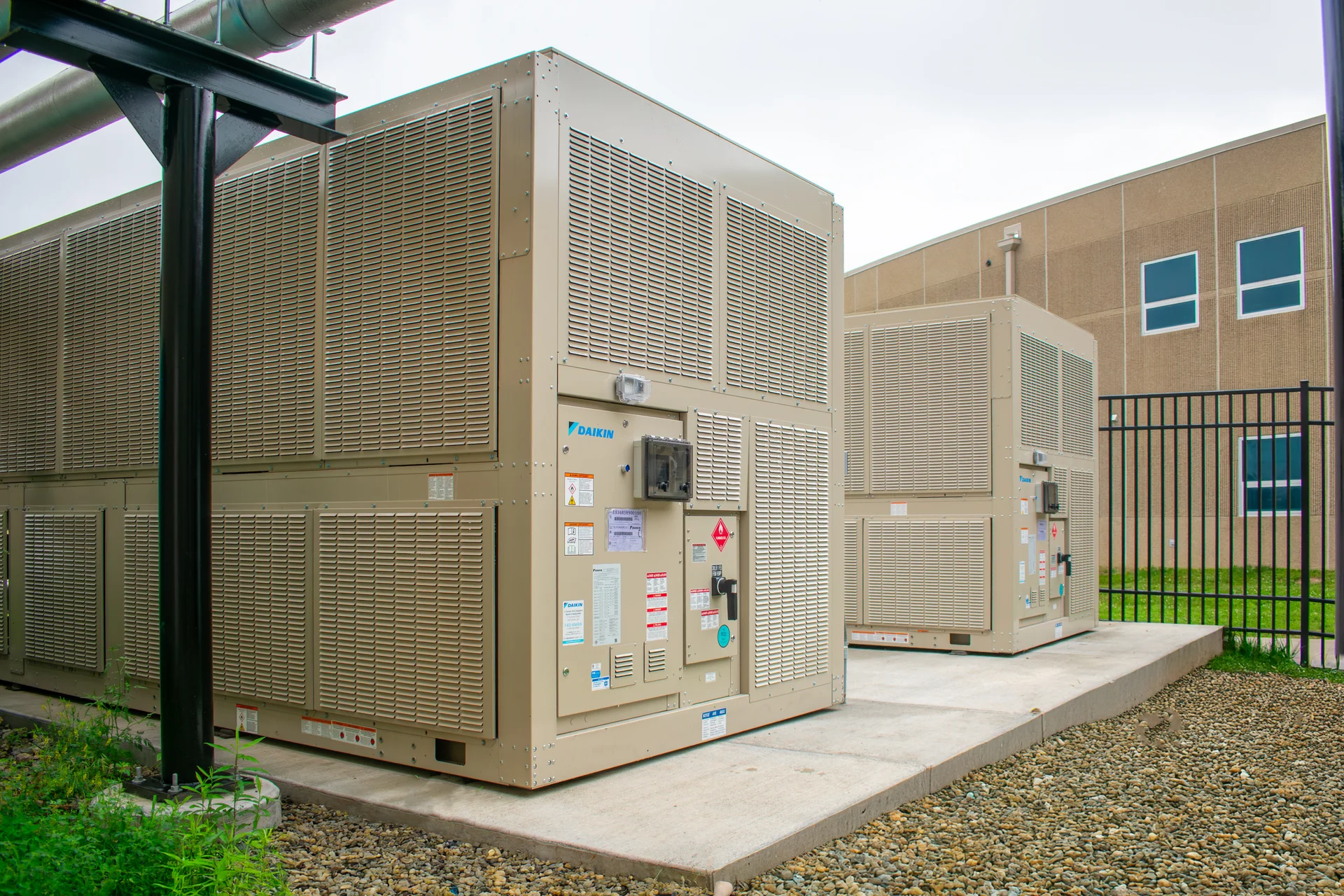
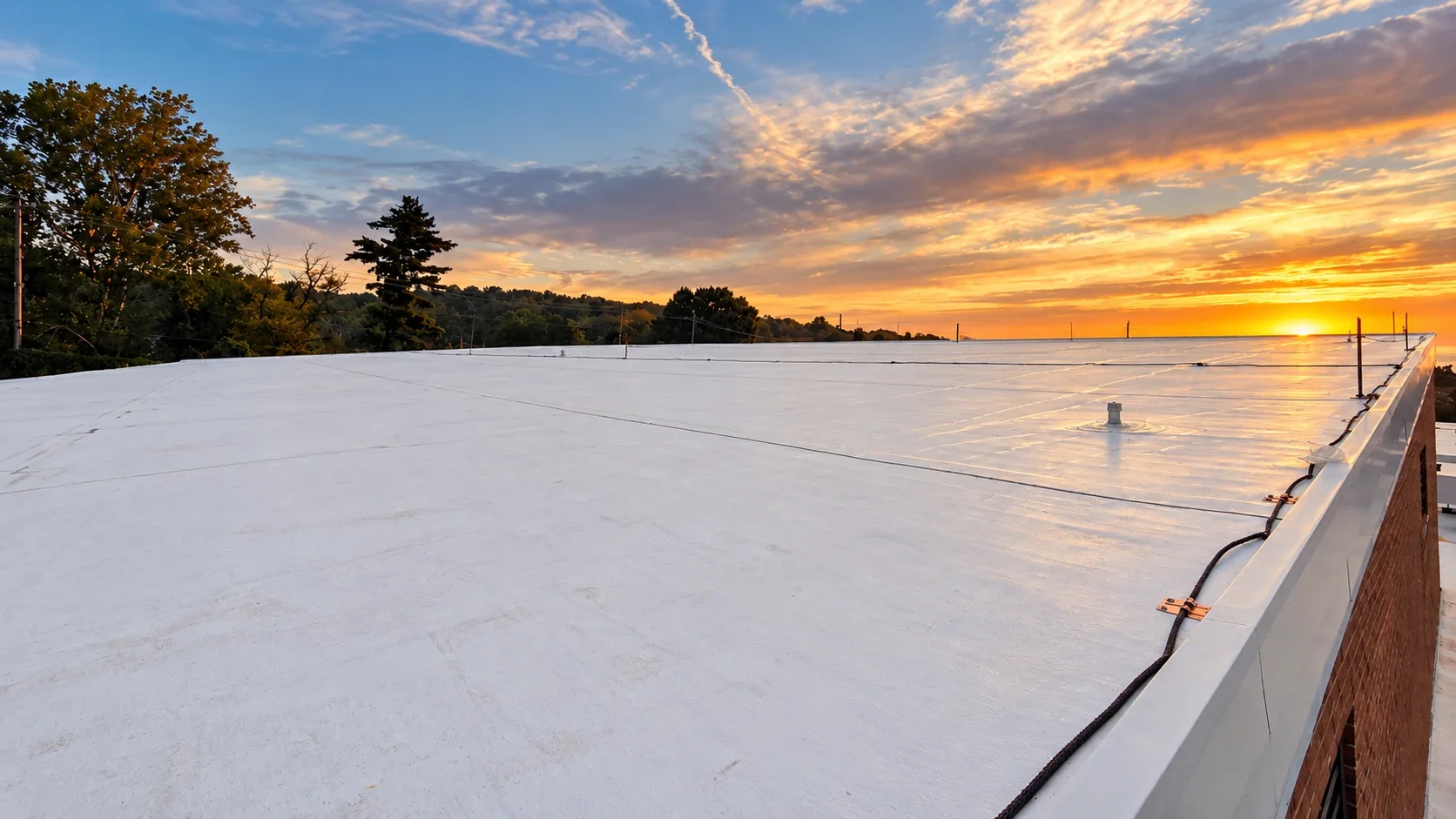
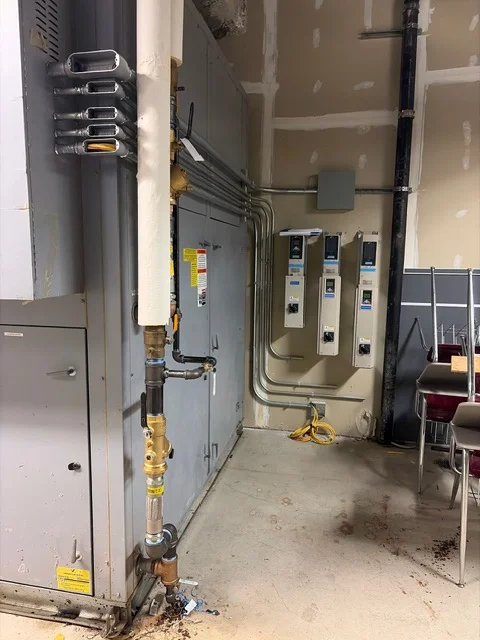
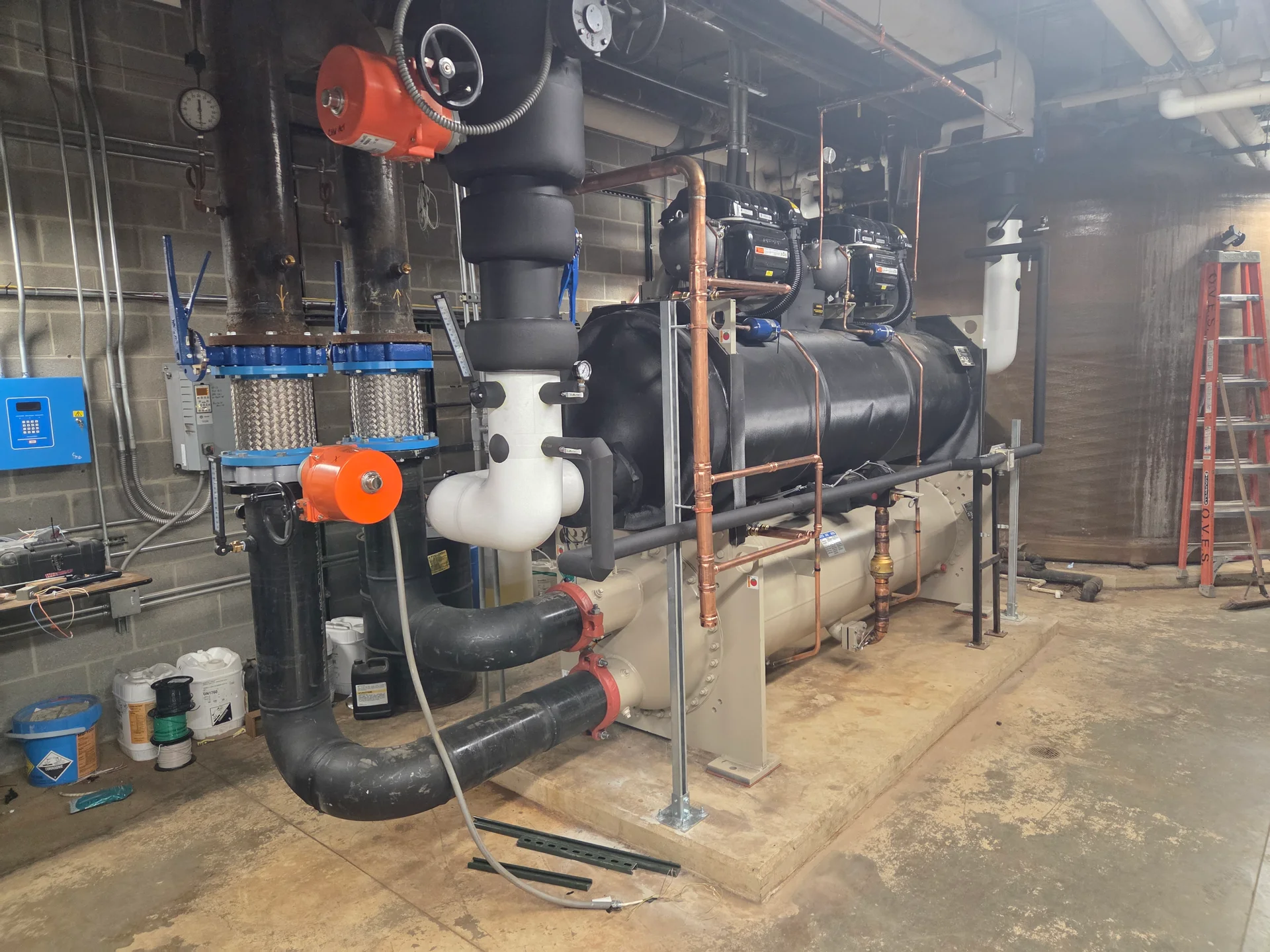
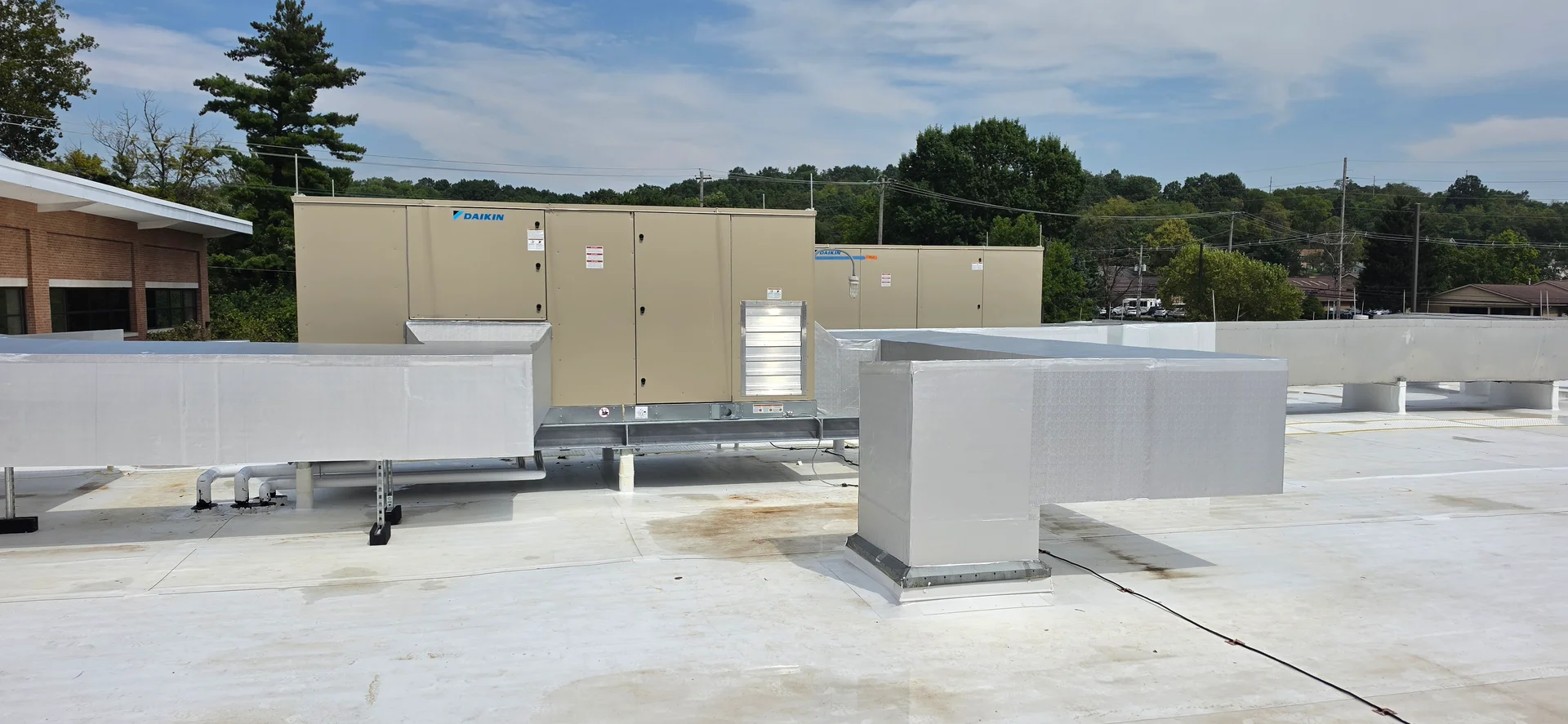
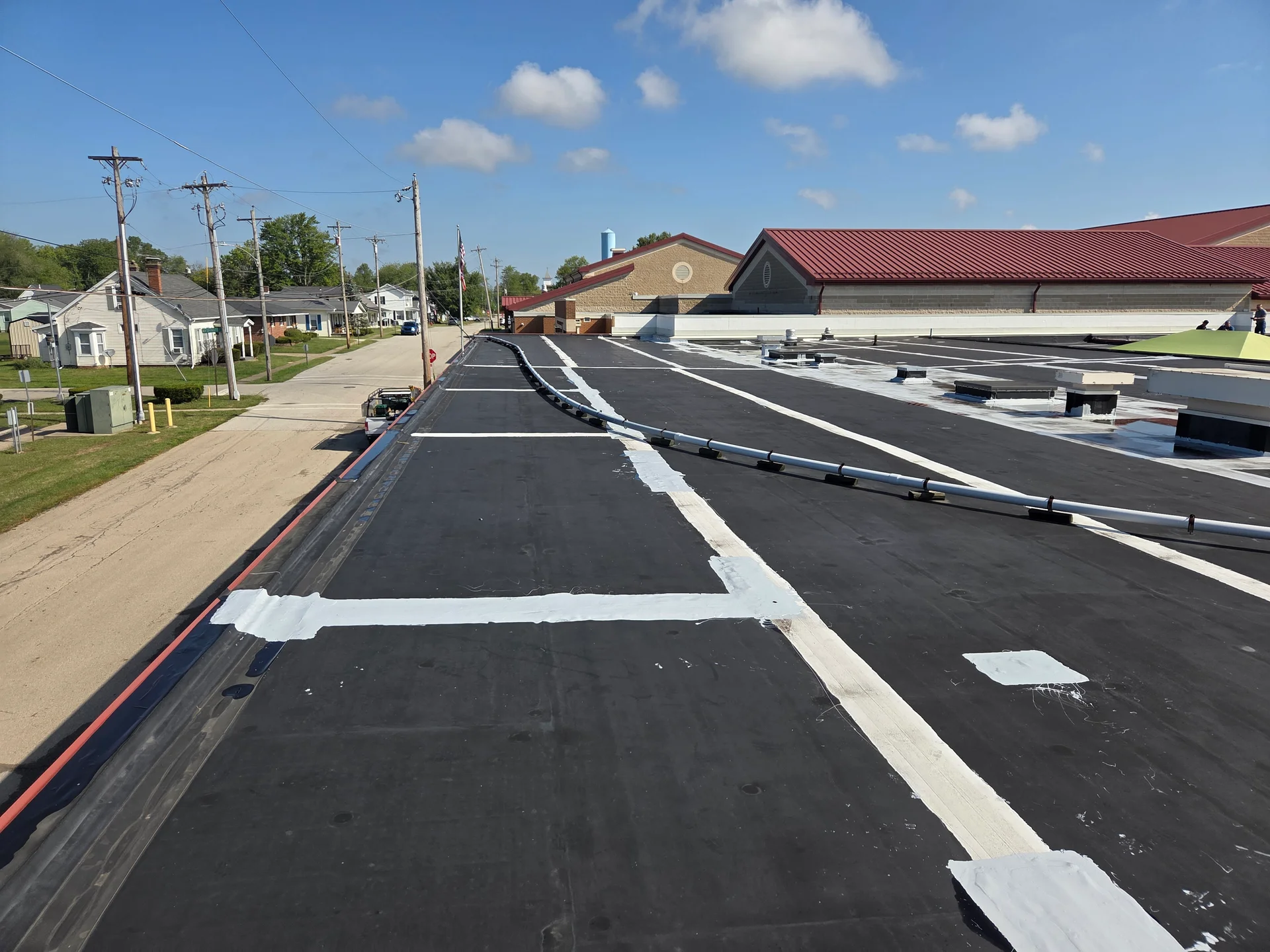
The building was converted to chilled-water cooling: one 180-nominal-ton air-cooled chiller with a dual-pump package feeding five tri-deck multizone rooftop units sized to the existing curbs, with the chilled water charged to 30 percent glycol for the run across the roof. New PVC storm piping in 4-inch through 12-inch sizes was tied back to 18 existing risers, with new sanitary below the slab and the restrooms rebuilt to current code. Five roof sections were rebuilt to an average R-25 under fully adhered 75-mil EPDM carrying a 30-year warranty. Inside, the district got LVT in classrooms, epoxy in the corridors, quarry tile in the kitchen, a new gym floor, roughly 1,177 seats of motorized telescopic bleachers, 464 LED flat panels with occupancy sensors and 41 dimmer zones, new ceilings, doors, lockers, casework and classroom furniture. At the stadium, six old poles came out and four new LED poles went in near the 20-yard lines, designed for an average of 50 horizontal foot-candles on the field.

Work started in March 2020, the building was ready for classes on September 1 that year under a temporary certificate of occupancy, and the corridor epoxy was finished over the winter break on January 4, 2021. Amendment No. 1, signed that same January, is part of this project: it removed the gymnasium video system and the gym and stadium sound systems, changed the gym floor to a build-up over the existing sleepers instead of a full tear-out, and redirected the difference into what demolition had exposed.
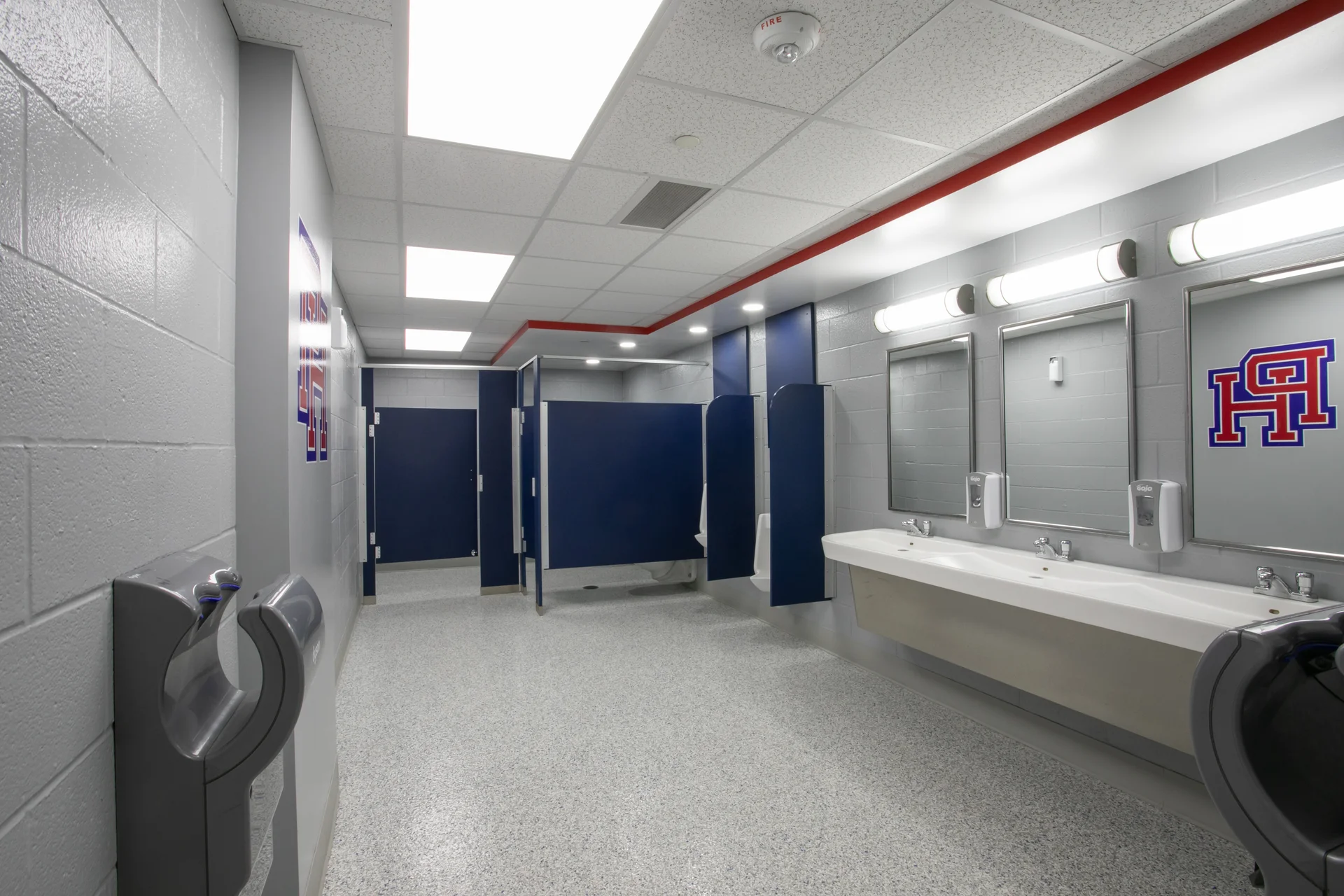
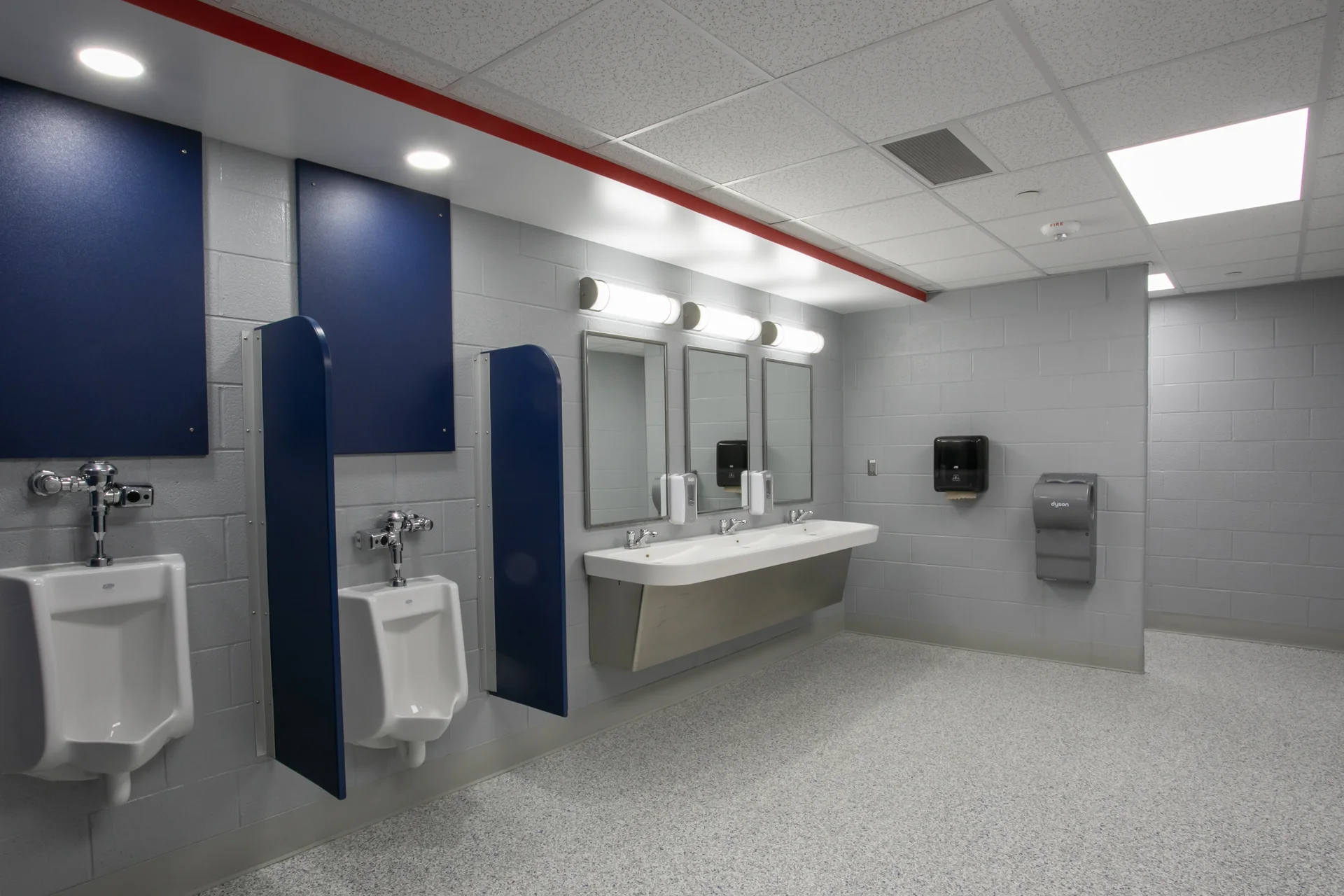
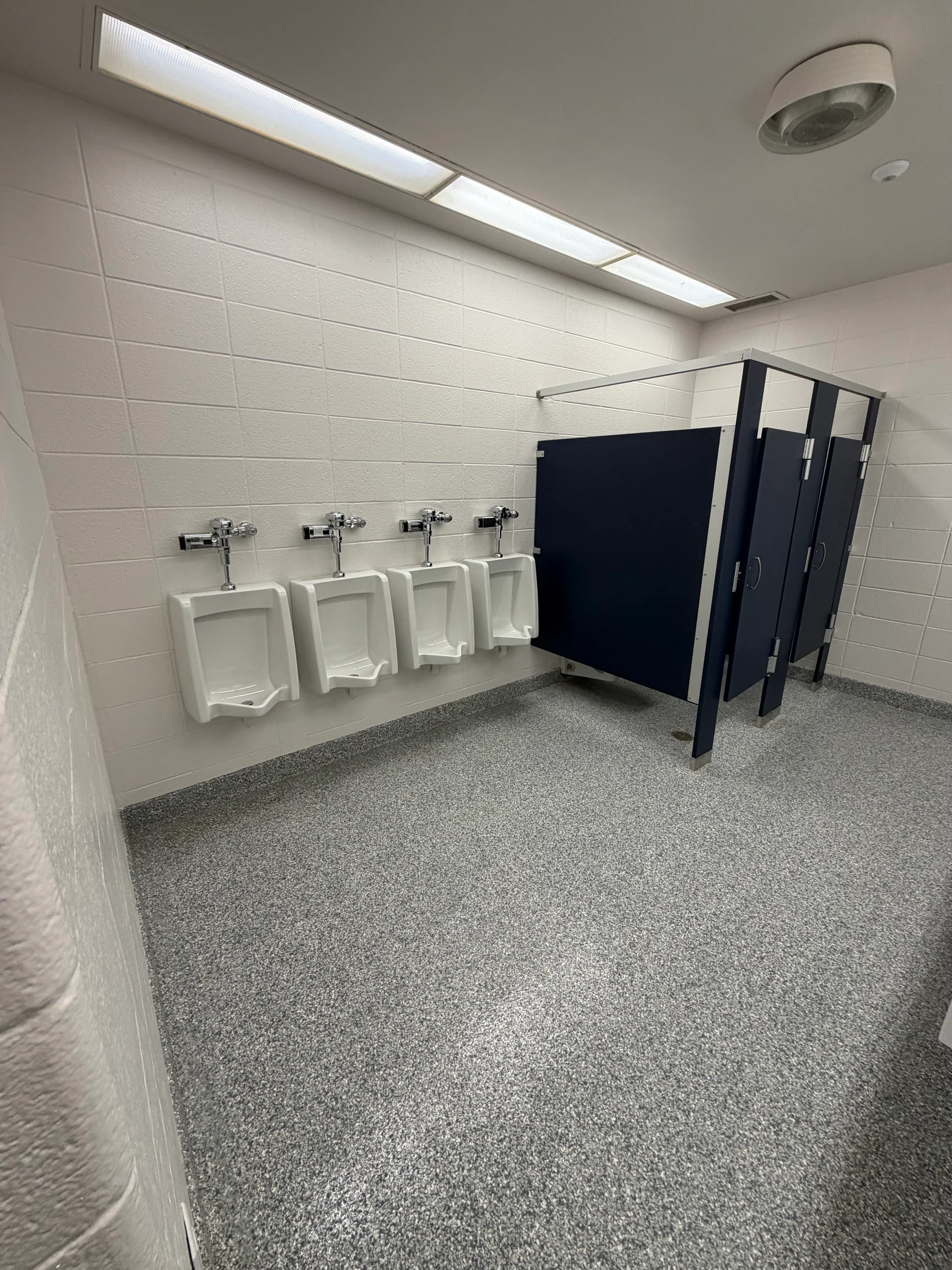
Renovated Patrick Henry restroom with blue partitions and a trough sink
Patrick Henry restroom fixtures and privacy screens after renovation
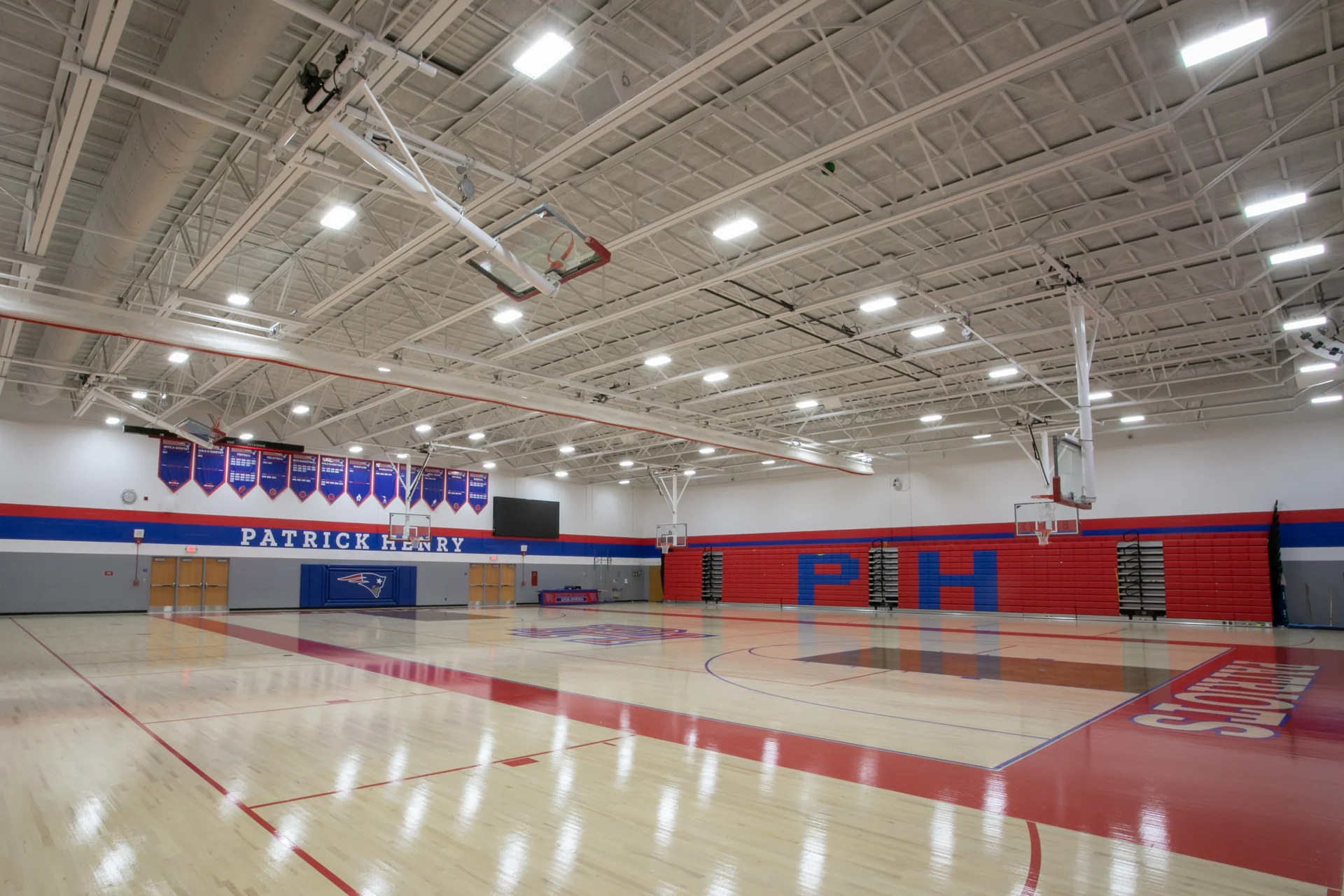
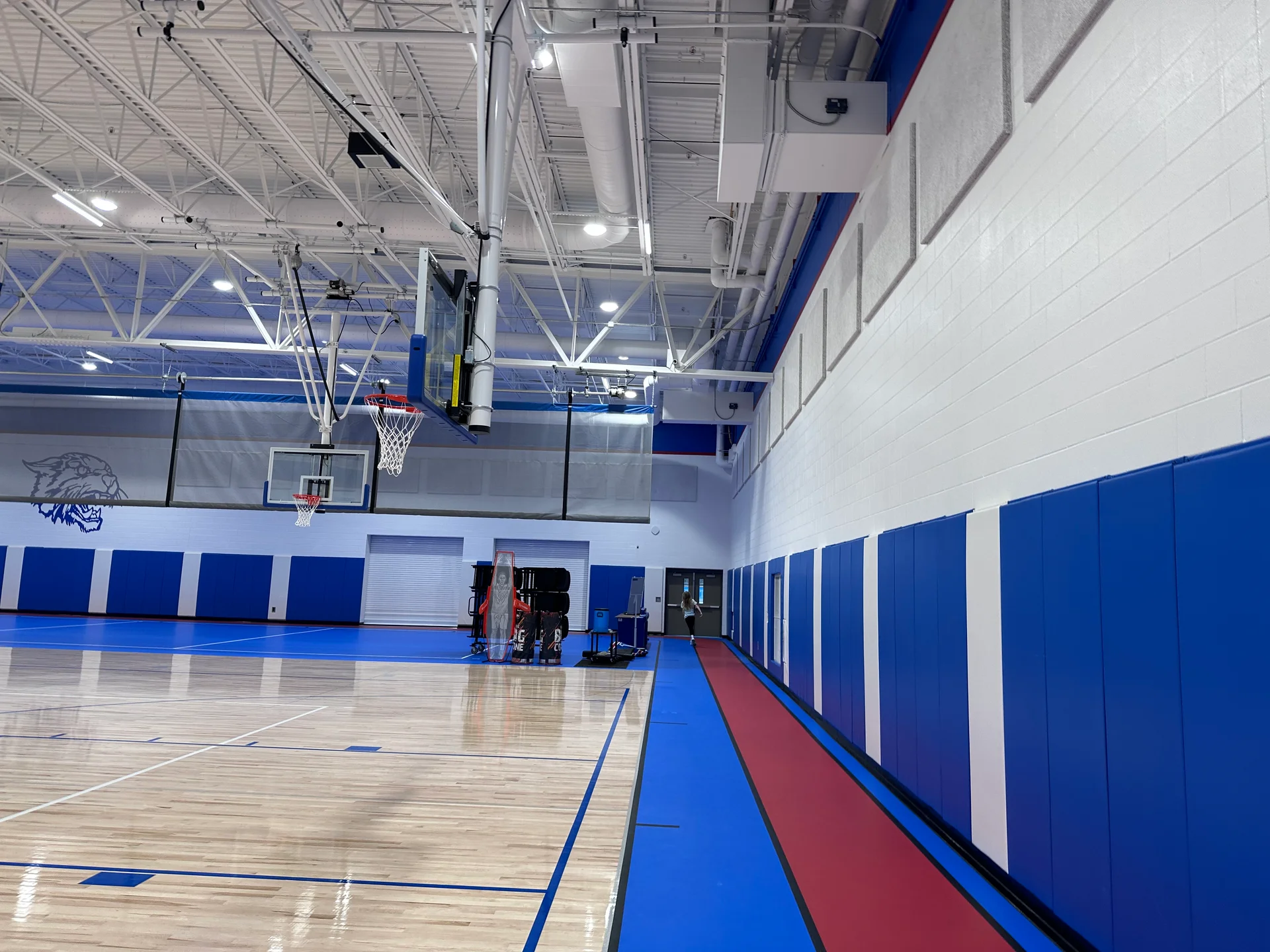
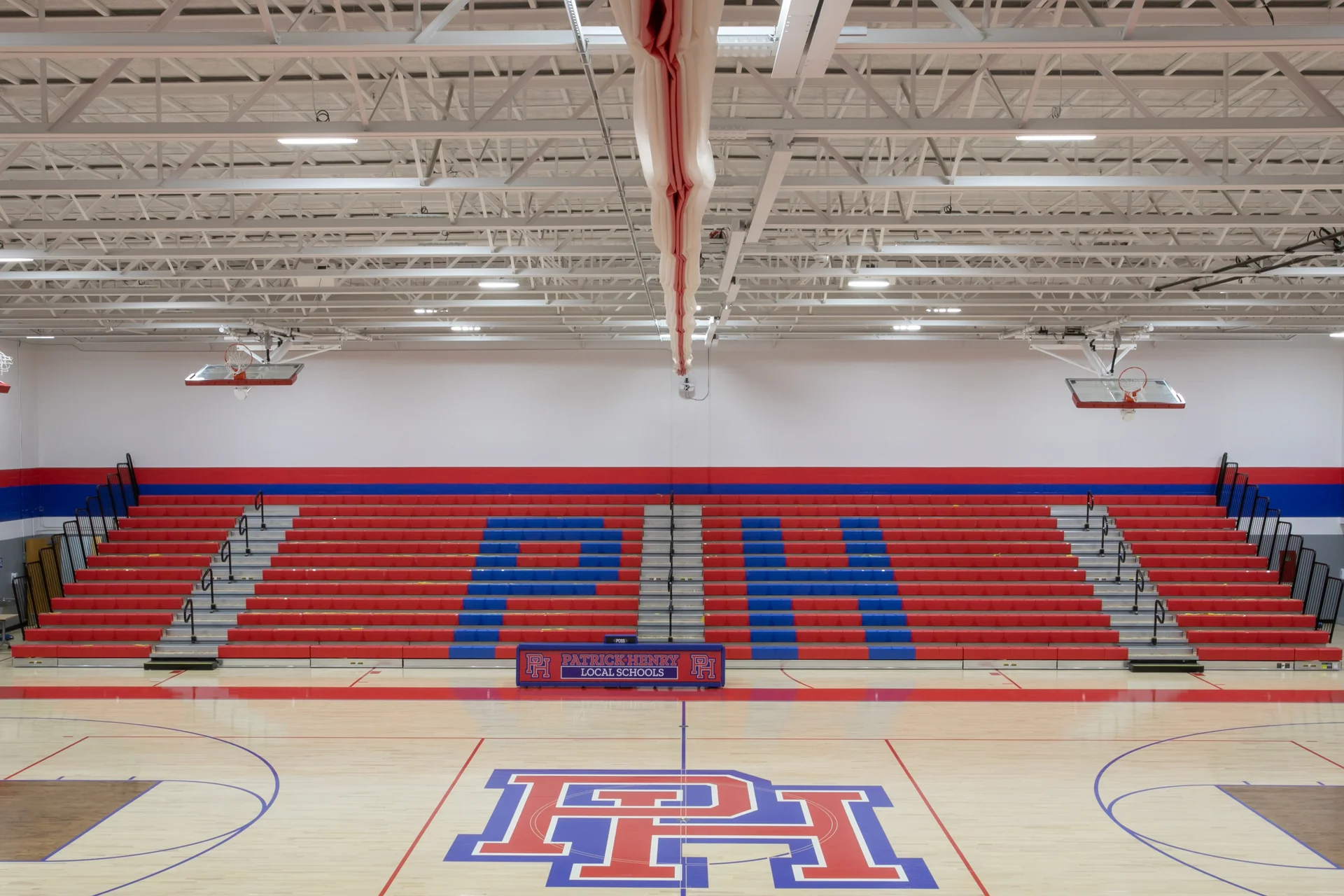
Patrick Henry gymnasium with new lighting, banners and red bleachers
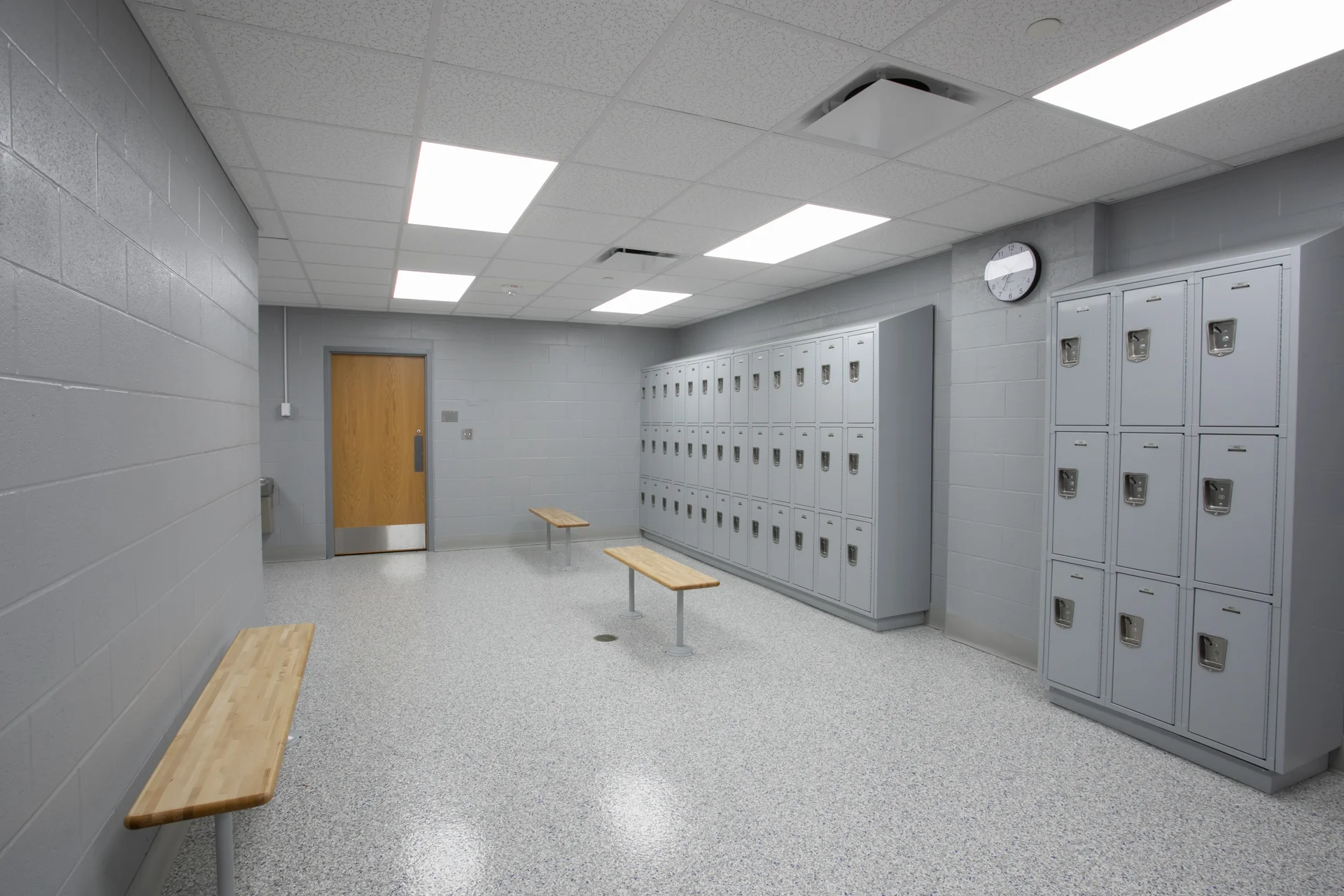
Locker bay with new lockers and benches at Patrick Henry High School
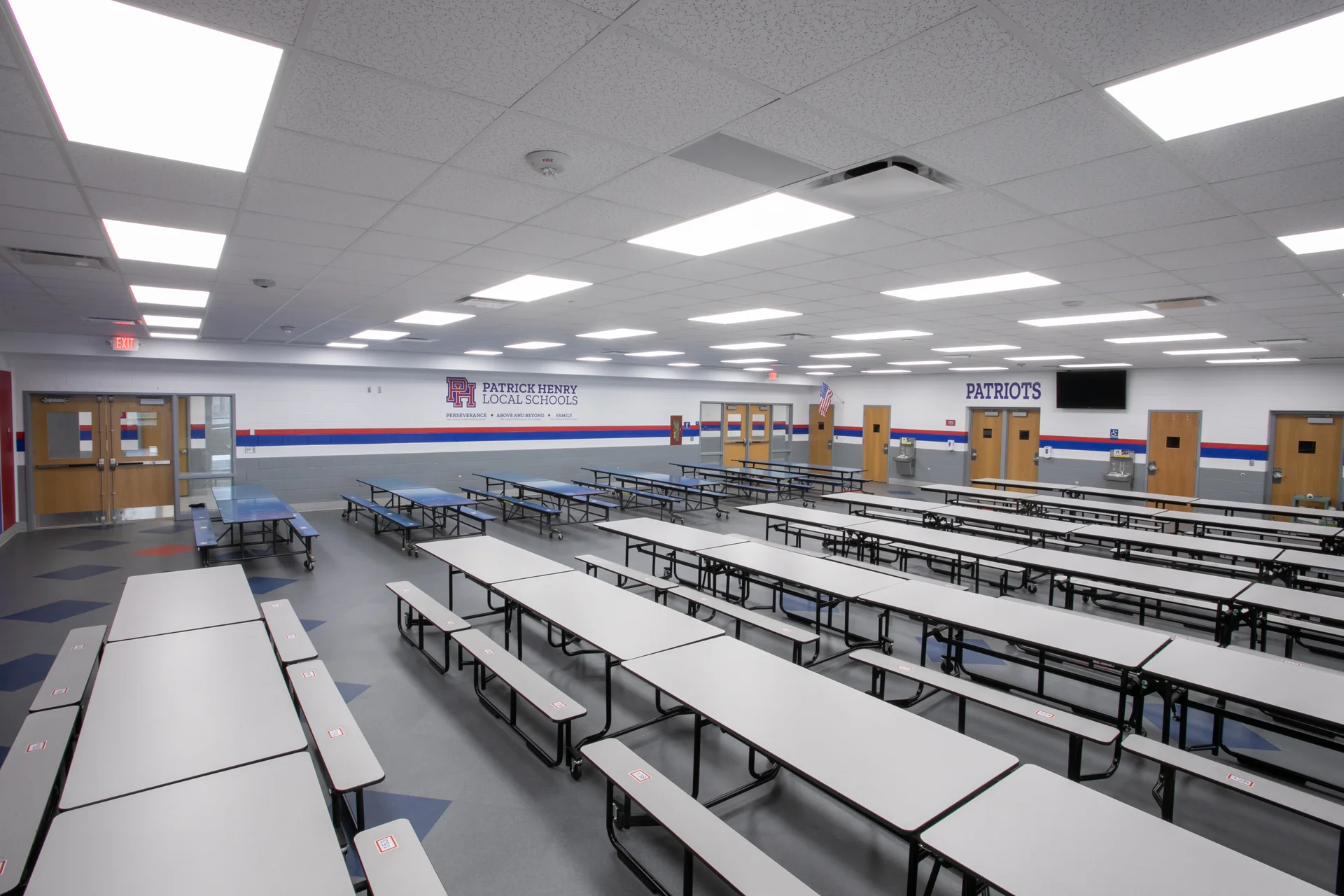
Patrick Henry cafeteria with folding tables and Patriots wall graphics
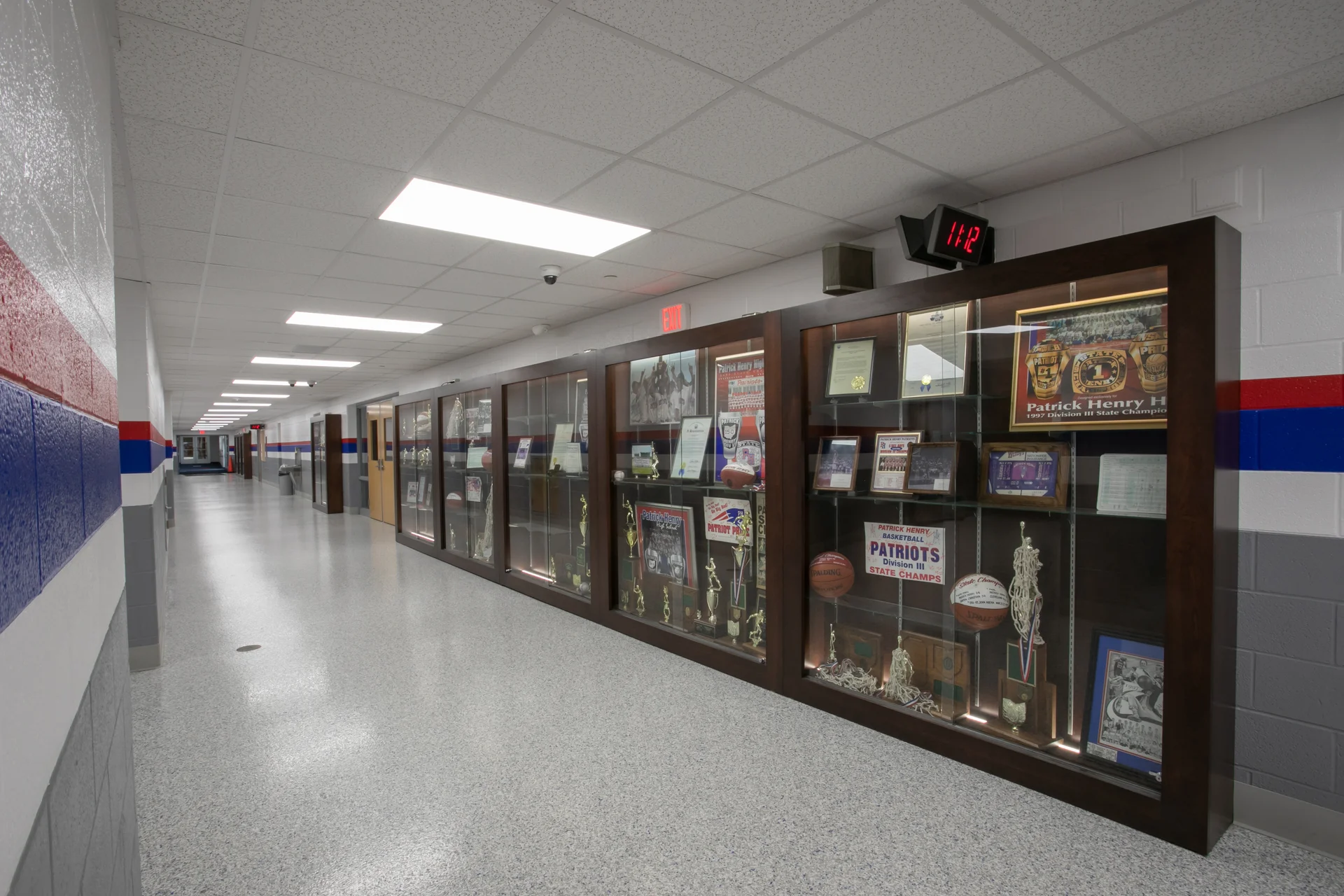
Trophy cases lining a renovated corridor at Patrick Henry High School
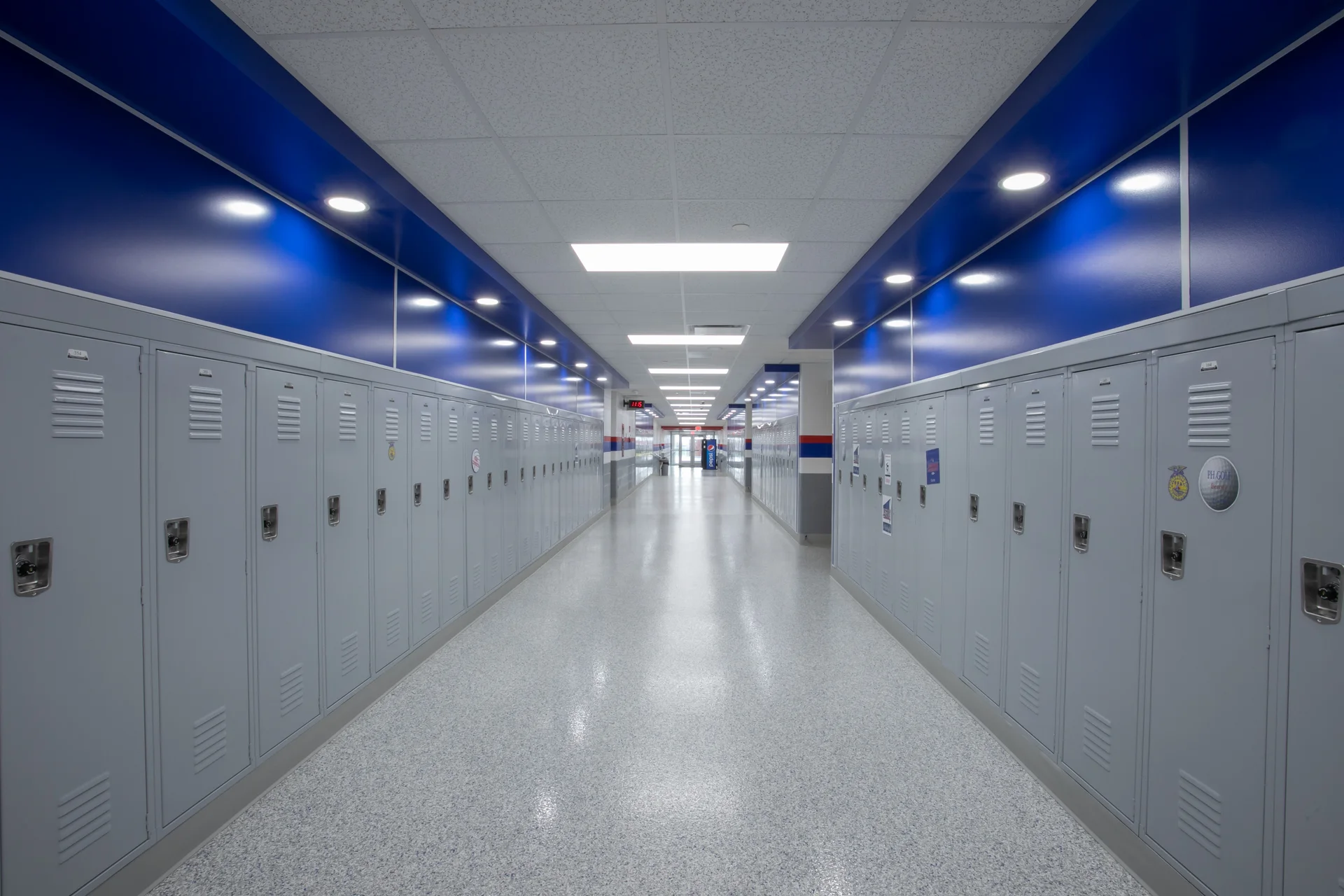
Locker-lined corridor with new lighting and blue soffit at Patrick Henry
Extended gym bleachers lettered P H below the Patrick Henry scoreboard
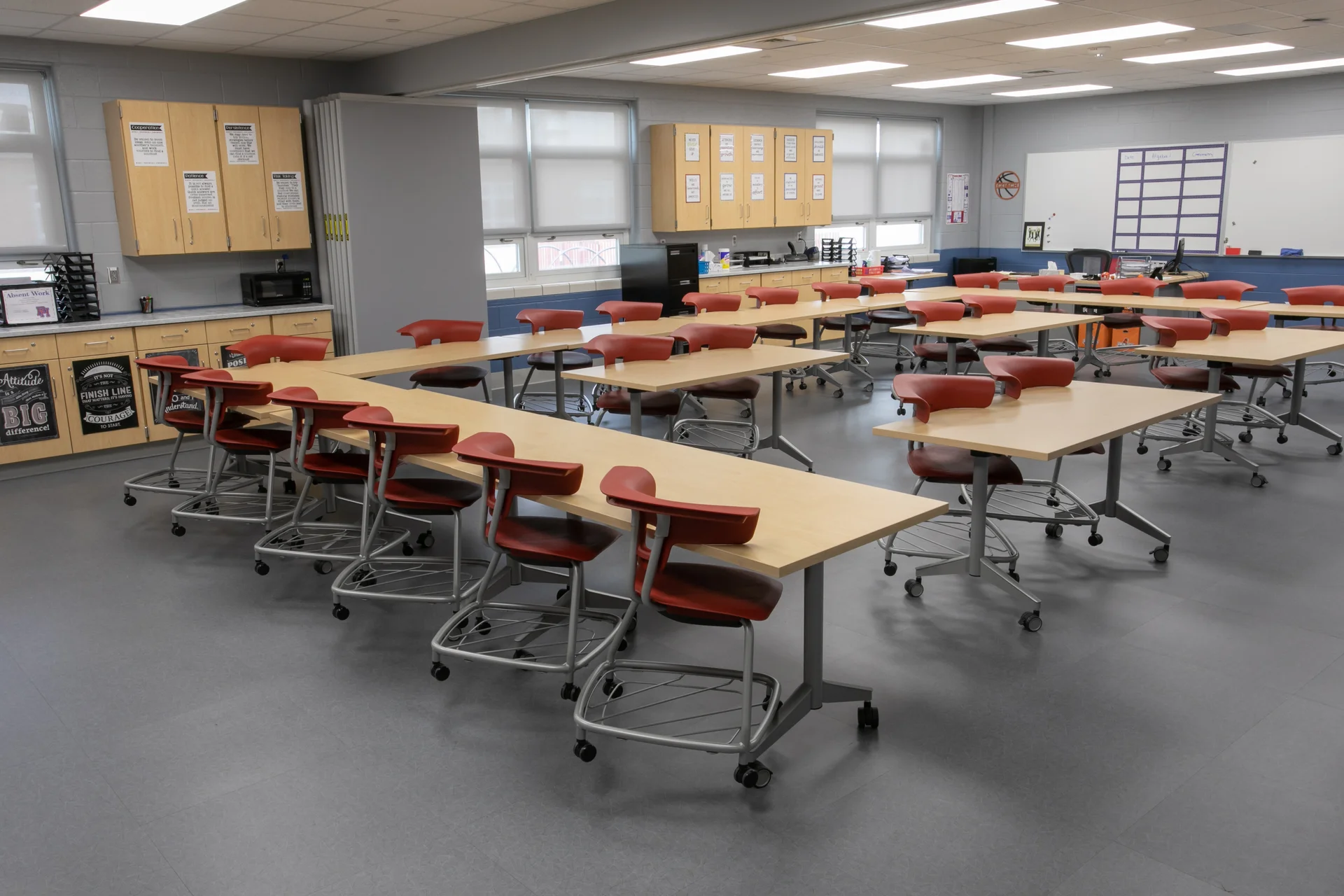
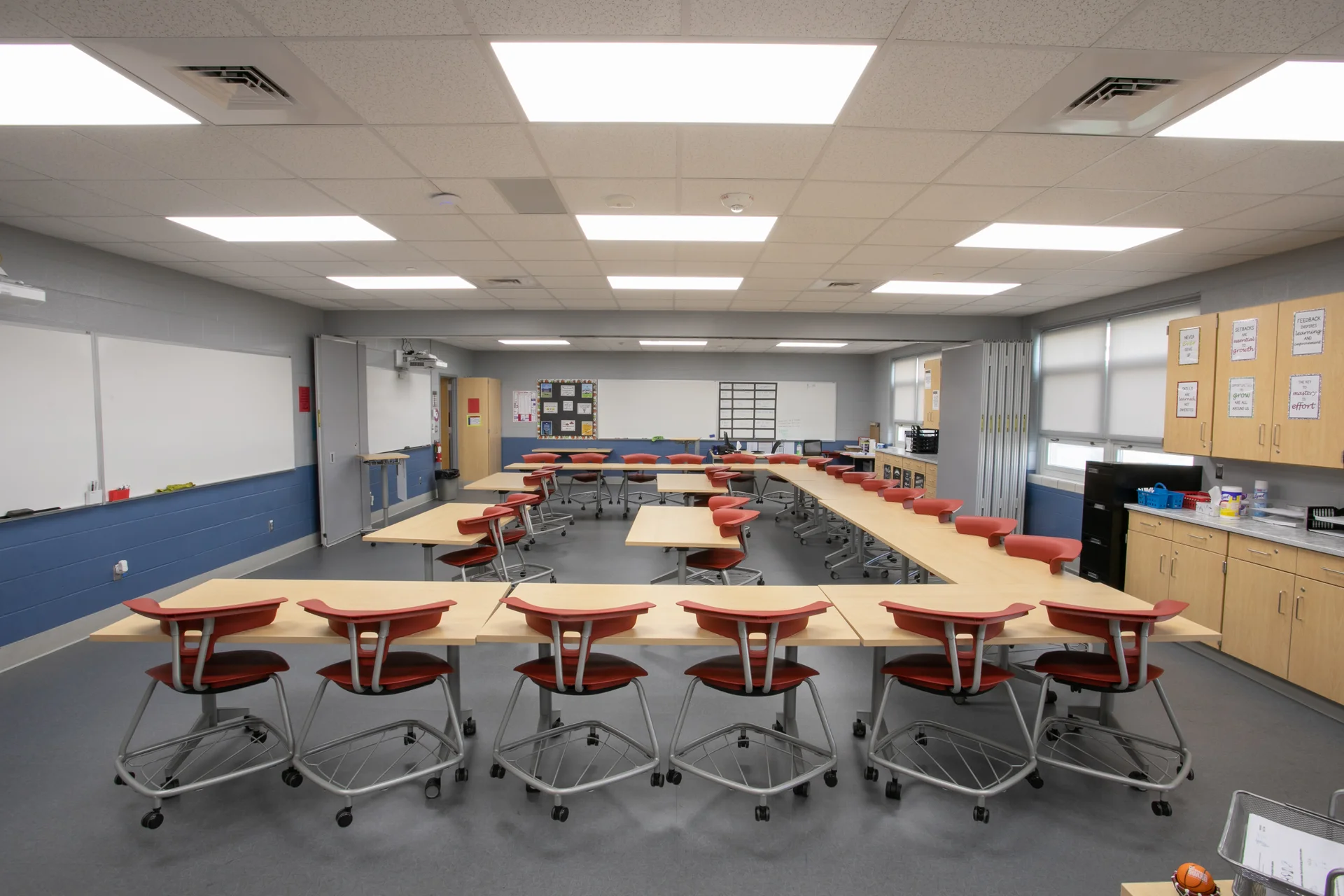
Classroom with mobile tables and red chairs at Patrick Henry High School
Patrick Henry classroom arranged in a U with new casework along the wall
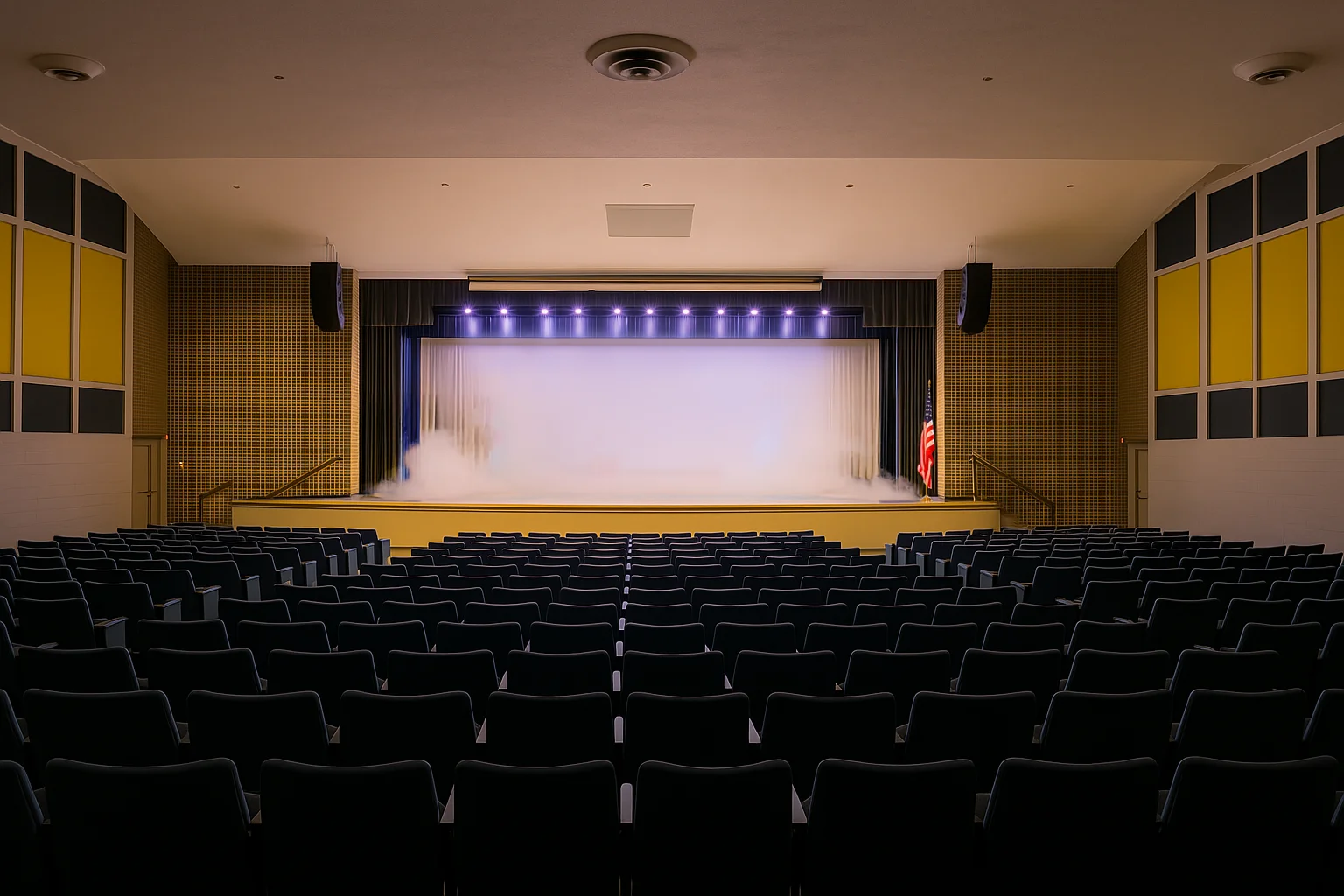
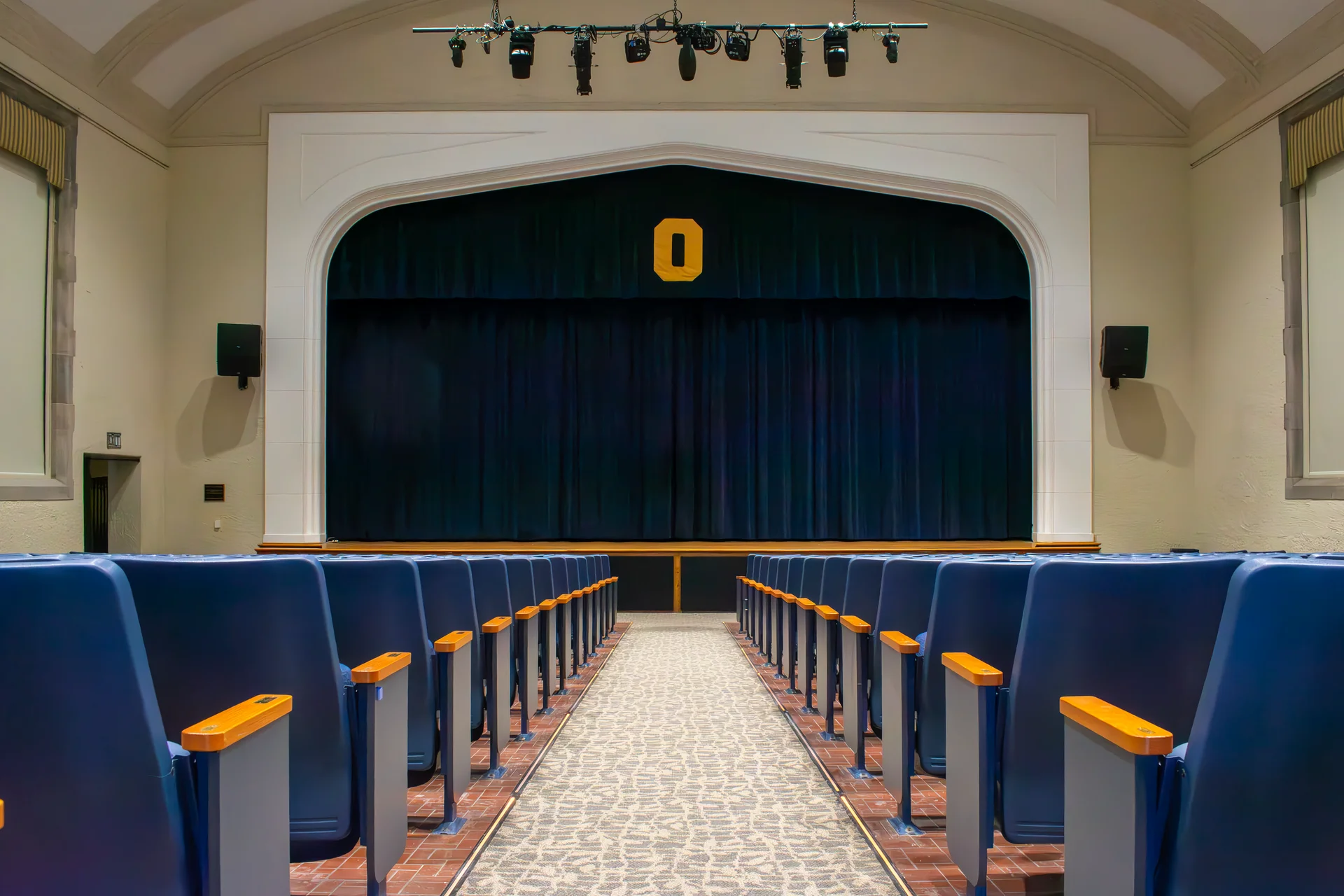
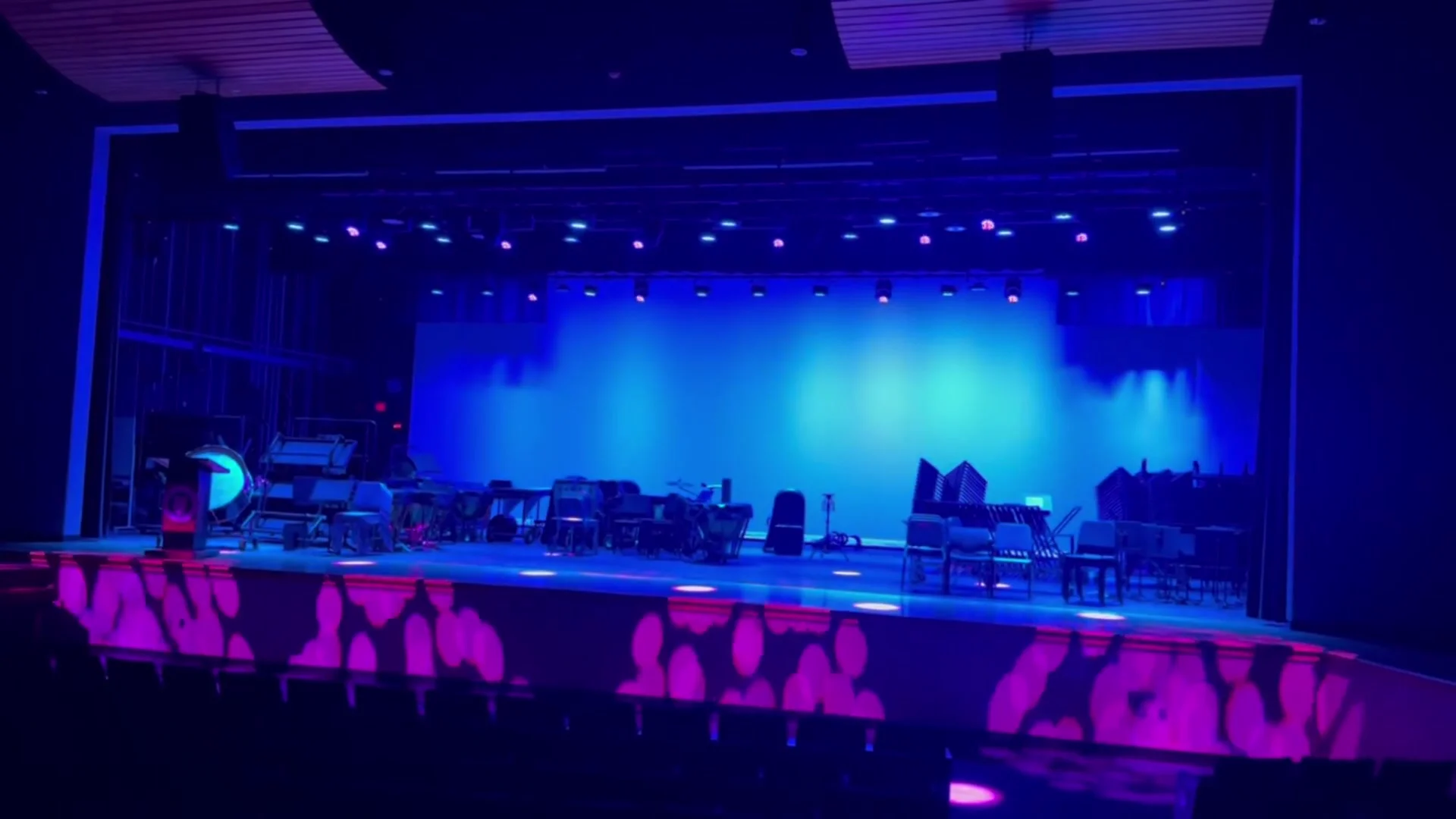
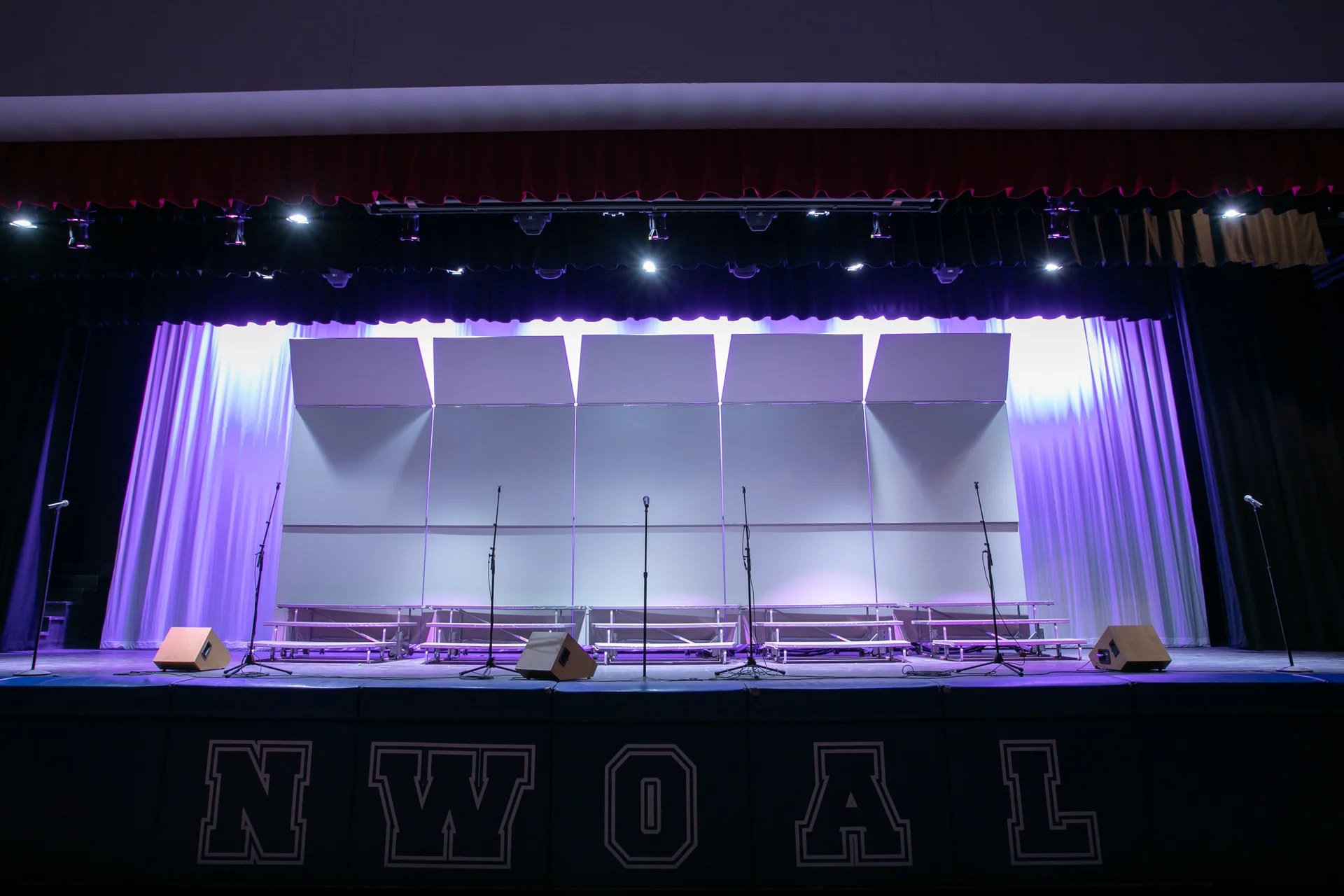
Patrick Henry auditorium stage with acoustic shell and choral risers

Technical Discussion

Renovating a high school that never closed

The hard part of this schedule was not the summer. It was March through May, when the work started with the building full. Roofing began on the gym and Section 1, the sections with the least classroom underneath — noise is a schedule input, not a courtesy. Electrical ran on second shift. Ceiling removal and HVAC control wiring started in April and moved room by room, with the projectors, access points, telephones and computers removed, tagged, turned over to the district and reinstalled as each room was finished.

The gym had two fixed dates in it. The musical ran April 2 to 4 and graduation was May 24, and the bleacher replacement — two 87-foot-6 banks — had to start after the musical and finish before graduation. Because the new floor came later, the contract wrote the consequence in: if the bleachers went in before graduation, the contractor detaches the bank from the wall and moves it over the summer so the floor can go in underneath. That is what an occupied calendar costs — one bank of bleachers handled twice, on purpose, because a district cannot move graduation.

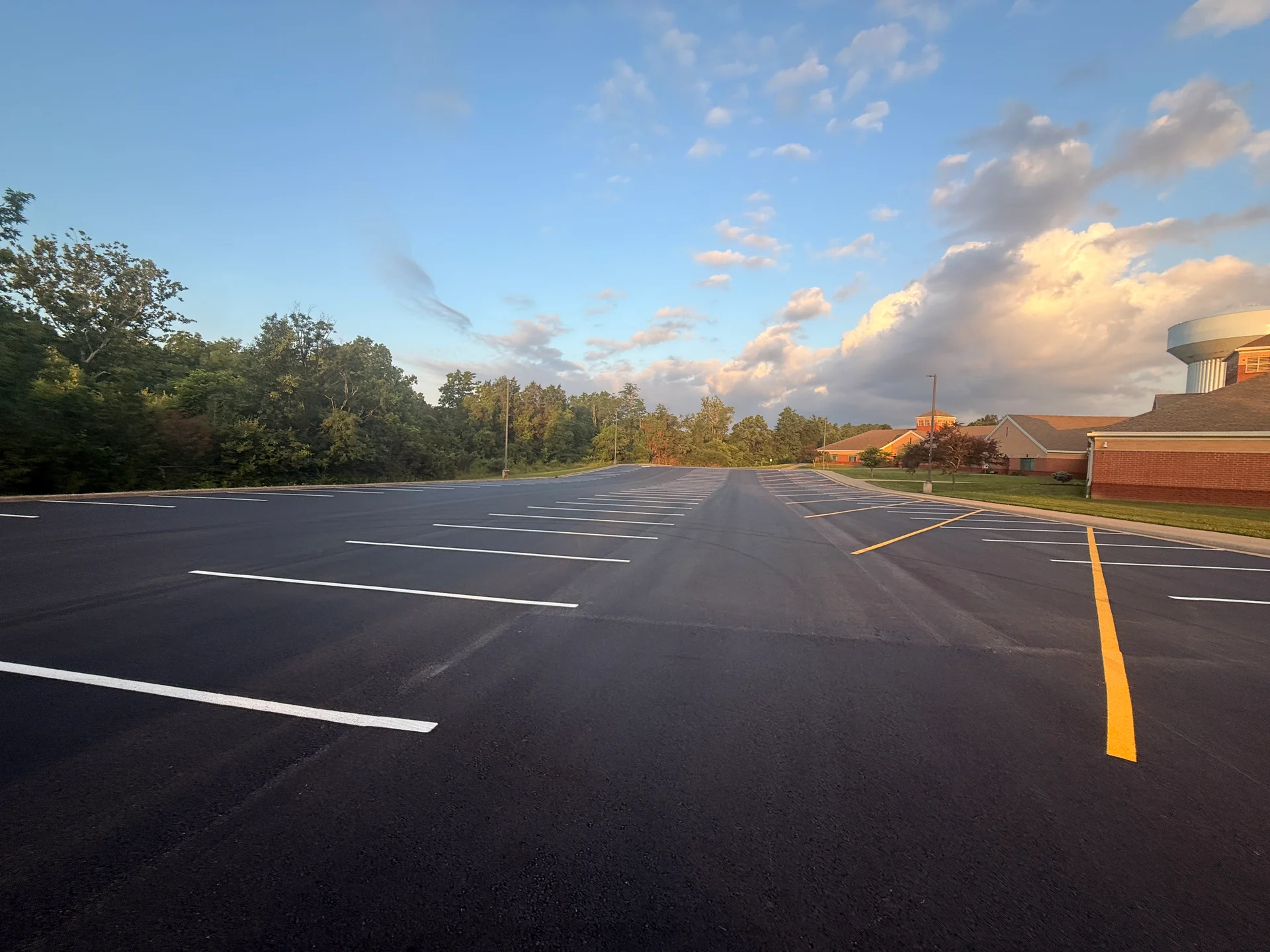
From June 1 to September 1 the district gave up the high school, the stadium and the parking entirely, and the trade ran both ways: 24-hour access and staging areas in the lot, liquidated damages for every day past August 31 that the district was kept from holding class. Roofing weather days were defined in advance instead of negotiated afterward — rain forecast above 35 percent, temperature under 48 degrees, wind over 12 miles an hour, or a temperature and dew point spread under seven degrees — and added to the end of the schedule.

Plumbing, HVAC and fire suppression in one opening of the building

These three go together in an old building because they share one demolition. The underground piping was replaced in full — new PVC storm in 4-inch through 12-inch sizes tied to 18 existing risers, new 4-inch through 6-inch sanitary — and reaching it meant saw-cutting the slab. Once the slab is cut, the flooring above it is gone whether or not anyone wanted new flooring, and the electrical that ran through the floor is gone with it. That is why power was re-fed from the ceiling and the surface-mount conduit came off the block.

The ceilings came out for an unrelated reason and to the same effect: the old return path pulled through door louvers into the corridor and up to the air handlers, and it was not code compliant. The fix is a plenum — return above the classroom ceilings, across above the corridor ceiling, to the units — and a plenum sets one rule for everything inside it: all cabling and materials must be plenum-rated. That reaches the control wiring, the ceiling assembly and the data — five CAT-6 runs per classroom across roughly 30 rooms.

With the slab open and the ceilings down, sprinkler pipe is close to the cheapest it will ever be, and so is everything else overhead. The five units were specified to fit the existing curbs, so the curbs stayed; 54 zone dampers went on DDC with new wall thermostats; exhaust fans were consolidated rather than replaced one for one, with ductwork tying several spaces to a single fan and the abandoned openings roofed over. Two clusters of restroom fixtures — 15 water closets, 10 urinals, 8 lavatories — came out for new group restrooms with 20, 5 and 12 at full ADA clearance. A district that spreads this across three summers pays for the same demolition three times.

What single-source design-build was worth in month ten

One agreement covering design and construction is easy to defend when nothing changes. The test is what happens when something does, and this project has that in writing: Amendment No. 1, dated January 19, 2021, signed after the building was back in use.

The amendment did three things at once, which is only possible when one party holds both halves. It removed work — the gymnasium video system, the gym and stadium sound systems, the aluminum composite entrance and the raised roof wall. It changed a means and method: instead of taking the gym floor down to concrete and removing the tar, the new floor was installed over the existing sleepers, building the surface up about an inch and a half with transitions at the doorways. And it added what demolition had turned up — abandoned electrical boxes removed and infilled, a masonry wall between two classrooms replaced with a folding partition and bulkhead, new ceilings in the boys' PE and varsity locker rooms with the sprinkler modifications those ceilings require. On a plan-and-spec job each of those is a separate negotiation with a designer in the middle, and the gym floor change by itself is a redesign.

Single source cuts the other way too, which is why this agreement carries a check on the design-builder. Third-party commissioning was written into it: functional performance checklists built from the contract documents and submitted for review before any testing, functional testing of the equipment and its controls, opposite-season testing, and photo reports issued as the work progressed. Opposite-season testing is the phrase to look for: somebody returns in the other half of the year to verify the units heat and cool as designed. The exclusions are stated as plainly: hazardous material abatement stayed with a contractor the district procured separately, and existing non-compliant systems uncovered mid-construction and ordered up to code by the building department are not in the price. A district signing one agreement should be able to name the risks it kept.

Customer Testimonial

Konnie Meyer

Board Member · Advocate · 5 years ago

Longtime Patrick Henry community member Konnie Meyer reflects on just how much the school has changed after the renovation project, calling the transformation “mind-boggling.” She talks about improvements throughout the building and campus—from the roof, windows, and landscaping to plumbing, wiring, air conditioning, classrooms, the cafeteria, and the gym—and the pride those upgrades have created for students, staff, and the community. Prodigy Building Solutions has worked with Patrick Henry Schools on facility improvements including gymnasium renovations, energy-efficient LED lighting upgrades, and a middle school restroom expansion. The result is a more modern, functional learning environment that the Patrick Henry community can be proud of, and a great example of the impact thoughtful school renovation can have for an Ohio school district.

Our Work
Similar Projects