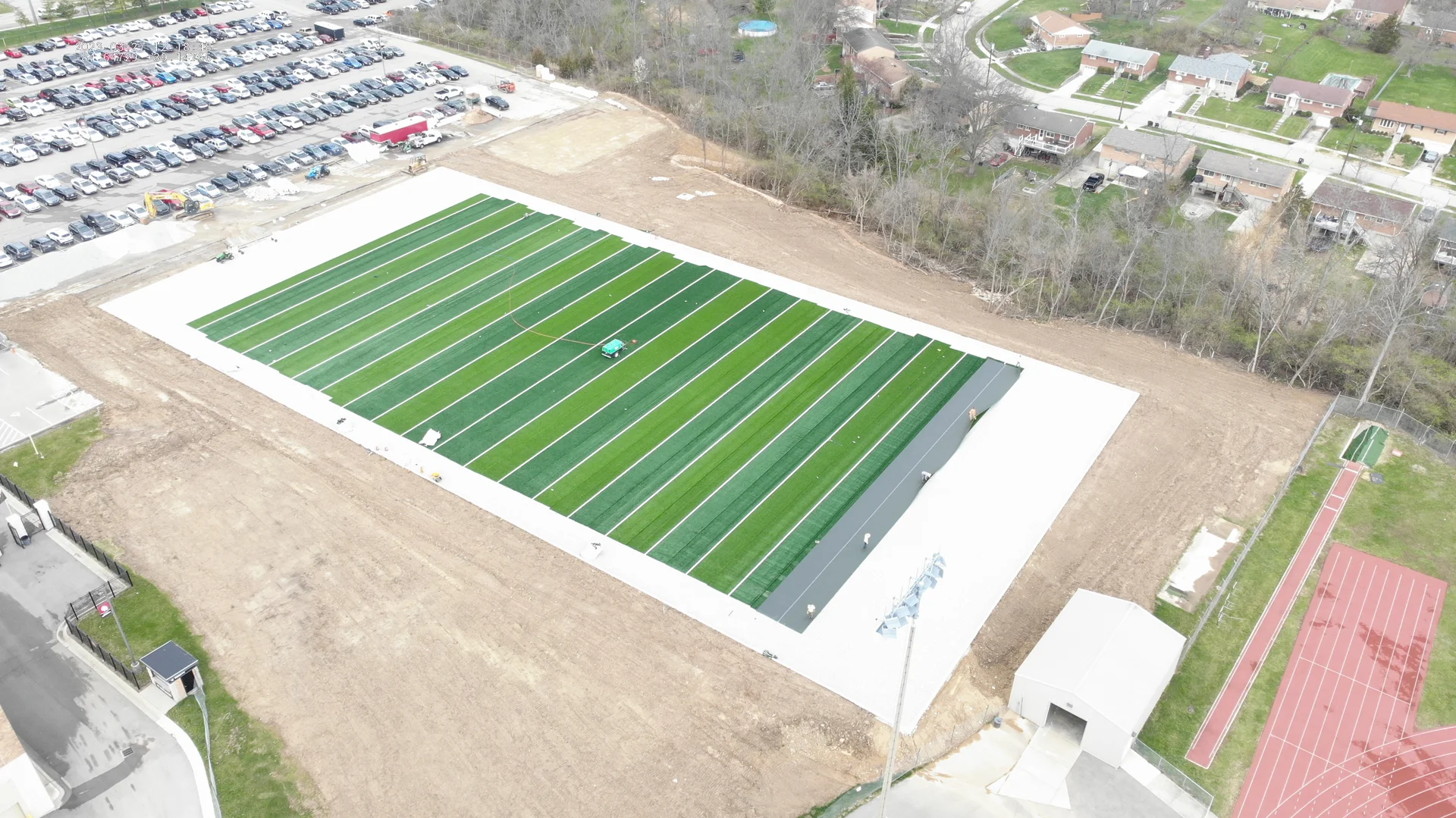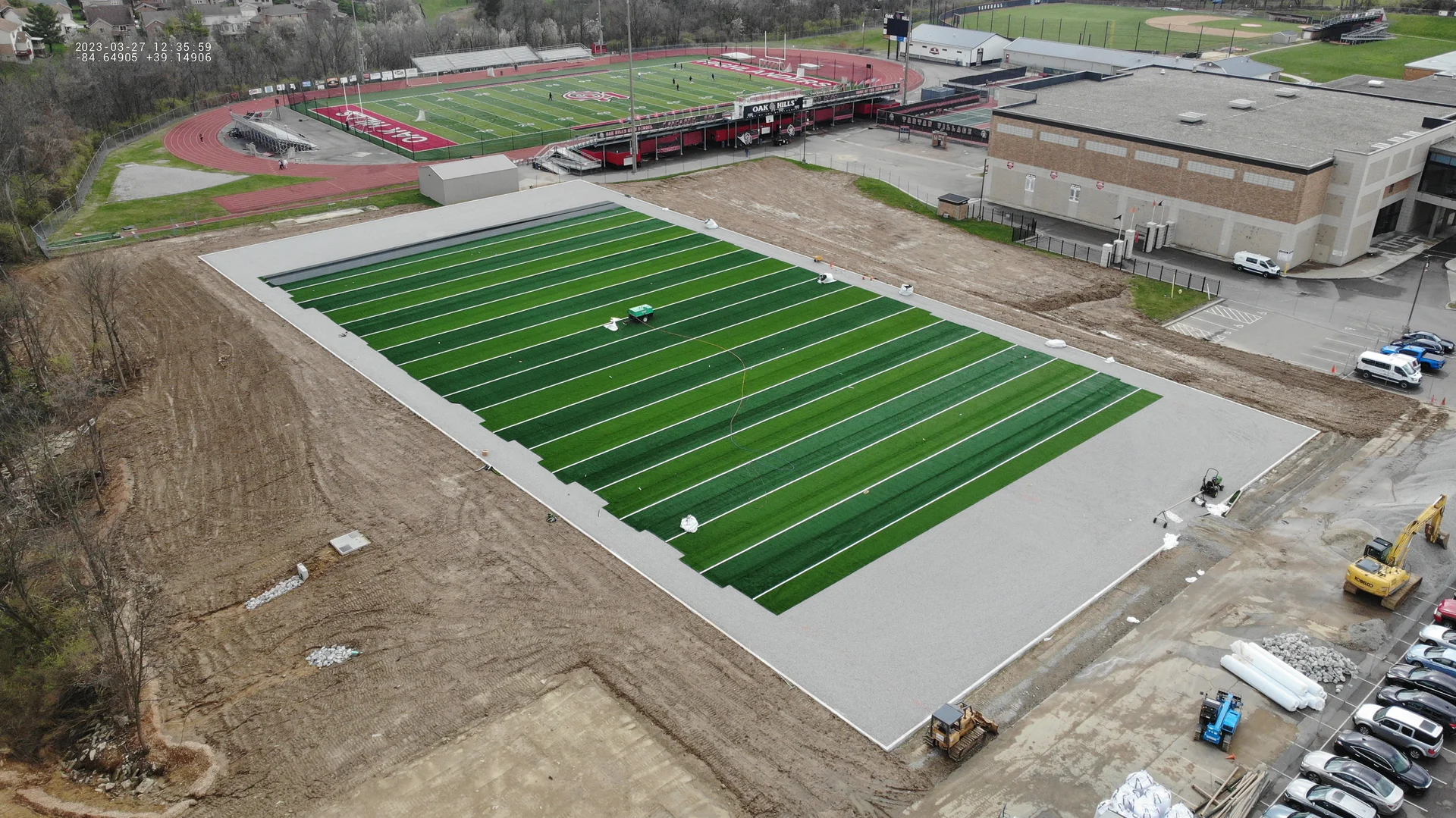
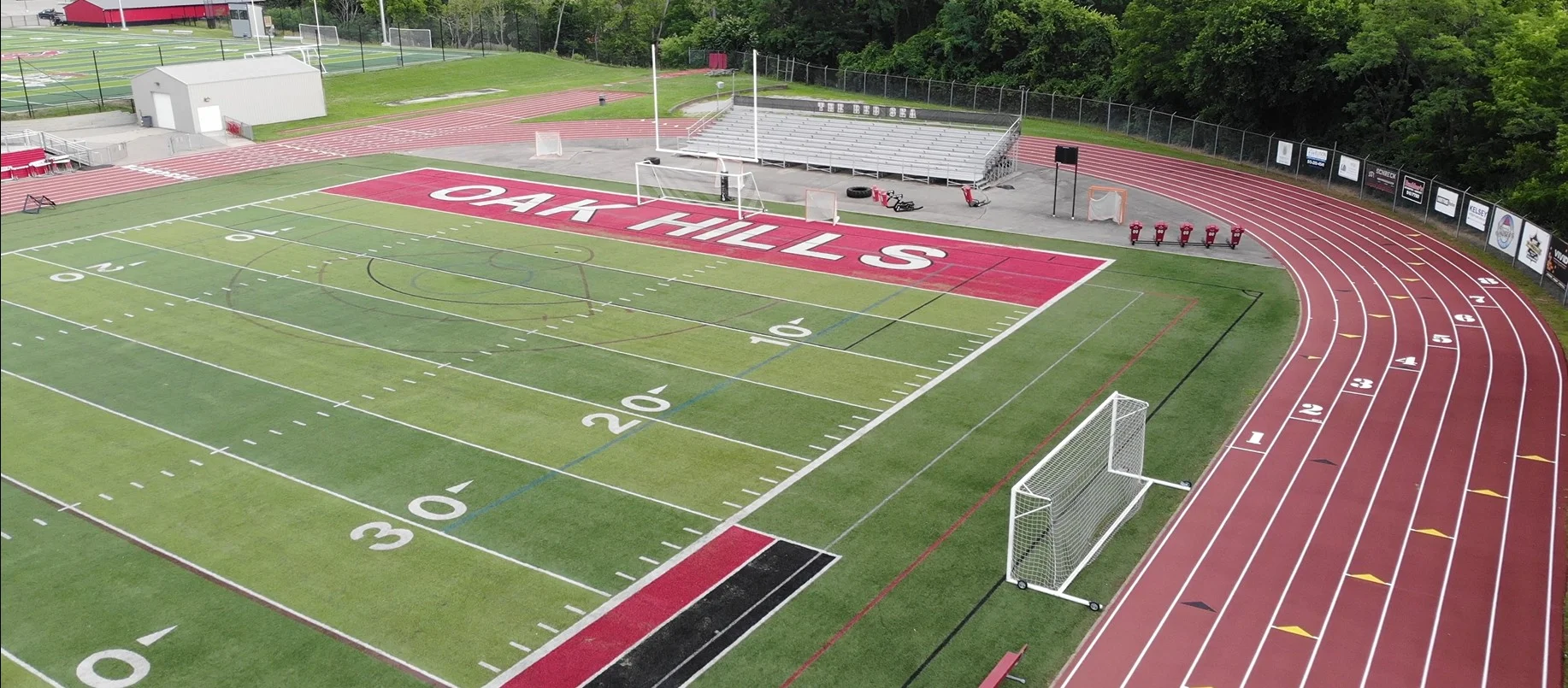

Aerial of the Oak Hills turf field and red running track
Athletic FacilitiesSouthwest OhioCincinnatiTOP-C purple wordmark logo for The Ohio Purchasing Council cooperative purchasing program

Oak Hills Multi-Sport Athletic Complex Construction

Oak Hills High School in Cincinnati needed a multi-sport field it could schedule — one surface that football, soccer and unified lacrosse could share, with lights, power, seating, a press box and a building to keep equipment in. The district bought the whole thing as design-build on a single agreement, pre-bid through The Ohio Purchasing Council: engineering, architecture, materials and installation from one party rather than a designer hired first and a builder bid against the drawings afterward.

Prodigy carried the civil, architectural and structural engineering in house. Civil covered the preliminary site plan and due diligence, the conditional use submittal, a partial location, topographic and utility survey, the stormwater pollution prevention plan, the detention as-built and easement plat, and construction staking. Architecture covered preliminary design and building elevations for the pole barn and press box, a code review and risk analysis, and the permit and construction documents. Structural provided the general notes and design stamps the Hamilton County permit process required for the barn, the press box and the light poles.

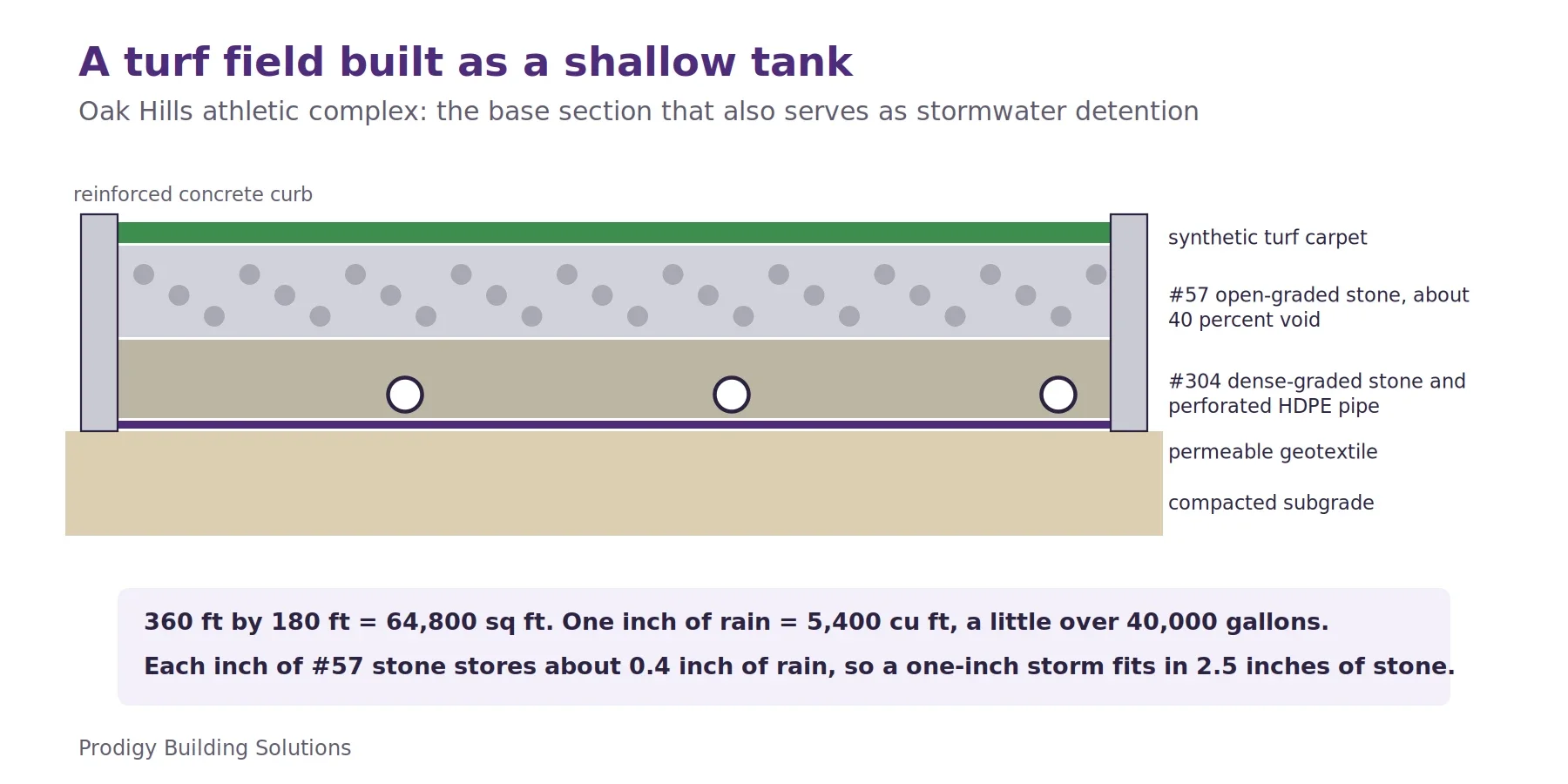
The built work starts underground. Existing dirt and spoils come out, the subgrade is graded and compacted to the site plan, HDPE perforated pipe is laid, a permeable geotextile liner goes over it, and #304 and #57 gravel is laid and compacted, all contained by a reinforced concrete curb poured around the turf. On top of that goes a synthetic turf system of at least 360 by 180 feet with permanent lines for all three sports. Around it sit four high-mast light poles on poured footers and bases with a Wi-Fi lighting control unit, a roughly 70 by 40 foot pole barn with two overhead and two man doors, an elevated press box about 10 by 8 feet with sliding windows and a scoreboard control desk, a scoreboard, fencing along the west and north boundaries, two team benches and two mobile fan bleacher sets. Power reaches all of it by underground boring from the school's existing electrical room.
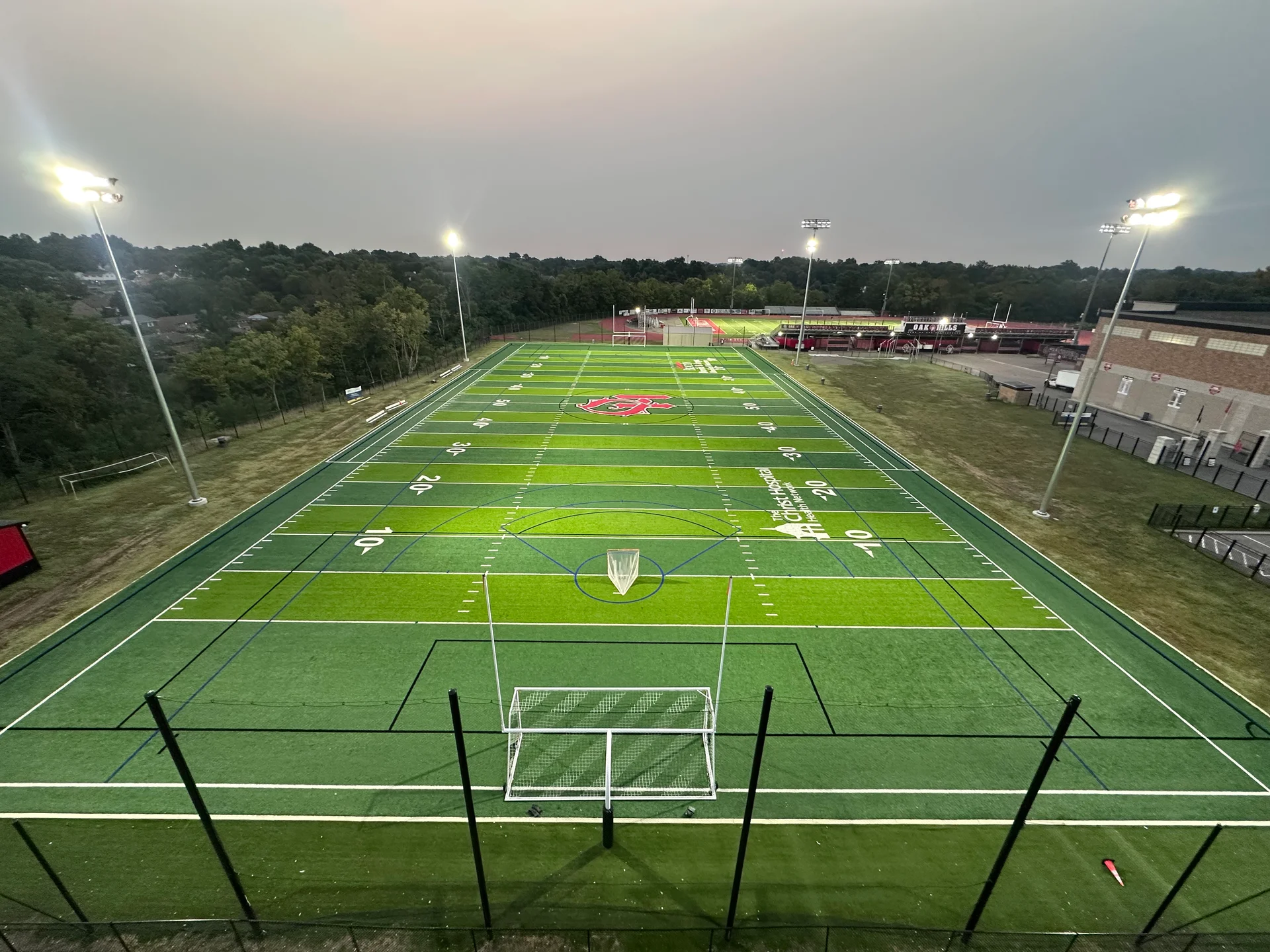
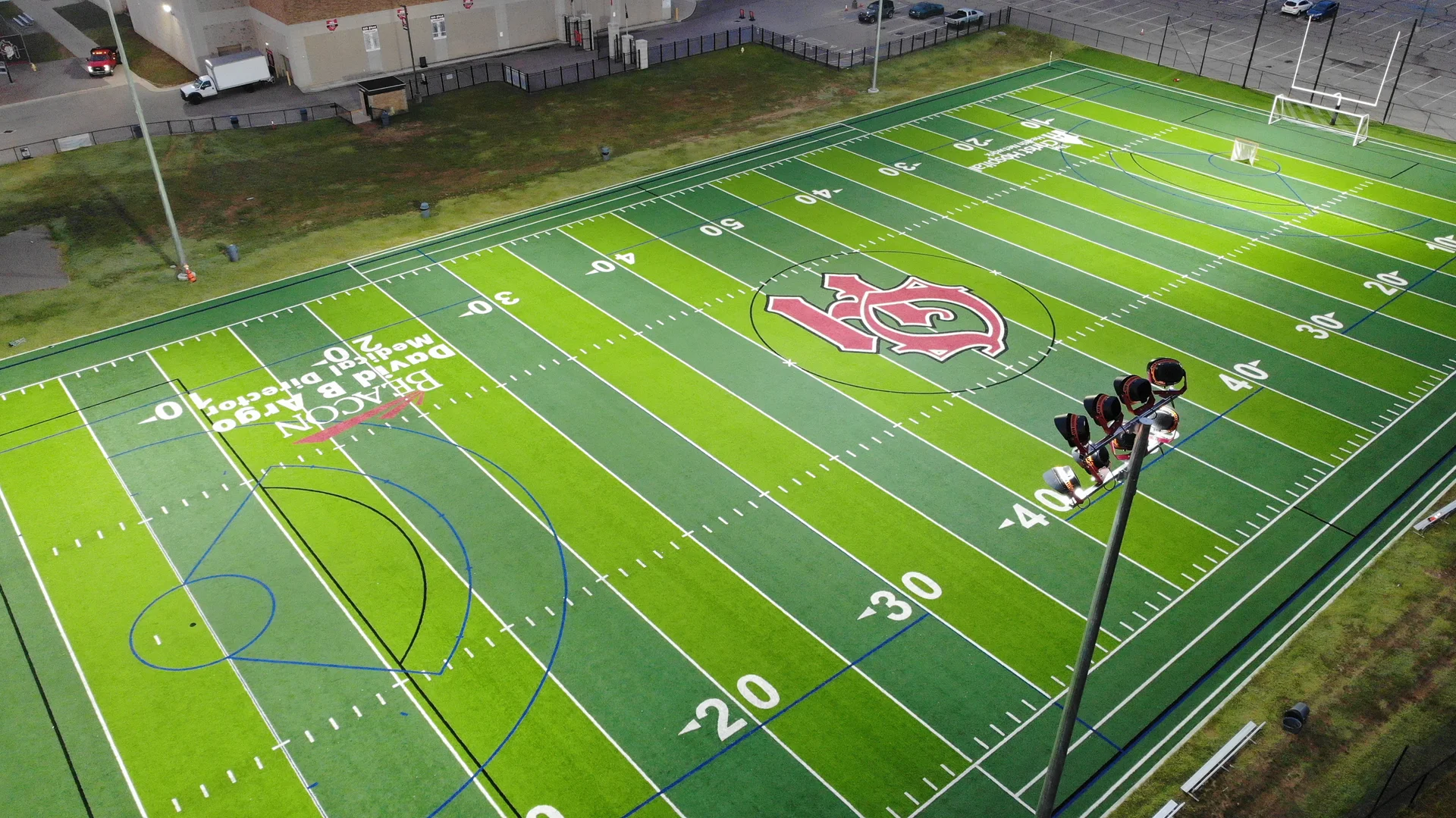
Aerial of the new Oak Hills turf football field with the school logo at midfield
Oak Hills stadium at dusk under the new field lighting
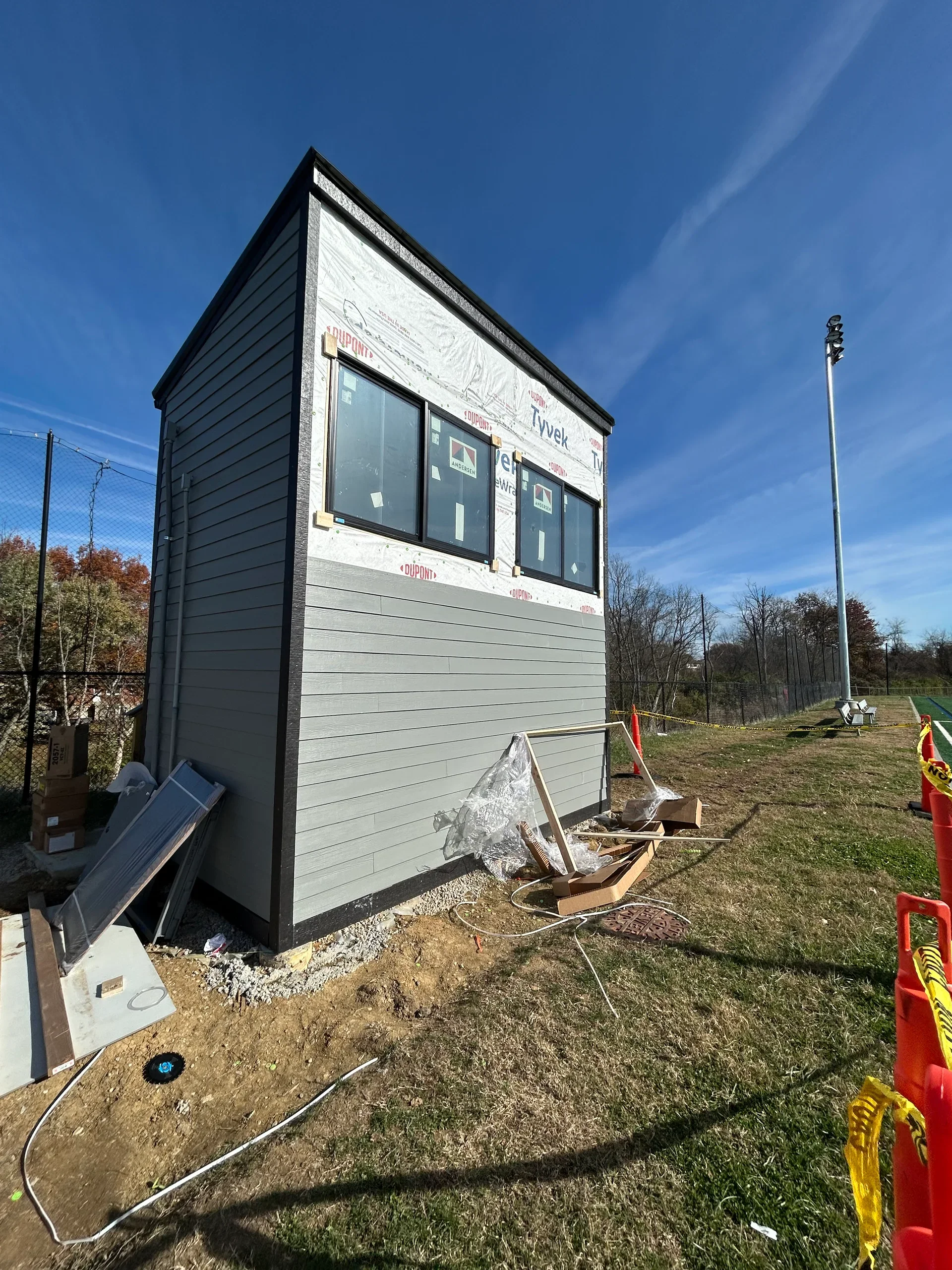
Press box and bleacher structure under construction at Oak Hills
Newly installed Oak Hills turf field with site work still underway
Oak Hills field and track alongside the school during construction

Technical Discussion

What goes under synthetic turf

A synthetic field gets sold as a carpet. It is a drainage structure that happens to have a carpet on top, and nearly everything that decides how it plays in year eight is buried before the turf shows up on a truck.

The sequence in this scope says so plainly. Existing dirt and spoils are removed to make room for the underground system. The subgrade is graded and compacted to the site plan — compaction being the step that gets rushed on a schedule and the one that produces the low spots that read as standing water three seasons later. HDPE perforated pipe is laid to collect what comes through the carpet. A permeable geotextile liner goes over it so the stone above keeps its voids instead of silting shut. Then #304 and #57 gravel is laid and compacted: the open-graded stone to hold water and move it, the dense-graded base to hold the shape and the grade. A reinforced concrete curb is poured around the whole perimeter to contain the system. Only then does the turf go down.

The civil design leaned on that stone for more than drainage, and this is the part worth repeating to a treasurer. The scope was written on the assumption that Hamilton County would accept using the underdrain gravel itself as the stormwater detention, with a county-required separate detention system priced as an addition. That single assumption decides whether a field project also needs a basin somewhere on the site, and it is answered by the civil engineer months before anyone orders a carpet.

The four light pole footers and bases are poured in the same operation, for the same reason. They are the only other elements that have to reach down through the drainage layer, and cutting them in afterward means cutting into the system that keeps the field playable.

None of this is visible in a photograph of a finished field. All of it is what a district is actually buying.

Engineering, architecture and construction under one agreement

The distinguishing fact about this project is not on the field. Oak Hills bought civil engineering, architecture, structural engineering and construction on one agreement, and all three engineering disciplines were carried in house by the builder.

What that buys is interfaces. A turf field, a pole barn, a press box, four high-mast light poles and a scoreboard are five design problems that meet in exactly three places: the ground, the permit, and the power. The light pole bases sit inside the field's drainage system, so the structural design of the poles and the civil design of the underdrain are one decision, not two. The barn and press box need elevations, a code review and a risk analysis; the poles need general structural notes and stamps; Hamilton County reviews all of it as one permit package, so a delay in any single piece is a delay in all of them. Electrical is one bored run from the school's existing electrical room to the transformer and then out to the barn, the press box, the scoreboard and the four poles — whoever fixes those locations is writing the boring plan.

Under separate contracts each of those seams is a place where one party's drawing stops and another's begins, and where a question gets asked twice and answered once. Under one agreement they are internal. The practical version for a district is that the conditional use submittal, the stormwater pollution prevention plan, the detention as-built and easement plat, the construction staking, the permit documents and the crew building from them all answer to one schedule and one party.

It also concentrates responsibility, which is the reason the defined edges of the agreement deserve a careful read. One architect design revision to the barn and press box is included. Geotechnical engineering is not, and the county retained the right to require it at added cost. Zoning approval for the lighting requires photometric data and may impose restrictions on light levels and pole locations. Those are the three places where a single-source agreement stops absorbing risk, and they are the three a facilities director should ask about first.

Our Work

Similar Projects