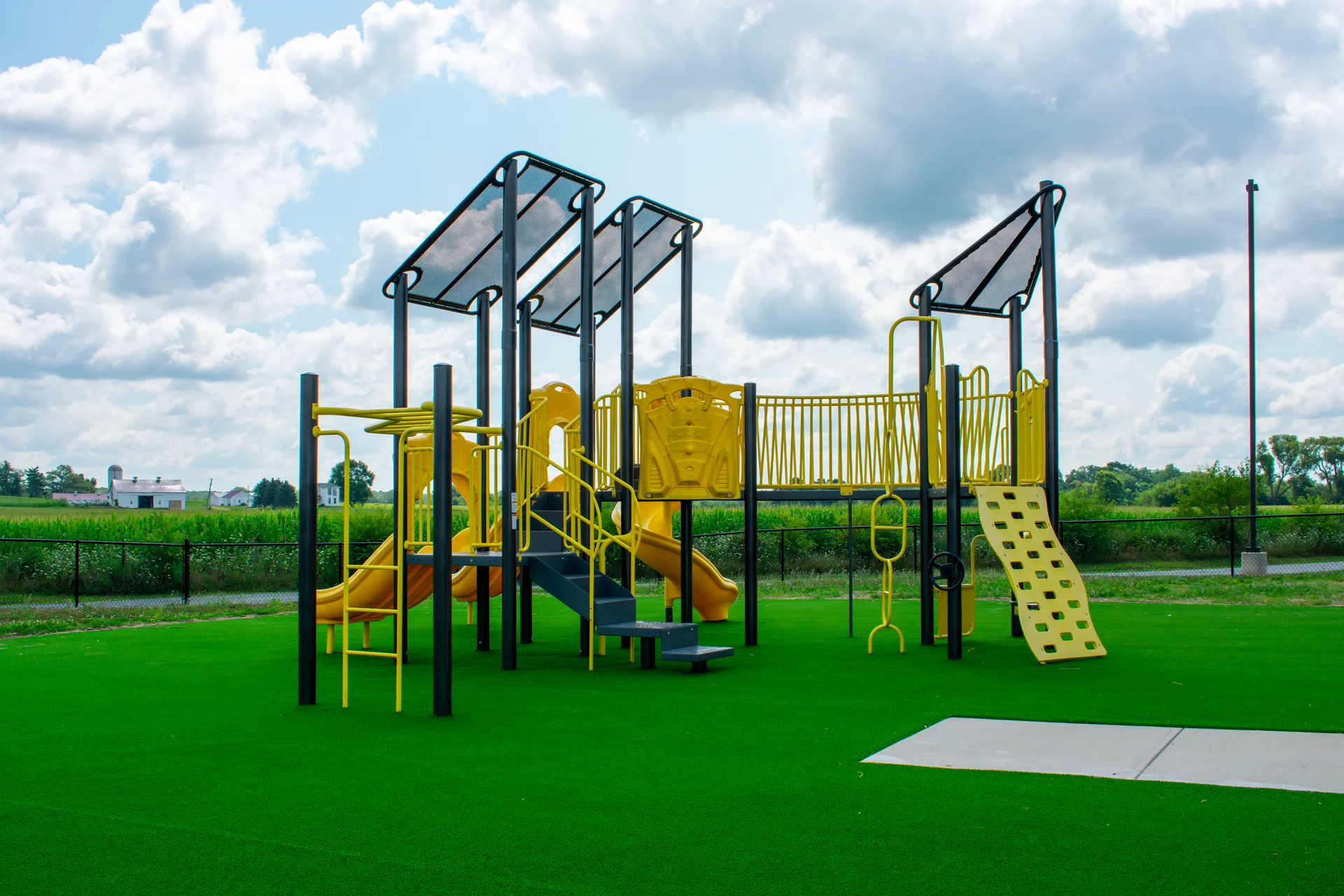
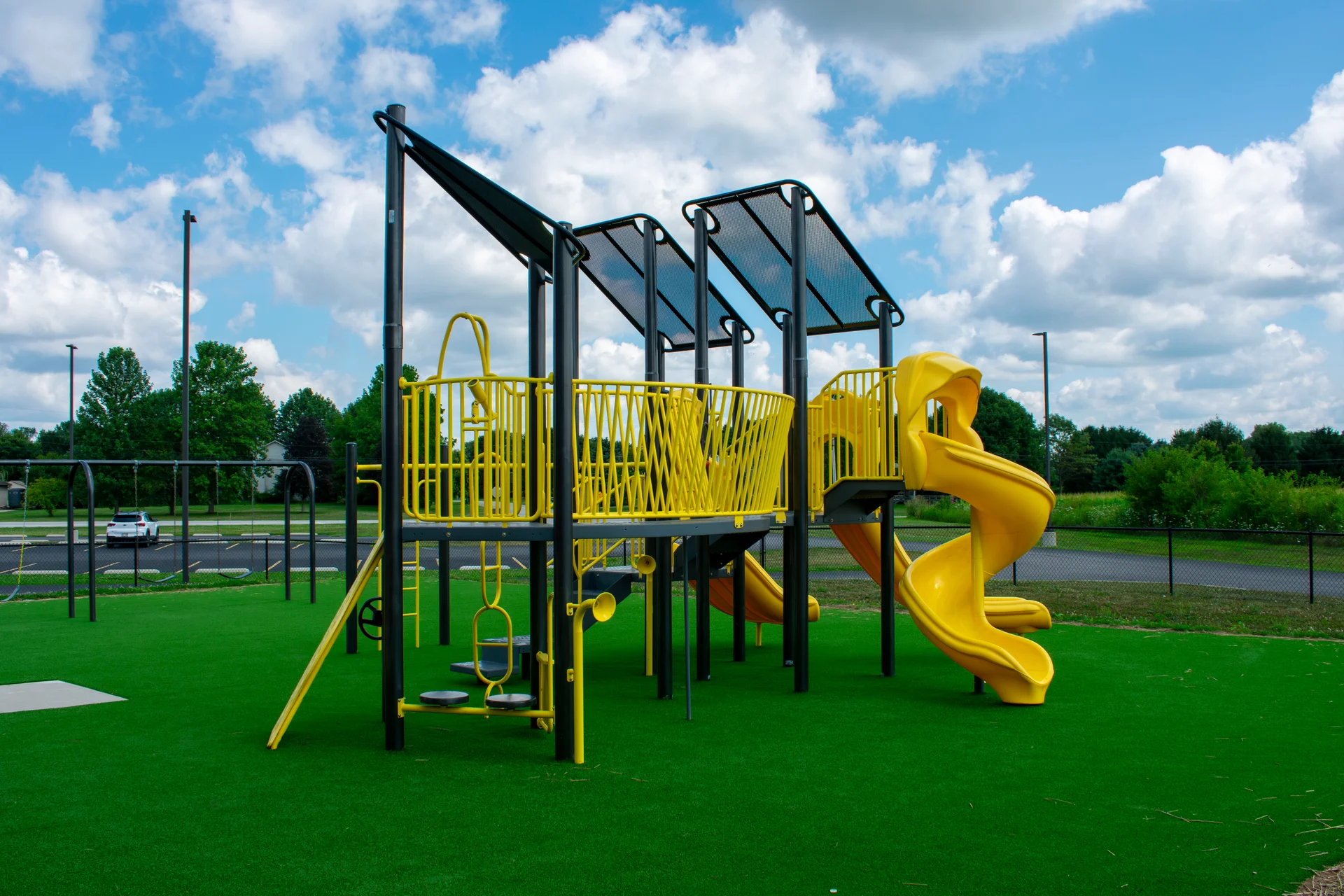
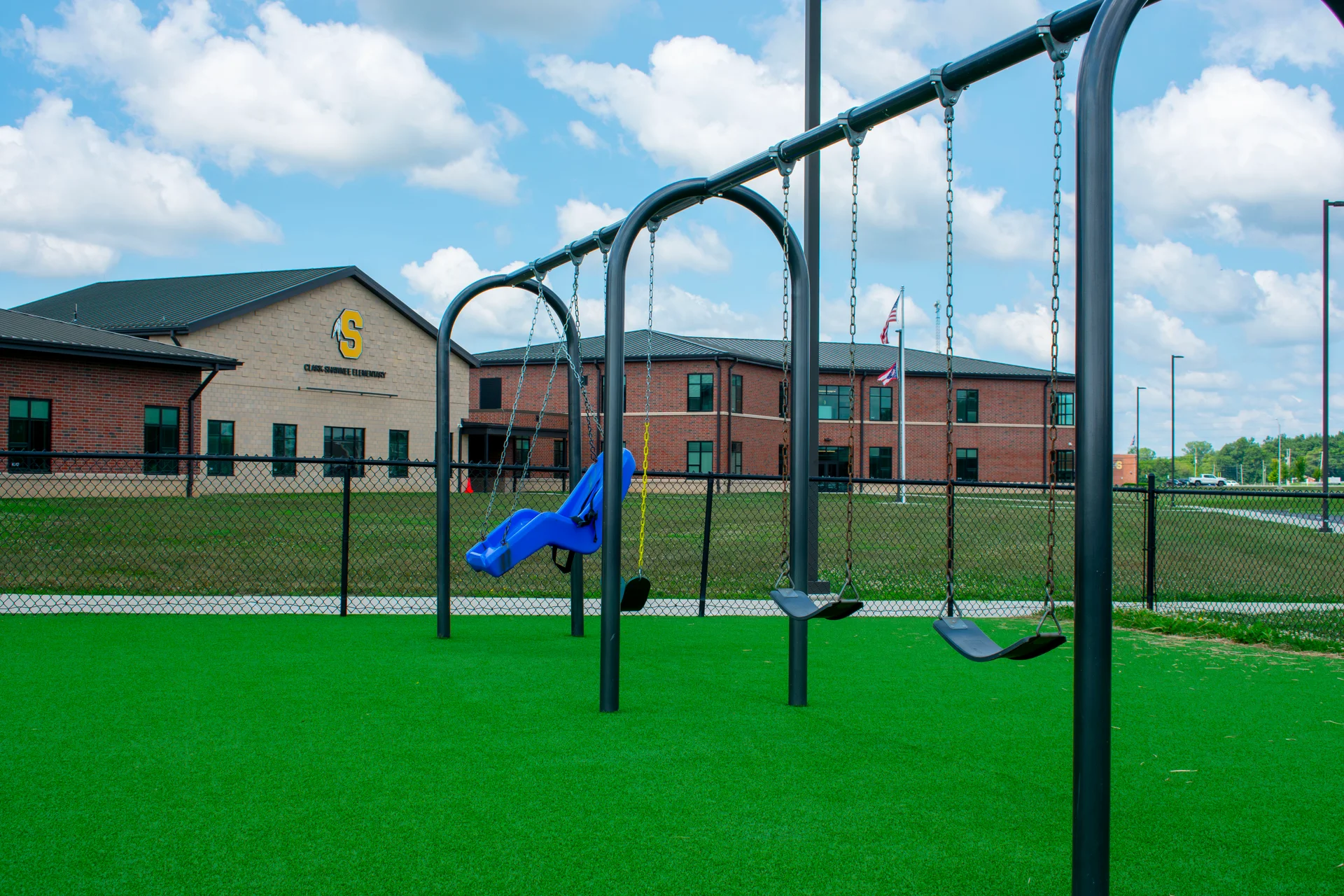
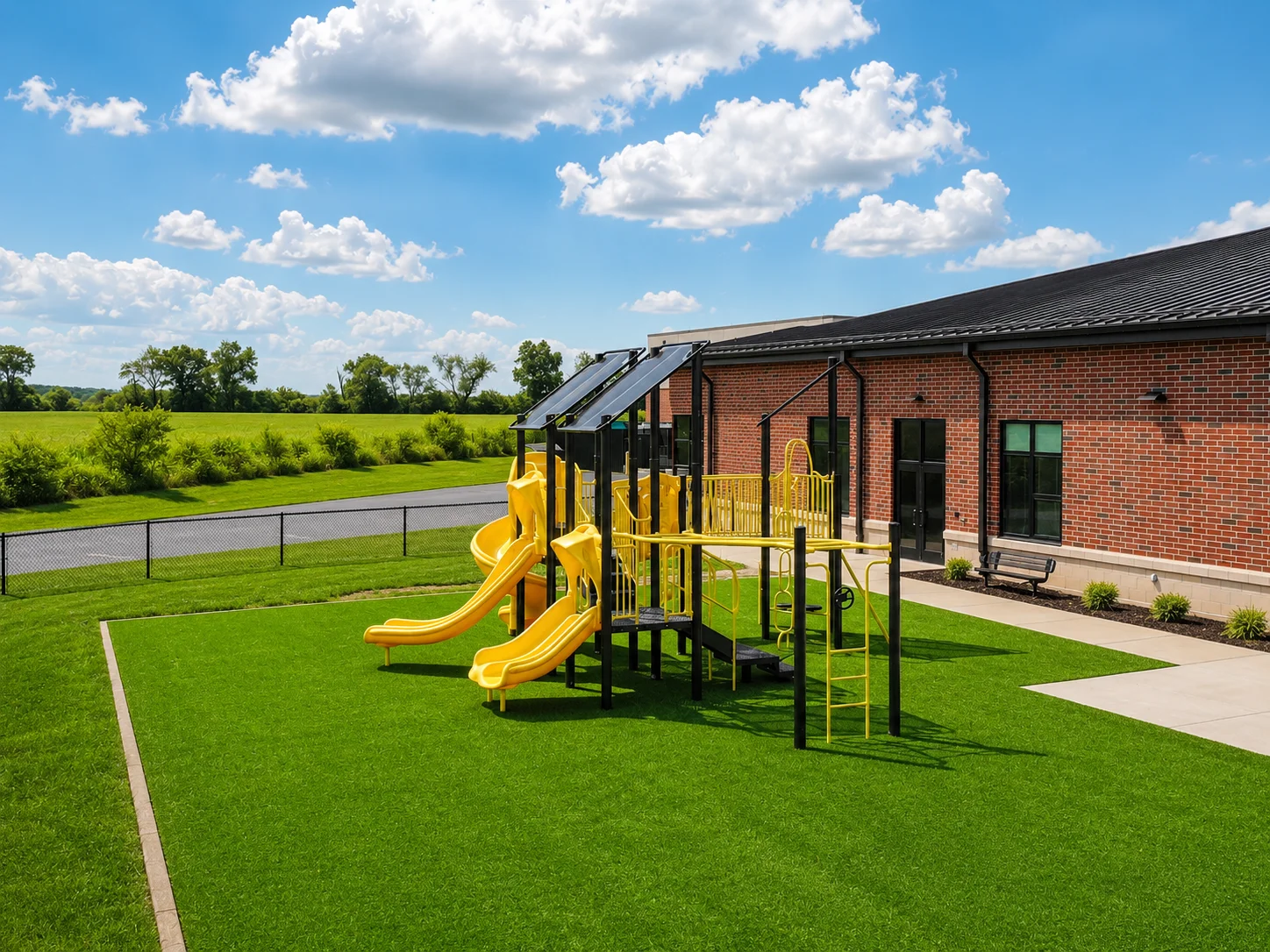
Shawnee Elementary in Springfield traded its mulch playgrounds for synthetic turf: a bigger, cleaner play area that drains after a storm, stays put under the swings and slides, and gives every student a firm path to the equipment. Prodigy built it for Clark-Shawnee Local Schools through the TOP-C cooperative contract around the school's existing play structures, expanding the footprint, adding underground drainage and a concrete border, and matching the cushion under the turf to the fall height of the equipment the district kept. A Shawnee logo inlaid in the turf finishes it off.
No more topping off mulch every spring or checking its depth under the slide. For a district weighing the same upgrade, Shawnee shows it can be done without replacing play equipment that still has years left in it.
Technical Discussion
What a playground surface has to do when a child falls
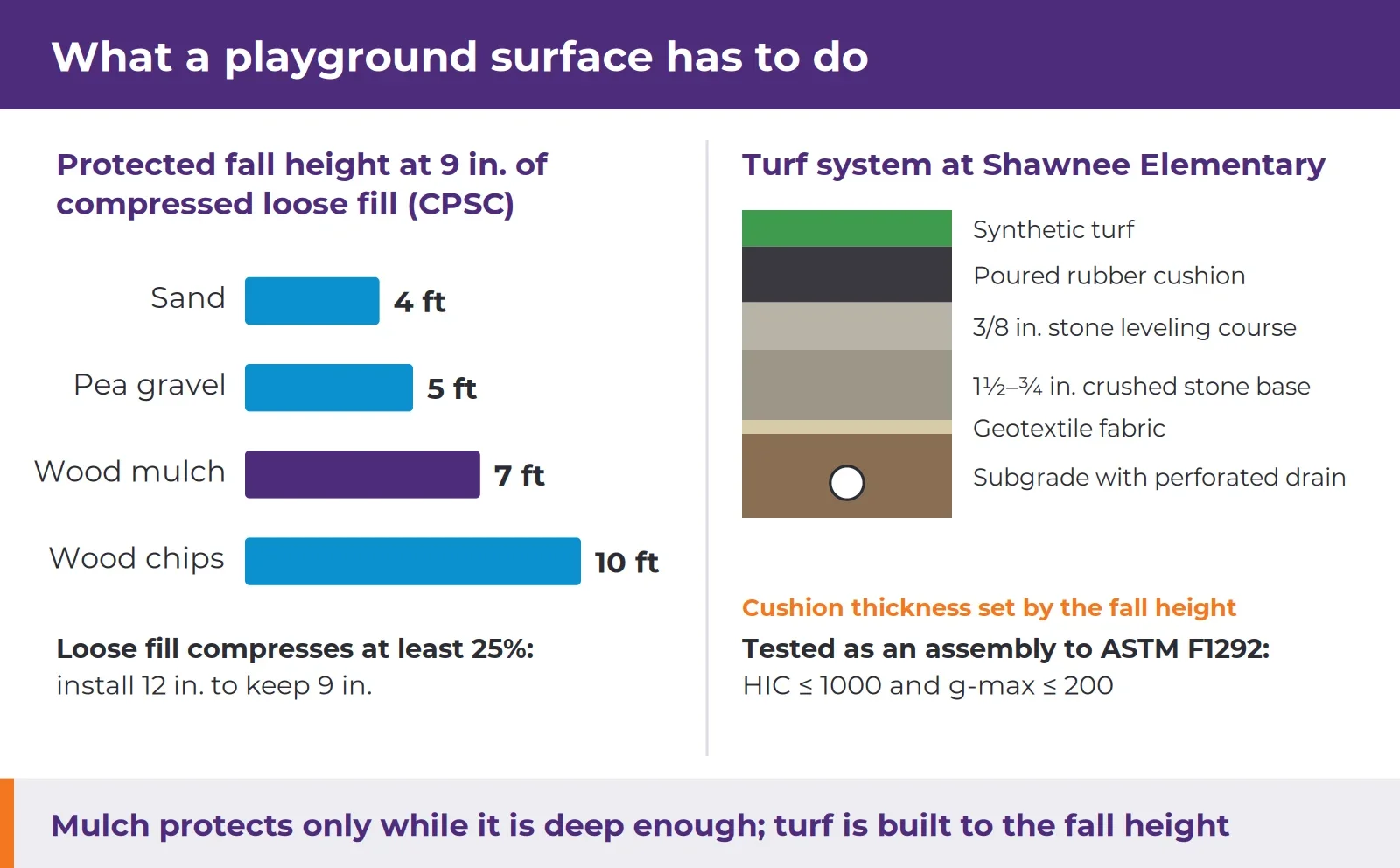
The surface under a play structure has one job that matters more than the rest: absorb the fall. The Consumer Product Safety Commission's Public Playground Safety Handbook measures loose-fill surfaces by the fall height they protect at a given depth, and the numbers are not interchangeable. At 9 inches of compressed depth, sand protects a fall of about 4 feet, pea gravel about 5 feet, wood mulch about 7 feet, and wood chips about 10 feet.
Figure 1: Loose fill protects only at depth; the turf system is built to the equipment's fall height. Fall-height data from the CPSC Public Playground Safety Handbook.
The depth you install is not the depth you keep
The handbook also warns that loose fill compresses by at least 25 percent with use and weather, which is why it tells owners to install 12 inches to keep 9. The depth that matters is the depth under the slide exit and the swing on the day a child falls, after a season of kicking, raking and rain. That is a maintenance commitment, and in most districts it competes with every other maintenance commitment.
A unitary surface is designed to a number once
A synthetic turf system with a poured rubber cushion beneath it is a unitary surface: it is tested as an assembly under ASTM F1292, which rates a surface to the height at which a test headform stays below a Head Injury Criterion of 1,000 and a peak deceleration of 200 g. The cushion thickness is selected for the tallest fall height of the equipment it serves, which is why the Shawnee contract ties the pad to the fall height of the play structures that stayed. The surface does not migrate, so the protection under the slide exit is the same in year five as it was on opening day.
Access is part of the same decision
The handbook points owners to ASTM F1951 for surfaces that are firm and stable enough for wheelchairs and walkers. Loose mulch can meet it only when it is carefully maintained. A bonded surface over a compacted stone base meets it by construction, and the drainage beneath keeps it from turning soft after a storm.
When you compare surfacing options, ask each bidder for the fall height the surface is rated to and how that rating will be kept. A turf system answers the question with a thickness. Mulch answers it with a maintenance schedule.