
Eastland Fairfield Career Tech Center Roofing 2025
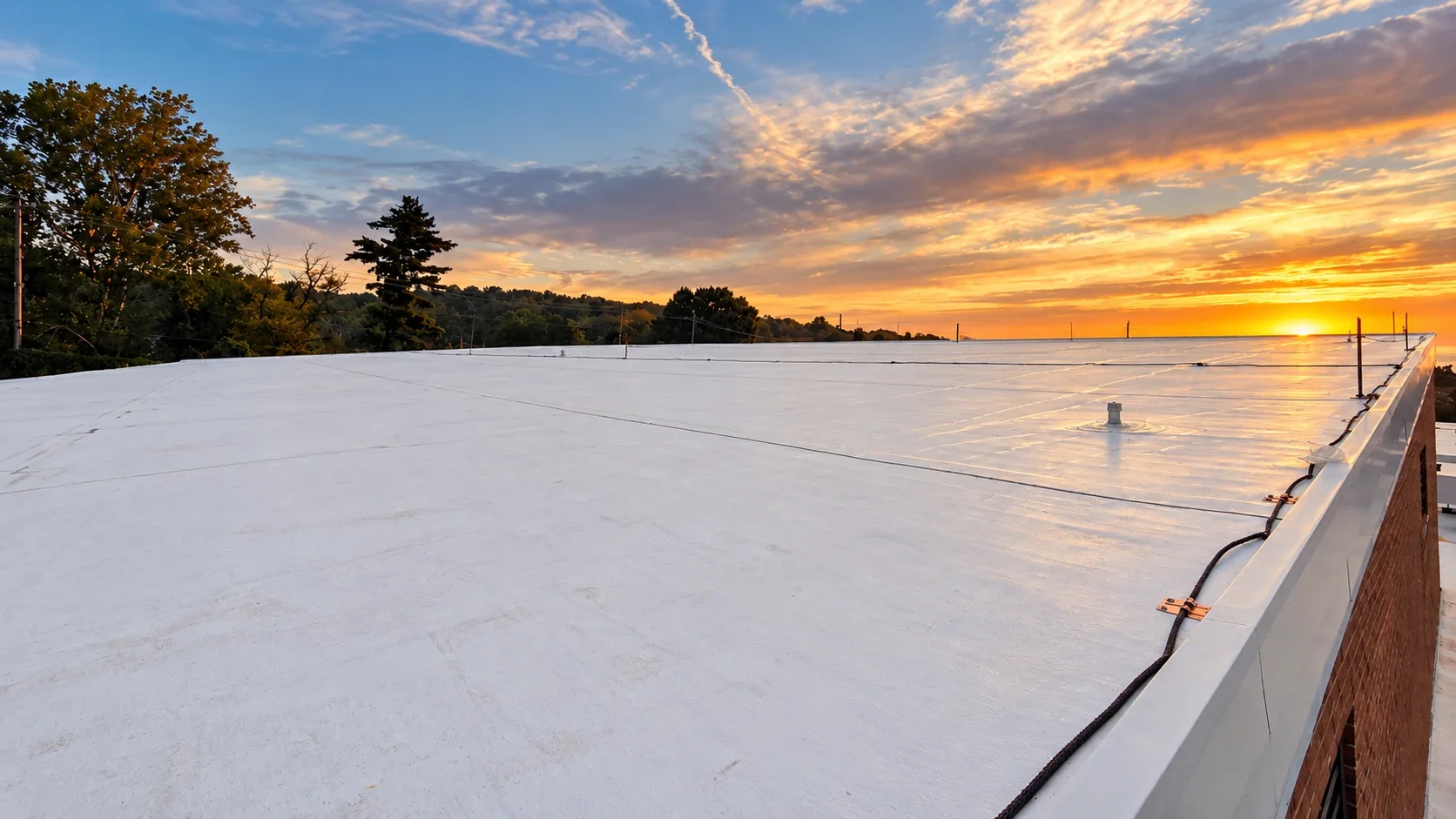
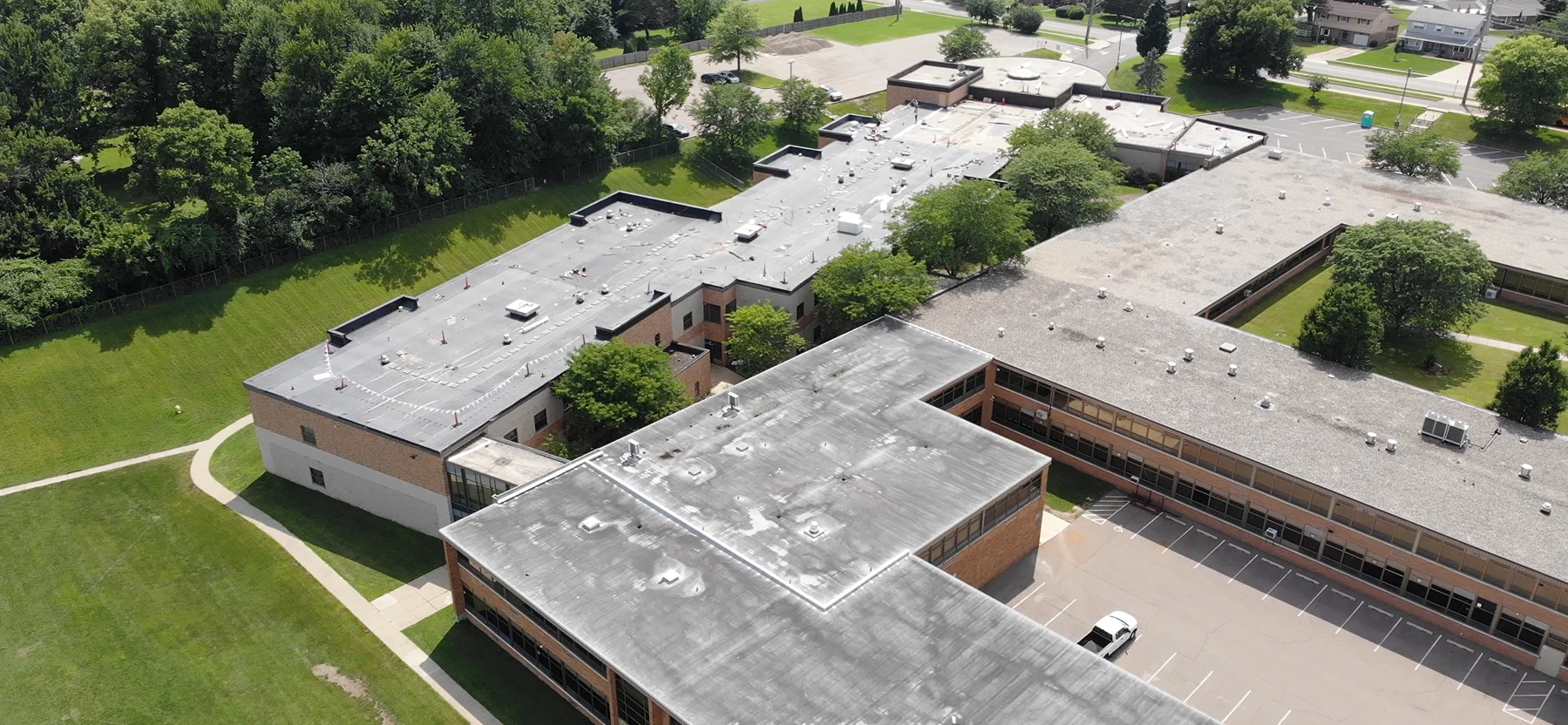
Eastland-Fairfield Career Center's Fairfield campus in Carroll has two roof sections under one new Carlisle 80-mil TPO membrane, each rebuilt the way its condition called for. Prodigy tore one section down to the metal deck and rebuilt it with new insulation under a 30-year watertight warranty, and re-covered the standing seam metal section in place under a 20-year warranty, adding new edge metal, gutters, downspouts and walk pads. The career center bought it pre-bid through The Ohio Purchasing Council's unit price contract.
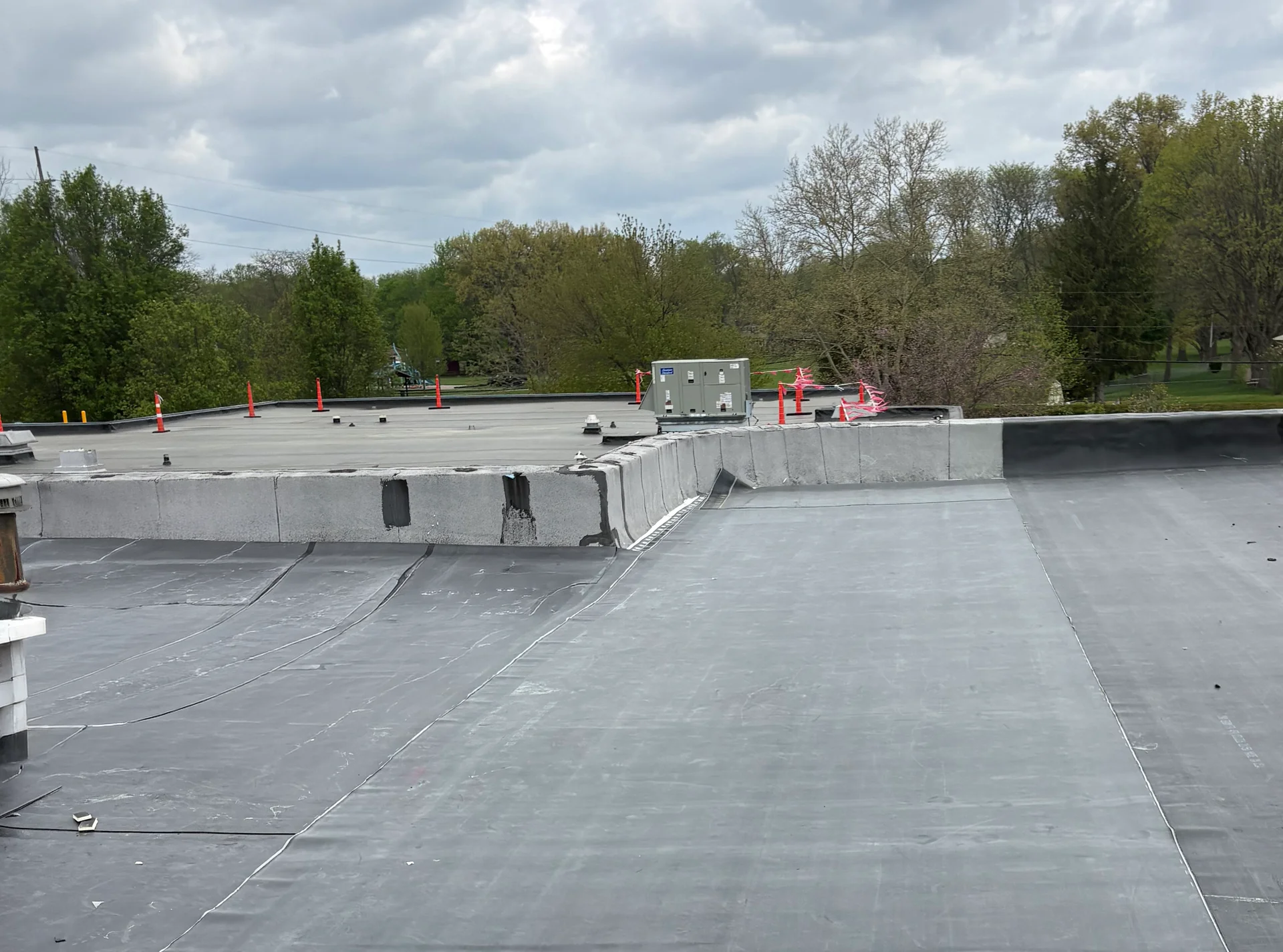
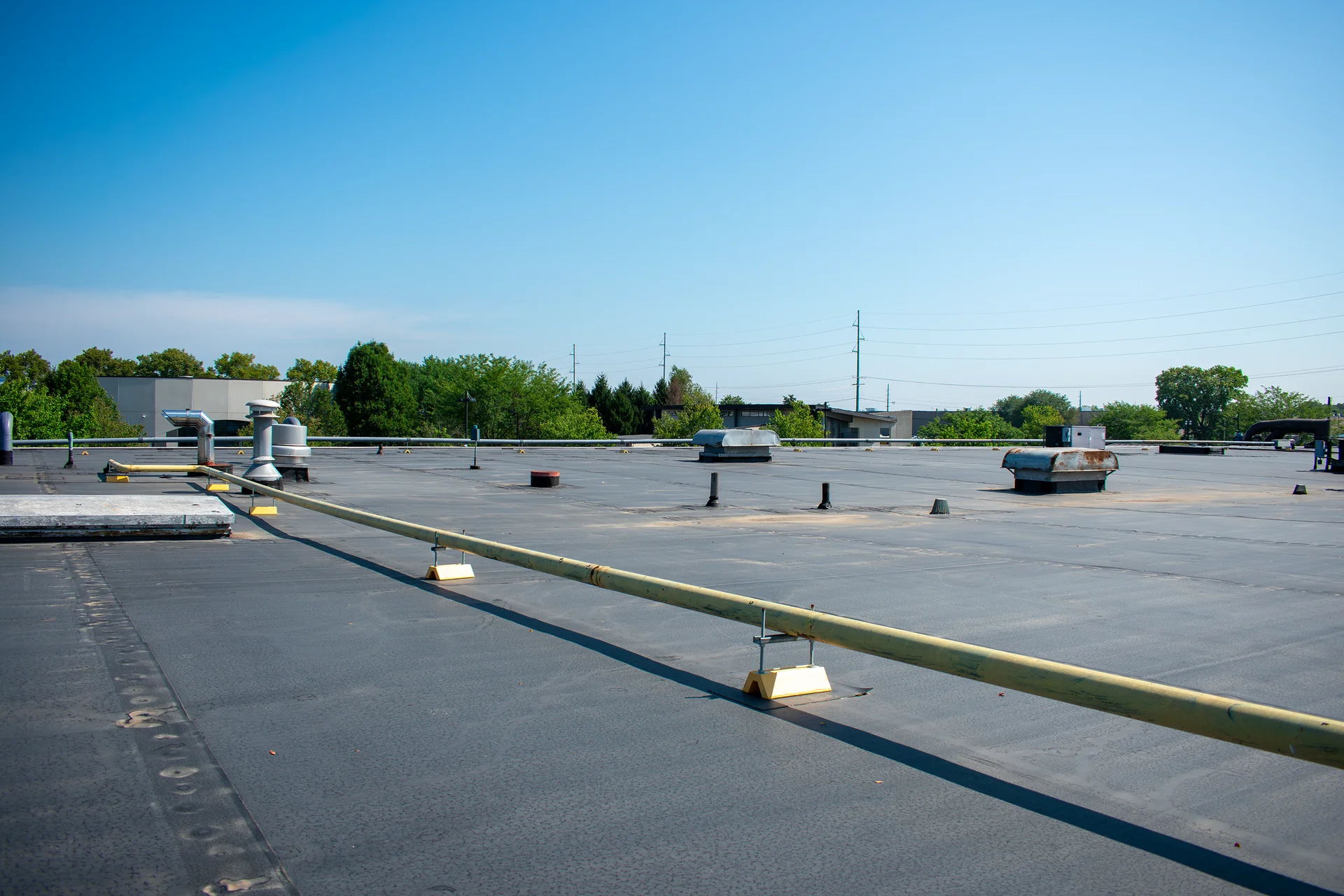
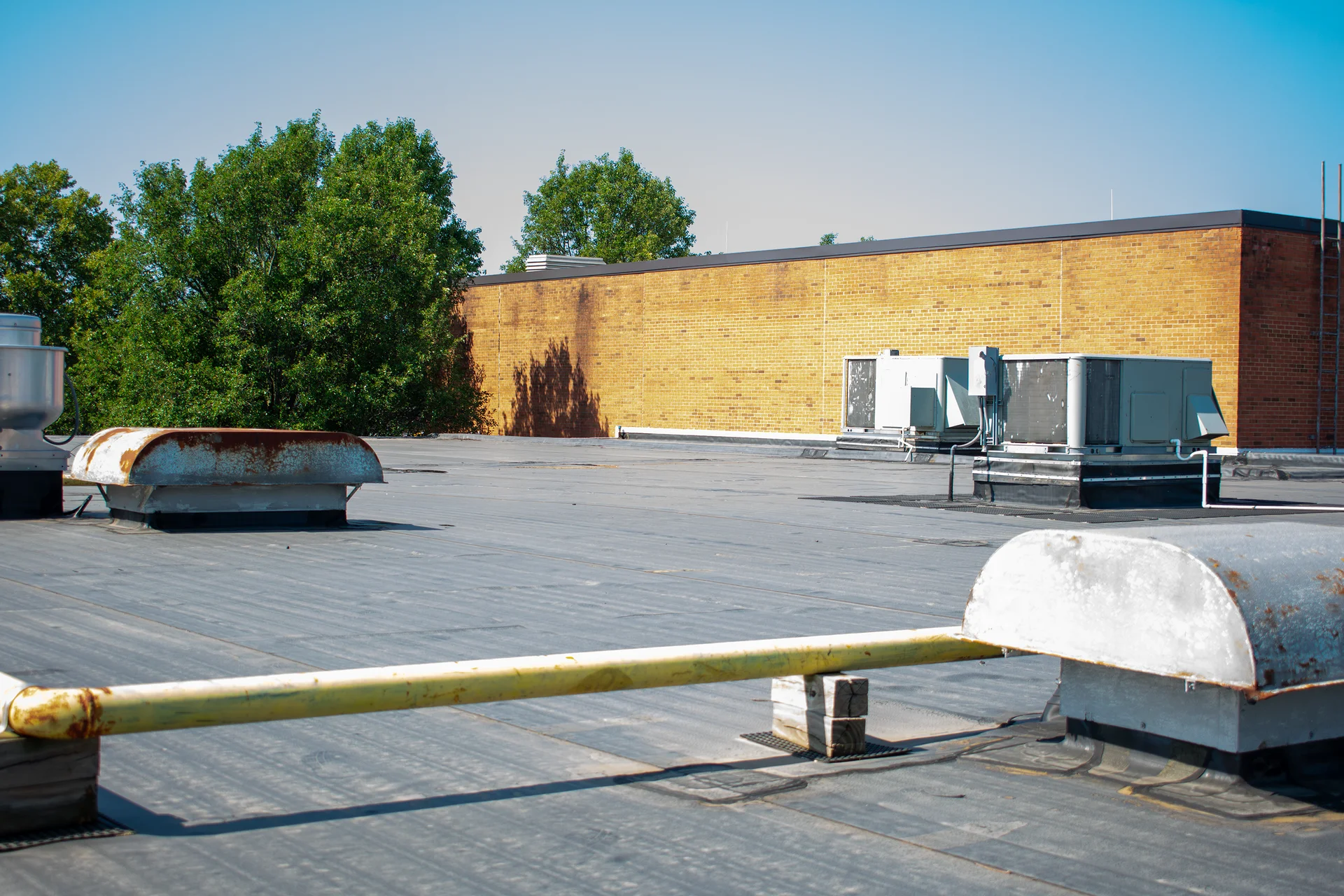
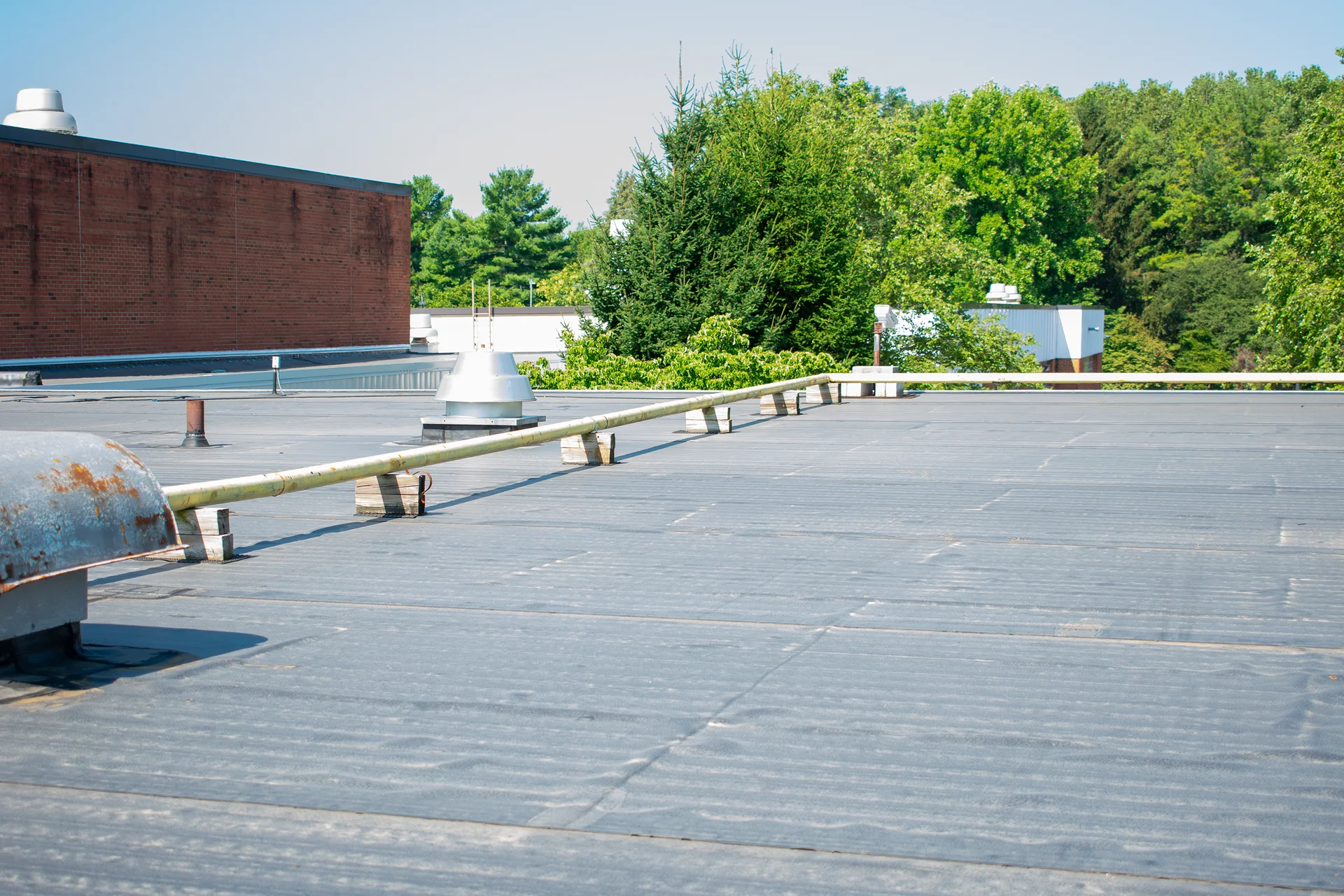
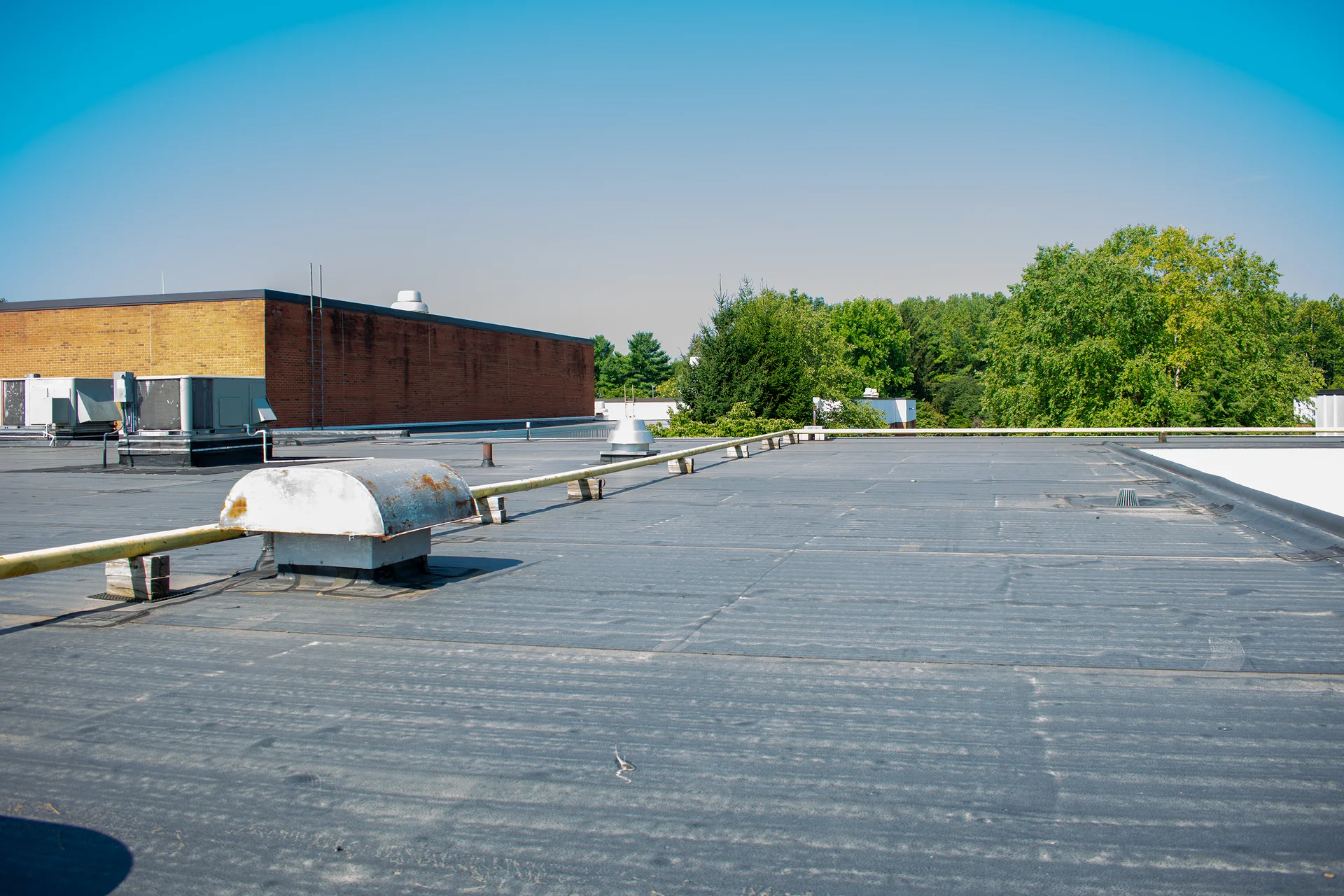
Eastland-Fairfield Career Center had two roof sections at its Fairfield Career Center campus in Carroll, Ohio that needed attention at the same time and did not need the same work. Section 2 came off entirely, down to the metal deck. Section 5 stayed where it was, with a new system built on top of it.
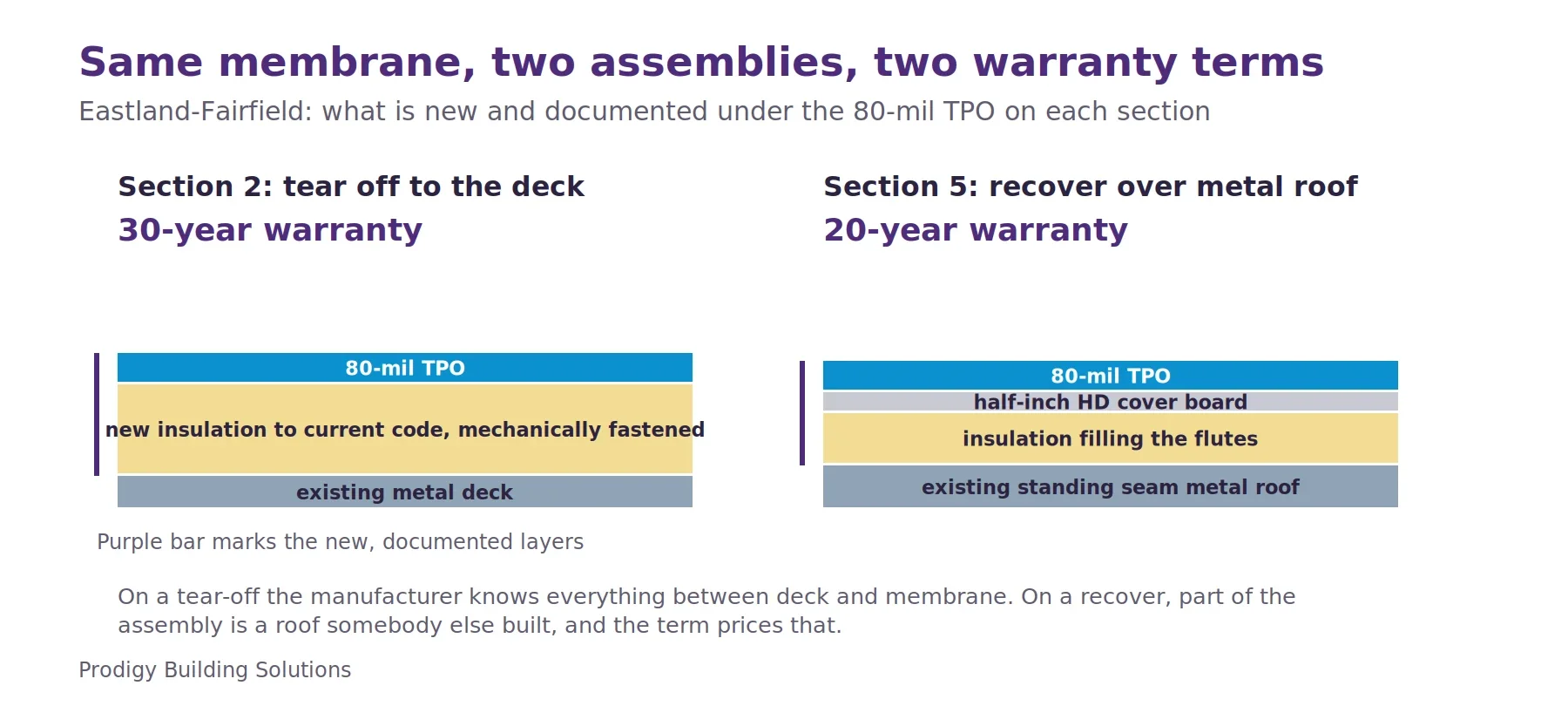
On Section 2 the replacement is new insulation specified to meet current code and mechanically fastened, factory pre-manufactured drain sumps, an 80-mil Carlisle TPO membrane and new perimeter edge metal, all detailed to Carlisle's 30-year requirements and carrying a 30-year watertight warranty. Walk pads go in at the walk-offs and around serviceable equipment, so the maintenance route to the rooftop units is not slowly wearing out the membrane the district just bought.
Section 5 is standing seam metal, and it stays. The contract fills the flutes between the seams with insulation, adds a half-inch SecureShield HD polyiso layer over that — both mechanically fastened — and covers the assembly with the same 80-mil TPO and new edge metal, plus new gutters and downspouts. That section is detailed to Carlisle's 20-year requirements and carries a 20-year warranty.
What the career center ends up with is one membrane and one manufacturer across both sections, two warranty terms that match two different methods, and no money spent tearing off a metal roof to throw it away. The roofing was bought through a pre-bid unit-price contract held with The Ohio Purchasing Council.
Technical Discussion
Our Work