
•••
PavingSouthwest OhioCincinnatiTOP-C purple wordmark logo for The Ohio Purchasing Council cooperative purchasing program

Princeton Paving Update 2026

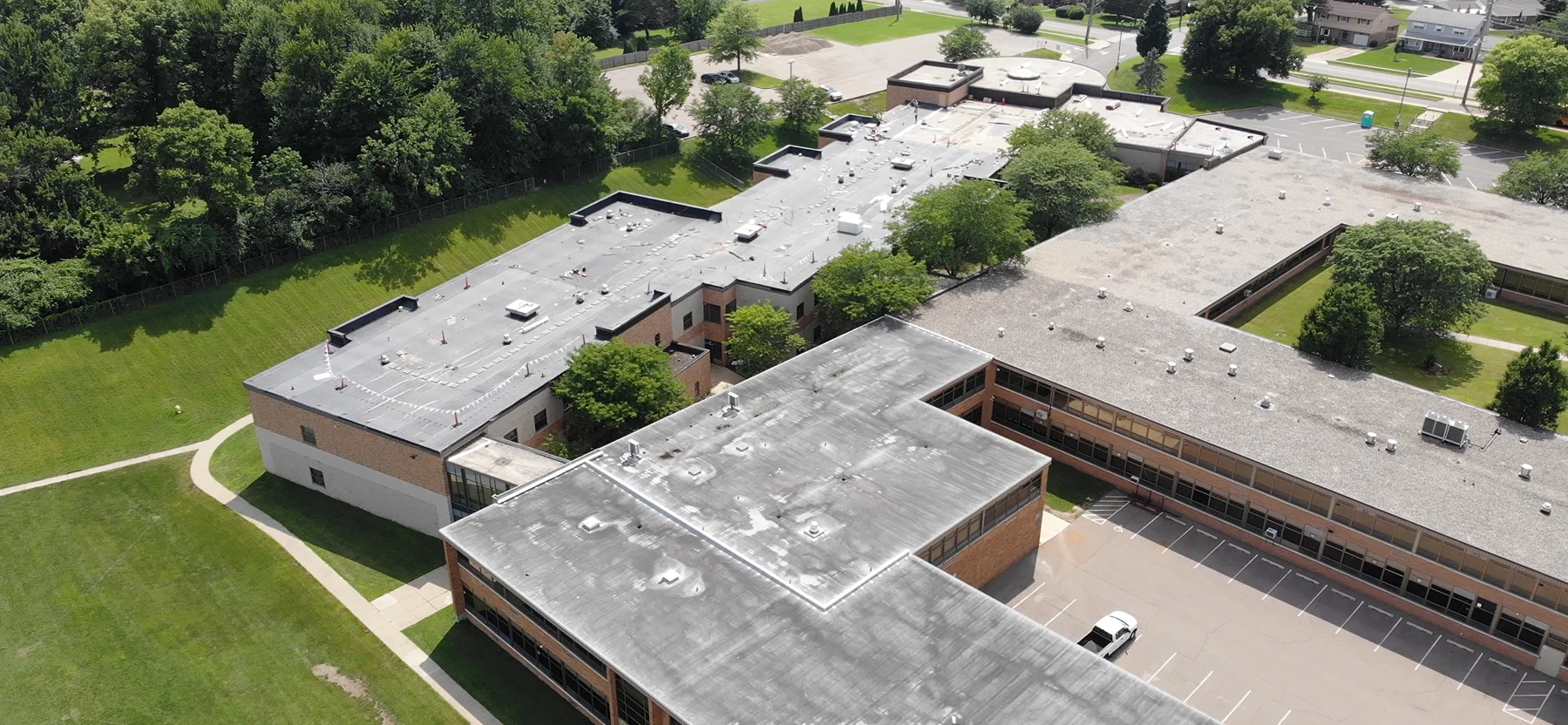
Princeton City School District put three elementary campuses into one 2026 paving program — Evendale, Lincoln Heights and Stewart — rather than taking one building a year. Each lot got the areas marked on its own contract diagram, and the three lots did not get the same repair, because they were not worn the same way.

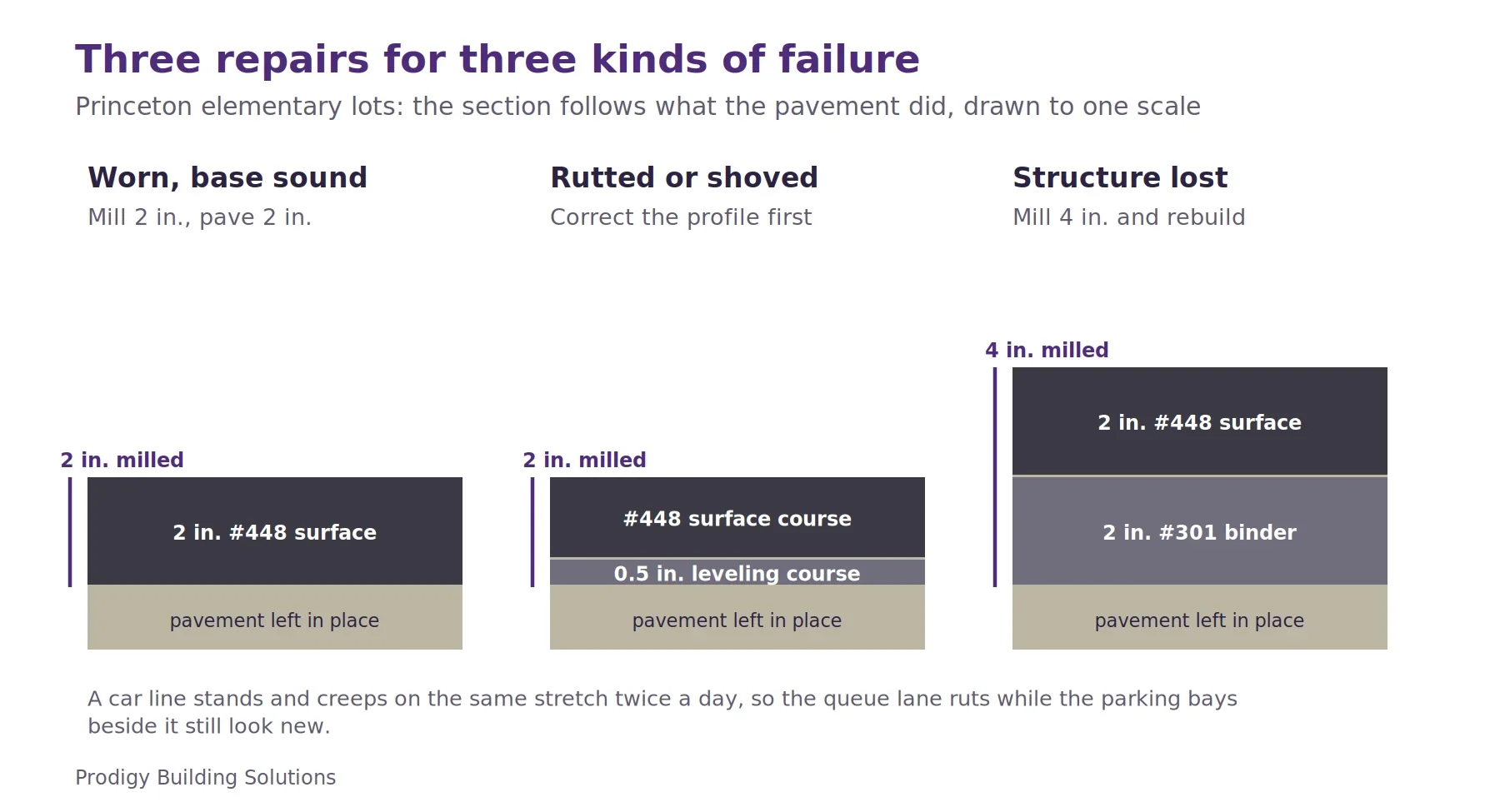
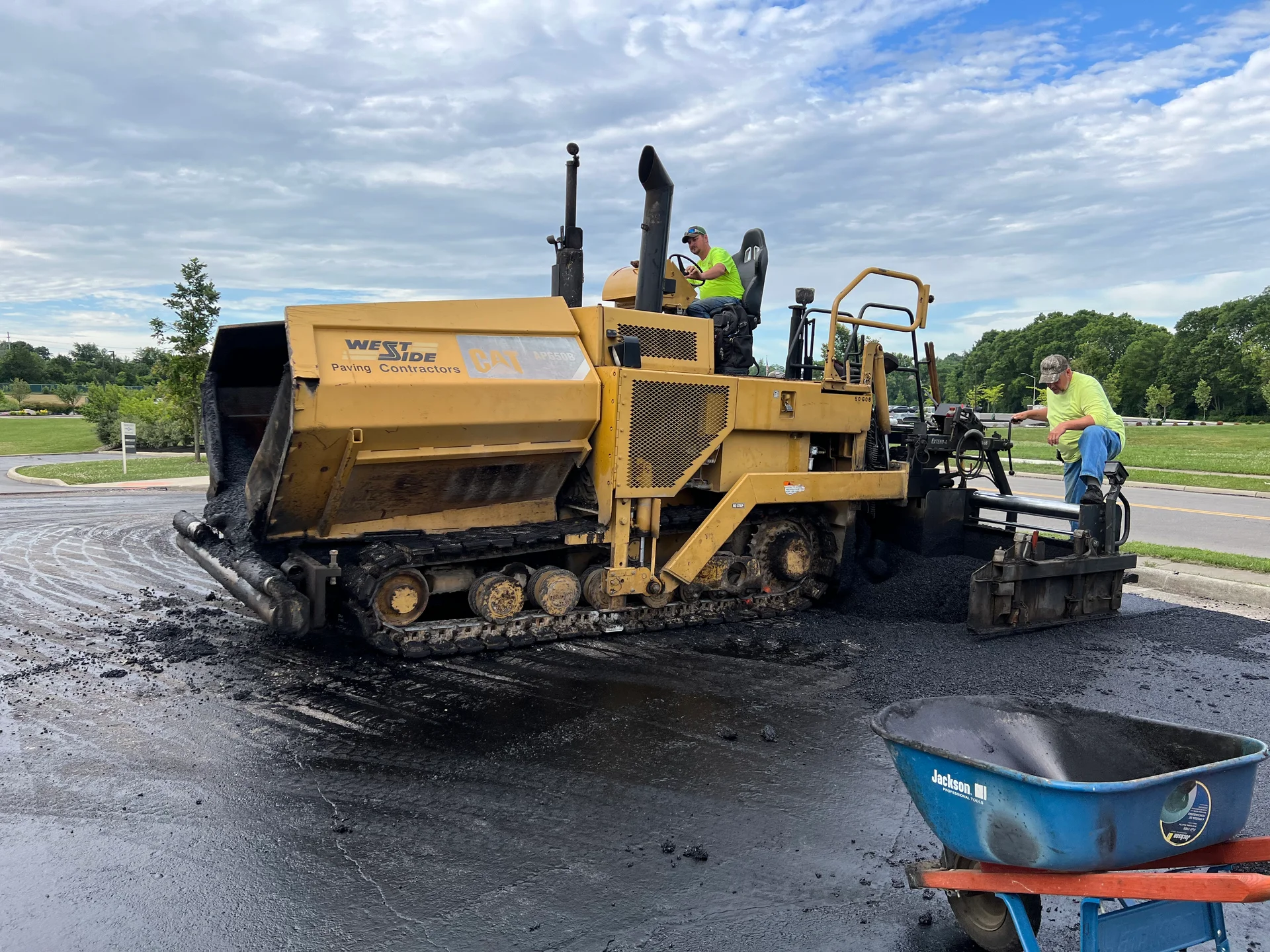
Where the surface was the problem, the work is two inches milled off, trackless tack at 0.05 gallons per square yard, and two compacted inches of ODOT #448 surface course put back. Where the pavement needed structure rather than a new face, the mill goes four inches deep and two compacted inches of ODOT #301 binder course goes in underneath the surface course. In the marked areas at Stewart, a half inch of #448 leveling course goes down before an inch and a half of surface course, which is what a lot needs when its profile has moved rather than simply worn. Joints are hot tar sealed and every area is striped back to the layout it already had.

Stewart's two playgrounds were handled separately and without asphalt: two passes with a diamond cup floor grinder, a HEPA vacuum to pull the debris, a pressure clean, then two coats of asphalt resurfacer and the games restriped.

The program was bought against a pre-bid TOP-C unit price contract, which is why three sites with three different pavement sections could be scoped, priced and built as one job.
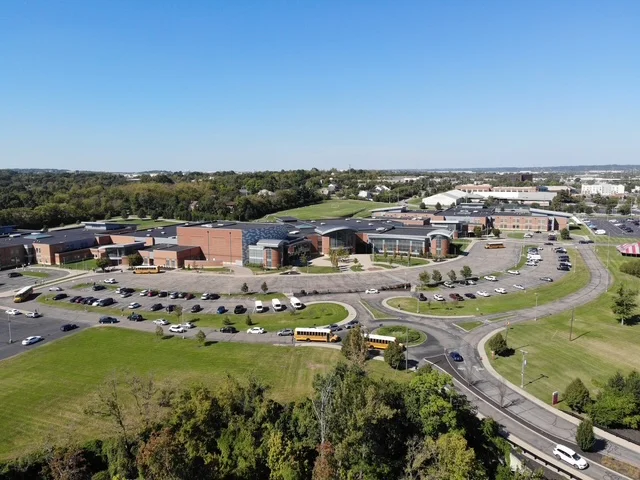
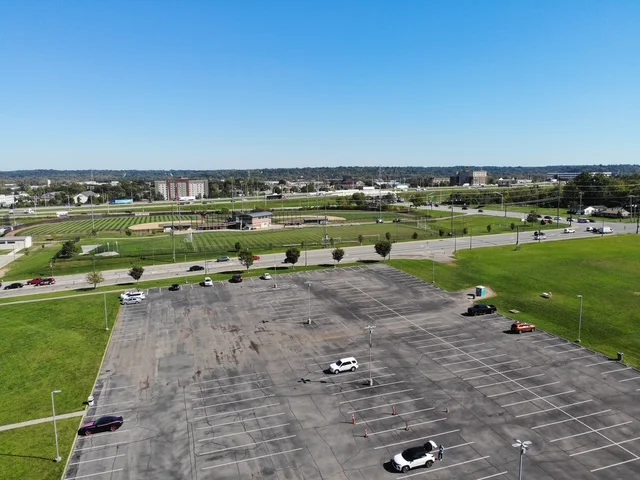
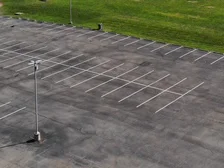
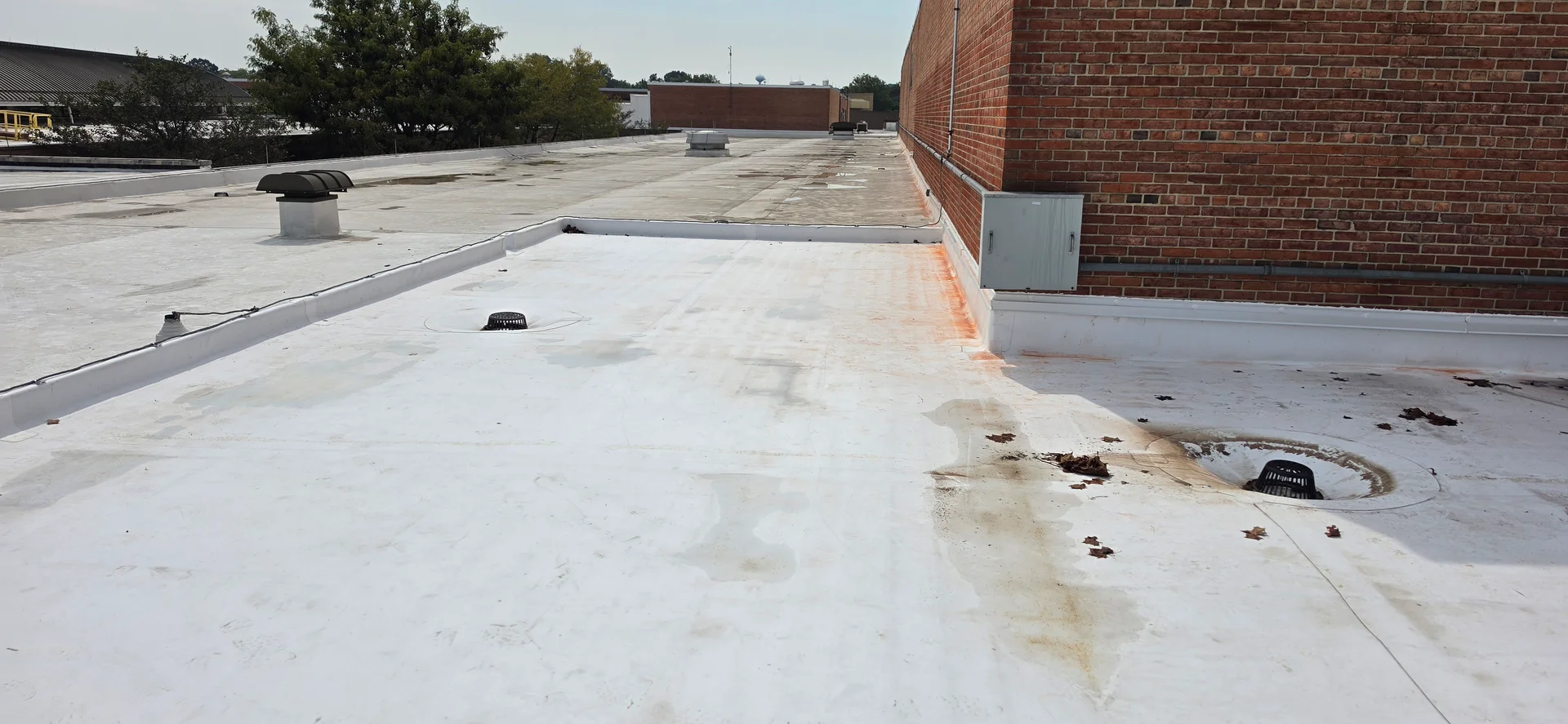
Princeton Paving Update 2026 — photo 1
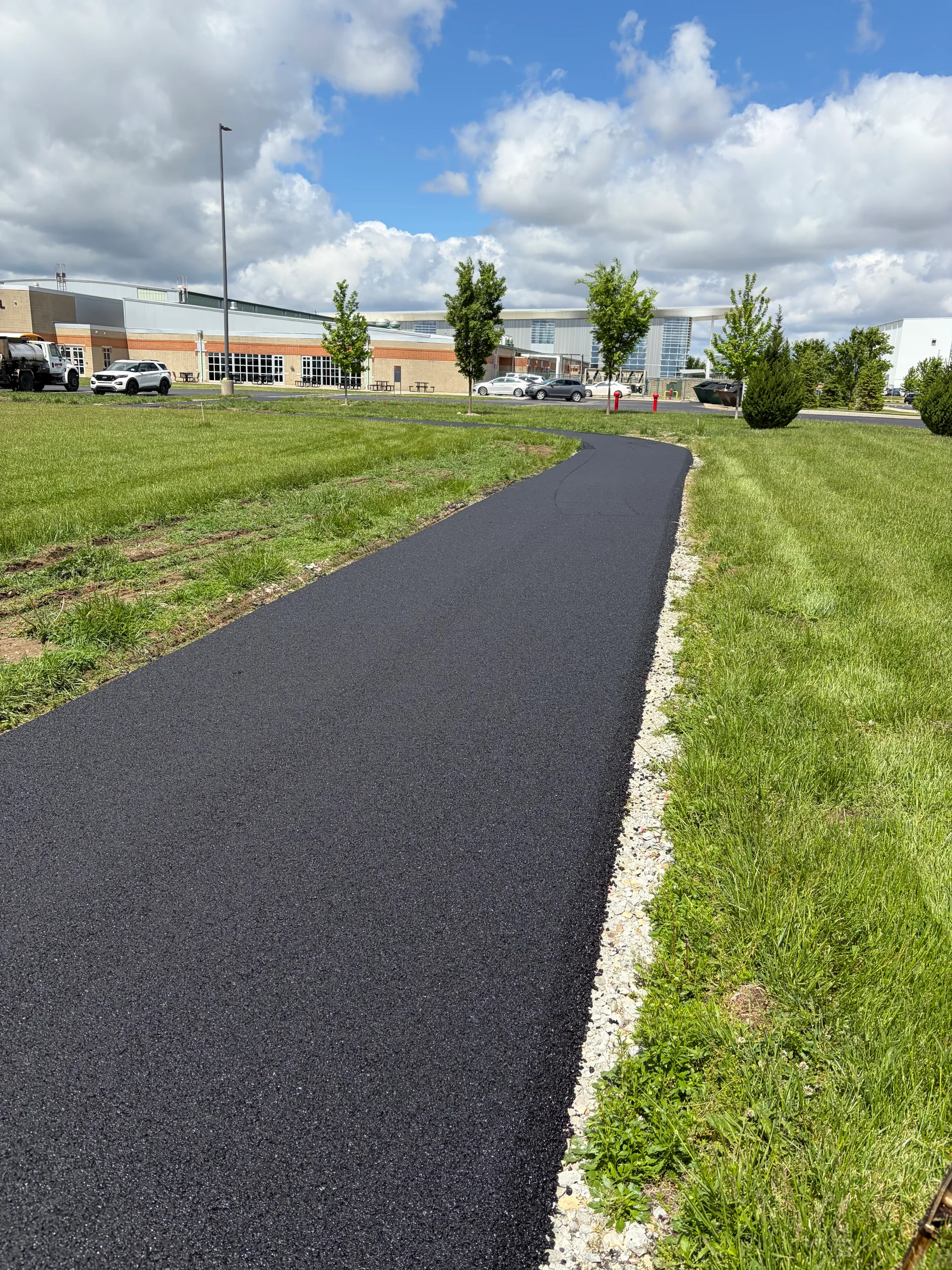
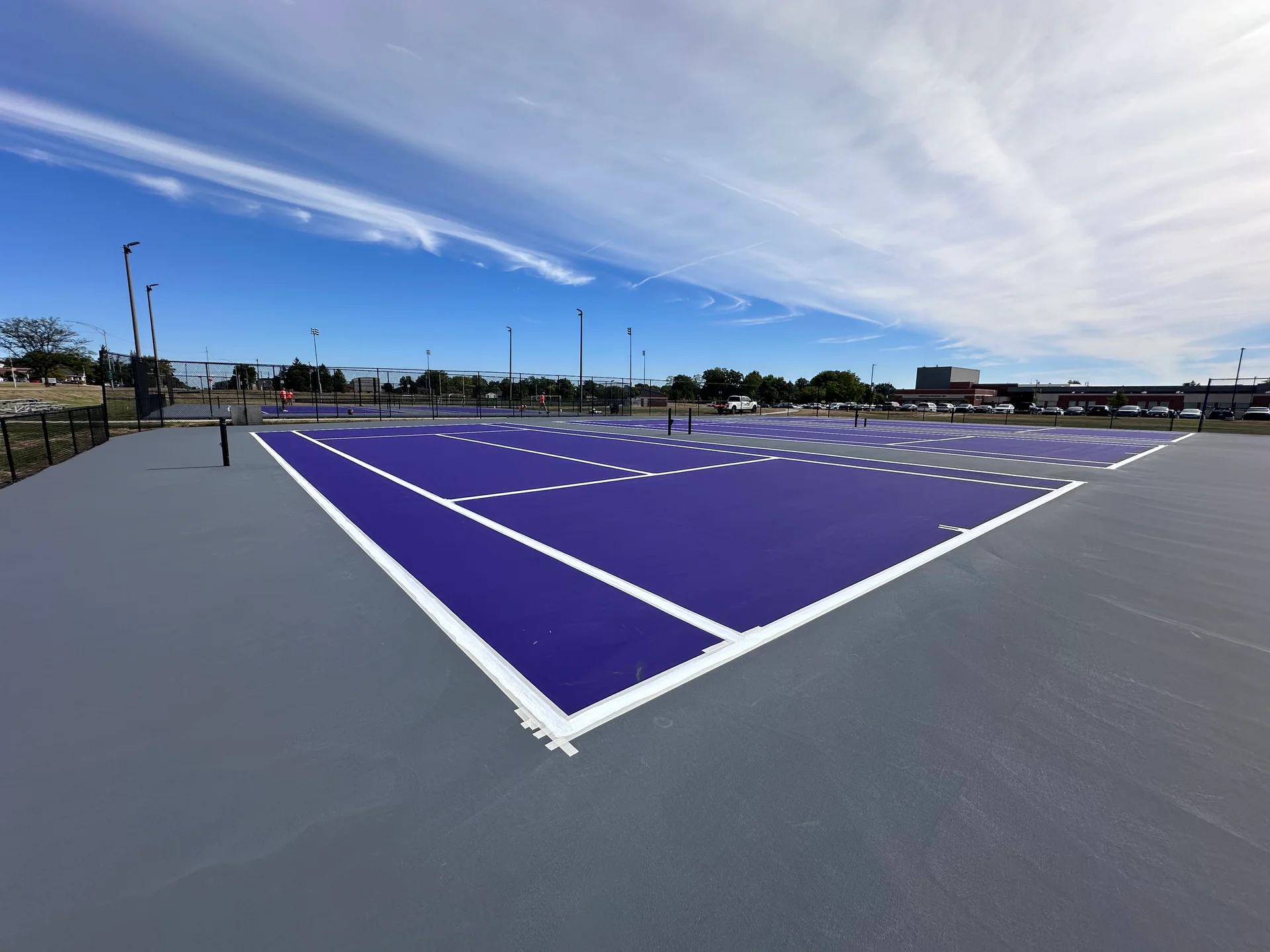
Princeton Paving Update 2026 — photo 2
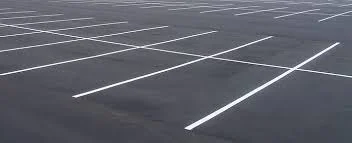
Princeton Paving Update 2026 — photo 3

Technical Discussion

What a car line does to an elementary lot

An elementary lot fails in a place a secondary lot does not. The heaviest vehicle that visits it is not what does the damage. The damage comes from the pickup queue: a line of cars standing on the same short stretch of pavement, twice a day, all year, creeping forward a length at a time.

Three asphalt repair sections at one scale: a 2-inch mill and 2-inch surface course for worn pavement on a sound base, a half-inch leveling course under the surface course for rutted pavement, and a 4-inch mill rebuilt with 2 inches of binder and 2 inches of surface where the structure was lost.
Figure 1 — Each marked area gets the section that matches how it failed.

Asphalt is soft in the afternoon

Asphalt is not a rigid material. Its binder is a viscous liquid held stiff by temperature, and on a sunny 90-degree afternoon a black pavement surface runs 50 to 60 degrees hotter than the air, around 140 to 150 degrees. At that temperature the binder in the top 2 to 3 inches flows under a sustained load. A tire that rolls through spreads its load across new pavement every instant. A tire that sits, advances a car length, and sits again works the same square foot over and over, at 2:45 in the afternoon, when the surface is softest. The result is shoving and rutting rather than cracking: a wavy profile in the queue lane while the parking bays beside it still look close to new.

Why a rut cannot simply be paved over

A new surface course goes down at a constant thickness, so laid straight onto a rutted profile it reproduces the rut. That is why the deformed areas here took a half-inch leveling course first, a thin lift placed to fill the low spots and restore the plane, and only then the surface course. Where the pavement was worn but flat, the 2-inch mill and 2 inches of #448 surface course was enough. Where the structure was gone, a 4-inch mill and 2 inches of #301 binder went under the surface.

Choosing a binder for a queue

Ohio's standard asphalt binder is graded for a pavement that reaches about 64 degrees Celsius, and it serves a parking bay for decades. A queue lane is a candidate for a polymer-modified binder graded a step or two higher, which stays stiff at the temperatures a car line produces. It costs more per ton and is only worth paying for on the strip of pavement that stands still, which is another reason the sections here were priced by marked area rather than by campus.

When an elementary lot is rutting, walk it at dismissal before you price it. The queue lane and the parking bays are two pavements with two problems, and the fix for one is wasted on the other.

Our Work

Similar Projects