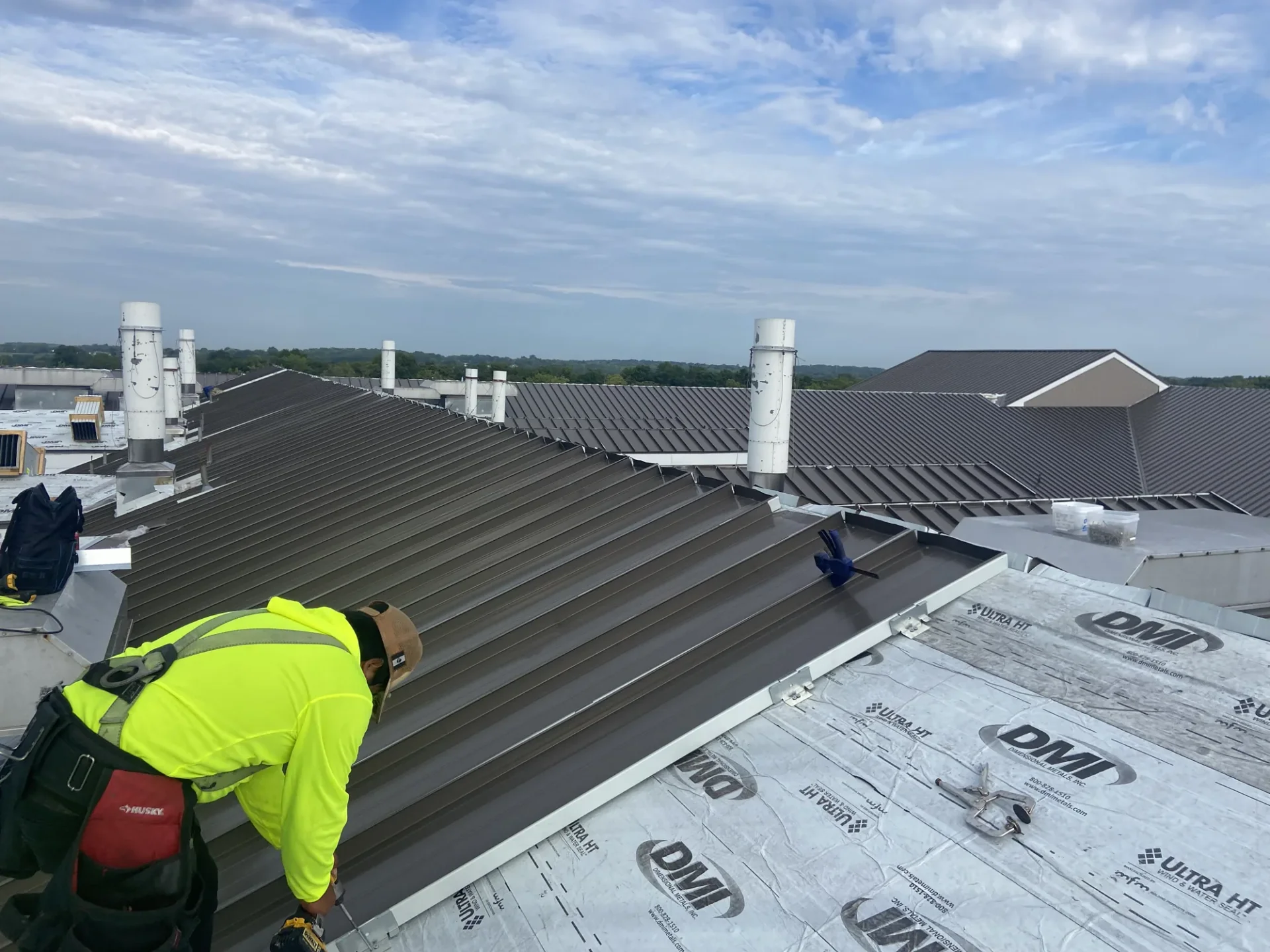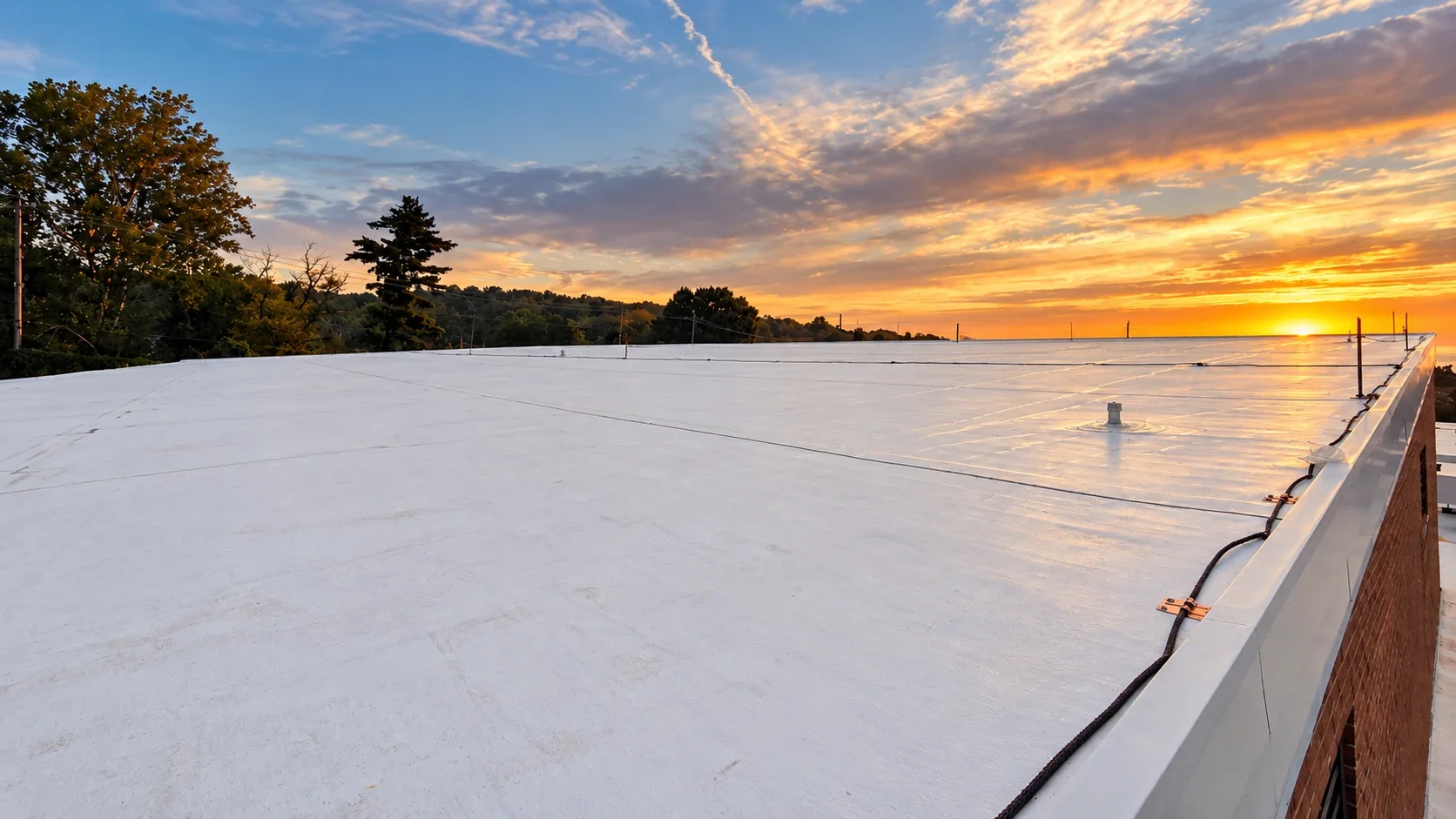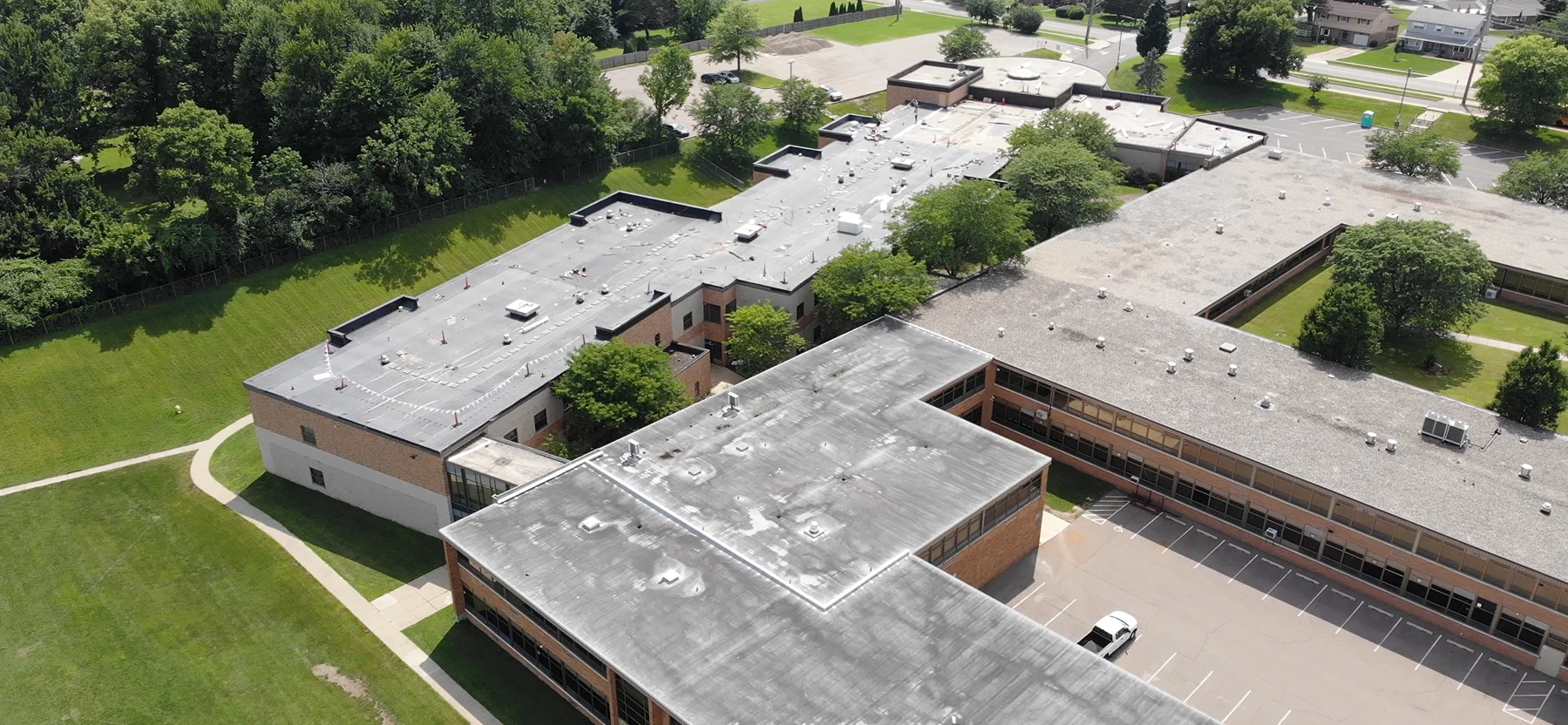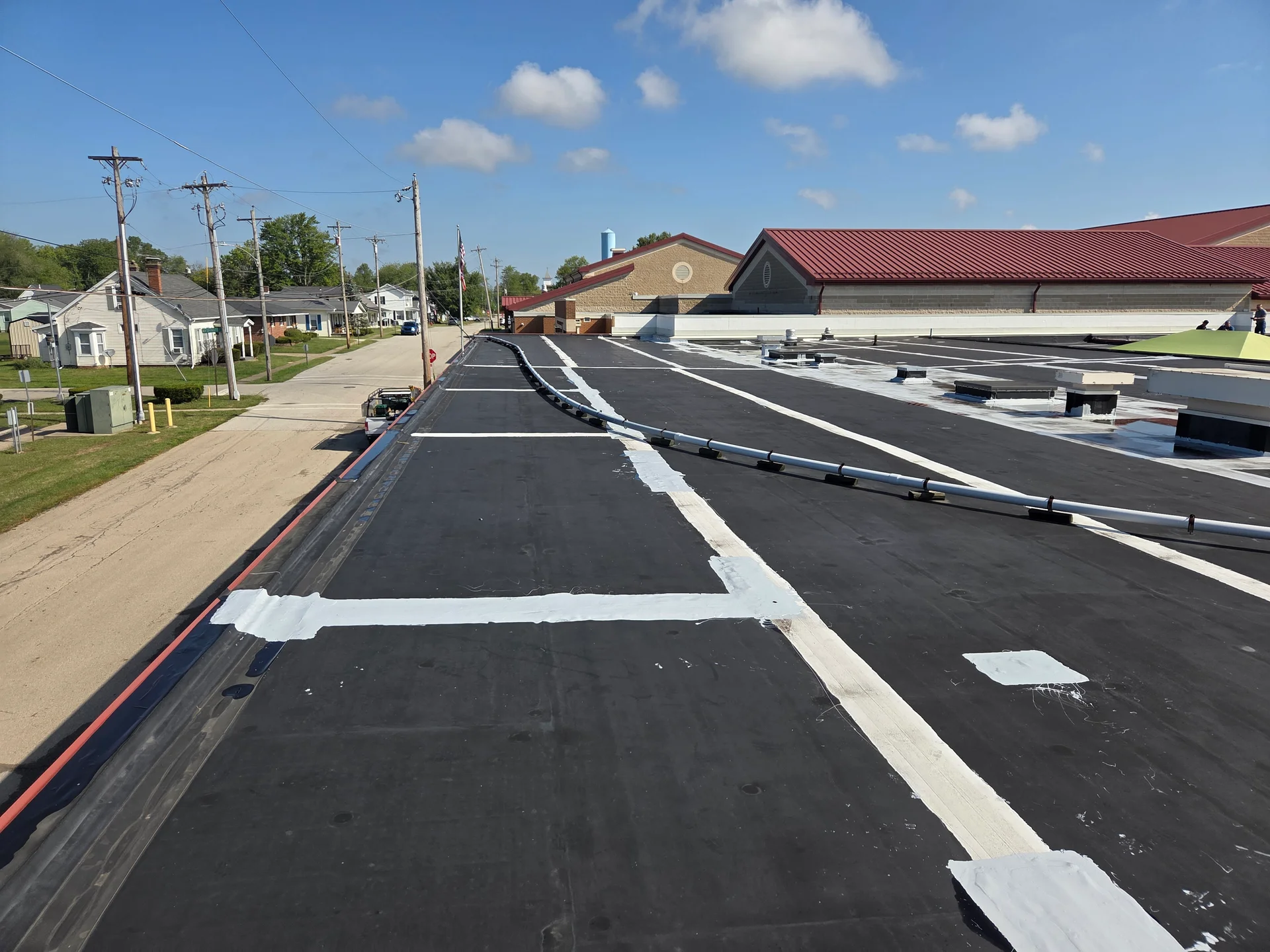
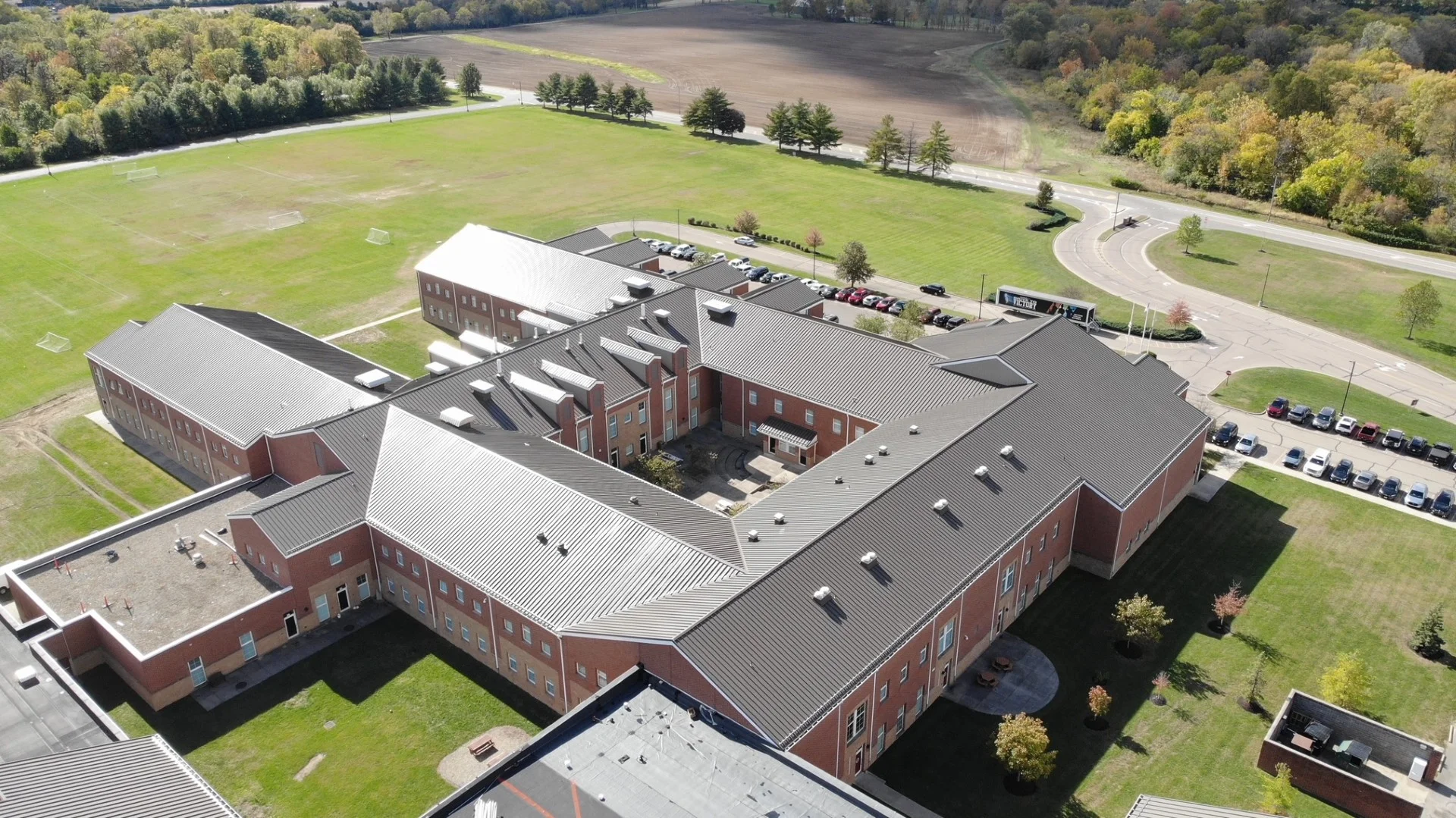

Aerial view of the new standing seam metal roof running across the Lebanon High School wings
RoofingSouthwest OhioCincinnatiTOP-C purple wordmark logo for The Ohio Purchasing Council cooperative purchasing program

Lebanon High School Roof Replacement

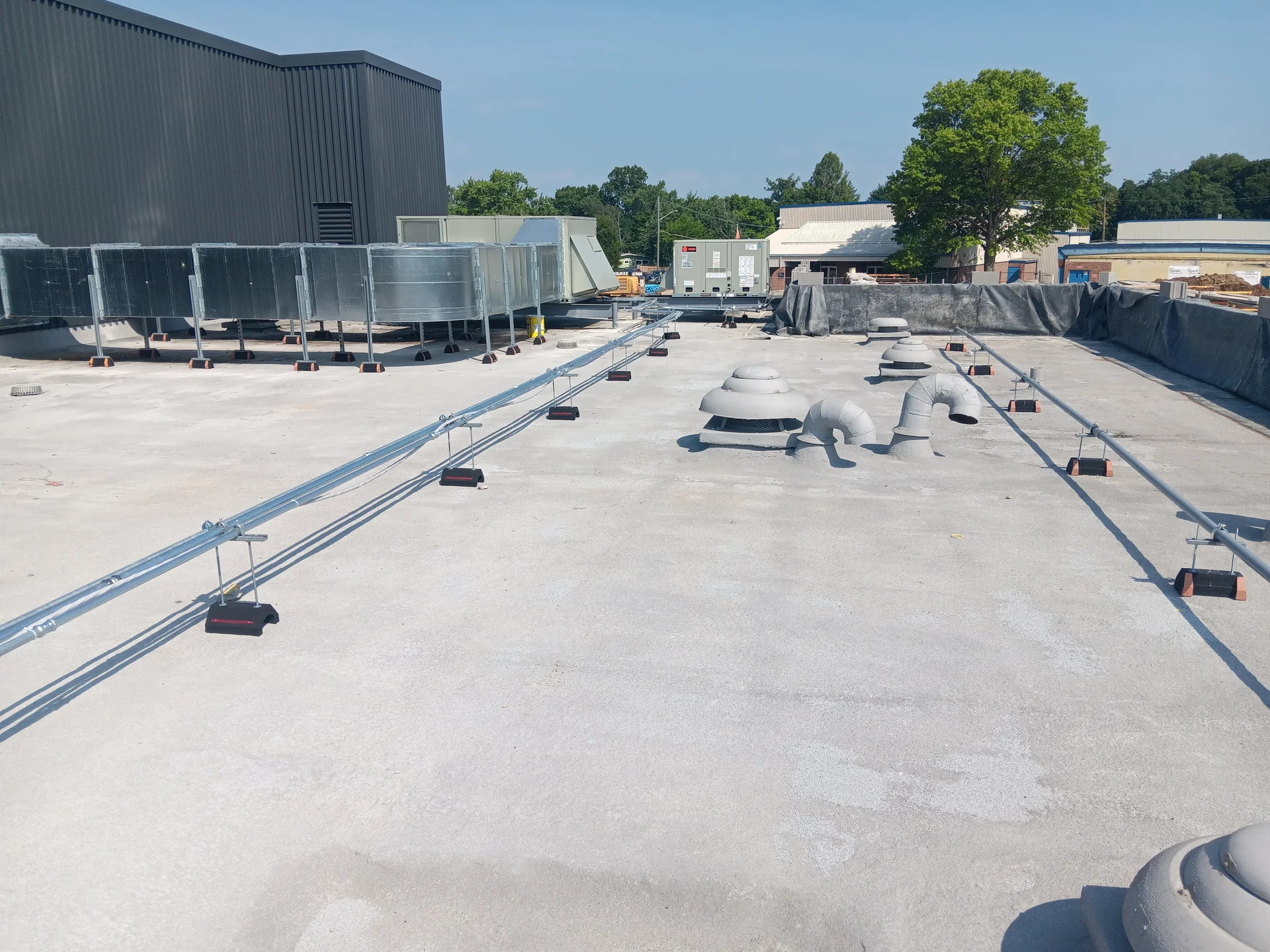
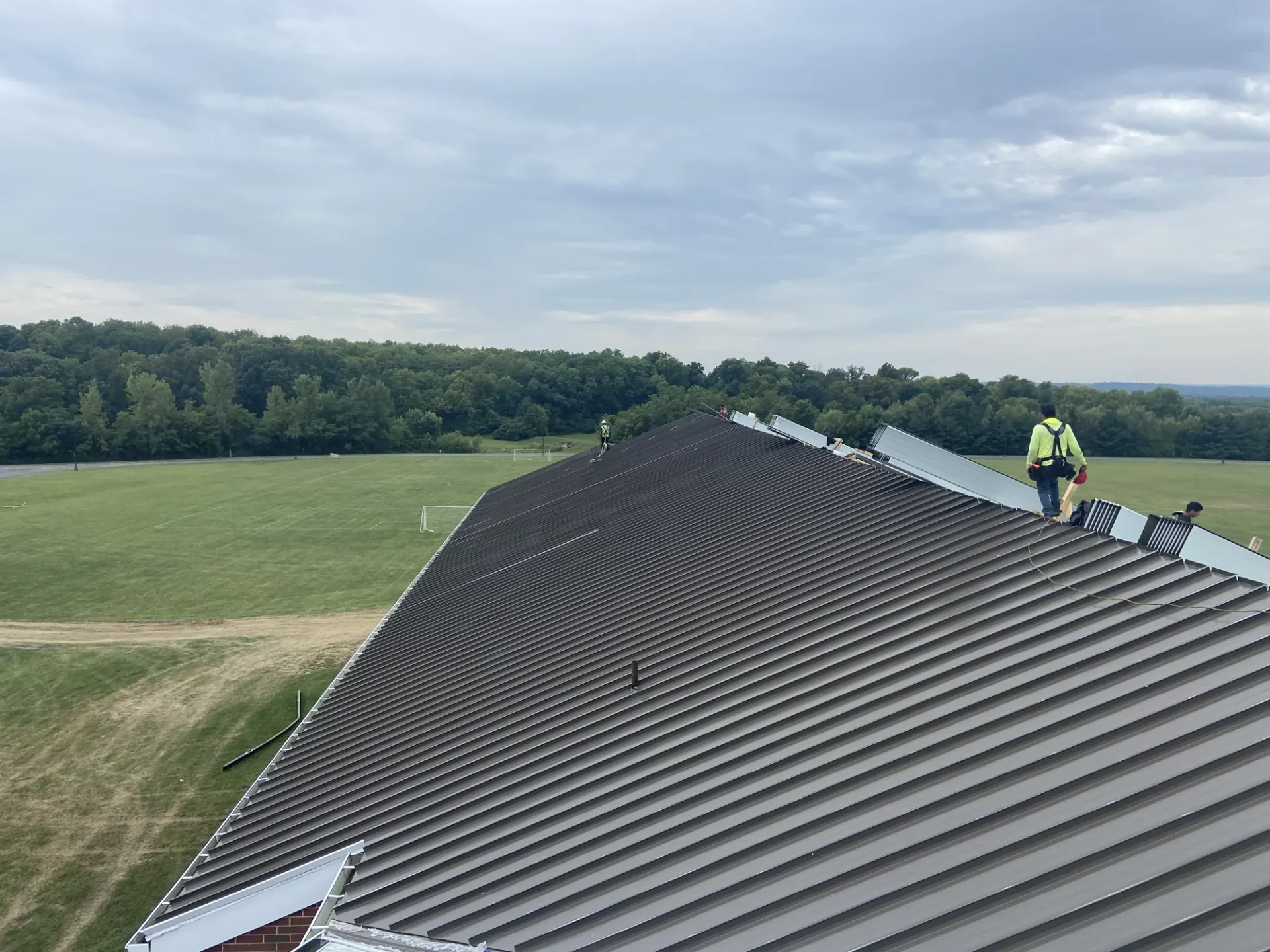
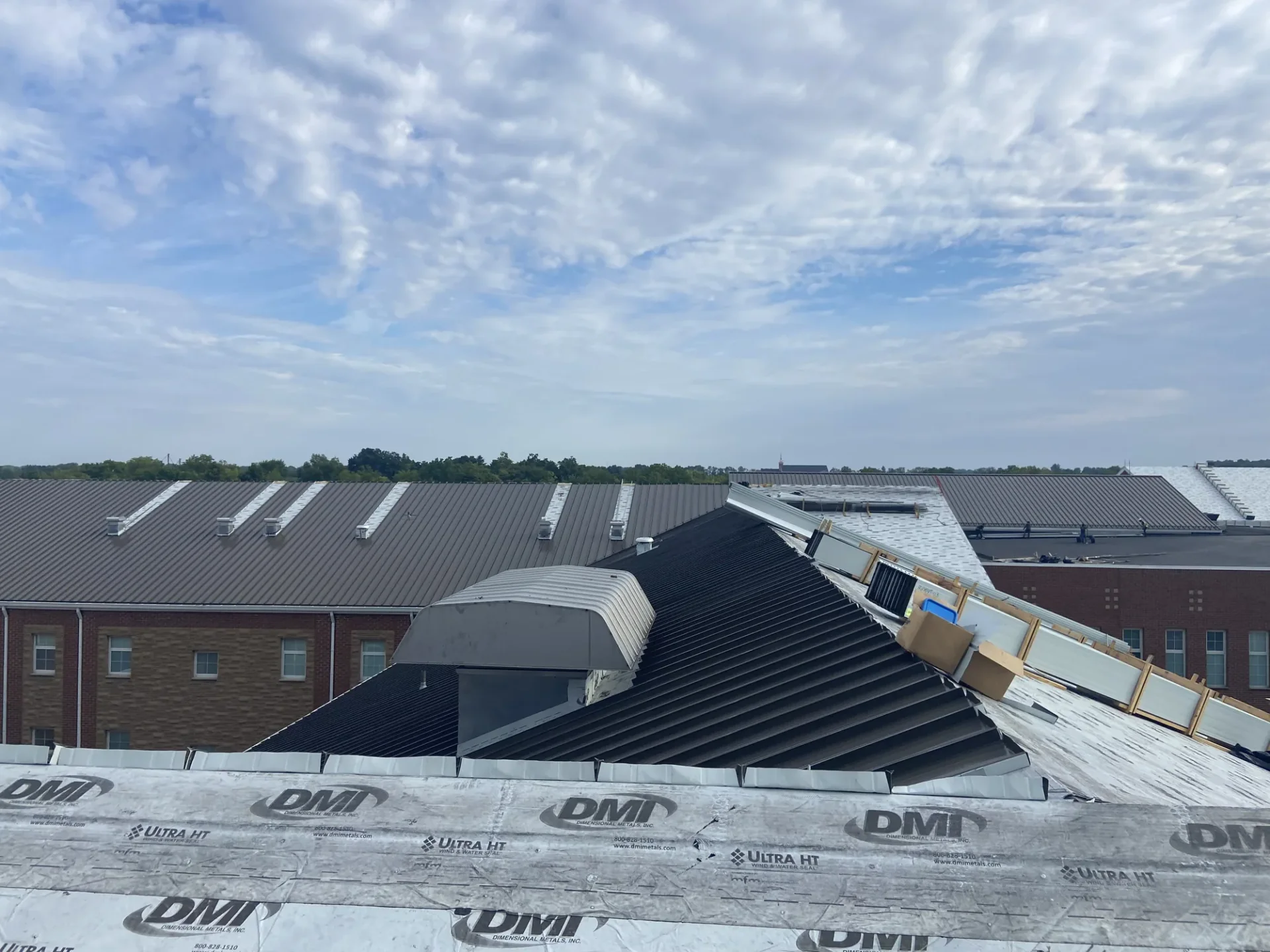
Lebanon City School District replaced the roof over designated areas at Lebanon High School in Lebanon, Ohio rather than the whole building at once. Those sections come off down to the deck, any decking found wet is replaced instead of covered, and what goes back is a Carlisle underlayment with 24-gauge T-250 PAC-CLAD standing seam metal panels over it, every penetration flashed.

The decision worth noticing is the material. Most low-slope school roofing in Ohio is single-ply membrane, and membrane is right often enough that it is the default. On these areas the district went to metal, and the warranty package is the reason: a 30-year PAC-CLAD weathertightness warranty on the system and a separate 30-year finish warranty on the metal — two different promises, one about whether the roof leaks and one about how it looks from the parking lot in year twenty-five.

The contract also carries the parts of a metal roof job that quietly fall out of a price comparison: cranes, lifts, dumpsters and on-site storage, site safety, and grading and seeding of ground torn up while a crane sat on it. Permits are included if needed. The work was bought through a pre-bid unit-price contract held with The Ohio Purchasing Council.

What the district gets out of it is a roof on a different replacement cycle from the rest of its buildings — one that a facilities director can reasonably expect not to be his problem.
Technical Discussion
Why standing seam metal on a high school

Single-ply membrane is the default on school roofs for defensible reasons. It is fast, it prices well, it suits the flat expanses school buildings are made of, and any competent roofer in Ohio can install it. The case for standing seam metal is not that membrane is bad. It is that on sloped, exposed, visible roof areas the failure mode of a membrane is a maintenance program, and the failure mode of metal is a phone call a very long way out.

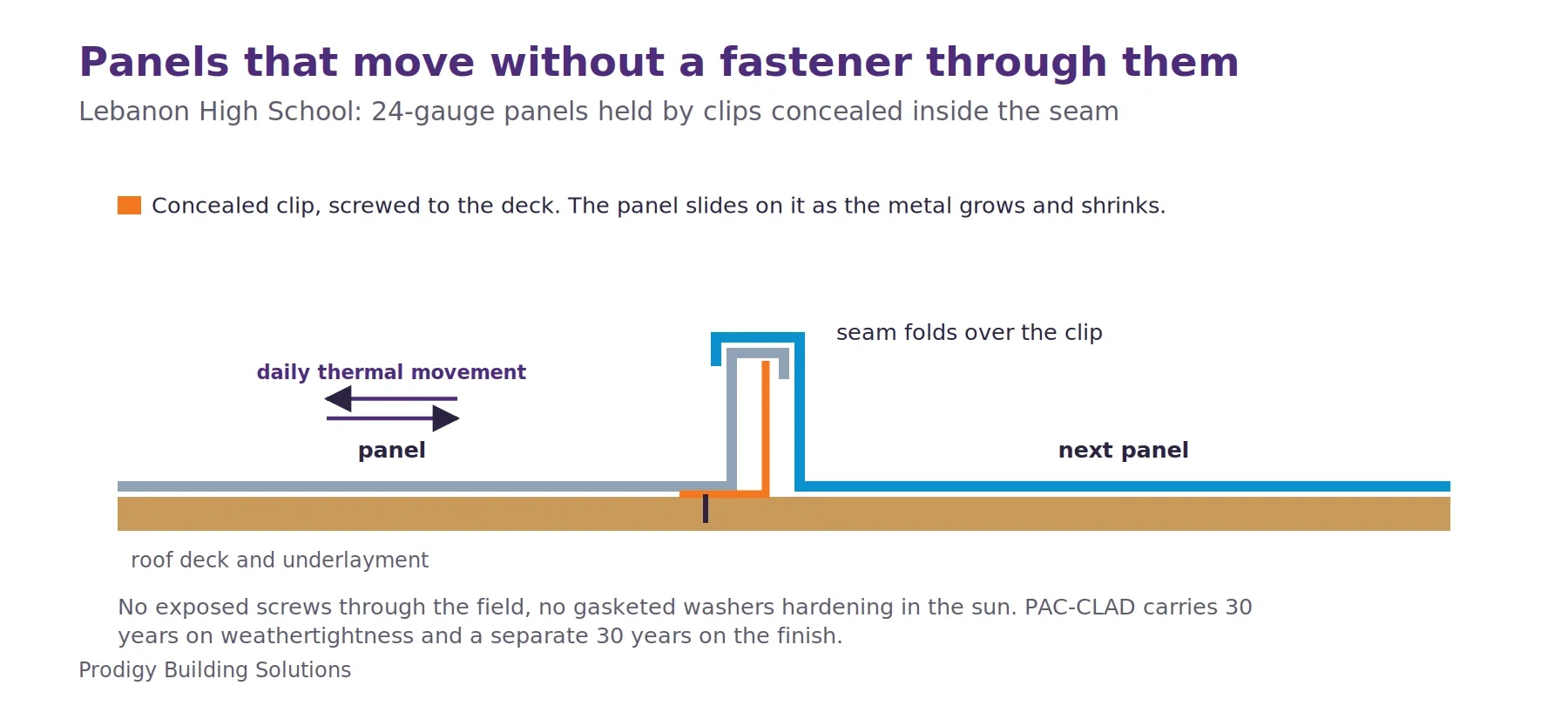
The mechanical difference is movement. A metal roof surface in Ohio runs from below freezing on a January night to hot enough to burn a hand in August, and 24-gauge panels grow and shrink through that range every day of their lives. A standing seam system is built around the fact: the panels are held by clips concealed inside the seam, which let each panel slide as it moves rather than fight a fastener. There are no exposed screws through the field of the roof to back out, no gasketed washers hardening in the sun, and no seam depending on an adhesive bond holding at temperature.

The warranty package reflects that. PAC-CLAD carries a 30-year weathertightness warranty on the installed system and a separate 30-year warranty on the finish, ten years on blue and red finishes, so the district is covered on two distinct questions rather than one.

The rest follows from intending to do it once. The existing system is removed down to the deck and any decking found wet is replaced, because a thirty-year assembly fastened to a substrate nobody looked at is a thirty-year assembly on paper only. Cranes, lifts, storage and site safety are in the contract, and ground damaged during the work is leveled and seeded.

Our Work

Similar Projects