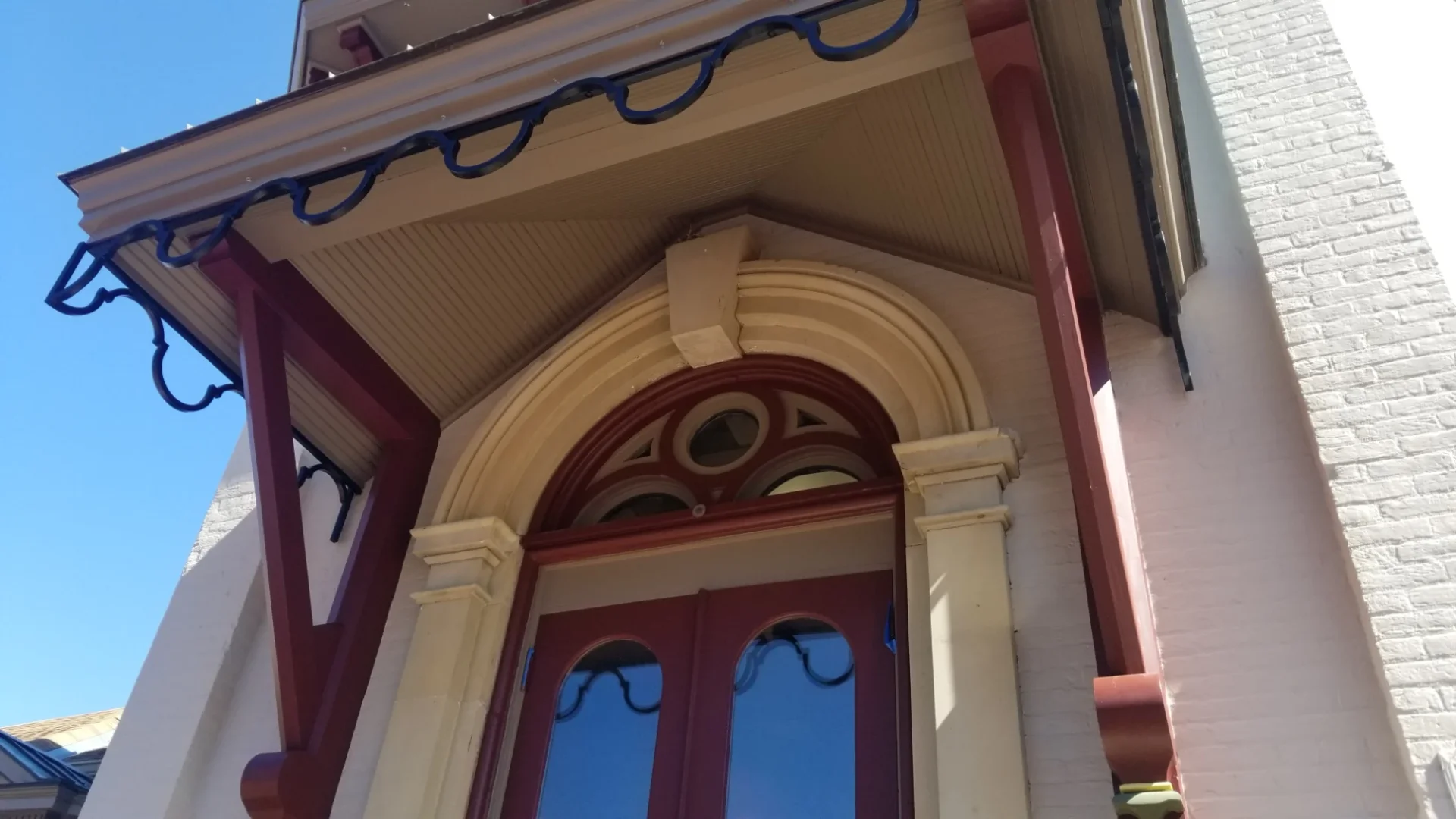

Restored entry porch of the Hamilton Lane Library, with repainted scrollwork brackets above red arched double doors
Building RenovationHamiltonCincinnatiTIPS

Lane Libraries Hamilton Branch Exterior Restoration 2020

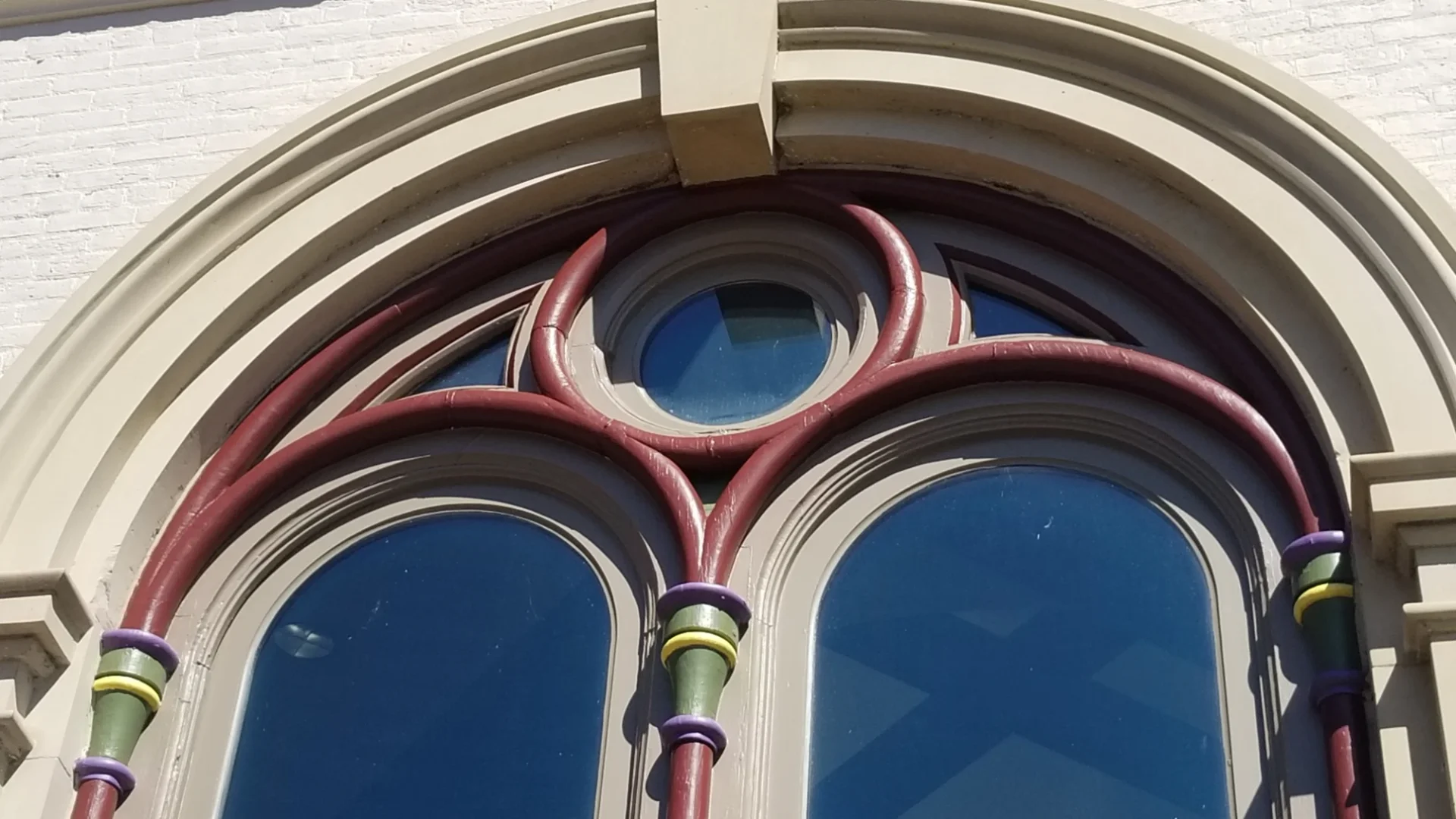
The Hamilton branch of the Lane Libraries is one of the oldest public buildings still working on North Third Street, and the parts of it that take the weather — the cornice, the soffits, the upper crown and the trim of its cupola — had been losing to water for years. Prodigy restored the whole exterior envelope. Decayed wood was cut out and replaced in solid stock milled to match, new blocking was set behind it, deteriorated mortar was chipped out and tuckpointed in matching color, windows were re-glazed, every corner, joint and seam was caulked, and the building — brick, siding and trim together — was primed and repainted in a seven-color scheme approved by the City of Hamilton's Architectural Design Review Board. The black iron fence around the property was pressure cleaned, wire brushed and refinished in industrial enamel. The work was carried out under a Certificate of Appropriateness in a local historic district and accepted in October 2020, with a three-year warranty on workmanship, materials and design.

Restoration on a building of this age is mostly carpentry. The rotted members came out back to sound wood rather than being filled, replacement pieces were manufactured from solid wood in the same sizes as the originals, and the crew walked the building with Prodigy before any new wood was primed so that damage found behind the first layer could be addressed while the lift was still up. Preparation on the painted surfaces was pressure washing and scraping to remove everything loose or peeling; all surfaces were then primed with a tinted primer mixed close to the finish color, so the chips and scuffs a public building collects do not flash white against the finish coat. The colors are Benjamin Moore throughout, seven of them, running from the grey of the field to the reds, greens and purples of the accent trim that give the building its Victorian reading.

An amendment that November replaced two deteriorated synthetic-stucco window casings and one rotten wooden sill with composite sill and trim boards matched to the neighboring trim — the right material in the two places on the building that never get a chance to dry out.

The library remained open to the public throughout. Access was by scaffolding, ladders and aerial lift, with drop cloths and fall protection, dumpsters and supervision provided by the restoration subcontractor, and background checks on site supervisors under Ohio law. The project was delivered for The Lane Libraries through the TIPS cooperative purchasing contract.
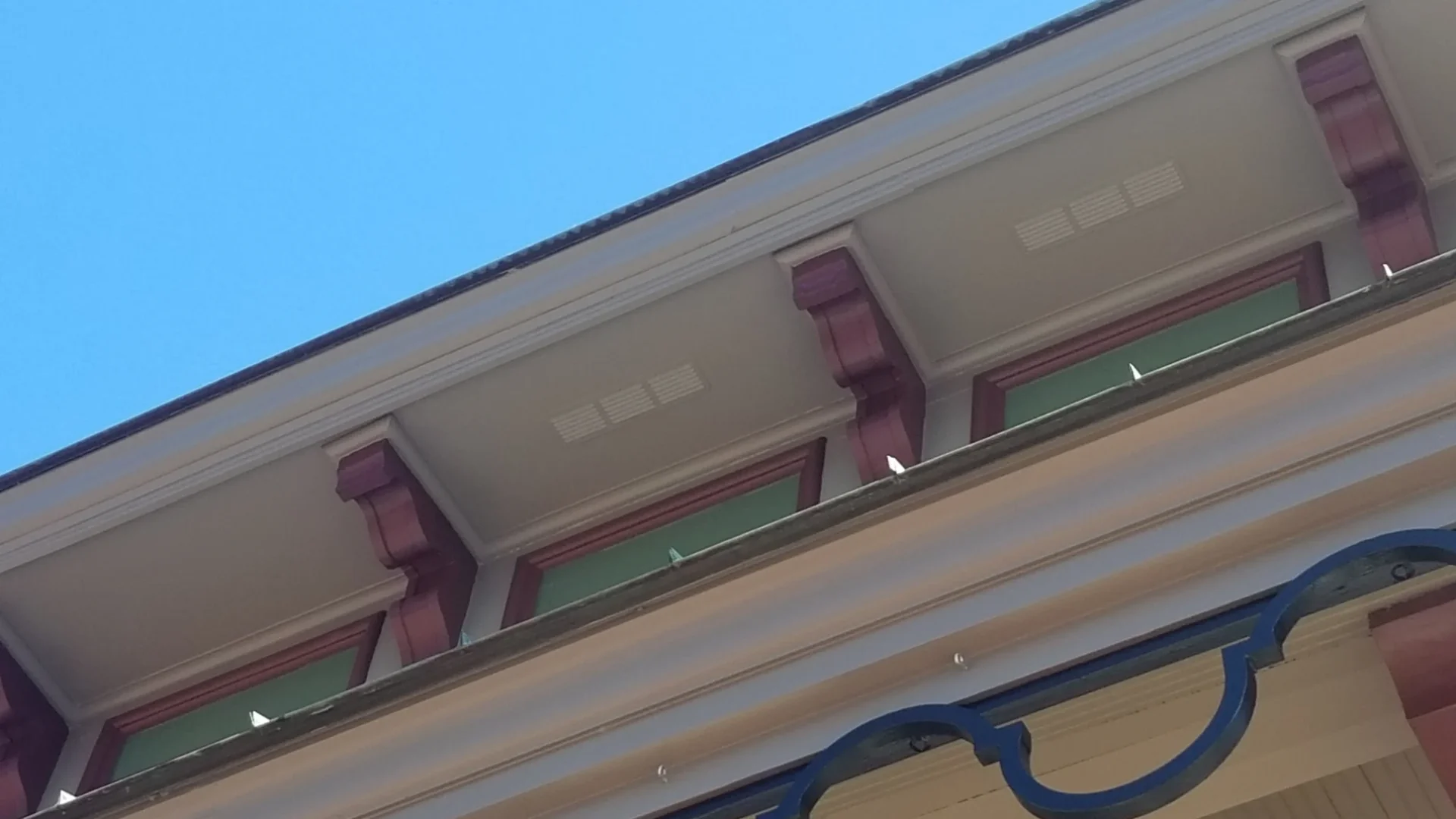
Repainted library cornice with red brackets and dark blue scrollwork against a clear sky
Arched double window at the Hamilton library after restoration, with repainted tracery and molded trim
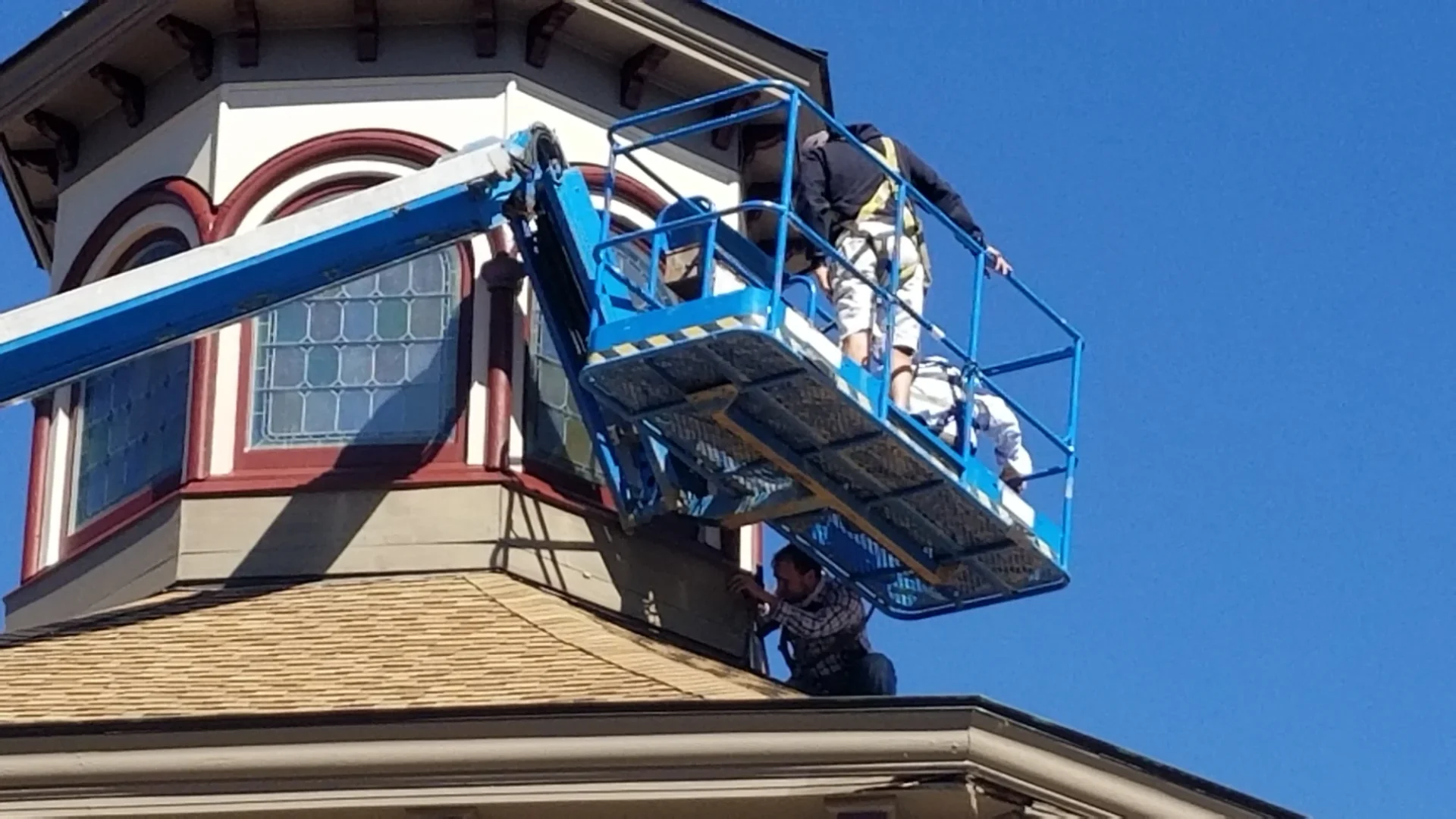
Two painters working from a boom lift at the library's octagonal cupola

Technical Discussion

Rot is a water path, not a surface

The temptation on a decayed cornice is to treat what you can see. Dig out the soft wood, pack it with epoxy filler or soak it with a consolidant, sand it flush, prime it and paint it. It looks finished the day the lift comes down, and on a piece of trim that dries out between rains it can last a long time.

It does not last on a cornice, and the reason is that rot in a cornice is rarely a surface condition. By the time the face of a crown molding is soft, water has usually been running behind it — through a failed joint, down the back of a backing board, into the blocking that holds the whole assembly off the wall. Filling the face seals the symptom and leaves the path. The consolidated wood is also harder and less permeable than the wood around it, so the next cycle of water moves to the edges of the repair and rots there instead.

On this building the specification was replacement, not repair: every piece of soffit, trim, upper crown, mixed molding and backing board showing decay or water damage was removed, new blocking was added where the framing behind it had gone, and replacement pieces were manufactured in solid wood at the same dimensions as the existing profiles. That last point matters more than it sounds. Matching the size keeps the drip edges, reveals and overhangs where the original builder put them, and those details are the reason the water was leaving the building in the first place. A slightly thinner replacement crown is a new water path with a fresh coat of paint on it.

The rest of the envelope was treated as part of the same problem rather than as separate trades. Deteriorated mortar was chipped out and the brick tuckpointed in matching color, windows were re-glazed where the putty had failed, and every corner, joint and seam was caulked before priming, not after painting. Paint is the last layer of a water strategy, not the strategy.

There is one real exception, and it came through as an amendment in November. Two synthetic-stucco window casings below grade and one rotten wooden sill were replaced with composite sill and trim boards matched to the adjacent trim. Solid wood is the right answer on a cornice forty feet up that sheds water and dries in an afternoon. It is the wrong answer at a sill at grade that sits wet, and no paint schedule fixes that. Knowing which is which is most of the craft.

For a facilities director looking at soft trim on an older building: price the replacement before you price the filler, and ask what is behind the piece that rotted. If nobody can tell you, the repair is a guess.

Our Work

Similar Projects