The 8 Design Rules That Make Prodigy Different
Every contractor promises quality at a competitive price; almost none will show you how. These are the eight internal design rules Prodigy operates by on every project — rules that eliminate stacked subcontractor markups, spec hooks written by equipment manufacturers, and designs created by engineers who've never maintained a building. Here's each rule and the industry problem it solves.
Every construction company says they deliver quality at a competitive price. Almost none of them will tell you how — because in the traditional model, the "how" is a stack of habits that quietly drive costs up: subcontractors hiring their own subcontractors, equipment reps writing themselves into specifications, engineers designing buildings they've never had to maintain.
We built Prodigy Building Solutions around eight internal design rules that attack those habits directly. They're not marketing language — they're operating policy on every project we deliver, and they're the reason a design-build project with a single in-house team consistently comes in at higher quality and lower cost. Here's each rule, the industry problem behind it, and what it looks like in practice.
1. Subcontractors Don't Carry Subs
Here's how a typical commercial project gets staffed. The general contractor doesn't self-perform most trades, so it hires a subcontractor — say, a mechanical sub for the HVAC scope. That mechanical sub is busy, so it subs out the ductwork to another firm. That firm brings in a crew from yet another company for the installation labor. By the time someone is actually hanging duct in your building, the work has passed through three or four companies — and every one of them added overhead and profit on top of the layer below.
Follow the money on a single dollar of labor: the crew's employer marks it up, the sub above them marks up that number, and the general marks up the total. The owner pays for three layers of management on one layer of work. Worse, when something goes wrong — a failed inspection, a schedule slip — accountability diffuses through those same layers. Each company can plausibly point down the chain.
Prodigy's rule is blunt: our subcontractors are not permitted to hire additional subcontractors. The company that wins the work performs the work with its own people. That collapses the markup stack to a single layer and means that when we call our sub about a problem, we're talking to the people whose hands were actually on it.
2. Prodigy Has Labor or Material In-House
For every one of our core services — roofing, HVAC, paving, lighting, renovation — Prodigy has either in-house labor or direct material rep agreements. To our knowledge, we're the only design-build contractor operating with both labor and distribution.
To see why that matters, consider what "buying a roof" normally looks like. The membrane is manufactured, sold to a distributor, sold to a roofing contractor, installed by that contractor (or its sub), and billed to a general contractor — who bills you. Each handoff is a margin. The same logic applies to labor: a design firm that owns no crews has to buy every hour of installation at another company's retail rate.
When design, labor, and materials live inside one company, most of those handoffs disappear. There's also a subtler benefit: our designers can't blame installers and our installers can't blame the design, because they share a hallway. Problems get solved in a meeting instead of in change orders.
3. Key Contractors Join Before Design Is Complete
The traditional sequence — design first, bid second, build third — has a structural flaw: the people who know what things actually cost to build don't see the project until the design is finished and the money is largely committed.
The failure mode is familiar to anyone who's run a public project. The engineer designs, the project goes out to bid, and the bids come back 30% over budget. Now the agency has spent months and design fees, and its options are all bad: rebid and hope, cut scope in a rush, or go back to the drawing board and lose a construction season. Alternatively the bids come in fine — and the building turns out to be needlessly expensive to construct, because the design specified a detail that looks simple on paper and takes triple the labor in the field. Nobody catches it, because nobody who builds was in the room.
Prodigy inverts the sequence. Key contractors join during design, while decisions are still cheap to change. A roofing foreman looking at a drawing can say "move that curb two feet and we save a day of labor"; an HVAC installer can flag that the specified unit needs a crane the site can't accommodate. Industry studies have long made the same point — the ability to influence a project's cost is highest at the start of design and falls off a cliff once documents are complete. Pre-design collaboration is where most of a project's cost and quality is actually decided; we just built our process to put the right people there.
4. Subcontractors Don't Carry Material
On a traditional project, each subcontractor buys the materials for its own scope and bills them through with markup. Multiply a standard contractor markup across the mechanical package, the electrical package, the roofing package, and the finishes, and material markup alone becomes one of the largest invisible line items on the job. It also creates a quiet incentive problem: when the sub profits on the material, the sub has a reason to prefer whatever is most profitable to supply — which isn't always what's best for the building.
Prodigy purchases all major material for our projects directly. We'll be honest about the tradeoff: this increases our risk. If the material takeoff is wrong, that's our cost to eat — no passing it down the chain. But that risk is precisely why the rule works. It forces a thorough, fully-resolved design before we buy, because we're accountable for every unit ordered. It removes an entire layer of markup from the largest cost category on the project. And it ensures no shortcuts get taken on material quality, because the material is ours to answer for — an owner never has to wonder whether a sub quietly substituted a cheaper product to widen its margin.
5. Eliminate Spec Hooks
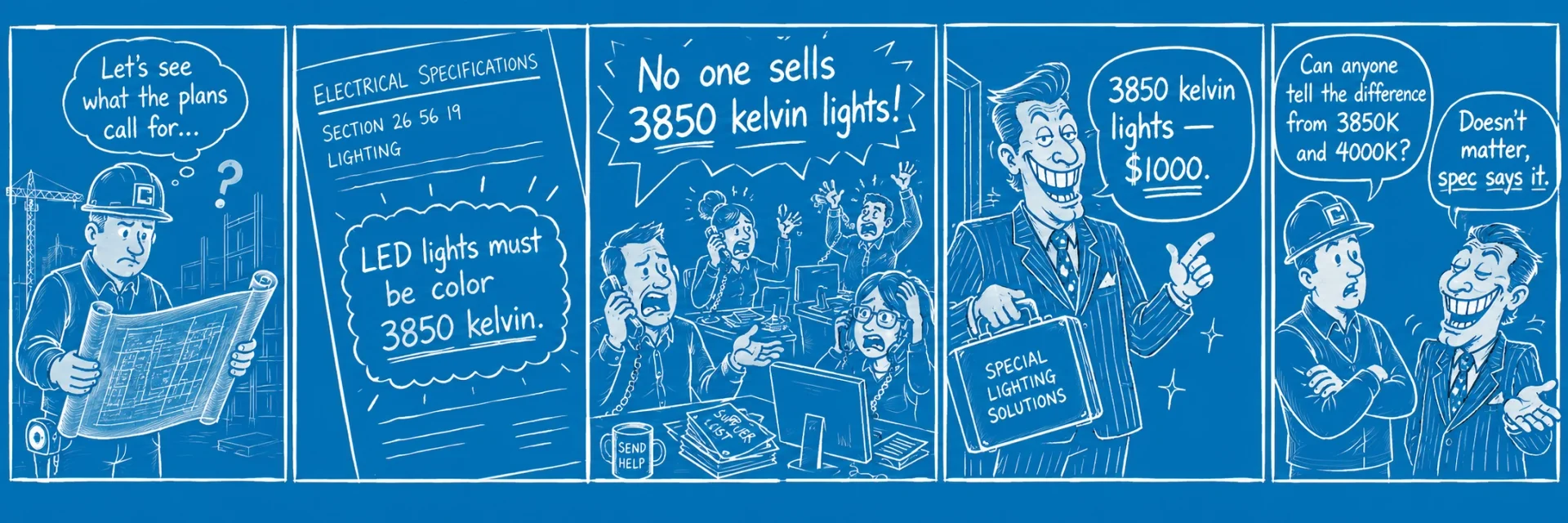
This is the industry practice most owners have never heard of, and it's worth understanding because it may have already cost you money.
Equipment manufacturers employ reps whose job is to build relationships with the architects and engineers who write project specifications. The goal is to get the spec written around their product — sometimes openly ("Basis of Design: Manufacturer X"), sometimes subtly, by embedding a requirement only their product happens to meet: a proprietary control protocol, a specific dimension, a performance figure taken straight from their own catalog. That embedded requirement is a "spec hook."
Here's the trick: once the hook is in, the project still looks competitively bid. Three contractors submit prices. But all three had to price the same pre-selected equipment, so the competition happened everywhere except the place with the most money in it. The manufacturer, facing no rival, has little pressure on price — and the owner pays the difference without ever seeing it.
Because Prodigy controls both the design and the purchasing, our specifications are written by people whose incentive is the project, not a product line. We spec on open performance requirements that multiple manufacturers can meet, then make them compete for the order. If a proprietary requirement genuinely serves the building, it earns its place on the merits — not because a rep bought lunch for the design team.
6. Three Bids, Every Time
Prodigy's products and services are available through competitively bid C.O.G. (Council of Governments) cooperative contracts — the procurement path many of our public-sector clients use, and one that already satisfies Ohio's competitive bidding requirements at the cooperative level.
We could stop there. Legally, nothing more is required. But "compliant" and "cheapest available" aren't the same thing, so we run our own competition anyway: no fewer than three bids for all subcontracted work, on every project. If the paving scope is going to a sub, three paving contractors price it. If demolition is subbed, three demolition firms compete.
For a public agency, this is the answer to a fair question a council member or board might ask: "If we skip the bid process, how do we know we got a good price?" You know because the competition happened twice — once at the COG level, where the contract itself was competitively awarded, and again at the project level, where every subcontracted trade was priced by at least three firms. The cooperative contract satisfies compliance; the three-bid rule protects value.
7. Every Engineer Has Field Experience
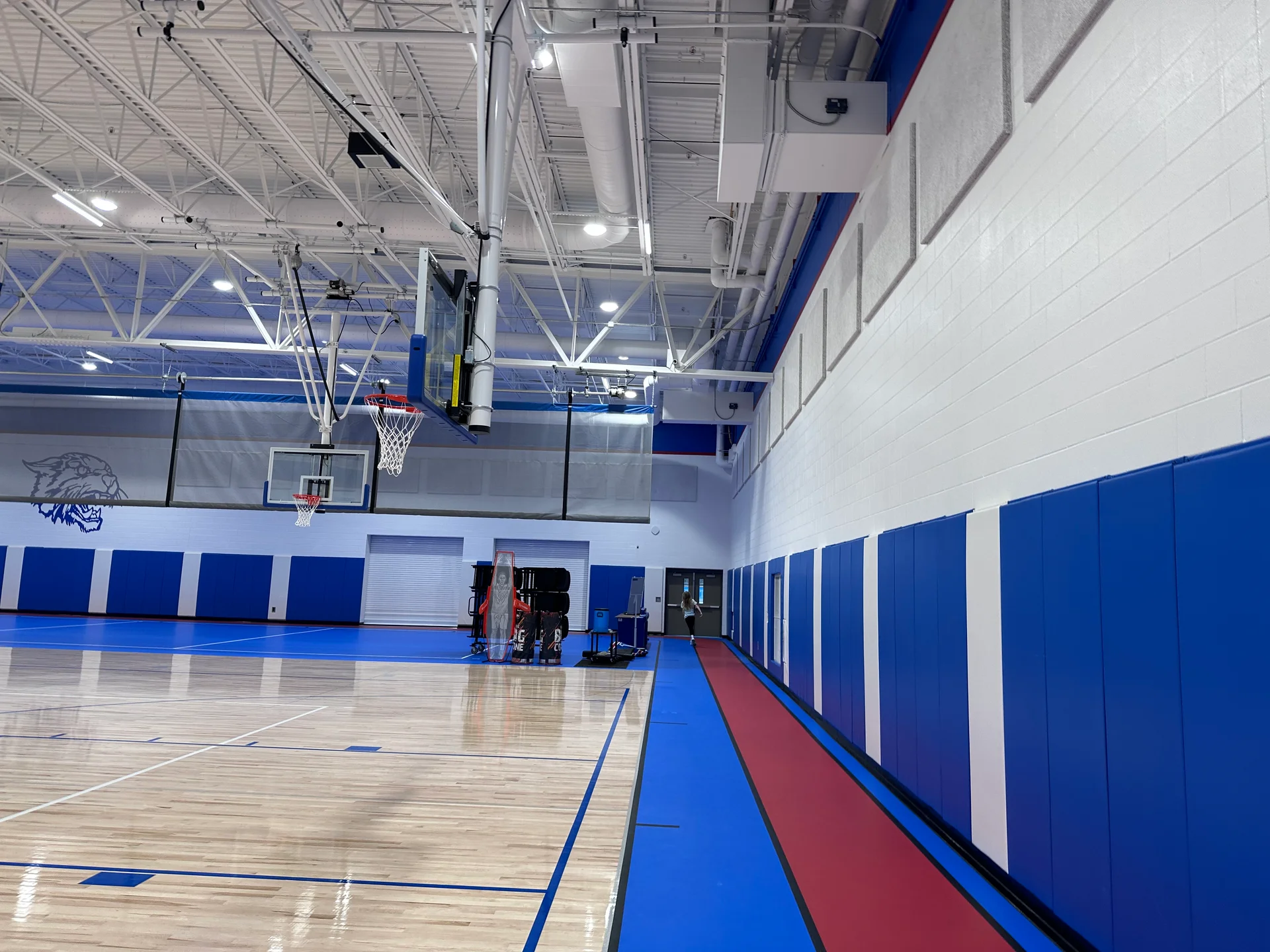
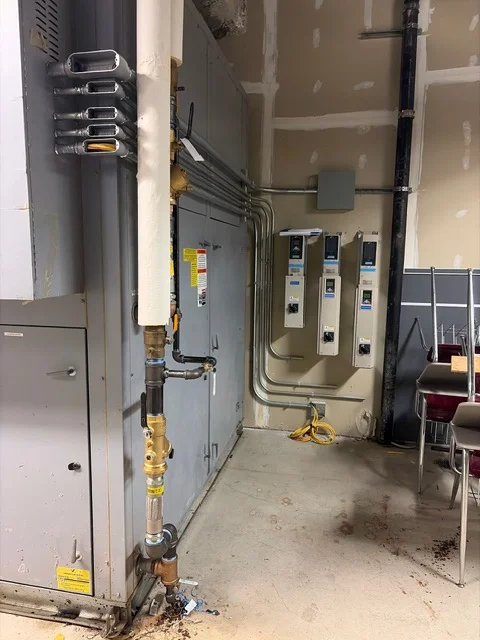
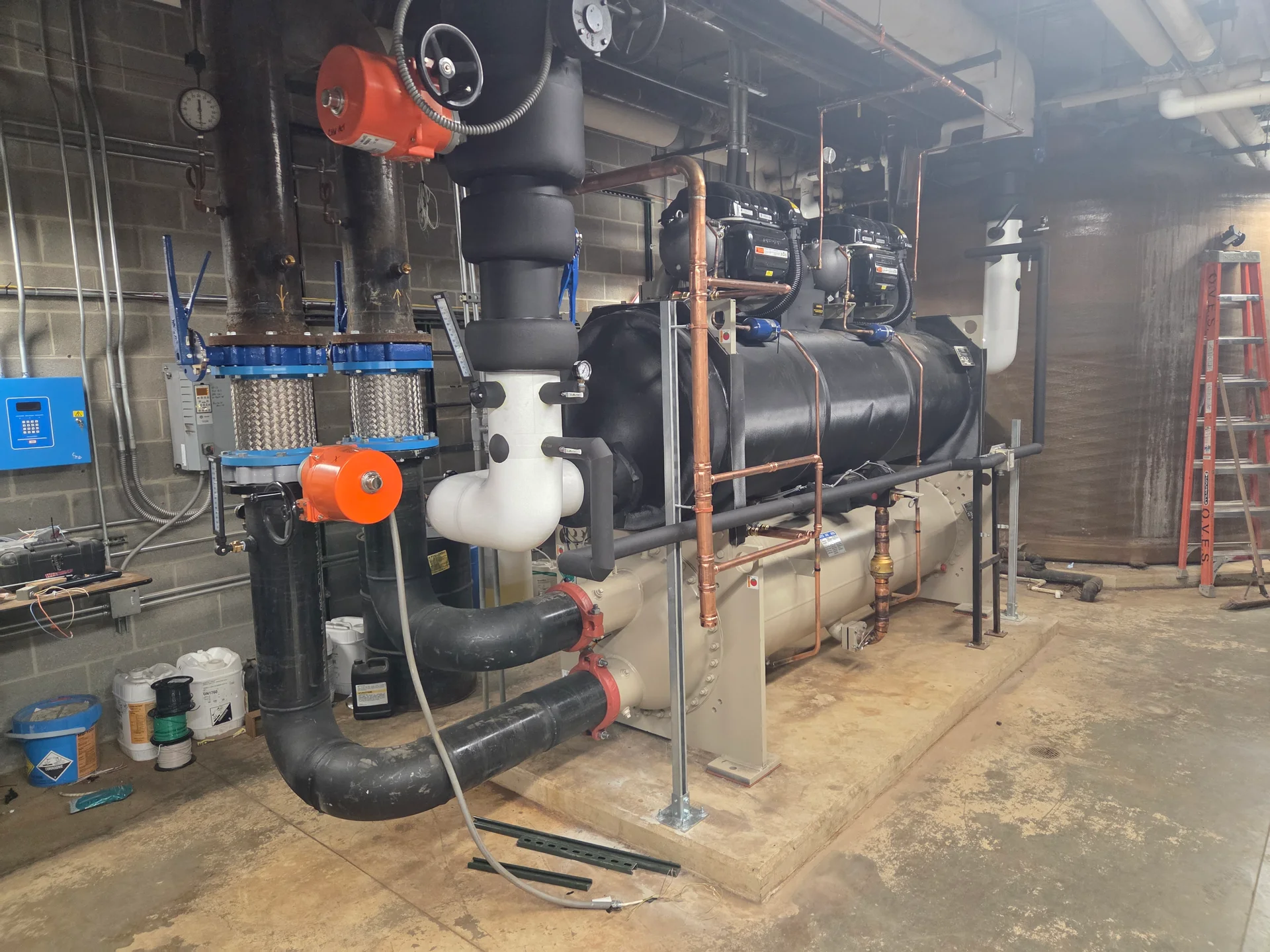
Ask any facilities manager about their least favorite building and you'll hear the same stories. The rooftop unit installed where no service tech can reach the access panel without scaffolding. The beautiful specified light fixtures that take a lift and two workers to relamp — in a gymnasium that hosts events every weekend. The mechanical room sized so tightly that replacing the equipment in twenty years will mean cutting a wall. Each of these was drawn by a competent engineer who had simply never been the person who had to maintain what they drew.
The design decisions that create these problems don't show up in a plan review, and they don't cost the designer anything. They cost the owner — every service call, for thirty years.
Prodigy's hiring rule addresses this at the root: we only hire engineers and architects with real field experience. People who have stood on the roof, pulled the wire, serviced the unit. When someone who has personally wrestled a compressor through a too-small doorway reviews a mechanical room layout, the doorway gets bigger before the concrete is poured. The result is buildings designed for the decades of practical use after ribbon-cutting, not just for the drawings.
8. Design to Eliminate Packaging
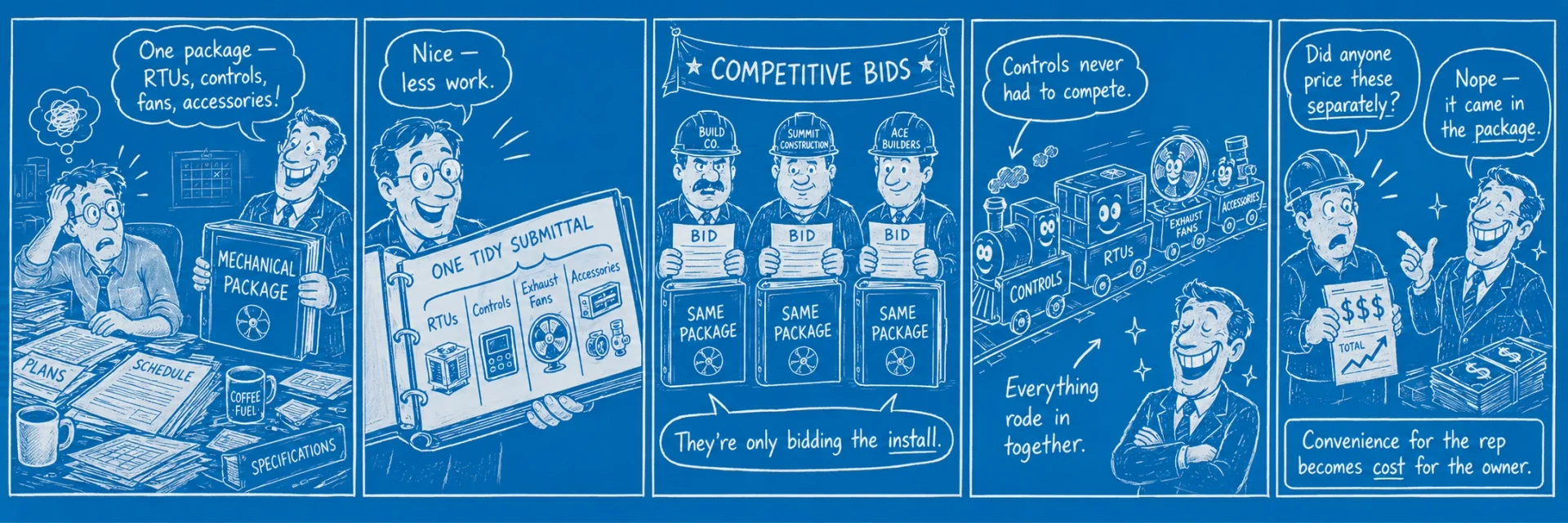
Equipment rep firms offer architects and engineers a tempting convenience: one bundled package covering all the equipment for a scope — the rooftop units, the controls, the exhaust fans, the accessories, all from lines the rep carries, all in one tidy submittal. For a busy design firm, it's less work. And it technically satisfies the bid requirements of a plan-and-spec job, because contractors still bid on installing the package.
But look at what happened inside the bundle: the components stopped competing with each other. The controls didn't have to beat rival controls on price; they rode in on the package. Bundling converts a dozen competitive purchasing decisions into one negotiated relationship — and the premium for that convenience lands in the owner's budget, invisibly.
We design to break those bundles apart. Each significant component is specified so it can compete on its own merits, and our direct purchasing (Rule 4) means we can actually buy it that way. Sometimes the bundled product wins anyway — fine, then it won on price and fit. Convenience for the rep firm is not a line item you should be paying for.
What These Rules Add Up To
Read the eight rules again and you'll notice they're all the same rule wearing different clothes: find the layer the owner is paying for without seeing, and remove it. Stacked subcontractors, pass-through material markups, pre-cooked specifications, bundled equipment, designs that externalize their costs onto thirty years of maintenance — each one is a place the traditional model leaks money quietly.
Strip those layers out systematically, and what's left is what construction should have been all along: one accountable team, genuinely competitive pricing at every level, and a building designed for the people who will actually use it.
That's the Prodigy in Prodigy Building Solutions.
Planning a facility project for your school, city, or business? Schedule a consultation and we'll walk you through how these rules apply to your project.
Our Work